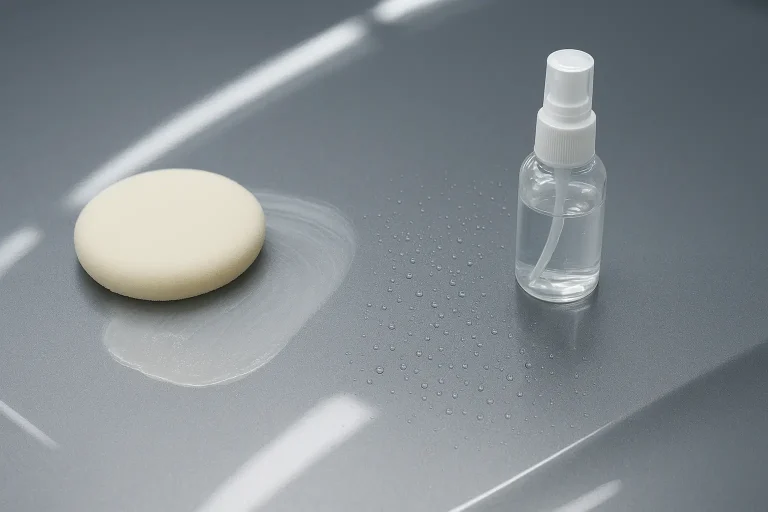
How to Clean Grout Haze Off Ceramic Tile After Installation

Grout haze is not dirt. It is a thin, dried film of cement residue that bonds to your ceramic tile surface during installation, and it requires a completely different removal approach than standard cleaning.
The good news is that fresh grout haze responds to simple household methods within 24 to 72 hours of grouting. Wait longer than that and you will need an acidic cleaner to dissolve the hardened calcium carbonate crust that forms as the cement cures fully.
By the Numbers
Grout Haze Removal on Ceramic Tile: Key Facts
Sources: Tile Council of North America (TCNA), American National Standards Institute (ANSI) A108.10, manufacturer technical data sheets
This guide covers every stage of grout haze removal from fresh haze cleanup within the first day, to dried haze removal at the 3-day to 4-week mark, to hardened old haze requiring professional-grade acid treatment. It also covers tool selection, tile type safety, what to do when haze returns after cleaning, and how to prevent the problem on your next installation.
What Is Grout Haze and Why Does It Form on Ceramic Tile?
Grout haze is a thin layer of cement particles suspended in water that spreads across the tile surface during the grouting process. When the water evaporates, those cement particles bond directly to the tile glaze as a white or gray film.
The chemistry behind grout haze formation is straightforward. Standard sanded and unsanded grouts use Portland cement as their binder. Portland cement contains calcium silicates that react with water to form calcium hydroxide and calcium silicate hydrate. As the water evaporates from the grout joints, a portion of the calcium hydroxide migrates to the tile surface, where it reacts with carbon dioxide in the air to form calcium carbonate. Calcium carbonate is the same mineral compound as limestone, and it adheres to the silica-based glaze on ceramic tile with surprising tenacity.
The thickness and opacity of the haze depends on three factors: how much water was used in the grout mix, how thoroughly the tile was wiped during installation, and how long the installer waited between applying grout and cleaning the surface.
Epoxy grout produces a different type of haze. Epoxy haze is not cement-based. It is a resin film that requires a specialized epoxy haze remover rather than acid-based products. Identifying which type of grout was used before you start cleaning is the most important step in the entire process.
How to Identify What Type of Grout Haze You Are Dealing With
The type of haze determines every product and tool choice that follows. Getting this wrong means either ineffective cleaning or permanent tile damage.
Cement-based grout haze appears white or light gray. It feels chalky or powdery when rubbed with a dry finger. It dissolves partially when you apply water and scrub, though dried haze resists water alone. Most residential and commercial ceramic tile installations use Portland cement grout, which means cement-based haze is by far the most common scenario you will encounter.
Epoxy grout haze looks different. It has a greasy or waxy appearance. It does not feel chalky. It often shows a slight sheen rather than a matte white finish. Water and scrubbing have almost no effect on epoxy haze. Products like epoxy grout haze remover contain solvents specifically formulated to break down the resin without damaging the tile glaze.
Efflorescence can be confused with grout haze. Efflorescence is a related but distinct problem where soluble salts from beneath the tile migrate through the grout joints and deposit on the tile surface. It appears as white powdery deposits at or near the grout lines rather than as a uniform film across the tile face. Efflorescence often reappears after cleaning unless the moisture source driving the salt migration is addressed.
The fastest identification test: apply a few drops of water to the haze and rub firmly with a white cloth for 30 seconds. Cement haze will smear slightly and leave gray residue on the cloth. Epoxy haze will not smear and will leave no residue. That result tells you exactly which removal method to use.
Tools and Supplies You Need Before You Start
Having the right tools assembled before you begin saves time and prevents the most common damage scenario, which is using an abrasive pad rated for the wrong tile type.
Use the table below to match your tools to the stage of haze removal you are tackling.
Process Guide
Grout Haze Removal Tools by Stage and Tile Type
Match your situation to the correct tool and product combination before starting
| Haze Stage | Cleaning Agent | Scrubbing Tool | Safe for Glazed Ceramic | Rinse Required |
|---|---|---|---|---|
| Fresh (under 24 hrs) | Clean water only | Damp cheesecloth or microfiber | Yes | Minimal |
| Dried (24-72 hrs) | Water plus white vinegar (1:1) | Nylon scrub pad or grout haze pad | Yes | Yes, plain water |
| Hardened (3-14 days) | Sulfamic acid cleaner (5-10%) | Nylon brush or white scrub pad | Yes, with care | Yes, thoroughly |
| Old haze (14+ days) | Commercial grout haze remover | Nylon brush, possible second application | Yes, test first | Yes, neutralize and rinse |
| Epoxy haze (any age) | Epoxy haze remover (solvent-based) | Soft cloth or nylon pad | Yes, test first | Yes, soap and water |
| Efflorescence | Dilute muriatic acid or efflorescence remover | Stiff nylon brush | Test first, risk of etching | Yes, neutralize with baking soda |
Never use steel wool, green Scotch-Brite pads, or metal scrapers on glazed ceramic tile. These tools scratch the glaze surface permanently. Source: TCNA Handbook for Ceramic, Glass, and Stone Tile Installation.
For scrubbing tools, a nylon scrub pad rated for tile surfaces is the safest general-purpose option for glazed ceramic. It provides enough abrasion to break the haze film without scratching the glaze.
A cheesecloth or haze removal cloth works well for fresh haze in the first 24 hours. The open weave structure traps cement particles rather than smearing them back across the tile. For acid-based cleaning stages, keep a bucket of plain water and a separate bucket of baking soda solution (1 tablespoon per quart of water) nearby for neutralizing the acid after cleaning.
How to Remove Fresh Grout Haze Within 24 Hours of Installation
Fresh grout haze is the easiest to remove and requires no chemicals. The cement particles have not yet fully hardened, and clean water with light mechanical scrubbing is all that is needed.
This phase requires timing awareness. The grout itself needs to have set enough that scrubbing the tile does not pull grout out of the joints. Most sanded and unsanded Portland cement grouts reach initial set within 30 to 60 minutes after application at room temperature (68 to 77 degrees Fahrenheit). Do not clean the tile until you can press the tip of your finger firmly against the grout joint surface without leaving an indentation. That firmness test confirms the grout has set enough for surface cleaning.
Step-by-Step Process for Fresh Haze Removal
Start by wringing out a large microfiber cleaning cloth in clean water until it is damp but not dripping. A wet cloth pushes contaminated water into the grout joints and increases haze coverage rather than reducing it.
Wipe the tile surface in a diagonal direction relative to the grout lines. Wiping parallel to grout lines pulls cement particles out of the joints onto the tile face. Wiping diagonally keeps the cloth moving across the tile surface without dragging material from the joints.
Rinse the cloth in a separate bucket of clean water after each pass over three to four tiles. The goal is a clean cloth on every pass. A cloth loaded with cement residue simply redistributes haze rather than removing it. Change the bucket water every 10 to 15 minutes as it becomes gray with cement particles.
Allow the tile to dry completely between passes, approximately 10 to 15 minutes per pass. This is important because cement haze that looks clean while wet often reappears as a white film when the tile dries. A second or third pass is normal and does not indicate a problem with the first pass.
For the final pass, use a clean, dry cheesecloth or cotton cloth to buff the tile surface. This final dry buff picks up any remaining calcium particles before they have time to bond fully to the glaze. Fresh grout haze handled within 24 hours almost always comes completely clean with this process alone.
How to Remove Dried Grout Haze Between 24 and 72 Hours After Grouting
Grout haze that has dried for one to three days has partially hardened but has not yet reached full cement cure. It no longer responds to water alone. The calcium carbonate film requires mild acidity to break the bond with the tile glaze.
White vinegar is a 5% acetic acid solution. It is effective on partially dried grout haze, safe for glazed ceramic tile, and inexpensive. Mix equal parts white vinegar and water in a spray bottle. This gives you roughly a 2.5% acid solution, which is strong enough to dissolve the calcium film without risk of etching the ceramic glaze.
Spray the diluted vinegar solution onto a 4-square-foot section of tile. Allow it to sit for 2 to 3 minutes, but do not let it dry on the surface. Dried acid on tile creates a different residue problem. Use a nylon scrub brush to scrub the treated area using circular motions. You will see the haze begin to lift as the acid dissolves the calcium carbonate.
Rinse the section thoroughly with clean water before moving to the next area. Acid left on grout joints between cleanings can weaken the grout surface over time. Work in small sections, clean, rinse, and repeat across the installation.
If the vinegar method leaves a faint haze after two passes, the haze has hardened further than the 24 to 72-hour window suggests. Move to a commercial sulfamic acid product rather than increasing the concentration of the vinegar solution. Higher concentrations of acetic acid can begin to affect the grout joint surface on extended or repeated exposure.
How to Remove Hardened Grout Haze with Sulfamic Acid Cleaner
Grout haze that has dried for more than three days requires a purpose-formulated acid cleaner. Sulfamic acid is the industry standard for removing cement-based grout haze from glazed ceramic tile because it dissolves calcium carbonate effectively without producing the toxic fumes or aggressive tile etching associated with muriatic acid.
According to the Tile Council of North America (TCNA) Handbook for Ceramic, Glass, and Stone Tile Installation, sulfamic acid-based cleaners are the recommended first-line treatment for hardened grout haze on glazed ceramic and porcelain tile. Muriatic acid (hydrochloric acid) should only be used as a last resort on highly resistant haze because its lower pH (around 1 to 2 compared to sulfamic acid’s pH of 2 to 3) increases the risk of grout joint erosion and glaze etching on lower-quality tiles.
Products like sulfamic acid grout haze remover are available as powder concentrates or ready-to-use liquids. The powder form allows you to adjust concentration. For glazed ceramic tile, mix at the lower end of the manufacturer’s recommended range, typically 1 ounce of sulfamic acid powder per quart of water for a fresh dilution before each use.
Before applying to the full installation, test the solution on a hidden tile or a tile offcut from the same batch. Some lower-fired ceramic tiles with thin glaze coatings can show slight dulling with repeated acid exposure. Testing first takes five minutes and prevents irreversible damage to the entire floor.
The following step-by-step process gives you the safest and most effective application sequence for sulfamic acid haze removal on glazed ceramic tile.
Step-by-Step Guide
How to Remove Hardened Grout Haze with Sulfamic Acid
7 steps. Estimated time: 45 to 90 minutes for a standard bathroom floor. Wear nitrile gloves and eye protection throughout.
Pre-wet the tile surface and grout joints
Dampen the entire area with clean water before applying acid. Pre-wetting slows acid absorption into the porous grout and reduces the risk of grout joint etching. Do not soak, but ensure the surface is visibly damp.
Mix sulfamic acid solution at recommended concentration
For glazed ceramic tile, use 1 ounce of sulfamic acid powder per quart of warm water (not hot, as heat accelerates the reaction). Mix only what you will use in 30 minutes. Sulfamic acid solution weakens over time as it reacts with minerals in the water.
Apply to a small section and allow 3 to 5 minutes dwell time
Apply the solution to a 3 to 4 square-foot section using a sponge or soft cloth. Do not let the solution dry on the tile. If it starts to dry before you scrub, mist the area lightly with water to rehydrate it.
Scrub with a nylon brush using circular or diagonal strokes
Use a stiff nylon grout cleaning brush for heavy haze and a soft nylon pad for light haze on the tile face. You will see the white film lift and dissolve into the solution as you scrub.
Rinse immediately and completely with clean water
Rinse the section thoroughly with two to three changes of clean water before moving on. Any acid left on the grout surface between section cleanings will continue to etch the joint as you work on adjacent areas.
Neutralize the entire floor with a baking soda solution
Once all sections are cleaned and rinsed, mop the entire floor with a solution of 1 tablespoon of baking soda dissolved in 1 gallon of water. This neutralizes any residual acid across the grout joints and tile surface before the final rinse.
Final rinse and dry inspection under raking light
Mop with clean water for the final rinse. Allow to dry fully. Inspect under a raking light (hold a flashlight at a low angle across the tile surface) to reveal any remaining haze. Raking light shows calcium film that is invisible under overhead lighting.
Always wear acid-resistant nitrile gloves and splash-proof safety goggles when working with sulfamic acid solutions. Ventilate the room thoroughly by opening windows and running a fan, as sulfamic acid vapor at working concentrations is an irritant to the respiratory tract and eyes.
The single most important rule for sulfamic acid haze removal is limiting contact time to 3 to 5 minutes per section. Leaving acid on the tile longer than that does not improve haze removal. It increases the risk of grout joint erosion and glaze surface dulling on lower-quality ceramic tile with thin factory glazes.
How to Remove Old Grout Haze That Has Been There for Weeks or Months
Grout haze that has been on ceramic tile for more than two weeks has undergone a significant chemical change. The calcium carbonate film has hardened to near its maximum density. Simple sulfamic acid at diluted concentrations often requires multiple applications to fully dissolve it.
Portland cement grout reaches approximately 70% of its final compressive strength at 7 days and close to 100% at 28 days, according to published Portland Cement Association data on cement hydration. Grout haze reaches similar hardness milestones on the same timeline. After 28 days, grout haze removal becomes significantly more difficult but remains achievable with the right products and patience.
For haze older than two weeks, use a commercial grout haze remover with a higher active acid concentration. Products like Aqua Mix Cement and Grout Film Remover or Custom Building Products Grout Haze Remover are formulated for stubborn hardened haze on glazed ceramic tile. Follow the manufacturer’s concentration instructions exactly. Higher-concentration products require shorter dwell times.
Multiple applications are almost always necessary for old haze. The first application dissolves the outer calcium carbonate layer. The second application reaches the deeper layer bonded directly to the glaze. Allow each application to fully rinse and dry before assessing whether a second application is needed.
If haze persists after three applications of a commercial product at the manufacturer’s recommended concentration, the remaining film may be a combination of calcium carbonate and mineral deposits from hard water used during installation. A product containing a chelating agent alongside the acid, such as EDTA (ethylenediaminetetraacetic acid), can help dissolve mineral compound films that pure acid alone cannot remove.
Grout Haze vs. Efflorescence vs. Hard Water Deposits: How to Tell the Difference and Treat Each One
Three different white film problems affect ceramic tile after installation, and each requires a different treatment. Misidentifying the problem is the most common reason a cleaning attempt fails or makes things worse.
Use the table below to identify which white film problem you are dealing with and confirm the correct removal approach for each.
Diagnostic Reference
White Film on Ceramic Tile: Grout Haze vs. Efflorescence vs. Hard Water Deposits
Identify your specific problem before selecting a treatment. Sources: TCNA Handbook, National Tile Contractors Association (NTCA) technical bulletins
| Characteristic | Grout Haze | Efflorescence | Hard Water Deposits |
|---|---|---|---|
| When it appears | Within days of grouting | Weeks to months after installation | Gradually over months of use |
| Location on tile | Across tile face, uniform film | At or near grout lines, irregular deposits | Around water contact areas, spots |
| Feel when dry | Chalky, powdery film | Crystalline, slightly rough | Hard, glassy spots |
| Chemical composition | Calcium carbonate (CaCO3) | Soluble sulfates and carbonates | Calcium and magnesium carbonates |
| Reacts to vinegar test | Yes, dissolves slowly | Yes, dissolves slowly | Yes, dissolves with fizzing |
| Reappears after cleaning | No, single-event problem | Yes, unless moisture source is fixed | Yes, with ongoing water contact |
| Correct treatment | Sulfamic acid cleaner | Efflorescence remover plus moisture source repair | Calcium lime rust remover (CLR) |
Efflorescence that reappears within 2 to 4 weeks of cleaning indicates an active moisture infiltration problem beneath the tile. Cleaning alone will not solve this. The moisture source must be identified and remediated before cleaning produces a lasting result.
Hard water deposits on ceramic tile in shower areas and around sinks respond well to products like CLR Calcium Lime and Rust Remover. These contain a blend of lactic acid and gluconic acid, which are effective on calcium and magnesium mineral deposits without the risk of grout etching that comes with stronger acids.
The key difference between efflorescence and grout haze is behavior over time. Grout haze is a one-time residue from the installation process. Clean it and it is gone permanently. Efflorescence is a symptom of ongoing moisture movement through the installation. It comes back because the conditions producing it are still active. Treating efflorescence without addressing the moisture source is a temporary fix that requires repeat cleaning indefinitely.
What Not to Use on Glazed Ceramic Tile During Grout Haze Removal
The wrong cleaning tool or chemical does permanent damage to ceramic tile glaze. Damage to the glaze is not reversible without professional tile restoration, which typically costs $3 to $8 per square foot for chemical restoration or full replacement if the damage is severe.
Steel wool scratches ceramic glaze at the microscopic level. The scratches are not immediately visible, but they trap dirt, bacteria, and mineral deposits in a way that smooth glaze does not. A tile cleaned with steel wool looks dull within weeks of cleaning because the scratched surface no longer reflects light uniformly.
Green Scotch-Brite scour pads contain aluminum oxide abrasive particles rated at 9 on the Mohs hardness scale. Most ceramic tile glazes fire to a hardness between 5 and 7 on the Mohs scale. Using a green Scotch-Brite pad on glazed ceramic tile is essentially using a harder mineral to scratch a softer one. The damage is identical in mechanism to sandpaper on glass. Use only white or gray nylon pads rated specifically for tile surfaces.
Muriatic acid (hydrochloric acid, typically sold at 28% to 31.5% concentration) is too aggressive for routine grout haze removal on glazed ceramic tile. The Tile Council of North America explicitly states in its installation handbook that muriatic acid should not be used on glazed tile without extreme dilution (at least 10 parts water to 1 part acid) because its low pH dissolves not just the calcium carbonate haze but also the silicates in the grout joint. Use sulfamic acid as the first-line treatment and reserve muriatic acid only for extremely resistant hardened cement that has not responded to commercial products.
Bleach-based cleaners are ineffective on grout haze and should not be used as a haze removal tool. Bleach is an oxidizing agent designed to kill biological stains, mold, and mildew. Grout haze is a mineral deposit, not an organic stain. Bleach has no chemical effect on calcium carbonate. Using it as a primary cleaner on fresh installations also risks premature bleaching of colored grout before it has fully cured, which occurs at a much slower rate than the initial set.
How to Remove Grout Haze from Specific Ceramic Tile Types
Not all ceramic tile surfaces respond identically to grout haze removal. The porosity of the tile body, the thickness of the factory glaze, and the surface texture all affect which methods are safe and effective.
Glazed Wall Tile and Standard Floor Tile
Standard glazed ceramic wall tile and floor tile are the most straightforward to clean. The dense factory glaze provides a non-porous surface that resists acid penetration and responds predictably to sulfamic acid treatment. Most residential bathroom and kitchen tiles fall into this category. The standard methods described in earlier sections apply without modification to any fully glazed ceramic tile with a smooth surface finish.
Textured and Matte Finish Ceramic Tile
Textured ceramic tile presents a more challenging grout haze situation. The surface relief traps cement particles in low points and recesses that a flat cloth cannot reach. A soft-bristled brush designed for textured tile surfaces is necessary for working acid solution into the recesses. Allow longer dwell time (up to 5 minutes) and use circular scrubbing to work the solution into the surface texture before rinsing.
Matte finish ceramic tiles have a glaze that is intentionally less dense and more porous than gloss finish tiles. The Tile Council of North America notes that matte finish tiles may show slight surface changes with repeated acid exposure. Always test acid cleaners on an inconspicuous matte tile before treating the full installation, and keep dwell times at the minimum required for effective haze removal.
Unglazed Quarry Tile and Saltillo Tile
Unglazed ceramic tiles, including quarry tile and Saltillo terra cotta, are highly porous and absorb acid cleaners rapidly. Standard grout haze removers at concentrations recommended for glazed tile can penetrate and stain unglazed tile if left for too long. For unglazed ceramic, use a diluted acid solution at one-half the concentration recommended for glazed tile and limit dwell time to 90 seconds maximum. Rinse immediately and thoroughly after each section. Pre-sealing unglazed tile before grouting is the most effective prevention strategy for this tile type, which avoids the haze removal challenge almost entirely.
Encaustic and Hand-Painted Ceramic Tile
Encaustic cement tile and hand-painted decorative ceramic tile require special caution. Encaustic tile is a cement-body tile with a decorative pattern pressed into the surface during manufacture. It has no glaze layer. Acid cleaners can lighten the surface pattern and strip any sealer that was applied after installation. For these tiles, use only pH-neutral tile cleaners for haze removal, combined with careful mechanical scrubbing. Accept that some haze may require professional cleaning rather than risking permanent pattern damage with acid.
Hand-painted ceramic tiles with non-fired decorative glazes or paints are equally sensitive. Any acid-based cleaner risks dissolving the colorant layers on tiles where the painted decoration was applied at low temperatures over an existing glaze. If you are unsure whether the decorative finish is fully fired, test only with water and a soft cloth on these tiles before using any chemical product.
How to Prevent Grout Haze on Your Next Ceramic Tile Installation
Grout haze is not unavoidable. Professional tile installers consistently produce near-haze-free results by managing the timing and water content of their grouting process, not by spending more time on cleanup afterward.
The single most effective prevention step is managing grout water content. The Tile Council of North America’s ANSI A108.10 standard specifies that grout should be mixed to the consistency of peanut butter, not a pourable slurry. A wetter grout mix releases more water and calcium compounds to the tile surface as it evaporates. Keep the mix firm and add the minimum water required for workability.
Seal the tile surface before grouting on installations where the tile has any surface texture or micro-porosity. A release agent or temporary tile sealer applied to the tile face before grouting creates a barrier that prevents cement particles from bonding to the glaze. The haze wipes off with water after the grout sets because it never bonded to the sealed surface. Products like grout release for ceramic tile are designed specifically for this purpose and wash off after installation is complete.
Grout the installation in small sections and perform the initial cleanup on each section before the grout begins to set. Professional tile setters typically work in 20 to 30 square-foot sections, finishing each section before starting the next. This keeps the working grout fresh and the haze in its easiest-to-remove state throughout the job.
Use a polymer-modified grout for installations where haze prevention is a priority. Polymer-modified grouts contain latex or acrylic polymers that reduce water migration out of the joint during curing. Less water migration means less calcium hydroxide reaching the tile surface and a significantly thinner haze film in most cases.
Timing the initial wipe-down correctly is as important as any product choice. Wipe the grout off the tile surface within 15 to 30 minutes of application, before the surface begins to set, but not before the joint has set enough to resist the wiping motion. The optimal window is when the grout joint surface does not indent under firm finger pressure but the tile face haze is still damp. A single diagonal pass with a lightly damp sponge during this window removes most of the surface residue before it has any opportunity to harden.
If you are planning a new installation and want a complete process walkthrough before you start, the step-by-step grouting process from joint filling through to final haze cleanup is covered in our complete guide to grouting ceramic tile from start to finish.
When to Seal Ceramic Tile and Grout After Removing Grout Haze
Removing grout haze is not the final step in a new ceramic tile installation. Sealing the grout protects the porous cement joint from absorbing stains, moisture, and mold in the months and years of use that follow.
Wait a minimum of 72 hours after completing grout haze removal before applying any sealer. The acid cleaning process slightly opens the surface of the grout joints, and those joints need time to re-stabilize before sealer penetrates effectively. For installations where multiple acid cleaning applications were necessary, a full 7-day wait after the final acid rinse ensures the grout joint chemistry has neutralized completely before sealer application.
The tile surface must be completely dry at the time of sealer application. A moisture meter reading below 6% moisture content is the professional standard for grout sealing readiness. In a bathroom environment, this may require 24 to 48 hours of ventilation with a fan after the final rinse. Applying sealer to damp grout creates a barrier that traps moisture in the joint and can cause the grout to discolor or develop a milky appearance.
Glazed ceramic tile does not require a tile body sealer. The glaze is already non-porous. What requires sealing in a standard glazed ceramic installation is the grout joint. Use a penetrating silicone or fluoropolymer grout sealer rather than a topical coating sealer. Penetrating sealers soak into the porous cement joint and repel water from within the structure. Topical sealers sit on the surface and can peel or trap moisture if the joint was not fully dry at application time.
For a complete walkthrough of sealer selection, application, and timing for both the tile and grout joints, our guide on when and how to seal ceramic tile correctly after installation covers every scenario including high-humidity areas, polished tile, and unglazed surfaces. If you want to focus specifically on protecting the joints, our resource on sealing ceramic tile grout for long-term stain protection walks through product selection and application in detail.
Quick Reference: Key Terms for Grout Haze Removal
Ceramic Reference
Grout Haze Removal Terminology Explained
Plain-language definitions for technical terms used throughout this guide
A thin film of calcium carbonate (CaCO3) that forms on tile surfaces when calcium hydroxide from Portland cement grout evaporates and reacts with atmospheric CO2 during the curing process.
A dry acid sold as a white crystalline powder, mixed with water at 5-10% concentration for tile cleaning. It dissolves calcium carbonate on contact without producing toxic fumes, making it safer than muriatic acid for indoor tile use.
White crystalline deposits that appear at or near grout lines when soluble salts from below the tile migrate to the surface through moisture movement. Unlike grout haze, efflorescence reappears after cleaning unless the moisture source is resolved.
The standard cementitious tile joint filler used in most residential and commercial installations. Contains calcium silicates that hydrate with water and produce calcium hydroxide during curing. The source of all cement-based grout haze.
A two-component grout system using epoxy resin and hardener rather than Portland cement. Produces a waxy, resin-based haze that requires solvent-based epoxy haze remover, not acid cleaners. Completely different chemistry from cement haze.
The mineral compound responsible for grout haze. The same compound found in limestone, chalk, and marble. Dissolves in mild acids (vinegar, sulfamic acid) to form water-soluble calcium salts that rinse away cleanly.
A haze inspection technique using a flashlight held at a low angle (10 to 15 degrees) across the tile surface. Calcium film that is invisible under overhead lighting becomes clearly visible as a dull zone against the reflective glaze under raking light.
A temporary tile surface treatment applied before grouting to prevent cement particles from bonding to the tile face. Washes off with water after the grout sets, leaving the tile clean and requiring minimal haze cleanup.
The process of applying a baking soda and water solution after acid cleaning to raise the pH of the grout joints and tile surface back to neutral before the final rinse. Prevents residual acid from continuing to etch grout after the cleaning session.
A silicone or fluoropolymer sealer that soaks into the porous cement grout joint and repels water from within the joint structure. Applied after haze removal and full grout cure to prevent staining, moisture absorption, and mold growth in the joint.
Troubleshooting: Why Is Grout Haze Still There After Cleaning?
Grout haze that persists after cleaning is one of the most common frustrations in post-installation tile maintenance. There are four specific reasons haze does not come off, and each has a different fix.
The Acid Was Not Concentrated Enough for the Age of the Haze
Fresh haze and haze that has hardened for three weeks are not the same challenge. A diluted vinegar solution that works perfectly at 48 hours post-installation has almost no effect on haze that has cured for two weeks. Match the product concentration to the age and resistance of the haze. If the first application did not work, increase the concentration to the upper range of the manufacturer’s recommendation before assuming the product is ineffective.
The Haze Is Epoxy Resin, Not Cement
Acid cleaners have zero effect on epoxy haze. If a sulfamic acid treatment produces no improvement after two applications at the correct concentration, the haze is almost certainly epoxy resin rather than calcium carbonate. Switch to an epoxy grout haze remover formulated with solvents that break down the resin film. These products require adequate ventilation and gloves because the solvent base is stronger than acid cleaners.
Haze Was Removed But Came Back After Drying
Haze that appears clean when wet but reappears as a white film after drying indicates that calcium compounds are still present at a concentration below the visual threshold of the wet surface. The calcium film is diluted enough by water to be invisible when wet, but concentrates back to a visible film as the water evaporates. An additional acid cleaning application with a longer dwell time and more vigorous scrubbing, followed by multiple rinse passes, is needed to reduce the calcium concentration to below the visible threshold in the dried state.
What Looks Like Haze Is Actually a Damaged Glaze Surface
If the tile has been cleaned multiple times with abrasive tools or high-concentration acid, what appears to be residual haze may actually be microscopic surface scratching or acid etching on the glaze itself. Run a fingernail across the affected area. Haze that is still present creates a slight drag that is absent on a clean glaze surface. A damaged glaze surface feels different from an adjacent clean area, slightly rougher or duller, even when both areas look similar under overhead light. Haze that has already been removed and a damaged surface require completely different responses. A damaged glaze cannot be restored by cleaning. It requires professional tile restoration or tile replacement.
Grout Haze Removal Cost: DIY vs. Professional Service
Grout haze removal is an accessible DIY task for most homeowners. The cost difference between doing it yourself and hiring a professional tile cleaning service is significant, and the DIY approach produces equally good results when the correct products are used at the correct stage.
Use the table below to compare costs across the full range of scenarios you are likely to encounter.
Cost Reference
Grout Haze Removal by Approach and Installation Size
All costs estimated at time of publication. Professional rates reflect national average range for tile cleaning services.
| Approach | Small bathroom (50 sq ft) | Kitchen floor (150 sq ft) | Large floor (300 sq ft) | Notes |
|---|---|---|---|---|
| Water and cloth (fresh haze, under 24 hrs) | $0 | $0 | $0 | Time only, no product cost |
| Vinegar solution (dried haze, 24-72 hrs) | $1-3 | $3-6 | $5-10 | White vinegar is $3-5 per gallon |
| Sulfamic acid DIY (hardened haze) | $8-15 | $12-22 | $18-30 | Most common scenario |
| Commercial haze remover DIY (old haze) | $15-25 | $20-40 | $30-60 | Multiple applications may be needed |
| Professional tile cleaning service | $150-250 | $250-450 | $400-700 | Includes truck-mounted extraction in most cases |
Professional services are cost-effective for large commercial installations, specialty tile types (encaustic, hand-painted), or situations where DIY methods have been unsuccessful after multiple attempts. For standard glazed ceramic tile, DIY grout haze removal produces professional-quality results when timed and executed correctly.
A complete grout haze removal kit including sulfamic acid, nylon scrub pad, neutralizer, and protective gloves typically costs between $20 and $35 for a standard bathroom installation. That kit handles most hardened haze situations up to four weeks old without a professional service call.
Reserve professional cleaning services for installations with specialty tile that carries a high replacement cost, for very large commercial floors where the labor savings outweigh the service cost, or for situations where multiple DIY attempts have not fully resolved the haze and you want to avoid further acid exposure to the grout joints.
Grout Haze Removal After Re-Grouting an Existing Installation
Re-grouting produces the same grout haze as a fresh installation, but the existing tile surface may have a different condition than new tile. Tile in an older installation may have accumulated surface scratches, been previously sealed, or have existing mineral deposits that interact with haze removal chemistry differently than a fresh, factory-glazed surface.
Remove any existing grout sealer from the tile surface before re-grouting. A sealer that was applied to the tile face as well as the grout joint will prevent new grout from releasing from the tile surface during cleanup. Use a sealer stripper or the highest safe acid concentration for your tile type to remove the sealer, then clean the tile thoroughly before beginning the re-grouting work.
If the existing tile has any surface etching, previous scratches, or areas where the glaze has worn through to the clay body, treat those areas with extra caution during acid cleaning. Exposed or damaged glaze absorbs acid differently than intact glaze, and already-damaged areas can show further deterioration with even diluted acid exposure. Work those areas with water only if they are localized, and reserve acid treatment for the unaffected tile areas.
For a detailed process on removing old grout before re-grouting a ceramic tile installation, including how to remove existing grout without damaging tile edges, our guide on how to re-grout ceramic tile and redo your grout joints properly covers the full process from grout removal through haze cleanup and final sealing.
Is Grout Haze on Hexagonal Ceramic Tile Harder to Remove?
Hexagonal ceramic tile installations have significantly more grout joint length per square foot than standard square or rectangular tile layouts. A hexagonal tile installation with 1-inch tiles can have three to four times more linear grout joint than a 12-by-12-inch tile installation of the same square footage. More grout joint means more surface area for cement compounds to migrate to the tile face during curing, which typically results in heavier haze coverage on hexagonal installations.
The tile edges on hexagonal installations are also closer together, which makes it harder to rinse acid completely from the joints during the cleanup phase without some acid carrying over onto adjacent grout. Work in smaller sections on hexagonal tile than you would on larger-format tile, clean one section completely before moving to the next, and use a spray bottle for rinsing rather than mopping to control where the rinse water flows.
Small-format hexagonal tiles also tend to have more total square footage of tile face edges per installation compared to large-format tile. These beveled edge areas trap cement residue in the angle between the tile face and the grout joint. A small detail brush is helpful for working acid solution into these edge angles on hexagonal tile without spreading solution uncontrolled across the grout joints. For more on managing grout and surface cleaning in complex pattern installations, our resource on hexagon ceramic tile installation techniques and common challenges covers joint width selection and cleanup strategies for this specific tile format.
Is Grout Haze Harmful or Toxic?
Dried grout haze on the tile surface is not acutely toxic. The calcium carbonate film poses no health risk during normal household use once it has dried. However, the process of removing grout haze involves products and conditions that require proper safety precautions.
Wet Portland cement, including the wet haze film immediately after grouting, has a very high pH of 12 to 13, which is strongly alkaline and can cause chemical burns to skin and eyes with prolonged contact. Wear nitrile gloves during fresh haze cleanup even when using only water and a cloth. The residue on the cloth contains alkaline compounds that dry out and crack skin with repeated contact.
Sulfamic acid at working concentration (5 to 10%) is corrosive. It causes immediate skin irritation and eye damage on contact. Use nitrile gloves, eye protection, and ensure ventilation keeps the vapor concentration low throughout the work. The NIOSH recommended exposure limit for sulfamic acid dust is 10 mg/m3. This is relevant primarily when mixing powdered sulfamic acid, not when working with the diluted solution, but proper mixing technique (add powder to water, not water to powder) reduces dust exposure significantly.
Dust generated during mechanical haze removal (scrubbing dried haze) contains calcium carbonate and potentially calcium silicate particles depending on the grout type. Neither compound is acutely hazardous at the concentrations generated during normal haze removal work. However, anyone who performs tile installation or cleaning work regularly should wear a dust mask rated N95 or higher during dry scrubbing operations to limit cumulative inhalation of fine mineral dust particles. A reliable N95 respirator mask is the appropriate protection level for this work.
Does Grout Haze Affect the Performance or Durability of the Tile?
Grout haze left on ceramic tile permanently affects neither the structural integrity of the installation nor the durability of the tile or grout. It is a surface residue on the glaze, not a penetrating contaminant. The tile beneath the haze film is fully intact.
The practical consequences of leaving grout haze in place are aesthetic and maintenance-related rather than structural. A haze-covered tile surface traps dirt, moisture, and cleaning product residue in the micro-texture of the calcium film more readily than a clean glaze surface. Over time, a haze film that was initially white and chalky gradually darkens as it absorbs environmental soils. The result is a tile that looks permanently dirty even after mopping, because the dirt is embedded in the calcium layer rather than sitting on the smooth glaze.
Grout haze over the grout joints themselves can also obscure the joint surface and make it harder to assess the true condition of the grout, including cracks, shrinkage, or joint gaps that require attention. Cleaning the haze off reveals the true joint surface and makes it possible to evaluate whether the grout needs any repair before sealing.
Haze left in place does not prevent sealer from being applied, but it does reduce the effectiveness of penetrating grout sealers on the joint. A haze film over the grout joint creates a partial barrier that prevents the sealer from fully penetrating the joint. The sealer bonds to the haze rather than the grout, and since haze is loosely bonded to the tile surface, the sealer eventually lifts with the haze. Always clean grout haze completely before applying any sealer for this reason. The long-term grout protection you want from sealing depends entirely on the sealer reaching the grout surface, not the haze film above it.
Is It Safe to Walk on Tile While Removing Grout Haze?
Avoid walking on freshly grouted tile for at least 24 hours after installation. Standard Portland cement grout reaches approximately 300 PSI compressive strength within the first 24 hours at 70 degrees Fahrenheit and 50% relative humidity, according to published Portland Cement Association hydration data. This is enough strength to resist light foot traffic without disturbing the joints. However, the grout has not yet reached the 1,700 to 2,400 PSI final compressive strength that makes it resistant to heavy traffic and impact.
During the haze removal process itself, wear clean rubber-soled shoes or kneeling pads rather than walking directly across the work area in socks. Acid solution on a tile floor is extremely slippery. The combination of water, acid, and a smooth ceramic glaze creates a surface with very low friction. A fall on a wet tile floor during cleaning is a genuine risk. Use a non-slip rubber mat to kneel on while scrubbing sections, and move it as you work across the floor.
Do not allow children or pets in the work area during acid cleaning. The concern is not the dried product residue, which rinses completely with thorough rinsing. The concern is contact with the active acid solution during the work period. Keep the room secured until the neutralization step and final rinse are complete and the floor has dried.
Can You Use a Steam Cleaner to Remove Grout Haze?
Steam cleaning is not an effective primary treatment for cement-based grout haze. Steam loosens organic soils, grease, and biological material like mold very effectively. It has minimal effect on calcium carbonate mineral deposits because steam is not acidic. High-temperature steam does not dissolve the chemical bond between the calcium film and the tile glaze.
Steam cleaning can be useful as a secondary step after acid treatment to remove any loosened residue from textured tile surfaces or grout joint recesses. The pressurized steam helps flush mineral particles out of surface texture where rinsing with water alone does not fully clear the acid residue. If you own a tile and grout steam cleaner, use it after the acid cleaning and neutralization steps as part of the final rinse stage, not as a replacement for the acid treatment.
Steam cleaning is the correct primary cleaning method for epoxy grout haze after the initial solvent treatment has broken down the resin film. The steam helps flush the softened resin from the tile surface more effectively than water rinsing alone on textured tile types.
How Long Does Grout Haze Removal Take on a Full Room Installation?
Removal time depends on the age and thickness of the haze, the size of the installation, and the product being used. The following time estimates apply to a single operator working on glazed ceramic tile.
Fresh haze cleanup within the first 24 hours of grouting takes approximately 20 to 40 minutes per 100 square feet using the water and cloth method. This is not a separate cleaning task but rather the completion of the grouting process itself. A standard bathroom floor under 60 square feet takes 15 to 25 minutes for initial fresh haze cleanup.
Dried haze at the 24 to 72-hour stage with vinegar solution takes 30 to 60 minutes per 100 square feet, including application, dwell time, scrubbing, and rinsing. A 150-square-foot kitchen floor requires approximately 60 to 90 minutes for complete dried haze removal.
Hardened haze with sulfamic acid at the one to two-week stage takes 45 to 90 minutes per 100 square feet when all product dwell times, scrubbing, neutralization, and rinsing steps are included correctly. A second application on particularly resistant areas adds another 30 to 45 minutes per 100 square feet.
Old haze at the one-month or later stage may require two to three full applications of commercial haze remover over multiple sessions separated by 24 hours of drying time between applications. Budget a full weekend for old haze removal on a medium-to-large installation, with the first session for the initial treatment and the second session for assessment and any additional applications needed.
What Happens If You Use Muriatic Acid on Glazed Ceramic Tile?
Muriatic acid (hydrochloric acid at 28 to 31.5% commercial concentration) dissolves grout haze very aggressively, but it also attacks the components of the grout joint and, at higher concentrations and longer contact times, can etch the surface of lower-quality ceramic glazes.
The specific damage mechanism is this: muriatic acid at full concentration has a pH of approximately 0 to 1. At this pH, it dissolves not only the calcium carbonate haze but also the calcium silicate hydrate that forms the structural matrix of the Portland cement grout joint. Repeated muriatic acid treatments on the same installation progressively weaken the grout joint by removing the binding matrix, leaving a chalky, porous grout surface that is more susceptible to cracking and staining than the original joint.
If muriatic acid is the only option available and the haze has not responded to sulfamic acid treatment, dilute it to a maximum of 1 part acid to 10 parts water before use on glazed ceramic tile. Apply the diluted solution only to the haze film, keep contact time under 2 minutes, and rinse immediately and thoroughly. Never apply undiluted muriatic acid to glazed ceramic tile. Never use muriatic acid on polished tile, encaustic tile, natural stone, or metal fixtures in the installation area, as it will cause immediate visible damage to all of these surfaces.
Does the Type of Ceramic Tile Glaze Affect How Hard Grout Haze Is to Remove?
Glaze type affects haze adhesion but not the chemistry of removal. The calcium carbonate film bonds to the silicon dioxide component of the ceramic glaze through a weak electrostatic interaction, not a chemical bond. This means the strength of adhesion varies primarily with the surface energy of the glaze, not its chemical composition.
High-gloss glazes have a lower surface energy than matte glazes, which makes it slightly harder for calcium particles to adhere and slightly easier to remove the haze once it forms. This is why grout haze tends to wipe more easily from high-gloss tiles than from matte tiles during the fresh cleanup phase. The practical implication is that fresh haze on high-gloss ceramic tile has a longer workable window before it bonds firmly, while fresh haze on matte ceramic tile bonds to the surface faster and requires earlier intervention.
Textured or embossed glaze surfaces hold haze more stubbornly in their surface recesses regardless of gloss level. The increased surface area and the mechanical trapping of calcium particles in the texture give the haze more surface contact and more resistance to removal. Plan additional cleaning time and a smaller working section size for any ceramic tile with significant surface texture.
Thin-bodied ceramic tile with light factory glaze coatings, commonly found in budget-tier wall tiles, are more sensitive to repeated acid exposure than thicker-glazed floor tiles. The glaze layer on thin-bodied wall tile can be as thin as 0.1 mm compared to 0.3 to 0.5 mm on commercial floor tile. Each acid cleaning pass removes a proportionally larger fraction of the glaze layer on thin-bodied tile. Keep acid concentration at the minimum effective level and limit applications to what is necessary to remove the haze rather than applying preventative additional treatments.
Is Grout Haze Removal Something a Beginner Can Do?
Fresh and recently dried grout haze removal is entirely accessible to a first-time homeowner without professional tile experience. The process is straightforward, the materials are inexpensive, and the risk of making the situation worse is low when the correct products and tools are used for the correct haze age.
The risk level increases with haze age and product concentration. Fresh haze with water and a cloth is as beginner-friendly as any household cleaning task. Dried haze with vinegar requires attention to rinsing but carries minimal risk. Hardened haze with sulfamic acid requires proper eye and skin protection and ventilation, but the process itself follows clear steps that produce predictable results.
Where beginners run into trouble is in two specific situations. The first is using the wrong abrasive tool, specifically green Scotch-Brite pads or steel wool, which cause permanent glaze scratching. The second is applying acid at too high a concentration or leaving it on the tile too long without rinsing, which causes grout joint erosion that is not reversible without full re-grouting. Both of these mistakes are avoidable by following the product and tool guidelines in this article carefully. A beginner who reads through the guide completely before starting will make the same quality of result as someone who has cleaned post-installation haze many times before.
When grout needs more extensive repair beyond just surface haze, the process of assessing joint integrity and knowing when re-grouting is the correct next step is covered in detail in our resource on recognizing when ceramic tile grout needs to be replaced rather than cleaned.
Can I Use a Pressure Washer to Remove Grout Haze on an Outdoor Ceramic Tile Installation?
Pressure washing alone does not remove cement-based grout haze from outdoor ceramic tile. Water at high pressure disrupts loose surface dirt and biological material effectively, but calcium carbonate is bonded chemically to the tile glaze and requires acid to dissolve it. Pressure washing blasts water across the surface without producing the acid contact necessary to break the calcium bond.
The combination of acid treatment followed by pressure washing is effective on outdoor installations. Apply a sulfamic acid solution at the standard concentration, allow 3 to 5 minutes dwell time, and then use a pressure washer at 500 to 1,200 PSI with a fan-pattern nozzle to flush the dissolved calcium and rinse the surface simultaneously. Keep the nozzle at least 12 inches from the tile surface to avoid eroding the grout joints with the water stream.
Outdoor ceramic tile around pools, patios, and driveways often has heavier efflorescence alongside grout haze due to higher moisture exposure from rain and ground contact. Treat efflorescence deposits separately from grout haze, even if they are adjacent, because efflorescence requires addressing the underlying moisture path to prevent recurrence.
After any acid treatment and pressure washing on outdoor tile, allow the surface to dry completely before applying a penetrating sealer to both the tile face (for any unglazed or low-fired ceramic) and the grout joints. Outdoor grout joints without sealer deteriorate significantly faster than interior joints due to freeze-thaw cycling and UV exposure.
Fresh grout haze responds to clean water and mechanical scrubbing within the first 24 hours. Hardened haze after three days responds to sulfamic acid at 5 to 10% concentration with correct dwell time and rinsing. Match your product to the age of the haze, protect the grout joints from excessive acid exposure, and finish the job with a thorough neutralization step and complete rinse. Those three decisions determine whether you spend 45 minutes with a cloth and bucket or an entire weekend with a professional service call.
Complete the installation properly by sealing the grout joints within 72 hours to 7 days after haze removal is finished. That sealer is what protects everything the grouting and cleaning work produced.