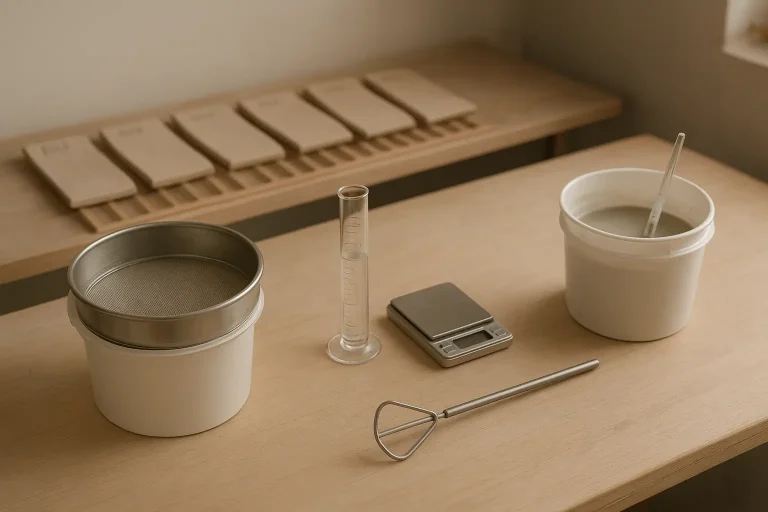
How to Apply Grout Properly: Tips for a Professional Finish

Getting grout right the first time saves you from cracked joints, stained surfaces, and the miserable job of tearing it all out six months later. The difference between grout that lasts decades and grout that fails within a year almost always comes down to preparation and mixing, not the grout product itself.
By the Numbers
Ceramic Tile Grouting: Key Specifications at a Glance
Sources: Tile Council of North America (TCNA) Handbook, ANSI A108.10, manufacturer technical data sheets
What Is Grout and Why Does Proper Application Matter for Ceramic Tile?
Grout is a cement-based, epoxy-based, or polymer-modified filler that seals the joints between ceramic tiles, prevents moisture from reaching the substrate, and locks individual tiles into a unified, load-bearing surface. Applying it incorrectly causes joint cracking, water infiltration, mold growth, and tile loosening, all of which require full removal and reinstallation to fix properly.
The Tile Council of North America (TCNA) Handbook for Ceramic, Glass, and Stone Tile Installation identifies grout joint failure as one of the most common causes of ceramic tile system failures in residential and commercial installations. Most failures trace back to four root causes: incorrect grout type for joint width, improper water-to-powder ratio during mixing, insufficient substrate curing time before grouting, and inadequate surface cleaning after application.
Grout is a type of hydraulic cement material that bonds to the edges of ceramic tiles through mechanical adhesion and chemical hydration. It consists of portland cement, aggregate (sand in sanded grout), pigments, and polymer modifiers depending on the product formulation. Grout works with the tile and setting mortar to achieve a complete installation system rated for the intended use, including wet areas, freeze-thaw cycles, and chemical exposure.
Grout differs from mortar in function: mortar bonds tiles to the substrate, while grout fills the spaces between tiles and provides lateral stability. Grout differs from caulk in rigidity: grout is rigid once cured and is not appropriate for movement joints, corners, or transitions between dissimilar materials, where flexible sanded silicone caulk is the TCNA-specified alternative.
For most home ceramic tile projects, getting grout right means choosing the correct type for your joint width, mixing to a smooth peanut-butter consistency, filling joints completely without voids, cleaning the surface before the haze sets, and allowing the full cure period before exposing the installation to moisture or traffic.
What Are the Different Types of Grout and Which Should You Use?
There are four main grout types used in ceramic tile installations: unsanded (non-sanded) cement grout, sanded cement grout, epoxy grout, and furan resin grout. The joint width and installation environment determine which type is correct. Using sanded grout in a 1/16-inch joint causes cracking because the sand particles are too large to pack properly. Using unsanded grout in a 3/8-inch joint causes shrinkage cracks because there is no aggregate to stabilize the mass.
Use the table below to match your joint width and installation type to the correct grout product before purchasing materials.
Product Comparison
Ceramic Tile Grout Types: Side-by-Side Comparison
Key specifications for selecting the correct grout for your ceramic tile installation. Source: TCNA Handbook, ANSI A118.6, manufacturer data sheets.
| Grout Type | Joint Width | Water Resistance | Stain Resistance | Best Use Case | Approx. Cost |
|---|---|---|---|---|---|
| Unsanded Cement | 1/16″ to 1/8″ | Moderate (seal required) | Low (porous) | Wall tile, polished stone, rectified ceramic | $8-15 per 10 lb bag |
| Sanded Cement | 1/8″ to 1/2″ | Moderate (seal required) | Low (porous) | Floor tile, most ceramic applications, most common | $10-18 per 25 lb bag |
| Epoxy | 1/16″ to 1/2″ | Excellent (no seal needed) | Excellent | Kitchens, showers, commercial floors, chemical exposure | $30-80 per kit |
| Polymer-Modified Cement | 1/16″ to 1/2″ | Good (seal recommended) | Moderate | Wet areas, heated floors, exterior installations | $15-25 per 10 lb bag |
| Furan Resin | 1/8″ to 1/2″ | Excellent | Excellent | Industrial and chemical-resistance applications only | $80-150 per kit |
| Premixed Latex | 1/16″ to 1/8″ | Low | Low | Dry backsplash only, not recommended for floors or wet areas | $10-20 per quart |
Highlighted cell represents the most common scenario for residential ceramic floor tile. Furan resin requires professional installation. TCNA recommends against premixed latex grout for wet areas. Costs verified at time of publication.
Unsanded Grout: When and Why to Use It on Ceramic Tile
Unsanded grout for ceramic tile is a fine-particle portland cement formula with no sand aggregate, designed for joints between 1/16 inch and 1/8 inch wide. It works for narrow joints because the fine texture allows complete joint filling without bridging or voids.
Unsanded grout is required on polished marble, glass tile, and soft-glazed ceramic surfaces where the sand particles in sanded grout would scratch the tile face during application. The fine cement particles flow into narrow joints under float pressure and cure into a dense, crack-resistant surface.
The failure mode for using unsanded grout in joints wider than 1/8 inch is shrinkage cracking. Portland cement shrinks as water evaporates during curing. Without sand aggregate to stabilize the volume, wide joints crack longitudinally within weeks. If you see hairline cracks running along the center of your grout joints, the likely cause is using unsanded grout in an oversized joint.
Sanded Grout: The Standard Choice for Most Ceramic Tile Floors
Sanded cement grout contains fine silica sand aggregate mixed into a portland cement base, designed for joints from 1/8 inch to 1/2 inch wide. The sand particles interlock during curing, reducing shrinkage and producing a joint strong enough to handle foot traffic and thermal cycling.
Sanded grout is the correct choice for most ceramic floor tile installations, most wall tile with standard 3/16-inch spacer joints, and all exterior ceramic applications. The sand aggregate stabilizes the cured joint against the compressive loads and temperature swings that crack unsanded joints in wider widths.
Do not use sanded grout on polished stone, unglazed soft ceramic, or glass tile. The quartz sand particles are harder than many glazed surfaces and will scratch them irreversibly during the floating process. Test a scrap tile by rubbing dry sanded grout across the face before committing to the full installation.
Epoxy Grout: Superior Performance for Kitchens, Showers, and Commercial Floors
Epoxy grout is a two-component system combining an epoxy resin with a hardener and aggregate filler, producing a chemically cured joint with near-zero porosity and high resistance to staining, acids, and biological growth. It does not require sealing and maintains color consistency far better than cement grout over years of use.
Epoxy grout is harder to apply than cement grout because the working time is shorter (typically 30-45 minutes at 70°F), the material is stickier, and residue must be cleaned before it begins to cure. After curing, epoxy grout residue bonds permanently to the tile surface and cannot be removed without abrasives.
The mechanism that makes epoxy grout stain-proof is chemical cross-linking. When the resin and hardener combine, they form a polymer network with pore sizes too small for food pigments, oils, or biological material to penetrate. This only occurs when the correct mixing ratio is followed exactly. Off-ratio mixing produces a soft, under-cured joint that stains as readily as cement grout but cannot be sealed after the fact.
For most home tile projects, choose sanded or unsanded cement grout sealed after installation. Reserve epoxy grout for kitchen backsplashes, shower floors, and any installation that will see cooking oils, dye compounds, or heavy foot traffic where permanent stain resistance justifies the harder application process.
How to Prepare the Tile Surface Before You Begin Grouting
Surface preparation before grouting determines whether the grout bonds fully, cures uniformly, and releases cleanly after application. Skipping or rushing preparation causes incomplete joint filling, grout adhesion to tile faces, and haze that cannot be removed without acid washing. Allow the tile-setting mortar to cure for a minimum of 24 hours before grouting, and 48 hours for large-format ceramic tiles (12 inches x 12 inches or larger).
According to the TCNA Handbook, setting mortar must reach sufficient rigidity to prevent tile movement during the grouting process. Grouting over uncured mortar causes tile displacement as the rubber float applies lateral pressure across the surface. Any tile that moves during grouting will have compromised joint geometry that traps voids and allows water infiltration.
Remove All Tile Spacers and Joint Debris
Pull out every tile spacer from the joints before grouting. Spacers left in place block complete joint filling and create voids in the grout line that hold water and crack the grout under thermal cycling.
Use a utility knife or a grout saw to remove any dried mortar squeeze-up from the joints. The joint must be clean to a minimum depth equal to two-thirds of the tile thickness for proper grout bonding, per ANSI A108.10. Shallow grout application over mortar remnants produces weak, thin joints that crack or pop out under normal use.
Clean the Tile Face and Check for Loose Tiles
Sweep or vacuum all dust, grit, and debris from the tile surface. Dust on the tile face acts as a release agent that prevents grout residue from bonding to the tile, which sounds helpful but actually interferes with proper grout seating in the joints and produces a contaminated grout surface.
Press on every tile to confirm there is no hollow-sounding flex under the surface. A hollow tile has inadequate mortar coverage and will crack under the float pressure of grouting. Mark any hollow tile with painter’s tape and relay it before proceeding. Attempting to grout over a poorly bonded tile locks the defect in place permanently.
Pre-Dampen the Joints for Cement Grout Applications
Lightly mist the tile surface and open joints with clean water using a fine-mist spray bottle before applying cement grout. This step prevents the porous tile edges and mortar substrate from drawing water out of the grout mix too rapidly, which causes premature stiffening and incomplete hydration of the cement.
The surface should be damp, not wet. Standing water in the joints dilutes the grout mix as you apply it, reducing cement-to-water ratio and producing a weaker cured joint. Wipe any pooled water with a dry cloth before spreading grout. Skip this pre-dampening step entirely for epoxy grout, where water contamination disrupts the chemical cure.
Proper surface preparation is the foundation for every other step in the grouting process, and no amount of technique during application recovers from joints that were not cleaned or tiles that were not fully cured before you started.
How to Mix Grout to the Right Consistency: The Step That Most People Get Wrong
Grout mixed too wet produces a porous, weak joint that cracks and stains. Grout mixed too dry tears out of the joints during floating and leaves voids. The correct consistency for sanded or unsanded cement grout is a smooth, lump-free paste that holds its shape like stiff peanut butter and slumps slightly when tapped. Achieving this consistently requires measuring water by weight, not by eye.
According to manufacturer technical data sheets for products including Custom Building Products Prism grout and Laticrete PermaColor, the water-to-powder ratio for sanded cement grout ranges from 0.22 to 0.28 quarts of water per pound of dry grout powder, depending on the colorant loading and aggregate size. Always follow the specific ratio on your product’s data sheet rather than a generic guideline.
Step-by-Step Grout Mixing Instructions
The following widget walks through the complete grout application process from mixing to final cure. Each step includes the timing, consistency check, and failure mode for that stage.
Step-by-Step Guide
How to Mix and Apply Grout to Ceramic Tile: Step by Step
7 steps. Estimated total working time: 2-4 hours depending on tile area. Allow 72 hours curing before water exposure.
Measure water first, then add dry grout powder
Pour the measured water (per the product data sheet) into a clean grout mixing bucket. Add the dry powder to the water, not water to powder. Adding water to dry powder traps unmixed dry material at the bottom.
Mix for 3-5 minutes to a smooth, lump-free paste
Use a mixing paddle attached to a drill at low speed (under 300 RPM) or mix by hand with a margin trowel. High-speed mixing introduces air bubbles that weaken the cured joint structure.
Slake the mix for 10 minutes before final stir
Let the mixed grout rest undisturbed for 10 minutes. This slaking period allows the cement particles to fully hydrate and the pigments to disperse evenly. Skipping slaking produces color variation across the finished installation.
Stir once more and check consistency
After slaking, stir again for 1-2 minutes. The finished mix should hold its shape when scooped onto a float, slump slightly under its own weight, and not stick aggressively to the back of your hand. If it sticks and strings, it is too wet. If it crumbles, add 1 tablespoon of water at a time.
Apply grout diagonally across tile joints with a rubber float
Scoop the grout onto the tile surface and spread it at a 45-degree angle to the joints using a rubber grout float held at 45 degrees. The diagonal angle packs grout into the joints rather than dragging it out.
Remove excess grout by holding the float at 90 degrees
After filling the joints in a 3-4 square foot section, hold the float nearly perpendicular to the surface and skim off excess grout in a single pass. This leaves joints full while removing the bulk of surface material before it begins to set.
Clean the surface before haze sets (within 20-30 minutes)
Wipe the surface diagonally with a damp tile grout sponge wrung until almost dry. Multiple light passes remove haze without pulling grout from the joints. Do not flood the surface with water at this stage.
The single most important variable in mixing is the water ratio. Adding extra water to make the mix easier to spread seems logical in the moment but produces a joint with higher porosity, lower compressive strength, and significantly more staining vulnerability once cured.
How to Apply Grout Using a Float: Technique for Full Joint Coverage
The rubber float is the primary tool for packing grout into ceramic tile joints, and the angle at which you hold it determines whether you fill the joints or dig them out. Hold the float at 45 degrees to the tile surface during the spreading and packing pass to force grout into the joint space. Switch to holding the float at 80-90 degrees (nearly upright) for the skim pass to remove excess from the tile face without disturbing the filled joints.
Work in sections of 3-4 square feet at a time for sanded cement grout, and 2-3 square feet for epoxy grout due to its shorter working time. Attempting to cover too large an area before cleaning allows the haze to set beyond the point where a damp sponge removes it without chemical intervention.
The Diagonal Float Technique: Why Angle Matters for Ceramic Tile
Floating parallel to a joint line pulls grout out of the joint instead of packing it in. The rubber edge of the float acts like a scraper when aligned with the joint, dragging material out rather than pressing it down. Moving at 45 degrees means the float crosses multiple joints simultaneously, distributing pressure evenly and leaving each joint fully packed.
Apply firm, consistent downward pressure during the 45-degree spreading pass. Light pressure leaves the center of the joint unfilled, producing a hollow joint that sounds dull when tapped and cracks under foot traffic loads. You should feel slight resistance as the float presses grout into the joint space.
Checking Joint Depth: How to Confirm Full Grout Coverage
Immediately after floating a section, drag a pointed grout tool or a sharpened pencil lightly along one joint to check fill depth. A properly filled joint shows grout flush with or slightly below the tile surface, with no visible voids or air pockets.
If the tool drops into a void or you see a gap, apply more grout to that section immediately before it begins to set. Voids that cure in place collect water, harbor mold, and eventually cause the grout to fracture from the edges inward. The TCNA standard for an acceptable grout joint requires 100 percent contact between the grout and both tile edges for the full depth of the joint.
Grout Application for Wall Tile vs Floor Tile: Key Differences
Wall tile grouting requires a stiffer mix consistency than floor tile grouting because gravity pulls wet grout downward out of vertical joints. If your wall grout slumps out of the joints immediately after floating, the mix is too wet. Add dry powder in small increments to stiffen the batch.
Floor tile grouting allows a slightly more fluid consistency because horizontal joints hold the material in place during packing. However, a mix that is too wet on a floor produces the same weak, porous joint as on a wall. The peanut-butter consistency guideline applies to both orientations. The primary technique difference is that floor grouting allows more working time because evaporation from horizontal surfaces is slower than from vertical ones at room temperature.
Consistent float angle, firm pressure, and working in manageable sections are the three mechanics that separate a professional-looking grout application from one that shows voids, high spots, and uneven joint depth.
How to Clean Grout Haze from Ceramic Tile Before It Hardens
Grout haze is the thin film of cement residue left on the tile face after floating, and it must be removed while still in the fresh state. Once cement grout haze cures for more than 24 hours, it bonds chemically to the tile glaze and requires acid washing to remove. The window for sponge cleaning ranges from 20-30 minutes after application for fast-setting grouts at 70°F, to 30-45 minutes for standard-set formulas.
The sponge cleaning technique is as important as the timing. Using too much water during cleaning is the most common mistake at this stage. Excess water dilutes the surface layer of the grout joint, washing out cement and pigment and leaving a weak, discolored joint surface. The sponge should be wrung to the point where pressing it firmly produces no dripping water before it touches the tile.
The Correct Sponge Technique for Grout Haze Removal
Work diagonally across the tile joints with each sponge stroke, using the same 45-degree angle as the float application. Wiping parallel to the joint line pulls grout out of freshly filled joints. Multiple light diagonal passes remove haze gradually without disturbing joint integrity.
Rinse the sponge in clean water after every 2-3 passes and wring it thoroughly before returning to the tile. A sponge loaded with grout slurry redistributes material across the tile rather than removing it. Using two large grout sponges in rotation, one cleaning and one rinsing, keeps the working sponge consistently clean and dry enough to remove haze without adding water.
Removing Dried Grout Haze: What to Do When You Miss the Window
If cement grout haze has set beyond the sponge-clean window (more than 24 hours), use a sulfamic acid grout haze remover diluted according to the label instructions. Sulfamic acid reacts with the calcium carbonate in cured cement to dissolve the surface bond without the aggressive attack of muriatic (hydrochloric) acid.
Apply the diluted solution to the hazes area, allow 5-10 minutes of dwell time, then scrub with a non-scratch nylon scrub pad and rinse thoroughly with clean water. Do not use acid-based haze removers on marble, travertine, or any calcium-based stone. The acid dissolves the stone surface at the same rate it removes the cement haze. For natural stone, use an alkaline grout haze remover formulated specifically for stone installations.
For epoxy grout haze, the timing is more critical: epoxy residue that cures fully bonds permanently to the tile and cannot be removed with acid. Most epoxy grout manufacturers recommend using their proprietary haze remover within 24 hours of application, before the epoxy polymer cross-links completely. Products such as Laticrete Epoxy Grout Haze Remover are formulated for this specific purpose and are not interchangeable with cement haze removers.
Removing haze while it is still fresh costs 10-15 minutes of careful sponge work. Removing cured haze costs hours of chemical cleaning and risks damaging the tile glaze on softer ceramic surfaces. Timing is the variable entirely within your control during the grouting process.
How Long Does Grout Take to Cure and When Is It Safe to Use?
Portland cement grout reaches initial set (hard to the touch, resistant to finger pressure) within 24 hours at 70°F and 50 percent relative humidity. It reaches full structural cure at 28 days, which is the point at which it achieves its rated compressive strength of approximately 3,000-4,000 PSI for standard sanded grout per ANSI A118.6. For practical purposes, foot traffic is safe after 24-48 hours, light water exposure is safe after 72 hours, and full immersion (shower use) should wait 7 days minimum.
Temperature and humidity directly affect cure rate. Grout applied in cold conditions (below 50°F) cures more slowly because the cement hydration reaction slows significantly at low temperatures. Grout applied in very dry conditions (below 30 percent relative humidity) can cure too rapidly, losing water to evaporation before full hydration completes. In both cases, the result is a weaker, more porous joint than the product data sheet specifications reflect.
Curing Conditions for Best Results
Apply cement grout when the ambient temperature is between 50°F and 90°F and relative humidity is above 40 percent. Avoid grouting in direct sunlight or in front of space heaters, as localized heat causes the surface of the joint to dry faster than the interior, producing surface cracking and poor color uniformity.
Mist the finished grout surface lightly with clean water after 24 hours and again at 48 hours to promote continued hydration, particularly in dry climates or air-conditioned interiors. This damp curing technique is standard practice in commercial ceramic tile installation and produces measurably denser, more durable joints than installations left to cure without moisture supplementation.
Sealing Cement Grout After Curing
Apply penetrating grout sealer after the grout has cured for a minimum of 72 hours, and ideally after the full 28-day cure for maximum penetration. Sealing before full cure traps residual moisture inside the joint, which can cause efflorescence (white salt deposits) and inhibit proper pigment development.
Penetrating sealers work by filling the microscopic pores in the cement matrix with a silicone or fluoropolymer compound that repels water and oil without forming a surface film. This is why high-quality penetrating sealers do not change the appearance of the grout, while surface-coating sealers produce a sheen that wears unevenly and must be stripped before reapplication. For residential ceramic tile, a penetrating sealer applied annually in high-use areas such as kitchen floors and shower walls provides practical stain resistance throughout the life of the installation.
Epoxy and furan grout do not require sealing at any point. Their near-zero porosity is a product of the chemical cure, not a topical treatment. Applying grout sealer to epoxy grout is not harmful but also not effective, as there are no pores for the sealer to penetrate.
Understanding the cure timeline prevents the most common post-installation failures: premature water exposure that softens the joint surface, early sealing that traps moisture, and foot traffic that dislodges grout before it has bonded to the tile edges.
Before / After Results
What Changes When You Apply Grout Correctly
Common problems from incorrect technique vs results from following proper procedure
Incorrect Application
- xHollow, voids in joints that crack and pop out under foot traffic
- xGrout haze permanently bonded to tile face after curing
- xUneven color from over-watered mix or missed slaking step
- xPremature joint failure from water exposure before 72 hours
- xStaining within weeks on unsealed porous cement joints
Correct Application
- +Fully packed joints flush with tile surface, no voids at depth
- +Clean tile face after sponge work, no acid treatment needed
- +Consistent color across the entire installation after curing
- +3,000-4,000 PSI compressive strength reached at 28-day full cure
- +Sealed joint resists oil and moisture staining for years
Correct mixing ratio, float technique, sponge timing, and cure conditions together determine whether the installation lasts decades or fails within months.
Common Grouting Mistakes and How to Fix Them
The most costly grouting errors are not technique failures during application. They are preparation failures made before the first scoop of grout leaves the bucket. Identifying the mistake category determines whether a fix is possible without full removal or whether the installation needs to come out.
Mistake 1: Using the Wrong Grout Type for Your Joint Width
Using unsanded grout in a 3/16-inch joint produces longitudinal cracking within weeks as the cement shrinks during curing. The fix for an already-installed incorrect grout type is full removal using a grout removal oscillating tool blade and reinstallation with the correct product. There is no chemical treatment or topical repair that compensates for using the wrong grout formula for the joint width.
Prevention is straightforward: measure joint width with a digital caliper or tile feeler gauge before purchasing grout. Anything below 1/8 inch requires unsanded grout. Anything from 1/8 inch to 1/2 inch requires sanded grout. When in doubt between the two, choose sanded.
Mistake 2: Adding Water to Stiff Grout Instead of Starting a Fresh Batch
Grout that has stiffened in the bucket because you waited too long cannot be revived by adding water. Adding water to partially set grout changes the water-to-cement ratio beyond the designed range, producing a weak, porous joint with poor color consistency. The batch must be discarded and a fresh mix prepared.
The working time for most standard sanded cement grout mixes is 15-20 minutes at 70°F. Work in small batches that you can apply, skim, and clean within that window. In warm weather (above 80°F), reduce batch size further and keep the bucket out of direct sunlight to slow the setting reaction.
Mistake 3: Floating Parallel to the Joint Lines
Floating parallel to joint lines pulls grout out of the joint rather than packing it in, leaving hollow joints that look filled on the surface but have voids at depth. The 45-degree diagonal float technique is not optional. It is the mechanical requirement for full joint fill depth.
If you realize you have been floating parallel and some joints are hollow, apply additional grout immediately and float at the correct angle. Once the grout has begun to set (more than 15-20 minutes after application), hollow joints must be allowed to cure fully before the grout is removed with an oscillating tool and the joints are regrouted. Attempting to force additional grout into a partially set joint breaks the bond of the material already in place.
Mistake 4: Grouting Over Movement Joints at Corners and Transitions
Movement joints at corners, along walls, and at transitions between ceramic tile and other flooring materials must be filled with flexible sealant, not grout. Portland cement grout is rigid and cannot accommodate the normal building movement that occurs at these locations. Grout in a movement joint cracks within the first seasonal temperature cycle.
The TCNA Handbook EJ171 specification requires flexible sealant matching the grout color at all changes of plane, changes in substrate material, at tile perimeters, and at intervals not exceeding 20 to 25 feet on large floor installations. Use a grout-color-matched sanded caulk in a matching color at all these locations to maintain visual consistency while allowing for movement.
Mistake 5: Sealing Grout Before Full Cure
Applying sealer to grout that has not fully cured traps residual moisture inside the joint matrix. The trapped moisture cannot escape through the sealed surface, resulting in efflorescence (white calcium salt deposits bleeding through the joint), discoloration, and in some cases, physical disruption of the joint as the trapped moisture expands and contracts through seasonal cycles.
The minimum wait time before sealing is 72 hours for standard cement grout in normal conditions. Waiting the full 28-day cure period produces the best sealer penetration and performance. Mark the installation date with painter’s tape on the baseboard and do not apply sealer until the waiting period is complete. If you notice efflorescence on grout that has already been sealed prematurely, the sealer must be stripped, the grout allowed to breathe and dry fully for several weeks, and then the sealer reapplied.
Most grouting errors are easier to prevent with correct technique than to repair after curing, and understanding why each mistake happens at the material level makes it far less likely you will repeat it on the next installation.
Quick Reference: Grout Application Terminology for Ceramic Tile
Technique Guide
Ceramic Tile Grouting: Key Terms Defined
Plain-language definitions of technical terms used throughout this guide
How to Grout Shower Walls and Wet Areas: Additional Considerations
Shower and wet-area grouting follows the same fundamental technique as dry-area ceramic tile, but requires stricter attention to grout type selection, waterproof backing compatibility, movement joint placement, and cure time before water exposure. According to the TCNA Handbook W244 and W245 wet area specifications, all shower grout joints must be filled completely to prevent water infiltration behind the tile into the substrate, which is the primary cause of shower tile failure and wall structural damage.
Use polymer-modified cement grout or epoxy grout in all shower applications. Standard, unmodified portland cement grout in wet areas is porous enough to allow capillary water movement through the joint to the substrate over time, even when sealed. Polymer-modified products reduce this porosity significantly. For maximum long-term performance in showers, a two-part epoxy grout such as Laticrete SpectraLOCK epoxy grout eliminates water infiltration entirely and never requires sealing.
Movement Joint Placement in Shower Installations
Every inside corner in a shower must be a movement joint filled with silicone sealant, not grout. The three planes of a shower (floor, two walls, ceiling) each move independently as the structure responds to temperature changes, humidity cycles, and building settlement. Grout at an inside corner between two independent movement planes cracks within the first year under normal conditions.
Caulk the floor-to-wall transition, all inside corners between walls, and the joint around any penetrations (faucet bodies, shower heads, shelf brackets) with a color-matched 100 percent silicone shower caulk. Most grout manufacturers offer matching caulk colors so the transitions are visually seamless. The full guide to grouting shower tile step by step, including substrate requirements and waterproofing specifications, is covered in detail in our complete step-by-step grouting guide for ceramic tile installations.
How Long to Wait Before Using a Tiled Shower
Do not use a tiled shower for a minimum of 72 hours after grouting with polymer-modified cement grout. Wait 7 full days before running the shower continuously or using high-pressure spray directed at the grout joints. Early water exposure before the joint has reached sufficient strength washes cement out of the surface layer, producing soft, discolored joints that crumble within months.
For epoxy grout in showers, the cure timeline is different: epoxy grout reaches handling strength in 24 hours and can be exposed to water after 48 hours. Full chemical cure takes 7 days at 70°F, after which the joint is impervious to water, cleaning chemicals, and biological growth at the surface.
How to Fix Existing Grout Problems Without Full Removal
Not every grout problem requires tearing out the entire installation. Narrow cracks, surface staining, discoloration, and minor joint depth loss can sometimes be addressed without full regrout, depending on the cause and extent of the damage. Understanding which failure mode you are dealing with determines whether a targeted repair or full removal is the appropriate solution.
Surface staining that has not penetrated the full joint depth responds well to oxygenated grout cleaner applied with a stiff-bristle grout cleaning brush. Allow 10-15 minutes of dwell time before scrubbing. Rinse thoroughly and allow to dry completely before evaluating whether sealer application will prevent recurrence.
When to Regrout vs When to Do a Full Replacement
Regrouting (removing existing grout and installing new material) is appropriate when joints are visually intact but discolored, when surface cracks are less than 1/4 of the joint depth, or when previous grout was sealed prematurely and has efflorescence that cleaning alone cannot resolve. Our detailed guide to when and how to regrout ceramic tile correctly covers the complete removal and reinstallation process, including tool selection and grout type matching.
Full tile removal is necessary when the grout joint failure is caused by a substrate problem (deflection, delamination, water damage) rather than a surface application error. Regrouting over a failed substrate produces the same failure within months. Press firmly on tiles adjacent to failed joints. If the tile flexes, deflects, or sounds hollow, the substrate is the issue and regrouting alone will not solve it.
Repairing Cracks in Ceramic Tile Grout Joints
Cracks that extend through the full depth of the joint are structural failures that require grout removal and replacement, not surface patching. Applying new grout on top of a cracked joint fills the visual crack but does not bond to the old material at the crack face. The repair separates within weeks under normal thermal cycling.
Remove cracked grout using an oscillating tool with a grout removal blade to a depth equal to at least two-thirds of the tile thickness, typically 3/16 to 1/4 inch. Clean the joint of all loose material, apply fresh grout at the correct water ratio, and allow the full 72-hour cure before water exposure. If you see crack patterns that correlate with building structure (running through multiple joints in a line, appearing after seasonal temperature changes), the cracking may indicate substrate movement rather than a grout application problem. Our article on why ceramic tile grout cracks and how to diagnose the root cause covers substrate failure patterns in detail.
Targeted repairs that address the actual failure mechanism produce lasting results. Cosmetic repairs that ignore the cause simply delay the same failure by another season.
Grout Coverage Rates and How Much to Buy for Your Tile Project
Buying too little grout for a project means stopping mid-installation, risking a color match difference between batches from the same manufacturer. Buying too much wastes money. The formula for estimating grout coverage uses tile size, joint width, joint depth, and tile thickness to calculate the weight of grout required per square foot.
The standard industry formula for estimating grout quantity is: pounds of grout per square foot = (joint width + tile thickness) divided by joint width, multiplied by a factor based on joint depth. For most residential ceramic tile projects, the following table provides pre-calculated estimates.
Cost Reference
Grout Coverage by Tile Size and Joint Width
Pre-calculated coverage estimates. Find your tile size row and joint width column to determine approximate pounds needed per 100 sq ft. Source: Tile Council of North America coverage estimation method.
| Tile Size / Joint Width | 1/16″ Joint | 1/8″ Joint | 3/16″ Joint | 1/4″ Joint |
|---|---|---|---|---|
| 4″ x 4″ tile | 6 lbs unsanded only |
11 lbs sanded |
17 lbs sanded |
22 lbs sanded |
| 6″ x 6″ tile | 4 lbs unsanded only |
7 lbs most common |
11 lbs sanded |
15 lbs sanded |
| 12″ x 12″ tile | 2 lbs unsanded only |
4 lbs sanded |
6 lbs sanded |
8 lbs sanded |
| 18″ x 18″ tile | 1.5 lbs unsanded only |
3 lbs sanded |
4.5 lbs sanded |
6 lbs sanded |
All values are pounds of dry grout per 100 square feet of tile surface. Based on TCNA coverage estimation formula using 3/8-inch tile thickness and full-depth joint fill. Add 10 percent for waste and color batch consistency. Highlighted cell represents most common residential ceramic floor tile scenario. Actual usage varies with tile absorption rate and texture.
Always add 10 percent to your calculated quantity. Buying a second bag from a different production batch creates a risk of color variation, even within the same manufacturer product and color number. The pigment loading in cement grout is batch-sensitive, and a visible color difference between sections is very difficult to correct after curing.
Tools You Need for a Professional Grout Application
Using the right tools for each stage of the grouting process reduces errors, saves time, and produces a cleaner finished result than improvising with off-list substitutes. The total tool investment for a residential ceramic tile grouting project is typically $40-80 for a complete set of quality tools that will serve multiple installations.
Key Specifications for a Complete Ceramic Tile Grouting Tool Kit:
- Rubber grout float: 4-inch x 9-inch pad size, 80-shore-hardness rubber face for standard ceramic tile (softer rubber is for mosaic and glass tile)
- Grout sponge: Commercial-grade, minimum 7-inch x 5-inch, rounded corners to prevent scratching tile edges during cleanup
- Mixing bucket: 3-5 gallon capacity with measurement markings, dedicated to grout mixing (cement residue from previous batches contaminates new mixes)
- Margin trowel or mixing paddle: For hand mixing or low-speed drill attachment at under 300 RPM
- Grout removal tool: Oscillating multitool with carbide grout removal blade for repairs and rework
- Caulk gun: For applying sanded silicone caulk at all movement joints and corners
A quality rubber grout float with an 80-shore hardness rubber face is the single most important tool in this list. A float with a face that is too soft deforms under pressure and fails to pack grout into the joint effectively. A face that is too hard scratches soft-glazed ceramic tile during the skim pass.
For grout cleaning, a two-bucket grouting system with one bucket for rinsing and one for wringing produces cleaner results than a single bucket, because it keeps the rinse water free of the grout slurry that builds up rapidly in a single-bucket system. The quality of your sponge rinse water directly determines how cleanly the tile face comes out after grouting.
How Does Grouting Ceramic Tile Differ from Grouting Other Tile Materials?
Ceramic tile is one of the most forgiving surfaces to grout because its factory glaze is hard (6-7 Mohs), chemically inert, and resistant to the cement pH and abrasion of the sanded float. Other tile materials require modified approaches that differ in grout type, float type, and cleaning method.
Use the table below to match your tile material to the correct grout selection, float type, and special handling requirements before starting the application.
Product Comparison
Grouting Technique by Tile Material Type
Grout type, float selection, and special handling requirements for each tile surface. Source: TCNA Handbook, ANSI A108.10.
| Tile Material | Grout Type | Float Type | Scratch Risk | Sealer Required | Special Notes |
|---|---|---|---|---|---|
| Glazed Ceramic | Sanded or unsanded per joint width | Standard rubber (80 shore) | Low | Yes (grout joints only) | Most forgiving surface for DIY grouting |
| Porcelain | Sanded or unsanded per joint width | Standard rubber (80 shore) | Low | Yes (grout joints only) | Pre-seal unglazed porcelain tile face before grouting |
| Natural Stone | Unsanded only (most types) | Soft rubber or foam (60 shore) | High | Yes (tile and joints) | No acid cleaners on marble or limestone |
| Glass Tile | Unsanded only | Soft rubber or foam (60 shore) | Very High | No (non-porous) | Sanded grout scratches glass permanently |
| Unglazed Ceramic | Sanded per joint width | Standard rubber (80 shore) | Low | Yes (tile face and joints) | Seal tile face before grouting to prevent pigment staining |
| Mosaic (any material) | Unsanded only | Foam grout float | Moderate | Depends on material | Use mesh backing side up; remove mesh before cleaning haze |
Shore hardness values refer to Type A durometer. Softer floats (60 shore) cause less scratching but pack joints less effectively; use firm but gentle pressure. All stone and unglazed tile must be sealed before grouting to prevent grout pigment absorption into the tile face.
For ceramic tile specifically, the factory glaze is hard enough to resist sanded float contact without scratching, which is why standard glazed ceramic is the most forgiving material for first-time grout application. The technique differences between ceramic and other tile types matter most in the cleaning stage: the timing and pressure that clears haze cleanly off glazed ceramic will scratch polished marble and glass if applied with the same force.
How to Achieve Even Grout Color Across the Entire Tile Installation
Color inconsistency in cured grout almost always traces back to one of three causes: variable water ratio between sections, insufficient slaking time, or inconsistent sponge water quantity during cleanup. Addressing all three produces uniform color from the first tile to the last.
Mix each batch using a kitchen scale to measure water by weight, not by volume estimate. A variation of 2 tablespoons of water in a 10-pound batch of cement grout changes the water-to-cement ratio enough to produce a visible color difference after curing. Consistent weight measurement eliminates this variable entirely.
Why Grout Color Looks Different Wet vs Dry
Freshly applied grout appears darker and more saturated than the cured color because the water in the mix reflects light differently than the dry cement surface. The dry color is the correct reference, but it takes 24-72 hours to stabilize as moisture evaporates uniformly. Do not evaluate color consistency until the installation has been dry for at least 24 hours.
Grout color also appears lighter after applying penetrating sealer, because the sealer fills surface pores that previously absorbed light. This shift is minor (typically 5-10 percent lighter in appearance) and is expected behavior, not a product defect. Epoxy grout color is more stable across the wet-to-dry transition because the polymer matrix cures with minimal shrinkage and low porosity compared to cement-based products.
Using Grout Colorant to Refresh Existing Discolored Grout
For existing installations where the grout is structurally sound but visually discolored, grout colorant and sealer products allow color restoration without removal. Clean the existing joints thoroughly, allow to dry completely for 24-48 hours, and apply the colorant with a small brush into each joint. The colorant penetrates the porous surface and bonds with the cement, restoring a uniform appearance while simultaneously sealing the joint.
Grout colorant is not appropriate for structurally compromised joints, joints with active efflorescence, or joints that are cracking or crumbling. In these cases, regrouting the affected sections with correct technique is the only lasting solution. Colorant on compromised joints masks the damage temporarily and delays proper repair.
Achieving consistent color requires consistent process: the same water ratio, the same mixing time, the same slaking period, and the same sponge moisture level at every section of the installation, from the first square foot to the last.
Is It Safe to Grout Yourself? Studio Safety and Material Handling for Ceramic Tile Work
Portland cement grout has a pH of approximately 12-13 during mixing and curing, which is strongly alkaline. Prolonged skin contact with fresh cement grout causes chemical burns that develop slowly and may not be painful until significant damage has occurred. This condition, called cement dermatitis or concrete burns, is an occupational hazard for tile workers and is entirely preventable with correct protective equipment.
Wear long-cuff nitrile gloves during all grouting work. Standard latex examination gloves are too thin for prolonged cement contact and degrade within 30-60 minutes. Nitrile gloves rated for alkaline chemical contact provide reliable protection for a full grouting session.
Silica Dust Hazard During Dry Grout Mixing
Dry sanded cement grout contains respirable crystalline silica, a carcinogenic particle that causes silicosis (irreversible lung scarring) after repeated inhalation exposure. The hazard is highest during dry mixing and when cutting or grinding cured grout for removal. According to OSHA Permissible Exposure Limit standards, airborne respirable crystalline silica must not exceed 50 micrograms per cubic meter of air (50 µg/m3) as an 8-hour time-weighted average.
Wear an NIOSH-approved N95 respirator during all dry grout mixing and during grout removal with power tools. A dust mask is not a respirator and does not filter silica particles at the respirable size. For a single residential project, the silica exposure from one grouting session is low. The risk accumulates with repeated exposure over multiple projects or in professional contexts.
Ventilation Requirements When Working with Epoxy Grout
Epoxy grout resin and hardener components contain volatile organic compounds (VOCs) that require adequate ventilation during mixing and application. Work in rooms with open windows and cross-ventilation, or use a portable fan to draw fumes out through an open window. Do not apply epoxy grout in enclosed spaces without ventilation.
For large epoxy grout projects (more than 100 square feet), a half-face respirator with organic vapor cartridges provides appropriate protection for extended exposure. Skin and eye contact with epoxy resin before curing causes sensitization reactions that can produce allergic responses to epoxy compounds in future exposures. Chemical-splash safety glasses and long-cuff gloves are required for all epoxy grout work.
The safety requirements for grouting are straightforward and the risks are well understood. Correct protective equipment makes grouting a safe DIY task for any competent home improvement practitioner.
Is Grout Color Important and How Do You Choose the Right One?
Grout color changes the visual weight, perceived scale, and maintenance burden of a ceramic tile installation more than most homeowners expect before seeing a test section. The three main color strategies each serve a different design and maintenance objective, and the choice has practical consequences beyond aesthetics.
Contrasting grout (significantly lighter or darker than the tile) emphasizes the grid pattern of the installation, makes individual tile sizes more visible, and hides staining better in dark colorways. Matching grout (closely matching the tile color) minimizes visible joints, makes the surface read as more unified, and reduces the visual impact of any minor joint irregularities. Neutral mid-tone grout (gray, beige, or greige in mid-value) is the most forgiving choice for maintenance because it does not show light staining as visibly as white grout or show efflorescence as visibly as dark grout.
White grout in high-use areas such as kitchen floors and shower floors discolors rapidly without regular cleaning and annual sealing. This is not a product failure. It is the predictable consequence of a porous light-colored surface in a high-traffic environment. If you prefer white grout in these locations, epoxy grout is the only product that maintains white color reliably without intensive maintenance because its sealed surface does not absorb staining compounds.
For most residential ceramic tile, a mid-tone gray grout in the 25-50 percent value range offers the best balance between design flexibility, color consistency over time, and maintenance tolerance. It works with warm and cool tile colors, does not highlight efflorescence, and does not require the frequent cleaning that white grout demands in functional spaces.
Can You Apply Grout in Cold or Hot Weather?
Temperature at the time of grouting directly affects pot life, working time, and final joint strength. Portland cement grout cures through a hydration reaction where water molecules bond with cement particles. This reaction slows dramatically at low temperatures and accelerates at high temperatures, changing your working window by as much as 50 percent from the data sheet specification (which is based on 70°F).
In cold conditions (50-60°F), working time extends to 25-30 minutes because the hydration reaction slows. This feels helpful but means the grout remains vulnerable to disturbance by foot traffic or water contact for longer. Do not heat the room with a space heater pointed at the tile surface, as localized heat causes the surface of the joint to skin over while the interior remains soft, producing surface cracking and color banding.
In hot conditions (above 85°F), working time shortens to 10-12 minutes for most standard sanded grouts. Mix smaller batches and keep the bucket shaded. Add ice water (not cold water alone) to the mix water before mixing in hot conditions to extend pot life without changing the water-to-powder ratio. Never grout tile that has been sitting in direct sunlight and is hot to the touch. The surface temperature of the tile draws heat into the grout mix and accelerates setting from the joint bottom up, preventing uniform curing.
Never grout when temperatures are expected to fall below 40°F within 24 hours of application. Cement that freezes before it reaches initial set is permanently damaged. The hydration reaction stops, the joint never gains strength, and the freeze-thaw cycle fractures the partially formed cement crystal structure. In these conditions, delay the project or heat the space to a stable 50°F minimum for 72 hours after grouting.
What Is Grout Joint Width and How Does It Affect the Final Look?
Joint width is the gap between tiles, set by spacers during the tile-setting process. It ranges from 1/16 inch (near-seamless appearance on rectified tile) to 1/2 inch (traditional, wide-joint appearance on handmade or rustic tile). Joint width is a fixed parameter set during tile installation, not during grouting. By the time grouting begins, the joint width cannot be changed without resetting tiles.
Rectified ceramic tile (precision-cut to uniform dimensions) allows joints as narrow as 1/16 inch to 1/8 inch, which is only possible with unsanded grout. Traditional non-rectified ceramic tile has slight size variation between pieces (typically plus or minus 1/32 inch to 1/16 inch) and requires wider joints of 3/16 inch to 1/4 inch to absorb these dimensional differences without producing a wavy, uneven appearance. Using narrow joints on non-rectified tile forces you to fight the dimensional variation with every piece and produces a visually irregular result regardless of how carefully the spacers are placed.
Wider joints make installation easier and more forgiving of minor tile size variation, but they also mean more grout surface area to clean and seal. Narrower joints produce a more seamless appearance but require more precise tile layout and are unforgiving of any lippage (height difference between adjacent tiles) that makes the joints appear uneven.
Frequently Asked Questions About Grout Application for Ceramic Tile
Can you apply new grout over old grout without removing it first?
You can apply new grout over old grout only if the old grout is removed to a depth of at least 2/3 of the tile thickness using a grout saw or oscillating tool. Simply spreading new grout on top of existing grout does not create a bond. New cement grout will not chemically adhere to cured, dried cement grout, and the thin new layer will pop out within weeks under normal use.
The minimum removal depth for a successful regrout is approximately 3/16 inch for most standard ceramic tile installations. This exposes the cement mortar bed and tile edges, providing the mechanical bonding surface that the new grout needs to lock in place. For a full guide on evaluating whether regrout or full replacement is the right solution for your specific situation, see our detailed breakdown of when regrouting is appropriate and when tiles need full replacement.
What happens if grout dries too fast and cracks along the surface?
Grout that dries too fast develops surface cracks because the outer layer loses water to evaporation before the interior has completed the hydration reaction. The surface layer shrinks at a faster rate than the interior, pulling apart along the weakest plane of the joint. This is a curing condition failure, not a material defect, and is most common in direct sunlight, in front of heating vents, or at ambient humidity below 30 percent.
The fix for freshly cracked grout (within the first 24 hours) is to mist the surface with clean water, cover with plastic sheeting to slow evaporation, and allow the joint to continue hydrating under controlled conditions. If the cracks have developed after full cure, remove the cracked joints with an oscillating tool and regrout with correct curing conditions. Surface cracking is not cosmetic: a cracked joint allows water infiltration that damages the substrate beneath the tile. More information on diagnosing the specific cause of your cracked grout is available in our article covering why tile grout cracks and how to identify the root cause before attempting repair.
Is sanded grout food-safe for kitchen countertops and backsplashes?
Cured portland cement grout (sanded or unsanded) is non-toxic and does not leach harmful compounds into food contact surfaces after the 28-day full cure. The primary food-safety concern with cement grout is porosity, not chemistry. An unsealed porous grout joint in a food preparation area harbors bacteria in the microscopic pore structure, which is a hygiene issue rather than a toxicity issue.
For kitchen countertops specifically, the TCNA recommends epoxy grout as the preferred option because its zero porosity eliminates bacterial harboring entirely without requiring sealing. If using cement grout on kitchen countertops, seal with a food-safe penetrating grout sealer and reseal annually. Avoid bleach-based cleaners on cement grout, which degrade the sealer and accelerate discoloration. For backsplashes (vertical surfaces not in direct food contact), standard sealed cement grout is entirely adequate.
What is the difference between grout and mortar, and can you use mortar to fill tile joints?
Mortar (thinset or medium-bed mortar) is designed to bond tile to a substrate. It is formulated for compression strength, adhesion to tile backs and substrates, and resistance to delamination under load. Grout is designed to fill the spaces between tiles, resist staining, and provide lateral stability to the tile system. The two materials are chemically similar (both portland cement-based) but are not interchangeable in function.
Using thinset mortar to fill tile joints produces a joint that is overly coarse in texture, prone to surface cracking, and difficult to clean because its aggregate is sized for bonding rather than joint filling. Mortar joints also absorb staining compounds more aggressively than properly formulated grout. Do not use mortar as a grout substitute under any circumstances. The cost difference between mortar and grout is approximately $5-10 per installation, which makes using the correct material an easy decision.
Can you mix different grout brands or colors to create a custom shade?
Mixing grout from different brands is not recommended and not supported by any manufacturer. Different brands use different cement formulations, polymer systems, and pigment loading rates. Combining them produces an unpredictable cured result with potentially different strength, porosity, and color than either product alone. The cured color of a blended batch cannot be predicted from the wet colors of the individual components.
Within a single brand, most manufacturers offer custom color mixing services where two colors from their line can be blended in controlled ratios to produce an intermediate shade. Contact the manufacturer before attempting in-field mixing. If you attempt color modification in the field, mix the entire quantity needed for the project in one batch and document the ratio for potential touch-up work. Never attempt to match a field-mixed color in a second batch; exact color replication of a field mix is practically impossible.
Do you need to seal ceramic tile as well as the grout joints, or just the grout?
Glazed ceramic tile does not require sealing because the factory glaze is a fully vitrified, non-porous surface with a water absorption rate of less than 0.5 percent. The glaze physically blocks sealer penetration, so applying sealer to glazed ceramic tile produces no benefit and leaves an oily film on the tile face that must be wiped off before it cures.
Grout joints made from cement-based products (sanded or unsanded) do require sealing because cured cement has a porous structure with water absorption rates of 5-15 percent depending on the water-to-cement ratio. Apply penetrating sealer to the grout joints only, using a grout sealer applicator bottle with a narrow tip to keep the sealer on the joint and off the tile face. Unglazed ceramic tile (terra cotta, quarry tile, unglazed porcelain) is the exception: both the tile body and the grout joints require sealing because the tile surface is as porous as the grout.
How do you grout around a toilet base or sink pedestal without cracking?
Do not grout the joint between ceramic tile and a toilet base, sink pedestal, or any plumbing fixture. These fixtures vibrate slightly every time they are used and move independently from the tile plane. Grout at this joint cracks within the first few months of use. The TCNA specifies that any joint between ceramic tile and a dissimilar material (fixture, cabinet base, threshold) must be filled with flexible sealant, not grout.
Use a color-matched silicone or latex caulk rated for wet areas at the tile-to-fixture transition. Apply with a caulk gun, smooth with a wet finger, and allow 24 hours to cure before water exposure. A neat caulk line at this transition is visually cleaner than cracked grout and is the correct installation method regardless of aesthetic preference.
Why does grout sometimes look blotchy or uneven after drying?
Blotchy or uneven grout color after drying has three common causes: variable water ratio between sections, incomplete slaking before application, or inconsistent sponge water during cleanup. The most common cause is over-wetting during the sponge cleaning stage. Flooding the tile surface with a too-wet sponge leaches cement and pigment from the surface of the joint, producing a lighter, washed-out appearance in those sections compared to areas cleaned with a properly wrung sponge.
If the blotchiness is mild and the installation is less than 7 days old, allow the grout to cure fully for 28 days and evaluate again. Color often equalizes as residual moisture evaporates uniformly. If significant color variation persists after 28 days, the only corrective options are grout colorant application (for intact but discolored joints) or removal and regrouting (for joints where the water damage has compromised the surface structure). Prevention is always faster and cheaper than correction: wring the sponge until it produces no dripping water before every cleaning pass.
What is the correct way to grout a tile shower floor with a center drain?
Shower floor grouting with a center drain requires special attention to three locations: the joints immediately surrounding the drain body, the transition between the sloped mortar bed and the drain flange, and the perimeter joint where the floor tile meets the curb or wall tile. None of these three locations should be grouted with cement grout. All three require flexible sealant because they are at the intersection of dissimilar materials or planes with different movement characteristics.
Grout the field joints on the shower floor with polymer-modified sanded grout or epoxy grout in the usual manner. Apply flexible sealant at the drain perimeter, at the floor-to-curb transition, and at the floor-to-wall base. If the shower floor uses mosaic tile (1-inch x 1-inch or 2-inch x 2-inch format), use unsanded grout regardless of joint width, because the small tile format requires fine-particle grout to fill the joints completely without the coarse texture of sanded grout interfering with joint depth.
How do you know when grout is fully cured and ready for heavy use?
Portland cement grout is hard to the touch after 24 hours, safe for light foot traffic after 48 hours, safe for water exposure after 72 hours, and reaches full structural cure (100 percent of rated compressive strength) at 28 days. The 28-day figure comes from ASTM C109 standard testing for hydraulic cement mortars at 70°F and 50 percent relative humidity. In colder conditions or lower humidity, full cure takes longer.
A practical field test for cure readiness before sealing: press a dry paper towel firmly against the grout joint for 30 seconds. If the towel shows any moisture transfer, the grout is still releasing residual hydration water and is not ready for sealer. Repeat the test daily until the towel stays dry. This test is more reliable than calendar timing alone because actual cure rate varies with temperature, humidity, and the specific product formulation.
Following the complete grouting process correctly, from choosing the right grout type for your joint width through sealing after full cure, gives your ceramic tile installation the structural integrity and stain resistance to last 20-30 years under normal residential use without any intervention beyond routine cleaning.
Grout application rewards methodical preparation and correct technique far more than speed or material upgrades. Mix to a consistent peanut-butter consistency, float at 45 degrees with firm pressure, clean with a wrung sponge before the haze sets, and wait the full cure period before sealing or exposing the surface to water. For guidance on the complete installation process from tile setting through finishing, our detailed step-by-step ceramic tile grouting installation guide covers substrate preparation, mortar application, and the full grouting sequence in a single reference. Start with the right grout type for your joint width, and every subsequent step becomes easier to execute correctly.