Ceramic vs Enameled Cast Iron: How Le Creuset Compares to Ceramic Pans

Enameled cast iron cookware like Le Creuset performs at 400-500°F maximum oven temperature, while pure ceramic cookware handles up to 2000°F in conventional ovens without thermal shock or coating damage. This temperature difference matters because ceramic’s crystalline structure provides superior heat retention and even cooking compared to cast iron’s metal base with enamel coating that can chip or crack over time.
Understanding these material differences helps you choose cookware that matches your cooking style and durability expectations. This comprehensive comparison examines heat performance, durability, maintenance requirements, and cooking results to help you decide between ceramic and enameled cast iron options.
What Makes Ceramic Cookware Different from Enameled Cast Iron?
Ceramic cookware consists entirely of fired clay materials that undergo vitrification at temperatures exceeding 2000°F during manufacturing. This process creates a non-porous, glass-like surface that resists scratching and maintains consistent heat distribution throughout the cooking vessel.
Enameled cast iron combines a cast iron core with a glass-based coating applied at lower temperatures around 1500°F. The iron base provides excellent heat retention, while the enamel coating prevents rust and creates a smooth cooking surface that doesn’t require seasoning like traditional cast iron.
The fundamental difference lies in thermal expansion properties. Ceramic materials expand and contract uniformly due to their homogeneous structure, while enameled cast iron experiences differential expansion between the metal core and glass coating, making it more susceptible to thermal shock and chipping.
Pure ceramic cookware weighs 30-40% less than equivalent enameled cast iron pieces. A 3.5-quart ceramic Dutch oven typically weighs 4-5 pounds, compared to 7-8 pounds for similar Le Creuset enameled cast iron models.
How Do Heat Retention Properties Compare Between Materials?
Cast iron’s thermal mass creates superior heat retention once heated, maintaining cooking temperatures 15-20 minutes longer than ceramic after removing from heat source. This property makes enameled cast iron excellent for braising, slow cooking, and keeping food warm during serving.
Ceramic cookware heats more evenly from the start, eliminating hot spots that can occur with cast iron on electric or gas stovetops. The uniform heating prevents food from sticking in concentrated areas and reduces the need for frequent stirring during sautéing or browning.
Heat-up time differs significantly between materials. Ceramic reaches target cooking temperature 25-30% faster than cast iron due to lower thermal mass and efficient heat transfer properties.
For high-temperature cooking above 450°F, ceramic maintains structural integrity while enamel coatings on cast iron can begin degrading, potentially releasing particles into food or developing permanent discoloration.
Oven Performance at High Temperatures
Pure ceramic cookware handles oven temperatures up to 2000°F without damage, making it suitable for high-heat roasting, pizza making, and broiling applications. The material’s thermal stability prevents cracking or surface degradation even with rapid temperature changes.
Le Creuset and similar enameled cast iron brands limit oven use to 500°F maximum temperature. Exceeding this temperature can cause enamel coating to crack, chip, or discolor permanently, requiring cookware replacement.
Stovetop Heating Characteristics
Ceramic cookware provides consistent heat distribution across the entire cooking surface, preventing the ring-pattern heating common with cast iron on gas burners. This even heating reduces cooking time for large batches and prevents edge burning in shallow pans.
Enameled cast iron requires 5-7 minutes preheating time to reach optimal cooking temperature, while ceramic achieves the same temperature in 2-3 minutes. The faster heating saves energy and reduces meal preparation time.
Which Material Offers Better Durability for Daily Cooking?
Ceramic cookware resists scratching from metal utensils due to its hardness rating of 6-7 on the Mohs scale, comparable to steel knife blades. The fired clay surface maintains its smoothness and non-stick properties even after years of use with proper care.
Enameled cast iron coating chips when subjected to impact or thermal shock, exposing the underlying iron to moisture and oxidation. Once chipped, the exposed metal creates rust spots that can contaminate food and require immediate repair or replacement.
Thermal shock resistance varies dramatically between materials. Ceramic cookware withstands temperature changes up to 400°F instantly without cracking, while enamel coatings can fracture with temperature differences exceeding 200°F.
Expected lifespan differs significantly with proper care. High-quality ceramic cookware maintains performance for 15-20 years, while enameled cast iron typically shows coating degradation after 8-12 years of regular use.
Impact Resistance and Chip Prevention
Modern ceramic cookware uses reinforced clay bodies that resist cracking from normal kitchen impacts. Dropping ceramic cookware on tile or concrete floors may cause breakage, but typical counter-height falls rarely damage quality pieces.
Le Creuset enamel coating chips more easily than ceramic surfaces when dropped or struck with metal implements. The brittle glass coating cannot flex with impact forces, creating permanent damage that affects both appearance and performance.
Long-term Performance Maintenance
Ceramic surfaces maintain their original cooking performance indefinitely when cleaned properly. The non-porous surface prevents oil absorption and flavor transfer between different foods, ensuring consistent results over time.
Enameled cast iron performance degrades as the coating wears thin in high-use areas. Food begins sticking to worn spots, and the exposed iron underneath can impart metallic flavors to acidic foods like tomato sauces or wine-based dishes.
How Do Cleaning and Maintenance Requirements Differ?
Ceramic cookware cleans easily with standard dish soap and warm water, requiring no special treatments or seasoning maintenance. The smooth, non-porous surface releases food residue without aggressive scrubbing or soaking.
Enameled cast iron needs careful cleaning to preserve the coating integrity. Harsh abrasives, steel wool, or bleach-based cleaners can damage the enamel surface, leading to staining and reduced non-stick properties.
Dishwasher compatibility varies between materials. Most ceramic cookware handles dishwasher cycles without degradation, while enameled cast iron manufacturers often recommend hand washing to prevent coating damage from harsh detergents and high temperatures.
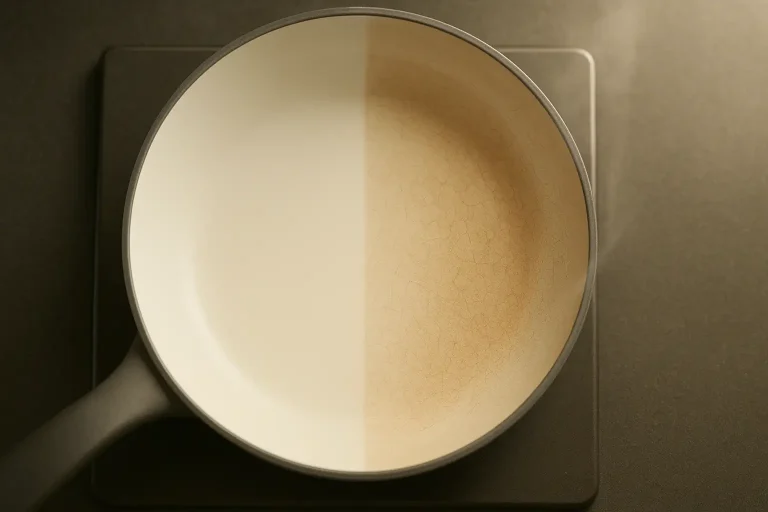
Stain resistance differs significantly. Ceramic surfaces resist permanent staining from tomato-based sauces, turmeric, and red wine, while enamel coatings can develop permanent discoloration that affects appearance but not cooking performance.
Daily Cleaning Procedures
Clean ceramic cookware immediately after cooling to prevent food residue from drying onto the surface. Warm soapy water and a soft sponge remove most cooking residue without scrubbing.
For stubborn residue on ceramic surfaces, create a paste using baking soda and water, let sit for 15 minutes, then wipe clean. This gentle abrasive action removes stuck-on food without scratching the surface.
Enameled cast iron requires gentle cleaning with non-abrasive sponges and mild detergents. Avoid temperature shock by allowing hot cookware to cool gradually before washing with lukewarm water.
Removing Stubborn Stains and Buildup
Ceramic cookware handles acidic cleaning solutions without damage. White vinegar or lemon juice removes mineral deposits and light staining when heated gently in the pan for 5-10 minutes.
For enameled cast iron staining, Le Creuset recommends their proprietary cleaning paste or a mixture of baking soda and hydrogen peroxide. Avoid acidic cleaners that can etch the enamel surface over time.
What Are the Cost Differences and Value Considerations?
High-quality ceramic cookware typically costs 40-60% less than equivalent Le Creuset enameled cast iron pieces. A premium ceramic Dutch oven ranges from $80-150, while comparable Le Creuset models cost $200-350.
Replacement costs favor ceramic cookware due to lower initial investment and longer expected lifespan. The total cost of ownership over 15 years shows ceramic providing 30-40% better value when factoring in durability and replacement frequency.
Energy efficiency impacts long-term costs. Ceramic’s faster heating reduces gas and electricity consumption by 15-20% compared to cast iron’s longer preheating requirements and higher thermal mass.
Resale value considerations show Le Creuset maintaining 50-60% of original value when sold in good condition, while ceramic cookware has limited resale market appeal despite superior performance characteristics.
Initial Investment Comparison
Entry-level ceramic cookware sets (5-7 pieces) cost $150-300 for quality brands, providing complete cooking capability at reasonable prices. These sets often include multiple sizes and specialty pieces for versatile meal preparation.
Le Creuset starter sets begin around $400-600 for basic configurations, with premium collections exceeding $1000 for comprehensive piece selection. The higher cost reflects brand premium and manufacturing complexity rather than performance advantages.
Long-term Ownership Costs
Ceramic cookware requires no special maintenance products or seasonal treatments, keeping ongoing costs minimal. Standard dish soap and occasional baking soda cleaning maintain optimal performance throughout the cookware’s lifespan.
Enameled cast iron may require specialized cleaning products, replacement pieces for chipped items, and careful handling to prevent damage. These factors increase total ownership costs beyond the initial purchase price.
How Do Cooking Results Compare Between Ceramic and Le Creuset?
Ceramic cookware produces more consistent browning and searing due to even heat distribution across the entire cooking surface. This uniform heating prevents hot spots that can burn delicate sauces or create uneven caramelization in onions and garlic.
Le Creuset excels at slow braising and stewing where heat retention matters more than initial heating speed. The thermal mass keeps food at consistent temperatures during long cooking processes, reducing the risk of scorching or uneven cooking.
Acidic foods like tomato sauce, wine reductions, and citrus marinades react differently with each material. Ceramic’s inert surface prevents metallic flavors and discoloration, while cast iron can impart subtle iron notes that some cooks find objectionable in delicate dishes.
Non-stick performance varies significantly. New ceramic surfaces release food easily without oil, while enameled cast iron requires light oil coating for optimal release properties and can develop sticky spots as the coating wears.
Searing and Browning Performance
Ceramic cookware achieves excellent searing results on proteins due to rapid heating and temperature stability. The surface maintains consistent heat during cooking, creating even browning without the temperature drops common when adding cold food to cast iron.
Enameled cast iron requires longer preheating (8-10 minutes) to achieve optimal searing temperature, but maintains that heat more consistently when adding multiple pieces of food. This makes it better for batch cooking large quantities.
Slow Cooking and Braising Results
For braising and slow cooking, Le Creuset’s thermal mass provides steady heat that reduces the risk of scorching during long cooking times. The heavy construction maintains temperature stability even when oven temperature fluctuates slightly.
Ceramic Dutch ovens cook braised dishes successfully but require more attention to prevent hot spots during long cooking times. The faster heating can cause bottom scorching if liquid levels drop too low during extended cooking.
Which Material Works Better for Different Cooking Methods?
High-heat cooking methods like stir-frying, searing steaks, and blackening fish work better with ceramic cookware due to its ability to handle temperatures above 500°F without surface damage. The rapid heating allows quick temperature adjustments needed for precise cooking control.
Low and slow cooking applications favor enameled cast iron’s thermal mass and heat retention properties. Dishes requiring consistent gentle heat over several hours, like French onion soup or beef bourguignon, benefit from cast iron’s temperature stability.
Baking applications in oven environments show ceramic’s advantages clearly. Ceramic cookware comparison guides demonstrate superior performance at temperatures exceeding standard enamel limitations.
Delicate sauce-making and reduction work suits ceramic’s responsive heating characteristics. The ability to make rapid temperature adjustments prevents overcooking and maintains better control over consistency and flavor development.
Stovetop Versatility
Ceramic cookware works on all stovetop types including induction, gas, electric coil, and glass-top surfaces. The material’s magnetic properties and flat bottom design ensure efficient heat transfer regardless of heat source.
Le Creuset enameled cast iron also works on all stovetop types but requires careful handling on glass-top surfaces to prevent scratching. The heavy weight can damage delicate cooktop surfaces if dropped or slid aggressively.
Oven and Broiler Applications
For pizza making, bread baking, and high-temperature roasting, ceramic cookware’s 2000°F temperature rating provides flexibility that enameled cast iron cannot match. This higher temperature tolerance expands cooking technique possibilities significantly.
Broiling applications work safely with ceramic cookware placed close to heating elements, while enameled cast iron risks coating damage from intense radiant heat exposure above 500°F.
What Are the Health and Safety Considerations?
Ceramic cookware contains no potentially harmful coatings or treatments that can break down during cooking. The fired clay material remains chemically inert at all cooking temperatures, preventing any material transfer to food.
Enameled cast iron uses lead-free enamel formulations in modern production, but older pieces manufactured before 1980 may contain lead-based glazes. Le Creuset has used lead-free enamel since the 1960s, making their products safe for food contact.
Off-gassing concerns differ between materials. Ceramic produces no fumes or odors even at maximum oven temperatures, while overheated enamel coatings can release unpleasant odors and potentially harmful compounds above 500°F.
Food safety considerations include bacterial resistance and cleaning effectiveness. Ceramic versus metal property comparisons show ceramic’s non-porous surface prevents bacterial harboring better than potentially compromised enamel coatings.
Chemical Leaching and Food Contamination
Pure ceramic cookware exhibits zero chemical leaching into food at any cooking temperature or pH level. The vitrified surface remains stable when cooking acidic foods like tomato sauce, wine reductions, or citrus-based marinades.
Damaged enamel coating on cast iron can expose underlying metal to acidic foods, potentially causing iron leaching and metallic taste contamination. Chipped areas require immediate attention to prevent food safety issues.
Temperature Safety and Burn Prevention
Ceramic cookware handles stay cooler during stovetop cooking due to lower thermal conductivity, reducing burn risk during normal use. However, handles still require protection when transferring from oven to stovetop.
Le Creuset handles reach higher temperatures due to the cast iron’s superior heat conduction throughout the entire piece. Always use protective equipment when handling heated enameled cast iron cookware.
How Do Specific Brands Compare: Le Creuset vs Premium Ceramic Options?
Le Creuset represents the premium standard in enameled cast iron with 95+ years of manufacturing expertise and rigorous quality control. Their pieces feature consistent wall thickness, even enamel application, and lifetime warranty coverage for manufacturing defects.
Premium ceramic cookware brands like Emile Henry, Lodge Stoneware, and Staub ceramic lines offer comparable build quality with superior temperature ratings and lighter weight construction. These brands focus on traditional ceramic manufacturing techniques adapted for modern cooking needs.
Manufacturing origin affects quality and pricing. Le Creuset produces all cookware in France using traditional foundry methods, while many ceramic brands manufacture in facilities with lower labor costs but maintain quality through strict specifications and testing.
Warranty coverage varies significantly between brands and materials. Le Creuset offers lifetime warranty against manufacturing defects but excludes damage from thermal shock or normal wear, while ceramic manufacturers typically provide 5-10 year warranties covering broader damage categories.
Build Quality and Consistency
Le Creuset maintains exceptional consistency across production runs with uniform wall thickness (4-5mm), even enamel distribution, and precise dimensional tolerances. This consistency ensures predictable cooking performance across different pieces and replacement items.
Premium ceramic brands achieve similar consistency through controlled firing processes and quality testing. Wall thickness typically measures 6-8mm for equivalent thermal performance with 30% less overall weight.
Design and Aesthetic Considerations
Le Creuset offers 12-15 standard colors with seasonal limited editions, allowing coordinated kitchen aesthetics and personal expression. The recognizable design has remained largely unchanged for decades, creating timeless appeal.
Ceramic cookware provides similar color variety with additional benefits like fade resistance and stain prevention. Ceramic cookware brand comparisons show how different manufacturers approach color stability and design durability.
What Should You Consider When Making Your Decision?
Budget constraints significantly impact the decision between ceramic and enameled cast iron cookware. Ceramic options provide 70-80% of Le Creuset’s performance at 40-60% of the cost, making them attractive for budget-conscious cooks who prioritize function over brand prestige.
Cooking style preferences determine which material serves your needs better. High-heat cooking, frequent oven use above 450°F, and rapid temperature changes favor ceramic’s superior thermal properties and durability characteristics.
Physical considerations include weight tolerance and storage requirements. Ceramic’s lighter weight benefits cooks with arthritis, limited strength, or small storage spaces, while cast iron’s weight appeals to those who equate heft with quality.
Maintenance willingness affects long-term satisfaction. Ceramic’s minimal care requirements suit busy lifestyles, while enameled cast iron demands more careful handling and specialized cleaning to maintain optimal appearance and performance.
Lifestyle Compatibility Assessment
Frequent entertainers benefit from Le Creuset’s serving appeal and heat retention for buffet-style meals. The cookware transitions beautifully from kitchen to table and maintains food temperature throughout extended serving periods.
Daily cooks who prioritize efficiency and quick cleanup find ceramic cookware more practical. The faster heating, easier cleaning, and dishwasher compatibility streamline meal preparation and cleanup routines significantly.
Long-term Investment Perspective
Consider total cost of ownership over 15-20 years including initial purchase, replacement needs, energy consumption, and maintenance products. Ceramic typically provides better financial value despite lower resale potential.
Performance degradation patterns differ between materials. Ceramic maintains consistent performance throughout its lifespan, while enameled cast iron gradually loses non-stick properties and develops cosmetic wear that affects user satisfaction.
Troubleshooting Common Issues with Both Materials
Food sticking problems occur more frequently with worn enameled cast iron than ceramic cookware. When Le Creuset develops sticky spots, reduce heat levels, increase oil usage, or consider replacement if coating damage appears extensive.
Thermal shock damage manifests differently in each material. Ceramic pieces develop hairline cracks that may be invisible initially but worsen over time, while enamel coating chips or cracks immediately when exposed to rapid temperature changes exceeding 200°F.
Discoloration issues affect both materials but respond to different treatments. Ceramic handles bleach-based cleaners safely for tough stains, while enameled surfaces require gentle baking soda pastes to prevent coating damage.
Handle heating problems plague both materials at high temperatures. Use silicone handle covers or kitchen towels when transferring between stovetop and oven, and allow gradual cooling before handling without protection.
Preventing Damage and Extending Lifespan
Avoid extreme temperature changes with both materials. Never place hot cookware directly into cold water, and allow gradual cooling before cleaning to prevent thermal shock damage that can ruin either ceramic or enamel surfaces.
Use appropriate utensils to prevent surface damage. While ceramic resists scratching better than enamel, both materials benefit from wooden or silicone implements that won’t create wear patterns or chip coatings over time.
Repair and Restoration Options
Ceramic cookware rarely requires repair but cannot be restored if cracked or broken. The fired clay structure makes repair impossible, requiring complete replacement when damage occurs beyond surface level.
Small enamel chips on Le Creuset can be professionally repaired or touched up with specialized enamel repair compounds. However, extensive damage typically requires replacement as repairs rarely match the original durability and appearance.
Frequently Asked Questions About Ceramic vs Enameled Cast Iron Cookware
Can I use metal utensils with ceramic cookware?
Yes, ceramic cookware handles metal utensils without scratching due to its hardness rating of 6-7 on the Mohs scale, equivalent to steel knife hardness. The fired clay surface resists damage from normal cooking implements including metal spatulas, whisks, and tongs.
However, avoid aggressive scraping or chopping directly in the pan, which can damage any cookware surface over time. Use cutting boards for food preparation and gentle stirring motions during cooking to maximize lifespan regardless of utensil material choice.
Why does my Le Creuset enamel chip while ceramic doesn’t?
Enamel coating consists of glass fused to cast iron at relatively low temperatures (1500°F), creating a brittle surface that fractures under impact or thermal stress. The different expansion rates between iron core and glass coating create stress points that lead to chipping.
Ceramic cookware undergoes vitrification at 2000°F+, creating a homogeneous material without coating layers. This single-material construction eliminates differential expansion issues and provides superior resistance to chipping from normal kitchen use.
Which material heats more evenly for delicate sauces?
Ceramic provides more even heating for delicate sauces due to uniform heat distribution across the entire cooking surface. This prevents hot spots that can cause scorching or curdling in temperature-sensitive preparations like hollandaise or custard bases.
Cast iron develops hot spots over the flame or heating element area, requiring frequent stirring and careful heat management. The thermal mass helps maintain temperature once heated, but initial heating creates uneven temperatures that challenge delicate sauce preparation.
Can both materials go from freezer to oven safely?
Neither material should go directly from freezer to hot oven due to thermal shock risks. Allow frozen food in either ceramic or enameled cast iron to reach room temperature gradually before heating, or start with low oven temperatures (200°F) and increase gradually.
Ceramic handles temperature changes better than enamel coating, but extreme temperature differentials (300°F+) can crack either material. Plan ahead for frozen-to-hot transitions to prevent costly damage to quality cookware investments.
How do I remove stubborn stains from each material?
For ceramic cookware, create a paste using baking soda and hydrogen peroxide, let sit for 30 minutes, then scrub gently with non-abrasive pads. Ceramic also tolerates diluted bleach solutions for whitening without surface damage.
Remove Le Creuset stains using the manufacturer’s recommended cleaning paste or gentle baking soda paste applied with soft cloths. Avoid acidic cleaners like vinegar or lemon juice that can etch enamel surfaces permanently over time.
Which material works better for bread baking?
Ceramic excels at bread baking due to its ability to handle the high initial temperatures (500°F+) required for artisan bread techniques like steam baking and rapid oven spring. The material’s thermal properties create excellent crust development and even browning.
Enameled cast iron works well for bread but requires temperature management to stay within 500°F limits. The thermal mass provides steady heat for consistent results, though the temperature restriction limits some advanced baking techniques.
Do these materials affect food taste differently?
Ceramic cookware remains completely taste-neutral due to its inert fired clay composition. No flavors transfer between different foods, and acidic ingredients won’t cause metallic tastes or chemical reactions with the cooking surface.
Quality enameled cast iron like Le Creuset also provides neutral taste, but damaged enamel exposing underlying iron can impart metallic flavors to acidic foods. Proper care prevents this issue, but ceramic eliminates the risk entirely.
Which material requires less maintenance long-term?
Ceramic requires minimal maintenance beyond normal washing with soap and water. The non-porous surface prevents staining, requires no special treatments, and maintains performance indefinitely with basic care.
Enameled cast iron needs more careful handling to prevent chipping, specialized cleaning products for stain removal, and gradual heating/cooling cycles to prevent thermal damage. Total maintenance time averages 20-30% higher than ceramic equivalents.
Can I repair chips or cracks in either material?
Small enamel chips on Le Creuset can be touched up with manufacturer repair compounds or professional restoration services. However, extensive chipping usually requires replacement as repairs rarely restore original durability and appearance.
Ceramic cookware cannot be repaired once cracked or chipped beyond surface level. The fired clay structure makes bonding impossible, but the material’s resistance to damage makes repairs rarely necessary with proper use.
How do cooking times differ between materials?
Ceramic cookware reduces cooking times by 15-20% due to faster heating and more efficient heat transfer. Preheating takes 2-3 minutes compared to 5-7 minutes for cast iron, and temperature adjustments respond more quickly during cooking.
Cast iron requires longer preheating and cooking times initially but maintains temperature longer after removing from heat. This makes it better for keeping food warm during serving but less efficient for quick weeknight meal preparation.
Which material handles acidic foods better?
Ceramic handles all acidic foods without concern, maintaining flavor purity and preventing any material interaction. Tomato sauces, wine reductions, and citrus marinades won’t cause staining, etching, or flavor contamination with ceramic surfaces.
Quality enameled cast iron handles acidic foods well when the coating remains intact, but damaged areas can react with acids causing metallic tastes and potential iron leaching. Material durability comparisons show ceramic’s superior chemical resistance over time.
What’s the real lifespan difference between materials?
High-quality ceramic cookware maintains peak performance for 15-20 years with proper care, showing minimal wear or performance degradation. The material’s stability means replacement occurs due to breakage rather than wear-out failures.
Le Creuset enameled cast iron typically shows coating wear after 8-12 years of regular use, developing sticky spots and cosmetic issues that affect user satisfaction. The iron core remains functional, but enamel degradation often prompts replacement for performance reasons.
How do weight differences affect daily use?
Ceramic’s 30-40% lighter weight reduces fatigue during cooking and makes storage easier in upper cabinets. A 5-quart ceramic Dutch oven weighs around 5 pounds compared to 8-9 pounds for equivalent cast iron models.
The weight difference becomes significant for users with arthritis, limited strength, or when cooking large batches that require frequent lifting and pouring. Consider your physical comfort and cooking frequency when evaluating this factor.
Which material provides better value for beginner cooks?
Ceramic cookware offers better value for beginners due to lower cost, easier maintenance, and forgiving performance characteristics. The material’s resistance to damage from common mistakes like thermal shock or improper cleaning reduces replacement costs during the learning phase.
While Le Creuset provides excellent performance, the high initial cost and potential for enamel damage during skill development make ceramic a more practical choice for new cooks building confidence and technique.
Ceramic cookware delivers superior temperature performance, easier maintenance, and better value compared to enameled cast iron like Le Creuset for most home cooking applications. The material’s ability to handle temperatures up to 2000°F, 30-40% lighter weight, and resistance to chipping make it more practical for daily use.
Choose ceramic for high-heat cooking, frequent oven use, quick cleanup requirements, and budget-conscious quality. Select enameled cast iron when heat retention for slow cooking, serving presentation, and brand prestige matter more than practical advantages.
Start with a ceramic Dutch oven or sauté pan to experience the material’s benefits firsthand. Test ceramic’s faster heating, even temperature distribution, and easy cleanup with your normal cooking routine before committing to a complete set replacement.