Ceramic Tile vs Slate Tile: Durability and Style Comparison

Ceramic tile and slate tile look similar from across a room. They are not the same material and they do not perform the same way under daily wear, water, or heavy foot traffic. The choice between them comes down to three factors you cannot change later: hardness, porosity, and how each surface ages with use.
This guide compares ceramic tile and slate tile across durability, style, cost, maintenance, and installation. It gives you the specific numbers, failure modes, and installation requirements that most flooring comparisons skip. Use it to make a decision that holds up for decades.
By the Numbers
Ceramic Tile vs Slate Tile — Key Specifications
Sources: ASTM C373, Mohs hardness scale, industry installation cost data
What Makes Ceramic Tile and Slate Tile Fundamentally Different?
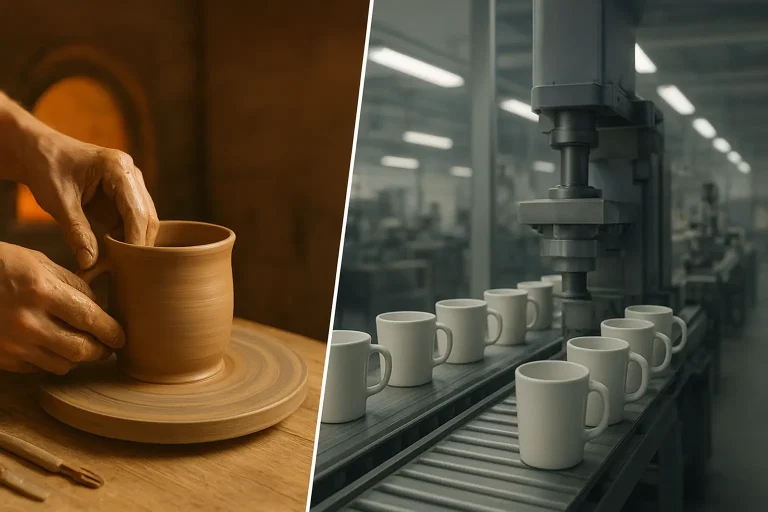
Ceramic tile is a manufactured product made from refined clay, pressed into shape, and fired in a kiln at temperatures between 1900°F and 2200°F (1038°C to 1204°C). The clay body vitrifies during firing. It becomes a hard, non-porous surface with consistent dimensions from tile to tile.
Slate is a natural metamorphic rock quarried from the earth. It formed millions of years ago when shale was compressed under heat and pressure deep underground. This geological process created the distinct layered structure called foliation. Every piece of slate is unique in color, texture, and thickness.
The manufacturing difference creates a fundamental performance gap. Ceramic tile is engineered for uniformity. You get the same thickness, the same surface hardness, and the same water absorption rate across every tile in a box.
Slate varies. One tile might be dense and nearly waterproof. The tile right next to it from the same crate might be porous and flaky. This variation is not a defect. It is the nature of natural stone.
In plain terms: ceramic tile is predictable. Slate is not. Your installation method and maintenance plan must account for this difference from the start.
How Durable Is Ceramic Tile Compared to Slate Tile?
Ceramic tile, specifically porcelain ceramic tile, achieves a Mohs hardness rating of 7 to 8. This places it just below diamond, corundum, and topaz on the scratch resistance scale. A steel knife blade, by comparison, rates around 5.5 to 6 on the Mohs scale.
This happens because porcelain tile is fired at temperatures above 2200°F (1204°C) until the clay particles fuse into a dense, glass-like body. The silica and alumina in the clay body form mullite crystals during firing. Mullite is an extremely hard aluminum silicate that gives porcelain its scratch resistance.
Slate rates between 3 and 5.5 on the Mohs scale depending on the specific quarry and mineral composition of the stone. A high-quality, dense slate from a reputable quarry may reach 5.5. Lower-grade slate can be as soft as 3. This means a dropped pan, a dragged chair leg, or even grit under a shoe can scratch a slate floor.
If the slate is too soft, the surface develops visible wear patterns within the first year of use. The fix is choosing slate with a documented hardness rating from the supplier and sealing it properly before foot traffic begins.
The PEI (Porcelain Enamel Institute) wear rating for ceramic tile goes up to PEI 5 for heavy commercial traffic. Most residential ceramic tile is PEI 3 or 4, rated for normal to heavy foot traffic without visible wear.
Slate has no PEI rating because it is not a manufactured product. Its wear resistance must be evaluated per batch from the quarry.
For most homeowners, a PEI 4 ceramic tile in a kitchen or hallway will still look new after 20 years of daily use. Slate in the same location will show character and wear within 5 to 10 years.
Which Tile Style Works Best for Your Space?
Ceramic tile offers complete design control. Manufacturers produce it in any color, any pattern, any size, and any surface finish you can imagine. You can buy ceramic tile that convincingly mimics wood, marble, concrete, fabric, or even slate itself.
This happens because the design is printed onto the tile surface using inkjet technology, then sealed under a clear glaze layer. The glaze protects the printed design from wear while providing the desired surface sheen from high-gloss to full matte.
Slate offers exactly one aesthetic: natural stone. It comes in shades of gray, black, green, purple, rust, and brown depending on the mineral content of the specific quarry. Copper traces produce greens and purples. Iron produces reds and rust tones. Carbon produces dark grays and blacks.
The surface texture of slate can be left natural with its characteristic cleft face, which reveals the layered rock formation in a rough, uneven texture. It can also be honed smooth for a more uniform appearance, though honing reduces the natural character that draws people to slate in the first place.
Choose ceramic tile when you need a specific color palette, a consistent pattern, or a surface that must match other design elements precisely. Choose slate when you want natural variation, organic texture, and a floor that does not look manufactured.
Ceramic Tile vs Slate Tile: Side-by-Side Comparison
Use the table below to compare ceramic tile and slate tile across every key performance dimension before making your final selection.
Product Comparison
Ceramic Tile vs Slate Tile — Side by Side
Detailed feature comparison to help you choose the right option for your space.
| Feature | Ceramic Tile | Slate Tile |
|---|---|---|
| Material origin | Manufactured from refined clay, kiln-fired | Natural metamorphic rock, quarried |
| Mohs hardness | 7-8 (resists scratches) | 3-5.5 (softer, can scratch) |
| Water absorption | Porcelain: under 0.5% (near zero) | 0.5-3% (varies by stone density) |
| Material cost per sq ft | $2 to $7 | $5 to $20 |
| Installation cost per sq ft | $5 to $10 | $10 to $25 |
| Sealing required | Grout only, not tile surface | Entire surface, reapplied every 1-3 years |
| Style consistency | Uniform color and size, predictable | Natural variation, every tile unique |
| Our verdict | Best for predictable durability, low maintenance, and design flexibility | Best for natural character, unique aesthetics, and rustic appeal |
Hardness and absorption values from ASTM testing standards and Mohs scale references. Costs are current market averages for mid-grade materials.
How Much Does Each Tile Type Cost Installed?
Ceramic tile material costs range from $2 to $7 per square foot for mid-grade residential products. Basic white ceramic subway tile can cost as little as $1 per square foot. High-end porcelain with realistic stone or wood visuals can reach $12 per square foot.
Slate tile material costs start at $5 per square foot for lower-grade imported slate with significant color variation and thickness inconsistency. Premium slate from well-known quarries costs $15 to $20 per square foot. The price difference reflects quarry location, stone quality, sorting consistency, and shipping weight.
Installation labor for ceramic tile averages $5 to $10 per square foot. The substrate preparation, thinset mortar application, tile setting, and grouting follow standardized procedures that experienced installers perform efficiently.
Slate installation labor averages $10 to $25 per square foot. This higher cost reflects several factors. Slate tiles vary in thickness, so the installer must back-butter each tile individually to achieve a level surface. Slate is heavier than ceramic, making transport and handling more labor-intensive. The cleft surface requires extra care during grouting to avoid staining the textured stone.
Total installed cost for ceramic tile: $7 to $17 per square foot for a typical residential project. Total installed cost for slate tile: $15 to $45 per square foot. For a 200-square-foot kitchen, ceramic tile might cost $2,000 to $3,400 installed. Slate for the same kitchen could cost $4,000 to $9,000.
Slate costs roughly double to triple the total installed price of ceramic tile. The premium pays for natural stone aesthetics and the skilled labor required to install it correctly.
Ceramic Tile: Pros and Cons
Product Review
Ceramic Tile — Pros and Cons
Honest assessment based on material properties and installed performance data.
Pros
- ✓Mohs 7-8 hardness resists scratching from daily wear
- ✓Under 0.5% water absorption makes porcelain nearly waterproof
- ✓No sealing required on the tile surface, only grout maintenance
- ✓Consistent sizing and thickness speeds up installation
- ✓Unlimited design options including wood and stone visuals
- ✓Lower material and installation cost than natural stone
Cons
- ✗Glaze layer can chip if a heavy object hits the tile edge
- ✗Printed designs lack the depth of natural stone
- ✗Glossy finishes become slippery when wet without a textured surface
- ✗Cold underfoot without radiant heating beneath
- ✗Grout lines require periodic cleaning and occasional resealing
- ✗Cannot be refinished if the surface wears through the glaze
Ceramic tile is the practical choice for kitchens, bathrooms, and high-traffic areas where predictable durability and low maintenance matter more than natural stone character.
Slate Tile: Pros and Cons
Product Review
Slate Tile — Pros and Cons
Honest assessment based on material properties and installed performance data.
Pros
- ✓Natural cleft surface provides excellent slip resistance when wet
- ✓Every tile is unique, creating a floor with genuine character
- ✓Color variation hides dirt and stains better than uniform surfaces
- ✓Ages gracefully, developing a natural patina over decades
- ✓Dense slate offers good thermal mass for passive solar design
- ✓No manufactured chemicals or synthetic binders in the material
Cons
- ✗Requires sealing before use and resealing every 1 to 3 years
- ✗Lower hardness means visible scratches from furniture and debris
- ✗Uneven thickness complicates installation and raises labor cost
- ✗Can delaminate along foliation planes in poor-quality batches
- ✗Material and installation cost 2 to 3 times higher than ceramic
- ✗Limited color palette compared to manufactured ceramic options
Slate is the choice for entryways, mudrooms, and living spaces where natural character, slip resistance, and authentic stone aesthetics justify the higher cost and maintenance commitment.
What Maintenance Does Each Tile Type Require Over Time?
Ceramic tile requires almost no surface maintenance beyond regular sweeping and damp mopping. The glazed surface does not absorb stains, does not need sealing, and does not support mold or mildew growth on the tile itself. The grout lines between tiles are the only vulnerable component.
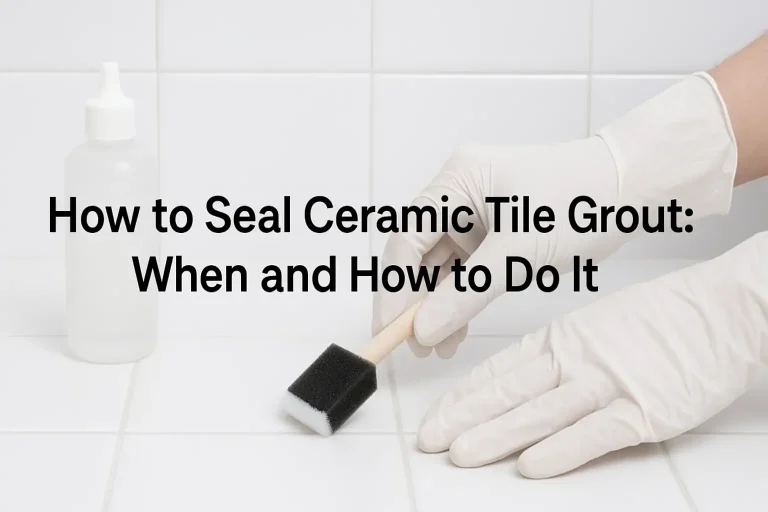
Grout is cement-based and remains porous even after curing. It absorbs liquids and can stain or support mildew in wet areas. You need to seal grout lines with a penetrating grout sealer at installation and reapply the sealer every 2 to 3 years depending on traffic and moisture exposure.
Slate requires significantly more maintenance. The stone surface is naturally porous to varying degrees. Without sealing, water, oil, and food spills penetrate the stone and cause permanent staining. A high-quality penetrating stone sealer must be applied before the floor sees any foot traffic.
Resealing is required every 1 to 3 years for slate floors. The exact interval depends on the sealer quality, the stone density, and the amount of traffic. A simple test tells you when it is time: place a few drops of water on the slate surface. If the water beads up, the seal is intact. If it darkens the stone within a few minutes, reseal immediately.
Daily cleaning for slate requires a pH-neutral stone cleaner. Acidic cleaners, including common household vinegar, etch the surface and dull the finish over time. Ceramic tile can handle a much wider range of cleaning products without damage.
In plain terms: ceramic tile cleaning takes a mop and any household floor cleaner. Slate cleaning takes a specific pH-neutral product and an annual sealing ritual you cannot skip without consequences.
Quick Reference
Ceramic Tile and Slate Tile — Key Terms Explained
Quick reference for the terms used throughout this guide
A 1-to-10 scale rating a material’s resistance to scratching. Diamond is 10. Talc is 1.
The point during kiln firing when clay particles fuse into a dense, glass-like, non-porous body.
The layered, sheet-like structure of metamorphic rock. Causes slate to split into flat tiles.
Porcelain Enamel Institute rating (1 to 5) measuring a glazed tile’s resistance to surface abrasion.
The natural, rough, textured surface of slate created by splitting along foliation planes.
A polymer-modified cement adhesive used to bond tile to a substrate. Required for both ceramic and slate.
A liquid that soaks into porous stone and fills microscopic voids, blocking liquid absorption without forming a surface film.
Spreading thinset on the back of each tile before setting it, used for uneven natural stone to achieve a level surface.
Which Tile Is Easier to Install?
Ceramic tile installs faster and with fewer complications than slate. The tiles are uniform in thickness, square at the corners, and consistent in size. This predictability allows the installer to use a standard trowel notch size and achieve consistent thinset coverage without adjusting for each tile.
A tile leveling system with clips and wedges helps eliminate lippage between adjacent ceramic tiles. The uniform thickness means the leveling system does most of the work mechanically.
Slate installation is more demanding. The natural cleft surface means each tile has a slightly different thickness. The installer must back-butter each tile individually, adding thinset to the back of the tile to build up thinner areas and achieve a level walking surface. This takes time and skill.
Slate is also heavier. A 12-inch by 12-inch slate tile weighs roughly 6 to 8 pounds depending on thickness. Ceramic tile of the same dimensions weighs 3 to 5 pounds. The weight difference adds to installer fatigue and makes slate more challenging to handle on vertical surfaces like shower walls.
Cutting slate requires a wet tile saw with a diamond blade rated for natural stone. Ceramic tile can be cut with a snap cutter for straight cuts, which is much faster and produces no dust. Slate cutting produces stone dust that requires proper respiratory protection.
For DIY installation, ceramic tile is approachable for a homeowner with basic tiling experience and the right tools. Slate installation is best left to professionals unless you have specific experience with natural stone. The cost of correcting a poorly installed slate floor far exceeds the savings of DIY labor. For guidance on choosing the right adhesive for your project, see our detailed comparison of tile adhesive versus thinset mortar and when to use each type.
How Does Each Tile Handle Moisture and Temperature Changes?
Porcelain ceramic tile absorbs less than 0.5% of its weight in water under ASTM C373 testing conditions. This near-zero absorption rate makes it fully suitable for wet areas including showers, steam rooms, pool decks, and exterior installations in freezing climates.
This happens because the vitrified clay body has no interconnected pore structure. Water molecules cannot penetrate beyond the immediate surface. There is no pathway for water to enter the tile body, freeze, expand, and cause spalling.
Slate absorption varies from 0.5% to 3% depending on the specific stone. High-quality, dense slate approaches the performance of ceramic. Lower-grade slate absorbs enough water to be a concern in freeze-thaw conditions or continuously wet locations.
If water penetrates a porous slate tile and then freezes, the expansion force can split the stone along its natural foliation planes. The visible result is flaking, crumbling edges, or a tile that cracks into layers. The fix is selecting slate with documented absorption below 1% for exterior use and sealing it aggressively before winter exposure.
Both materials respond to temperature changes by expanding and contracting. Ceramic tile has a thermal expansion coefficient that must be accommodated with movement joints at the perimeter of the room and at intervals across large floors. Slate, being a natural stone, has a thermal expansion rate close to that of the concrete substrate it is typically installed on, which reduces the stress at the bond line during temperature swings.
For bathrooms and kitchens with typical humidity levels, both materials perform well. For steam rooms, exterior walkways, or unheated sunrooms in freezing climates, porcelain ceramic tile is the safer, lower-maintenance choice.
Buying Guide
Before You Buy — Ceramic or Slate Tile Checklist
Check off each point before making your final flooring decision.
Common Myths About Ceramic Tile and Slate Tile
Myth vs Fact
Ceramic Tile and Slate Tile — Common Myths Debunked
Separating fact from fiction on the most common tile misconceptions
✗ Myth
Slate tile is just as durable as ceramic tile because it is natural stone.
✓ Fact
Slate is a soft metamorphic rock with a Mohs rating of 3 to 5.5. Porcelain ceramic tile rates 7 to 8. A steel knife scratches slate but not porcelain. Slate compensates through thickness and mass, not surface hardness.
✗ Myth
Ceramic tile looks cheap and fake compared to natural stone.
✓ Fact
Modern inkjet printing technology produces ceramic tile with wood grain, marble veining, and stone textures that are difficult to distinguish from the real material at standing height. High-end porcelain tile costs as much as natural stone and looks the part.
✗ Myth
Once sealed, slate tile requires no further maintenance.
✓ Fact
Penetrating sealers wear away with foot traffic. Slate floors need resealing every 1 to 3 years. The water droplet test tells you when: if water darkens the stone within minutes, the seal has failed and must be reapplied immediately to prevent staining.
✗ Myth
Any ceramic tile can be installed outdoors in any climate.
✓ Fact
Only porcelain ceramic tile with water absorption under 0.5% is rated for exterior use in freezing climates. Standard non-porcelain ceramic tile absorbs enough water to crack when that water freezes and expands inside the tile body.
✗ Myth
Ceramic tile and slate tile can be installed with the same mortar and technique.
✓ Fact
Slate requires a polymer-modified thinset rated for natural stone and back-buttering each tile to account for thickness variation. Ceramic tile can use standard thinset with a consistent trowel notch size. The installation methods and mortar specifications differ substantially.
Is Ceramic Tile More Scratch-Resistant Than Slate Tile?
Yes. Porcelain ceramic tile at Mohs 7 to 8 is significantly more scratch-resistant than slate at Mohs 3 to 5.5. A dropped kitchen knife, dragged furniture, and even grit-laden shoes will scratch a slate floor long before they mark a quality ceramic tile.
The Mohs scale is not linear. The jump from 5 to 7 represents a major increase in scratch resistance. This is why ceramic tile in a busy kitchen still looks new after 20 years while slate in the same space shows visible wear patterns within 5 years.
Which Tile Type Is Better for Bathrooms and Wet Areas?
Porcelain ceramic tile is the better choice for continuously wet areas. Its water absorption rate under 0.5% means it does not absorb moisture, does not support mold growth within the tile body, and will not fail in freeze-thaw conditions if used outdoors.
Slate can work in bathrooms if you select dense, low-absorption stone and seal it properly. However, the ongoing maintenance burden of resealing every 1 to 2 years in a wet environment makes it less practical than ceramic for most homeowners. The textured surface also collects soap residue more readily than smooth ceramic.
Does Slate Tile Increase Home Value More Than Ceramic Tile?
Slate tile can increase perceived home value in certain markets where natural stone flooring is expected, such as higher-end homes in the Northeast or mountain regions where slate fits the regional architectural character. The value increase is not guaranteed and depends heavily on installation quality.
Ceramic tile, particularly high-end porcelain, adds consistent resale value across all markets. Buyers recognize it as durable, low-maintenance, and timeless. Poorly installed or low-quality slate can actually reduce home value by signaling deferred maintenance to potential buyers.
Can You Install Slate Tile Over an Existing Ceramic Tile Floor?
You can install slate tile over existing ceramic tile only if the existing tile is firmly bonded to the substrate, the floor can support the additional weight of slate, and you use a bonding primer specifically designed for tile-over-tile installation. The existing ceramic surface must be roughened or primed to create a mechanical bond.
However, this is rarely the best approach. The added height creates awkward transitions to adjacent rooms. The existing tile may have hidden cracks or loose tiles that will telegraph through the new slate. Removing the old tile and starting from a clean substrate produces a more reliable result.
How Long Does Each Tile Type Last Before Needing Replacement?
A properly installed ceramic tile floor lasts 75 years or more in residential use. The limiting factor is usually the substrate, not the tile itself. Many homes from the 1950s still have their original ceramic tile bathrooms in functional condition.
Slate can last over 100 years with proper sealing and maintenance. Historic buildings in slate-producing regions have slate floors that have been in continuous use for centuries. However, poorly maintained slate can require replacement within 20 to 30 years if it has not been sealed regularly and has absorbed stains or developed delamination.
What Subfloor Preparation Does Each Tile Type Require?
Both ceramic and slate tile require a rigid subfloor with deflection under L/360 for ceramic and L/720 for natural stone under the Marble Institute of America standards. The L/720 standard for slate is twice as strict as the ceramic standard because natural stone is more brittle and less tolerant of movement.
This means a floor that is perfectly adequate for ceramic tile may need additional structural reinforcement before it can support a slate installation without cracking. The subfloor investigation must happen before any tile is ordered. For related flooring comparisons, see our guide on ceramic tile versus marble tile covering cost, durability, and appearance differences.
Is Slate Tile More Slippery Than Ceramic Tile When Wet?
Natural cleft-face slate tile is less slippery than most glazed ceramic tile when wet. The rough, textured surface of cleft slate provides friction even with water on the surface. Many slate tiles achieve a Dynamic Coefficient of Friction (DCOF) above 0.42, the standard for slip resistance in wet areas.
Glazed ceramic tile can be manufactured with a textured surface that meets or exceeds the same DCOF standard. The key is the surface finish, not the material. A polished ceramic tile is slippery when wet. A textured ceramic tile designed for bathroom use is not. Always verify the DCOF rating of the specific tile you are purchasing.
Do Ceramic Tiles Crack More Easily Than Slate Tiles?
Ceramic tiles are more brittle than slate. A sharp impact from a dropped heavy object can crack a ceramic tile, especially if there is a void in the thinset coverage beneath it. Slate, being a layered stone, absorbs impact energy better and is less likely to crack from a single impact event.
However, this impact resistance advantage comes with the tradeoff that slate scratches more easily and can delaminate along its foliation planes. Neither material is indestructible. The failure modes are different: ceramic fails by fracturing, slate fails by scratching and flaking.
Which Tile Is Better for Homes With Pets?
Ceramic tile is the better choice for homes with pets. Its scratch resistance means dog claws do not leave visible marks over time. Its near-zero porosity means pet accidents do not soak into the tile and leave permanent stains or odors. Cleanup requires only a mop and any household disinfectant.
Slate is less pet-friendly. Dog claws can scratch the softer stone surface. Pet urine, if not cleaned immediately, can penetrate an unsealed or worn seal area and leave a permanent stain and odor that is difficult to remove without replacing the affected tiles.
How Do Ceramic and Slate Tile Compare for Radiant Floor Heating?
Both ceramic and slate tile are excellent conductors of heat and work well with radiant floor heating systems. The thermal mass of both materials holds heat and releases it slowly, making them efficient choices for hydronic or electric radiant systems.
Slate has a slight advantage in thermal mass due to its greater density and typical thickness. It stores more heat per square foot and releases it more gradually after the heating system cycles off. Ceramic tile heats up faster but also cools faster. The practical difference in comfort is minimal for most residential installations.
Can You Use Ceramic Tile and Slate Tile Together in the Same Room?
You can combine ceramic and slate tile in the same room, but the transition requires careful planning. The two materials will almost certainly have different thicknesses, which means the installer must build up the thinner material or recess the thicker one to achieve a flush transition.
The visual contrast between uniform manufactured ceramic and variable natural slate can be striking when done intentionally. However, the two materials have different maintenance requirements, different cleaning product tolerances, and different aging characteristics. A room with both materials requires two separate maintenance regimens.
What Is the Environmental Impact of Ceramic vs Slate Tile?
Ceramic tile production requires significant energy for kiln firing at temperatures above 2000°F. The clay extraction, transportation of raw materials, and manufacturing process all contribute to its carbon footprint. However, the final product lasts for decades, which amortizes the initial environmental cost over a long service life.
Slate has a lower manufacturing footprint because it is quarried, cut, and shipped with no high-temperature processing. However, slate is heavier and requires more fuel to transport from quarry to distributor to job site. Slate quarrying also permanently alters the landscape. Both materials are environmentally preferable to vinyl flooring or carpet that requires replacement every 10 to 15 years.
Why Does Slate Tile Sometimes Flake or Peel After Installation?
Slate flakes or peels when water penetrates the stone along its natural foliation planes and the thin layers separate. This condition is called delamination. It occurs when low-quality slate with weak bonding between layers is installed in a wet area, or when freeze-thaw cycling forces water to expand between the layers.
There is no repair for delaminated slate. The affected tiles must be removed and replaced. Prevention requires purchasing slate from a reputable supplier, verifying its suitability for the specific installation environment, and maintaining the sealer on a strict schedule.
How Do I Clean Ceramic Tile vs Slate Tile Daily?
Clean ceramic tile with a damp mop and any pH-neutral household floor cleaner. Avoid abrasive cleaners on glossy glazed surfaces to prevent micro-scratching that dulls the shine over time. A stiff grout cleaning brush helps keep grout lines clean without damaging the tile surface.
Clean slate tile only with a pH-neutral stone cleaner specifically formulated for natural stone. Never use vinegar, lemon juice, ammonia, or general household cleaners on slate. These acidic or alkaline products etch the stone surface and remove the sealer prematurely. Rinse the floor with clean water after cleaning to remove any residue.
Which Tile Choice Offers Better Long-Term Value?
Ceramic tile offers better long-term value for most homeowners. The lower upfront material and installation cost, combined with near-zero maintenance requirements, produces a lower total cost of ownership over a 30-year period. A $3,000 ceramic tile kitchen floor that lasts 50 years with basic cleaning costs roughly $60 per year.
Slate can offer excellent value if you place a high personal value on natural stone aesthetics and are committed to the maintenance schedule. The satisfaction of living with genuine natural stone, with all its variation and character, is real and worth the premium to many homeowners. The value judgment is personal, not purely financial.
Understanding how ceramic compares to other materials helps put these tradeoffs in perspective. For a broader view, read our analysis on ceramic versus metal across every relevant property for product design and material selection. If you are also weighing ceramic against another popular tile option, our complete ceramic tile and porcelain tile comparison guide covers the differences within the ceramic category itself.
Conclusion
Ceramic tile wins on scratch resistance, moisture protection, maintenance simplicity, and installed cost. Slate wins on natural character, slip resistance, authentic stone aesthetics, and long-term aging beauty for those willing to maintain it. Your choice depends on which factors you value most and which compromises you can live with.
For kitchens, bathrooms, and high-traffic family spaces where practical durability matters most, choose porcelain ceramic tile with a PEI 4 rating and a textured surface for slip resistance. For entryways, mudrooms, and living spaces where natural stone character justifies the higher cost and maintenance commitment, choose high-quality dense slate from a reputable quarry. Either way, hire an installer with specific experience in your chosen material. The installation quality determines the floor’s lifespan more than anything else.