Ceramic Tile vs Marble Tile: Cost Durability and Appearance

Ceramic tile costs $2 to $15 per square foot installed while marble tile runs $15 to $50 per square foot. That three to ten times price gap is only the first difference that matters for your floor or wall project.
By the Numbers
Ceramic Tile vs Marble Tile — What the Data Shows
Sources: HomeAdvisor, Floor Covering Weekly, Marble Institute of America
What Is the Real Cost Difference Between Ceramic Tile and Marble Tile?
The installed cost of ceramic tile ranges from $2 to $15 per square foot depending on the tile grade and labor complexity. Marble tile installation runs $15 to $50 per square foot for standard materials and labor, with premium marble reaching $100 or more per square foot.
Material cost is only part of the equation. Marble requires specialized installers experienced with natural stone, adding $8 to $15 per square foot in labor alone. Ceramic tile installation is more standardized and costs $4 to $8 per square foot for labor.
A 100-square-foot bathroom floor in ceramic tile totals $600 to $1,500 installed. The same floor in marble totals $1,500 to $5,000 installed. This gap widens further when you factor in long-term maintenance costs, which marble demands and ceramic largely avoids.
Marble also requires sealing upon installation and resealing every six to twelve months. Ceramic tile with a quality glaze needs no sealing at all. Annual marble maintenance adds roughly $1 to $3 per square foot to the ownership cost, according to the Marble Institute of America.
For budget-conscious projects, standard 12×12 ceramic floor tiles deliver the lowest total cost of ownership. For luxury aesthetics, marble justifies its premium through longevity and uniqueness, but only if you budget for ongoing care.
Price Comparison
Installed Cost Comparison — Ceramic Tile vs Marble Tile
Price per square foot including standard installation. Prices verified at time of publication.
$2-$5/sq ft
$6-$10/sq ft
$10-$15/sq ft
$15-$25/sq ft
$25-$40/sq ft
$40-$100+/sq ft
Prices include standard installation labor. Marble installation requires specialized labor adding $8-$15/sq ft vs $4-$8/sq ft for ceramic.
Which Tile Is More Durable: Ceramic or Marble?
Ceramic tile with a quality glaze is harder and more scratch-resistant than marble in daily use. The PEI (Porcelain Enamel Institute) rating system measures ceramic tile surface durability on a scale of 1 to 5, with ratings of 3 to 4 suitable for residential floors and 5 for commercial traffic.
Marble scores only 3 to 5 on the Mohs hardness scale, making it susceptible to scratches from sand, dirt, and even furniture legs. Ceramic glazed surfaces rate 6 to 7 on the Mohs scale, resisting most common household abrasives. This hardness gap means a ceramic floor in a busy entryway still looks new after a decade while marble shows wear within a few years.
Staining is where marble faces its biggest durability challenge. Marble is calcium carbonate, a porous stone that reacts with acids immediately. A spilled glass of orange juice, a splash of vinegar, or even tomato sauce can etch the surface in minutes, leaving a permanent dull mark.
Ceramic glaze is chemically inert and impervious to acids once fired. The vitrified glass surface repels moisture, oils, and acidic substances without any protective treatment. For kitchens and bathrooms where spills are daily occurrences, this chemical resistance makes ceramic the functionally more durable choice.
Fracture resistance tells a different story. Marble, as a dense natural stone, resists cracking under heavy static loads better than ceramic. A dropped cast-iron pot may crack a ceramic tile but bounce off marble with only surface chipping. However, ceramic tile properly installed over a deflection-free subfloor provides adequate crack resistance for all normal residential use.
For floors exposed to high traffic and potential spills, PEI 4 rated ceramic floor tiles offer the best balance of scratch resistance and long-term durability.
The durability winner depends on the room. Ceramic wins in kitchens, bathrooms, mudrooms, and any area with moisture or acidic exposure. Marble holds its own in low-traffic, dry areas like formal living rooms and master bedroom walls where its softer surface faces fewer daily threats. For most homeowners, ceramic tile provides better all-around durability with zero maintenance requirements.
Product Comparison
Ceramic Tile vs Marble Tile — Durability Side by Side
Use the table below to compare durability characteristics for your specific room.
| Durability Factor | Ceramic Tile | Marble Tile |
|---|---|---|
| Mohs hardness | 6-7 (glaze surface) | 3-5 (stone body) |
| Scratch resistance | Excellent (PEI 3-5) | Poor to fair |
| Stain resistance | Excellent (impervious glaze) | Poor (acid-sensitive, porous) |
| Water absorption | Under 0.5% (glazed) | 0.2-2% (varies by type) |
| Impact resistance | Moderate (brittle body) | Good (dense stone) |
| Best room application | Kitchen, bath, entry, laundry | Formal living, bedroom, accent wall |
PEI ratings from Porcelain Enamel Institute standards. Mohs hardness sourced from mineralogical reference data.
How Do Ceramic Tile and Marble Tile Compare in Appearance?
Marble offers a depth and visual complexity that ceramic cannot fully replicate. Each marble tile is a unique slice of natural stone with veining patterns, color variations, and subtle translucency formed by geological processes over millions of years.
Ceramic tile has closed the aesthetic gap significantly through digital inkjet printing technology. Modern marble-look ceramic and porcelain tiles reproduce stone visuals with such fidelity that even professionals sometimes need a close inspection to tell the difference from six feet away.
Where marble still wins is in the tactile experience and the way it interacts with light. Marble has a soft, cool surface that feels substantial underfoot. Light penetrates slightly into the stone surface, giving it a glow that ceramic glaze cannot match. This is called translucency, and it is the quality that makes marble feel alive rather than printed.
However, ceramic offers design flexibility that marble cannot. Ceramic tiles come in wood-look, concrete-look, fabric-textured, and patterned designs that marble simply does not exist in. If your design vision includes wide-plank wood visuals on a bathroom floor, ceramic tile delivers that look with tile durability while marble limits you to stone patterns only.
Color consistency is another ceramic advantage. Marble varies from tile to tile and from batch to batch, sometimes dramatically. Even tiles from the same quarry can differ in background color and veining intensity. Ceramic tile is manufactured for color consistency, so every tile in a box matches the sample you chose.
For pure aesthetic prestige, marble remains unmatched. A Carrara marble bathroom floor signals luxury in a way that ceramic, however well-printed, does not. For design versatility and consistent appearance across a large installation, ceramic tile offers more control and more options.
What Are the Maintenance Requirements for Each Tile Type?
Ceramic tile with a quality glaze requires almost no maintenance beyond regular cleaning. Sweep or vacuum to remove abrasive grit, mop with a pH-neutral cleaner, and the surface stays pristine for decades. There is no sealing, no special treatment, and no polishing regimen.
Marble tile demands a consistent maintenance commitment. It must be sealed upon installation and resealed every six to twelve months depending on traffic and exposure. Acidic spills must be wiped immediately to prevent etching. Marble floors need periodic professional polishing to maintain their reflective surface, which costs $2 to $5 per square foot per session.
Cleaning products for marble are restricted to pH-neutral, stone-specific formulations. Common household cleaners containing vinegar, citrus, bleach, or ammonia will etch the surface on contact. Ceramic tile tolerates virtually any household cleaner without damage.
If you want a floor you can clean without thinking about it, ceramic wins hands down. If you are willing to treat your floor with the care of fine furniture, marble rewards that attention with a patina that develops character over decades.
How Does Installation Complexity Compare Between the Two?
Ceramic tile installation is a standardized process that most experienced tile setters handle efficiently. Standard cutting tools, standard thinset mortars, and standard grouting techniques apply across almost all ceramic tile products. Labor costs run $4 to $8 per square foot in most markets.
Marble installation requires specialized knowledge and tools. The stone must be cut with a wet saw using a diamond blade to prevent chipping. Marble tiles are heavier than ceramic, typically weighing six to eight pounds per square foot versus four to five pounds for ceramic, which can require subfloor reinforcement.
Layout planning for marble is also more demanding. Experienced installers spend extra time arranging tiles to create a visually balanced flow of veining patterns across the floor. This artistic placement adds labor time and cost compared to ceramic, where tiles are pulled from boxes and set without pattern matching.
Subfloor flatness requirements are stricter for marble. Any deflection or unevenness that ceramic might tolerate can cause marble to crack over time. The Marble Institute of America recommends a maximum deflection of L/720 for marble floor installations, meaning the floor can deflect no more than 1/720th of the span length under load.
For DIY installation, ceramic is the clearly more accessible choice. For a professional installation of marble, budget 50% to 100% more in labor costs than you would for ceramic in the same space.
Which Tile Works Best in Kitchens and Bathrooms?
Ceramic tile is the functional winner for both kitchens and bathrooms. These rooms expose flooring to water, humidity, food acids, cleaning chemicals, and heavy foot traffic, all of which ceramic handles without damage. A glazed ceramic kitchen floor resists tomato sauce splashes, oil drips, and dropped utensils without etching or staining.
Marble in a kitchen is a high-risk choice. Lemon juice, wine, coffee, and vinegar are all acidic enough to etch the surface on contact. Even sealed marble is not acid-proof. The sealant slows liquid absorption but does nothing to prevent chemical etching of the calcium carbonate surface itself. Bathrooms present similar risks with cosmetic products, cleaning agents, and hard water deposits.
Bathroom floors in marble can work if the household is committed to wiping up water after every shower and using only stone-safe cleaners. Bathroom walls and vanity tops are lower-risk applications for marble since they see less direct water exposure and fewer acidic product spills.
For shower floors, ceramic tile or its denser cousin porcelain tile is the standard recommendation. Marble shower floors develop a dull, etched patina within months of exposure to soap, shampoo, and hard water. The once-polished surface becomes a matte, worn-looking stone that cannot be restored without professional refinishing.
For your own kitchen or bathroom floor project, glazed ceramic floor tiles rated for wet areas provide the safest and most practical surface for daily use. This recommendation aligns with the detailed analysis in our guide on how ceramic and porcelain tiles compare in water-prone areas, where absorption rates and slip resistance receive closer examination.
Quick Reference
Tile Terms Explained — Quick Reference
Key terms used throughout this comparison
Porcelain Enamel Institute scale of 1-5 measuring glaze surface abrasion resistance. PEI 3-4 for residential floors, PEI 5 for commercial.
Scale of 1-10 measuring scratch resistance of minerals. Diamond is 10. Marble is 3-5. Ceramic glaze is 6-7.
The process where clay body becomes glass-like and impermeable during firing. Fully vitrified ceramic absorbs under 0.5% water.
Chemical reaction where acid dissolves calcium carbonate in marble, leaving a dull mark. Not repairable without professional refinishing.
The primary mineral in marble. Reacts with acids to produce carbon dioxide and soluble calcium salts, causing surface damage.
The amount a floor structure bends under load. Marble requires L/720 maximum deflection. Ceramic requires L/360 minimum.
The quality of marble allowing light to penetrate slightly into the stone surface, creating a visual depth that printed ceramic cannot replicate.
The adhesive layer between tile and substrate. Ceramic uses standard polymer-modified thinset. Marble requires white thinset to prevent color bleed.
What Is the Resale Value Impact of Ceramic vs Marble Tile?
Marble tile adds more perceived luxury value to a home than ceramic. Real estate appraisers and buyers recognize marble as a premium material, and a well-maintained marble entryway or bathroom can increase a home’s market appeal in the luxury segment. However, poorly maintained or damaged marble subtracts value immediately.
Ceramic tile provides solid, neutral value that appeals to the broadest range of buyers. It signals a clean, updated, and practical home without requiring the buyer to commit to ongoing stone maintenance. In mid-range homes, ceramic tile floors in kitchens and bathrooms meet buyer expectations and do not raise concerns about future upkeep costs.
The return on investment calculation favors ceramic for most homeowners. A ceramic tile bathroom floor that costs $1,000 installed delivers its full functional value for 20-plus years with zero additional cost. A marble bathroom floor at $3,500 installed may add aesthetic value, but the annual sealing cost and the risk of etching damage mean the net value after 10 years could be lower than ceramic if maintenance is deferred.
For luxury homes where buyers expect premium materials, marble can be the right investment. For the majority of homes, ceramic tile delivers better value for the money spent with no ongoing cost liability passed to the next owner.
How Do Ceramic and Marble Tile Compare for Radiant Heating Systems?
Both ceramic tile and marble tile work well with radiant floor heating systems. Ceramic has a slight performance edge because it conducts heat more efficiently and reaches target surface temperatures faster. Marble, being denser, takes longer to warm up but also retains heat longer after the system cycles off.
Thermal conductivity for ceramic tile ranges from 1.0 to 1.3 watts per meter-Kelvin (W/mK). Marble typically measures 2.0 to 3.0 W/mK, which makes it a better conductor of heat once it reaches temperature. The practical difference is that a marble floor over radiant heat feels warm faster to bare feet once the system is running but uses slightly more energy during the initial warm-up phase due to its thermal mass.
Both materials are dimensionally stable under the temperature ranges that radiant systems produce (typically 75 to 85 degrees Fahrenheit at the floor surface). Cracking from thermal expansion is not a concern with either material when the system is properly installed with expansion joints around the perimeter.
Ceramic tiles are fully compatible with all electric and hydronic radiant systems. Marble requires an extra layer of crack isolation membrane between the heating elements and the stone to protect against thermal stress, adding approximately $2 to $4 per square foot to the installation cost.
If radiant heating is part of your project plan, both materials perform well with proper installation. Ceramic offers lower total system cost and simpler installation. Marble offers a uniquely luxurious warm-stone feel that no ceramic can fully replicate underfoot on a cold morning.
Can Marble Tile Be Used Outdoors Compared to Ceramic Tile?
Ceramic tile for outdoor use must be rated as frost-proof with a water absorption rate below 0.5%. Standard indoor ceramic tile absorbs too much moisture and will crack during freeze-thaw cycles. Look specifically for frost-proof porcelain or outdoor-rated ceramic tiles when planning patios or exterior walkways.
Marble outdoors faces even greater challenges. Rainwater is slightly acidic from dissolved carbon dioxide, meaning every rainfall slowly etches outdoor marble surfaces. Freeze-thaw cycles exploit any micro-fractures in the stone. Within a few years, outdoor marble loses its polish and develops a weathered, dull appearance that some find attractive as an aged patina but most consider degraded.
Outdoor marble also becomes dangerously slippery when wet if the surface was originally polished. Honed or flamed finishes improve slip resistance but further dull the stone’s aesthetic appeal.
For outdoor applications, ceramic or porcelain tile rated for exterior use is the more practical and durable choice in most climates. Marble outdoors is best limited to covered porches or mild, non-freezing climates where acid rain exposure is lower.
What Are the Common Mistakes When Choosing Between Ceramic and Marble Tile?
Choosing marble for a kitchen floor without understanding acid sensitivity is the most expensive mistake homeowners make. Marble in a kitchen requires a level of vigilance about spills that most households cannot sustain. Within two years, an unsealed or poorly maintained marble kitchen floor shows etch marks from citrus, vinegar, wine, and cooking acids that cannot be removed.
Installing ceramic tile with inadequate subfloor preparation is the second most common error. While ceramic is more forgiving than marble, any tile installation over a bouncing or uneven subfloor will crack. The Tile Council of North America recommends a maximum deflection of L/360 for ceramic tile floors, meaning the floor structure should not bend more than the span length divided by 360 under design load.
Using dark grout with marble is a mistake that ruins the visual effect. Marble needs a grout color that matches the stone background as closely as possible to create a seamless visual field. High-contrast grout lines break the continuity that makes marble floors look expansive. For a job that avoids this issue, color-matched grout products designed for natural stone provide the right shade match.
Assuming all ceramic tile is the same is another planning error. Ceramic tiles range from soft, porous wall tiles to dense, fully vitrified floor tiles. Choosing a wall-grade tile for a floor application guarantees early failure. Always check the PEI rating and the manufacturer’s stated application before purchase.
Underestimating marble maintenance costs before purchase leads to neglect. The sealing schedule costs $1 to $3 per square foot annually. Professional polishing every three to five years costs $2 to $5 per square foot. Over 20 years, a 200-square-foot marble floor can accumulate $8,000 to $20,000 in maintenance costs above the installation price. Budget these costs before choosing marble, not after.
Buying Guide
Before You Buy — Tile Selection Checklist
Check off each point before making your final tile decision.
Can You Install Ceramic Tile Over Existing Marble Tile?
Installing ceramic tile directly over marble tile is technically possible but requires specific preparation. The marble surface must be mechanically abraded to create a profile for thinset adhesion. A diamond grinding cup wheel on an angle grinder removes the polish and creates the rough surface needed for bonding.
The existing marble must be fully bonded to the subfloor with no hollow-sounding tiles. Any loose or cracked marble tiles must be removed and the voids filled with a cementitious patching compound. All grout joints must be filled flush to create a flat plane for the new tile layer.
A high-performance polymer-modified thinset rated for tile-over-tile applications must be used. Standard thinset will not bond reliably to dense polished marble without the proper mechanical preparation and primer. A crack isolation membrane applied over the prepared marble surface adds insurance against future cracking from thermal movement.
Height transitions are the biggest practical challenge. Adding ceramic tile over existing marble raises the finished floor by at least half an inch, which affects door clearance, baseboard height, and transitions to adjacent flooring. In many cases, removing the marble entirely produces a better result with fewer transition problems.
How Long Does Each Tile Type Last Before Needing Replacement?
A properly installed ceramic tile floor lasts 20 to 50 years or longer with basic cleaning. The limiting factor is rarely the ceramic tile itself. Grout deterioration, subfloor failure, or style obsolescence typically drive replacement decisions long before the tile wears out. Ceramic tile is a generational flooring material when installed correctly.
Marble tile, if maintained with regular sealing and professional polishing, can last 50 to 100 years or more. Many historic buildings in Europe have marble floors installed centuries ago that remain functional today. This extreme longevity comes with the maintenance obligation. Deferred maintenance on marble shortens its service life dramatically, sometimes to as little as 10 to 15 years in a kitchen or bathroom with heavy use and no sealing.
The longest-lasting floor calculation changes when you factor in style cycles. A marble floor installed today may look dated in 30 years even if the stone is in perfect condition. Ceramic tile, being less expensive to replace, allows for more affordable style updates over the decades. The total cost of ownership over a 30-year period, including one ceramic replacement versus ongoing marble maintenance, often favors ceramic for the average homeowner.
Do Ceramic Tiles Chip More Easily Than Marble Tiles?
Ceramic tiles chip more easily along edges than marble because the clay body under the glaze is more brittle. A dropped heavy object on the edge of a ceramic tile can chip the glaze and expose the contrasting clay body beneath, which is visually obvious. Marble, being the same material throughout its thickness, hides small edge chips better because the underlying stone matches the surface color.
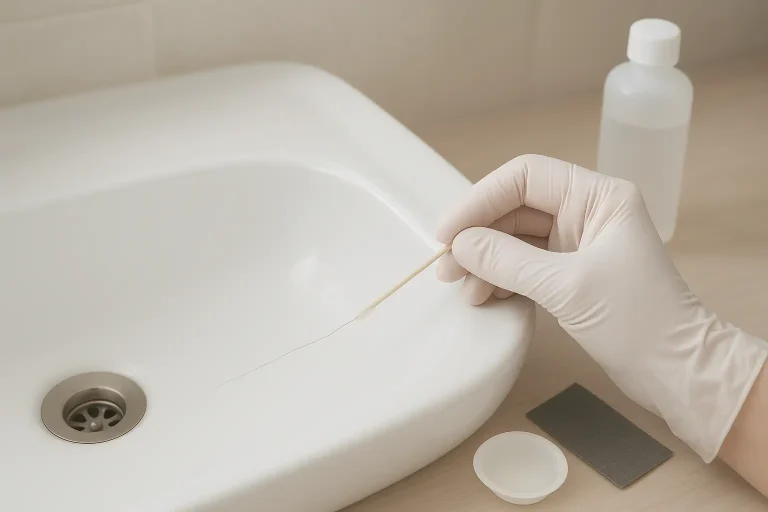
However, ceramic tile body chipping has a reliable repair solution. Color-matched epoxy fillers and ceramic tile chip repair kits can make edge chips nearly invisible. Marble chips are more difficult to repair seamlessly because the repair material cannot replicate the natural veining pattern.
Surface scratches, which are far more common than edge chips in daily use, favor ceramic heavily. A ceramic glaze surface resists scratching from sand, pet claws, and furniture movement. Marble surfaces accumulate visible micro-scratches over time that require professional polishing to remove. For most households, surface wear is a bigger issue than edge chipping, and ceramic handles surface wear better.
Is Marble Tile Colder Underfoot Than Ceramic Tile?
Marble tile feels colder underfoot than ceramic tile even when both are at the same actual temperature. This is due to marble’s higher thermal conductivity (2.0 to 3.0 W/mK vs 1.0 to 1.3 W/mK for ceramic), which pulls heat away from bare feet faster. The sensation is the same physics that makes a metal spoon feel colder than a wooden one at room temperature.
Both materials are thermally cold surfaces in unconditioned spaces during winter. In a basement bathroom or a sunroom without heated floors, both ceramic and marble feel uncomfortably cold to bare feet. The solution for either material in cold climates is radiant floor heating, which eliminates the cold-foot problem completely and makes the stone’s thermal mass an asset for heat retention.
If cold floors are a concern and radiant heating is not in the budget, ceramic tile over a cork or foam underlayment provides slightly better thermal insulation than marble set directly on a concrete slab. For projects where warmth matters most, our comparison of ceramic tile against hardwood flooring covers the thermal comfort differences between tile and wood surfaces, which may help if underfoot warmth is a deciding factor in your material choice.
Does Marble Tile Increase Home Value More Than Ceramic Tile?
Marble tile increases perceived home value in luxury and high-end markets where buyers expect premium natural materials. In a $1 million-plus home, a marble foyer or master bathroom signals quality that ceramic tile does not. In homes priced below $500,000, ceramic tile provides excellent perceived value without the maintenance concerns that may actually deter some buyers.
Appraisers do not assign a specific dollar premium to marble over ceramic in standard valuation models. The value impact depends entirely on the market segment and buyer expectations. A well-installed ceramic tile floor in a mid-range home achieves full market value. Marble in the same home may not recover its higher installation cost at resale unless the property is in a neighborhood where marble is the standard.
Poorly maintained marble actively reduces home value. An etched, stained, or dull marble floor signals deferred maintenance to buyers and inspectors. Ceramic tile, even when older, rarely raises the same concerns because it does not visibly degrade in the same way without severe damage.
Can You Use Underfloor Heating With Both Ceramic and Marble Tiles?
Both ceramic and marble tiles work with electric and hydronic underfloor heating systems. Ceramic tile conducts and releases heat quickly, reaching comfortable surface temperatures faster after system activation. Marble stores more heat and releases it more slowly, providing longer-lasting warmth after the system cycles off.
The installation requirements differ slightly. Ceramic tile over radiant heat needs a flexible thinset mortar rated for thermal cycling to prevent cracking. Marble over radiant heat requires a crack isolation membrane between the heating elements and the stone, which adds approximately $2 to $4 per square foot to the overall installation cost. This membrane absorbs the minor thermal expansion and contraction movements that could otherwise crack the natural stone.
Floor surface temperatures for radiant systems are typically designed to stay between 75 and 85 degrees Fahrenheit regardless of the tile material. Both ceramic and marble handle this temperature range without degradation. The practical difference is that a marble floor over radiant heat feels noticeably luxurious, combining the visual depth of stone with warmth that contradicts the expectation of cold stone underfoot.
What Is the Environmental Impact of Ceramic vs Marble Tile?
Ceramic tile manufacturing consumes significant energy during kiln firing at temperatures of 1,800 to 2,200 degrees Fahrenheit. The clay extraction process disturbs land and consumes water. However, ceramic tile is made from abundant natural materials (clay, feldspar, silica) and contains no petroleum-based binders or synthetic components. At the end of its long service life, ceramic tile is inert and can be crushed for aggregate or, in some facilities, recycled into new tile body.
Marble tile carries the environmental cost of quarrying, which involves cutting large blocks from mountainsides using diamond wire saws and heavy equipment. The stone must then be transported, often internationally, to fabrication facilities where it is cut into tiles. Transportation emissions for marble shipped from quarries in Italy, Turkey, or China to North American job sites add a significant carbon footprint that domestically produced ceramic tile avoids.
The longevity of marble offsets some of its initial environmental cost if the stone remains in place for 50 to 100 years. Ceramic tile replaced every 20 to 30 years for style reasons carries a cumulative environmental impact that may exceed marble over a century. For environmentally conscious buyers, domestically manufactured ceramic tile with recycled content offers the lowest immediate footprint.
How Do You Clean and Maintain Ceramic Tile Grout vs Marble Tile Grout?
Ceramic tile grout requires periodic cleaning with a pH-neutral cleaner and occasional resealing if cement-based grout was used. Epoxy grout, which is increasingly common in ceramic installations, is inherently stain-proof and never needs sealing. The smooth, non-porous surface of epoxy grout wipes clean with standard household cleaners.
Marble tile grout presents a more complex maintenance challenge. The grout must be sealed on the same schedule as the stone itself, typically every six to twelve months. Cleaning products used on the grout must also be safe for the marble, which eliminates most heavy-duty grout cleaners that contain acids or bleach. This dual sensitivity (marble to acids, grout to staining) makes the grout lines in marble installations a persistent maintenance focus.
The most practical solution for both materials is to minimize grout joint width. Ceramic tile can be installed with grout joints as narrow as 1/16 inch using rectified tiles, dramatically reducing the visible grout area and the associated cleaning burden. Marble tiles are more commonly set with 1/16 to 1/8 inch joints for a nearly seamless stone appearance.
What Underlayment Is Required for Ceramic vs Marble Tile Installation?
Ceramic tile over a wood subfloor requires a cement backer board or an uncoupling membrane as the underlayment. Cement backer board (such as HardieBacker or WonderBoard) provides a stable, moisture-resistant surface that bonds reliably with thinset mortar. This underlayment layer costs $1 to $3 per square foot installed and is standard practice for ceramic tile floors in wet areas.
Marble tile demands a stiffer substrate than ceramic. The Marble Institute of America requires a double-layer plywood subfloor totaling at least 1.25 inches thickness before any underlayment is applied. Over this, a crack isolation membrane or a reinforced mortar bed provides the stable base that prevents marble cracking. The combined subfloor and underlayment system for marble can cost $4 to $8 per square foot, two to three times the cost of a standard ceramic underlayment system.
Over concrete slabs, ceramic tile can be installed directly with a bond coat of thinset provided the slab is flat, clean, and free of cracks. Marble over concrete still benefits from a crack isolation membrane to protect the stone from slab movement. For both materials, uncoupling membranes like Schluter Ditra provide the best insurance against future cracking from subfloor movement.
Which Tile Is More Slip-Resistant: Ceramic or Marble?
Glazed ceramic tiles range from highly slip-resistant (textured, matte finishes) to dangerously slippery (high-gloss polished surfaces). The coefficient of friction (COF) rating tells you what you need to know. A COF of 0.42 or higher on wet surfaces meets the Americans with Disabilities Act standard for slip resistance. Many matte-finish ceramic tiles achieve COF ratings of 0.50 to 0.60 wet.
Polished marble is dangerously slippery when wet, with COF ratings typically between 0.20 and 0.35 on wet surfaces. This is the same slipperiness as wet ice and is the reason polished marble in bathrooms causes falls. Honed marble (matte finish) improves to COF ratings of 0.40 to 0.50, making it acceptable for bathroom floors. Tumbled or brushed marble finishes provide the best natural stone slip resistance.
For bathrooms, entryways, and any area exposed to water, ceramic tile with a textured or matte surface provides more slip resistance options than marble. Polished marble should never be used on a bathroom floor or shower floor, regardless of how visually appealing it looks in showroom lighting.
The slip resistance comparison ties into the broader question of how ceramic handles demanding environments. In the same way that ceramic and slate tiles each bring distinct advantages in wet-area safety, ceramic offers more consistent and predictable slip resistance through engineered surface textures than natural cleft stone surfaces can provide.
Can Marble Tile Be Refinished, and How Does That Compare to Ceramic?
Marble tile can be professionally refinished through a process called diamond honing and polishing. A stone restoration specialist uses progressively finer diamond abrasives to remove the damaged surface layer and restore the original polish. This process costs $2 to $5 per square foot and can be repeated multiple times over the life of the stone, effectively resetting the surface appearance.
Ceramic tile cannot be refinished. Once the glaze surface is scratched, chipped, or worn through, the tile must be replaced. There is no practical method to reapply or restore a fired ceramic glaze in place. The only repair option for damaged ceramic tile is individual tile replacement, which is straightforward and costs $10 to $30 per tile for a professional to cut out and replace.
The refinishability of marble is a meaningful advantage for high-end installations where the stone represents a significant investment. A marble floor that looks worn after 15 years can be restored to like-new condition in a few days by a professional. Ceramic tile that looks dated after 20 years is typically replaced entirely, which costs less per square foot than marble refinishing but is a more disruptive project.
Is Ceramic Tile or Marble Tile Better for Allergy Sufferers?
Both ceramic and marble tile are excellent flooring choices for allergy sufferers. Neither material harbors dust mites, mold spores, pet dander, or pollen in the way that carpet does. The hard, non-porous surface of glazed ceramic tile is the easiest to keep allergen-free because it does not trap particles and can be cleaned with water alone.
Marble, when properly sealed, is also a hypoallergenic surface. The sealing process fills the natural pores of the stone, creating a smooth surface that does not trap allergens. The grout lines in both ceramic and marble installations are the only potential allergen trap, and narrow, well-sealed grout joints minimize even this minor concern.
For the most allergen-resistant floor, ceramic tile with epoxy grout provides a completely non-porous, seamless surface that can be cleaned with hot water and a microfiber mop. No chemical cleaners, no sealers, and no maintenance products are needed to maintain a dust-free, allergen-free surface.
How Do Ceramic and Marble Tile Compare for Pet-Friendly Homes?
Ceramic tile is the more pet-friendly flooring material. Glazed ceramic resists scratching from dog claws, does not stain from pet accidents when cleaned promptly, and does not absorb pet odors. The hard surface is easy to clean with pet-safe, non-toxic cleaners, and the tile itself is unaffected by the ammonia in pet urine.
Marble is vulnerable to pet accidents. Urine is acidic enough to etch marble’s calcium carbonate surface, leaving dull spots that cannot be wiped away. A pet accident that goes unnoticed for even a few hours can permanently damage a marble floor. Sealed marble resists liquid penetration but does not prevent acid etching, so the damage still occurs.
Pets with long claws or large breeds create visible wear patterns on marble floors in high-traffic paths (hallways, routes to food bowls, and doorways). These micro-scratches accumulate into dull pathways that stand out against the polished stone around them. Ceramic glaze surfaces show no equivalent wear from pet traffic.
For homes with dogs, ceramic tile is the clear choice. For homes with only small, well-trained pets, marble can work but requires more vigilance about cleaning up accidents immediately.
What Are the Best Rooms for Marble Tile vs Ceramic Tile?
Ceramic tile works well in every room of the house. Kitchens, bathrooms, laundry rooms, mudrooms, entryways, and basements all benefit from ceramic’s moisture resistance, stain resistance, and durability. Living rooms, dining rooms, and bedrooms can also use ceramic tile effectively, especially with area rugs to add warmth and softness underfoot.
Marble tile performs best in low-moisture, low-traffic areas. Foyers and entryways (in dry climates), formal living rooms, dining rooms, master bedroom accent walls, and fireplace surrounds are ideal marble applications. These rooms showcase marble’s beauty without subjecting it to the daily hazards that cause etching, staining, and scratching in kitchens or bathrooms.
A marble bathroom vanity backsplash is a reasonable application because it sees occasional water splashes but rarely food acids. A marble accent wall in a dry living room delivers the visual impact of natural stone with none of the floor-level wear. But a marble kitchen countertop or floor commits you to a level of daily care that most households find burdensome.
For the most practical room-by-room strategy, use ceramic tile in all wet and high-traffic areas. Use marble selectively in formal, dry spaces where its visual impact justifies the maintenance commitment. This hybrid approach gives you the best of both materials without the worst of either.
Should You Choose Ceramic Tile or Marble Tile for Your Home?
Choose ceramic tile if you want a durable, low-maintenance floor that handles moisture, spills, and heavy traffic without special care. Your project will cost less upfront and accumulate no ongoing maintenance expenses. Ceramic tile is the practical, reliable choice for kitchens, bathrooms, and active households.
Choose marble tile if you prioritize natural beauty, unique veining, and a luxurious aesthetic that no manufactured material can match. Budget for the higher installation cost, the annual sealing, and the professional polishing every few years. Marble rewards those who treat it with care by developing a rich patina that ceramic can never replicate.
The decision comes down to your tolerance for maintenance and your willingness to pay for natural stone’s visual depth. Ceramic gives you freedom from worry. Marble gives you a floor that is genuinely one of a kind. Both are excellent materials. The right choice is the one that fits how you actually live, not how you imagine living.