Tile Adhesive vs Thinset Mortar: When to Use Each Explained

Tile adhesive and thinset mortar look nearly identical in the bag, but using the wrong one can mean cracked tiles, failed grout lines, and a floor you have to tear out within two years.
Both products bond ceramic tile to a substrate, but they are engineered for different conditions, different substrates, and different tile weights. This guide covers what each product actually is, where each one works, where each one fails, the cost differences, and the exact scenarios where one outperforms the other across wall tile, floor tile, wet areas, and large-format ceramic installations.
By the Numbers
Tile Adhesive vs Thinset Mortar: Key Figures
Sources: ANSI A118.1, TCNA Handbook, manufacturer technical data sheets
What Is Tile Adhesive and What Is Thinset Mortar?
Tile adhesive is a pre-mixed, ready-to-use organic adhesive, typically a vinyl acetate or acrylic polymer paste, that bonds ceramic tile to a substrate without any mixing or water addition. Thinset mortar is a cement-based bonding compound composed of Portland cement, fine sand, and water-retaining agents (such as cellulose ether), which must be mixed with water or a liquid polymer additive before use.
The chemical difference matters more than most DIYers realize. Tile adhesive cures through evaporation: the water in the paste evaporates, leaving a polymer film that bonds the tile. Thinset cures through a hydraulic reaction: Portland cement particles react with water molecules to form calcium silicate hydrate crystals, a process that continues for 28 days and produces a rigid, load-bearing bond that tile adhesive cannot replicate.
This mechanism determines everything about where each product can and cannot go. Tile adhesive needs airflow to cure, which means it cannot be used in fully enclosed wet areas or under large-format tiles where the polymer film cannot release moisture. Thinset, once cured, is waterproof, dimensionally stable, and chemically inert, which is why it is the product specified in the Tile Council of North America (TCNA) Handbook for nearly every demanding installation.
The terminology gets confusing because the industry uses “thinset,” “dryset mortar,” “drybond mortar,” and “tile mortar” interchangeably. They all refer to the same cement-based product category defined under ANSI A118.1 (dry-set portland cement mortar) and ANSI A118.4 (latex portland cement mortar). Tile adhesive is sometimes called “mastic,” although mastic technically refers to a specific organic compound that is no longer widely sold in its original form.
How Do Tile Adhesive and Thinset Mortar Actually Bond to Ceramic Tile?
Tile adhesive bonds through mechanical adhesion: the polymer paste fills microscopic surface irregularities in both the tile back and the substrate, then cures into a flexible film that holds both surfaces together. Thinset mortar bonds through both mechanical interlocking and chemical hydration: the cement paste fills surface pores, then the hydration reaction locks the material into a rigid crystalline matrix that becomes part of the substrate structure.
The bond strength difference is significant. Standard pre-mixed tile adhesive achieves shear bond strengths of approximately 100 to 150 psi on a cured installation. Polymer-modified thinset mortar meeting ANSI A118.4 achieves minimum 200 psi shear bond strength, with premium products (such as Laticrete 254 Platinum or Custom Building Products Versabond-LFT) routinely testing above 400 psi. The TCNA Handbook specifies thinset for all floor applications, all wet areas, and all exterior installations because floor traffic, thermal cycling, and freeze-thaw cycles introduce shear forces that organic adhesives cannot resist long-term.
Polymer-modified thinset adds latex or acrylic polymer to the cement-sand mix. The polymer serves two functions: it improves workability (extending open time from roughly 10 minutes for unmodified thinset to 30 to 45 minutes for polymer-modified products), and it increases the cured bond strength and flexibility. Products such as Custom Building Products Versabond and Mapei Ultraflex 2 are polymer-modified thinsets designed for ceramic tile on floors, walls, and wet areas, meeting ANSI A118.4 requirements.
Key Specifications for Polymer-Modified Thinset (ANSI A118.4 compliant):
- Shear bond strength (ANSI A118.4 minimum): 200 psi (wet) / 300 psi (dry)
- Open time: 30 to 45 minutes at 70°F (21°C) and 50% relative humidity
- Adjustability time after tile set: 20 to 30 minutes
- Full cure time: 28 days (hydraulic cement cure cycle)
- Coverage per 50-pound bag: approximately 40 to 60 square feet at standard application thickness
Tile adhesive is not a weaker version of thinset. It is a different chemistry for a different application. Using tile adhesive where thinset is specified does not produce “less strong” results. It produces a bond that fails on a different timeline under conditions the adhesive was never engineered to handle.
Where Tile Adhesive Works and Where It Fails
Tile adhesive is engineered for dry, interior, vertical applications: specifically, wall tile installations in areas that do not receive direct water exposure and where tiles are small enough for the adhesive film to carry the load without creep. The product works well for ceramic wall tile in dry bathrooms, kitchen backsplashes above the countertop, and decorative tile feature walls where tiles are under 8 inches by 8 inches and weigh less than the adhesive can support vertically without slumping.
The failure conditions for tile adhesive are well-documented in the TCNA Handbook and by every major adhesive manufacturer in their technical data sheets. Using pre-mixed tile adhesive in any of the following situations produces predictable bond failure:
- Wet areas (shower walls, bathtub surrounds, steam rooms): the adhesive polymer film softens and breaks down with repeated water exposure, typically within 12 to 36 months
- Floor applications: foot traffic introduces continuous shear force that organic adhesives cannot resist long-term, particularly at grout joints
- Large-format tile (anything over 12 inches by 12 inches): the adhesive cannot support the tile weight on vertical surfaces and the limited bed thickness creates hollow spots beneath large tiles on horizontal surfaces
- Exterior applications: freeze-thaw cycling destroys organic adhesive bonds because the polymer film cannot accommodate the substrate movement
- Over non-porous or contaminated substrates: tile adhesive requires a porous surface for the polymer to grip; over glass, metal, or previously painted surfaces, bond failure is rapid
- Radiant heat floors: heat accelerates adhesive softening and causes creep deformation beneath tiles
The reason tile adhesive fails in wet areas comes down to the cure mechanism. The polymer film that bonds tile adhesive to the substrate is a physical solid, not a chemical compound. When water is introduced repeatedly, it re-enters the adhesive matrix, temporarily re-emulsifying the polymer. Each wet-dry cycle degrades the film a small amount. After enough cycles, the bond at the tile back separates from the bond at the substrate, producing hollow-sounding tiles and eventual pop-off.
For most home DIYers, tile adhesive is the right choice for exactly one common application: small ceramic tiles on a dry interior wall where convenience matters more than longevity expectations. A pre-mixed tile adhesive for ceramic wall tile in a kitchen backsplash application well above the sink line is reasonable. That same product in a shower surround is a guaranteed callback in under two years.
Where Thinset Mortar Is the Only Correct Choice
Thinset mortar is not the “professional” choice over tile adhesive. It is the structurally correct choice for any application where the installation will encounter water, load, thermal movement, or large-format tiles. The TCNA Handbook specifies thinset for all of the following applications, and no compliant tile installation uses organic adhesive in these conditions.
Floor tile of any type requires thinset. Walking traffic creates continuous, low-level impact and shear stress at the bond layer. Thinset’s crystalline structure distributes this stress through the cement matrix without deforming. Organic adhesive creeps under sustained load, producing lippage (tile edges rising above adjacent tiles) and eventual delamination at grout joints.
All wet area installations require thinset. Shower walls, shower floors, bathtub surrounds, steam rooms, pool surrounds, and exterior fountains all require a minimum of ANSI A118.4 polymer-modified thinset, and in many cases require an epoxy thinset (ANSI A118.3) for maximum waterproofing. Products such as Laticrete 254 Platinum, Mapei Ultraflex LFT, and Custom Building Products Versabond-LFT are industry-standard products for these applications.
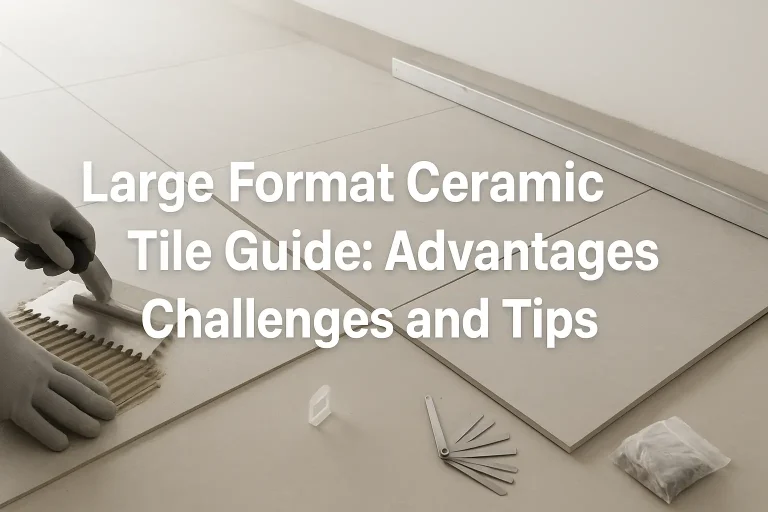
Large-format tile (12 inches by 12 inches and larger) requires thinset. Large tiles flex slightly under load and require back-butter application in addition to the floor coverage to achieve the 95% minimum back coverage specified by the TCNA Handbook (80% in dry areas). A large-format tile thinset mortar with a medium- or large-bed formulation achieves the coverage required without slump.
Exterior tile installations always require thinset. Temperature swings from below freezing to above 100°F (38°C) expand and contract the substrate by amounts that organic adhesive bonds cannot track. Polymer-modified thinset with a Shore A hardness specification in the cured state provides just enough flexibility to absorb substrate movement without bond failure. For exterior applications in climates with significant freeze-thaw cycling, consult the TCNA EJ171 movement joint guidelines before specifying any bond coat product.
Key Specifications for Standard Gray Polymer-Modified Thinset (Custom Building Products Versabond example):
- Classification: ANSI A118.4 (latex portland cement mortar)
- Compressive strength at 28 days: approximately 3,500 psi
- Shear bond strength: 300+ psi
- Open time: 30 minutes at standard conditions
- Suitable substrates: cement board, concrete, mortar beds, existing ceramic tile (if sound)
- Retail cost: $18 to $25 per 50-pound bag (covers approximately 40 to 50 square feet at 3/16-inch application)
Thinset is also the correct product for heated floors. Radiant heat systems cycle between ambient temperature and operational temperature (typically 85°F to 104°F (29°C to 40°C) at the tile surface) every time the system runs. The cement-based matrix handles thermal cycling without bond degradation, while organic adhesive softens and deforms. Always use a decoupling membrane for radiant heat tile floors in combination with polymer-modified thinset to absorb the differential expansion between the heated substrate and the tile layer.
The following table summarizes which product is correct for each installation scenario. Use the table below to confirm the right bonding product before purchasing materials for your specific tile project.
Product Comparison
Tile Adhesive vs Thinset Mortar: Side by Side
Full comparison across key installation variables. Source: TCNA Handbook, ANSI A118.1/A118.4, manufacturer technical data sheets.
| Feature | Tile Adhesive (Mastic) | Thinset Mortar |
|---|---|---|
| Chemistry | Organic polymer (vinyl acetate/acrylic) | Portland cement, sand, polymer modifier |
| Mixing required | No (pre-mixed) | Yes (water or polymer additive) |
| Cure mechanism | Evaporation (polymer film) | Hydraulic cement hydration |
| Shear bond strength | 100 to 150 psi (typical) | 200 to 400+ psi (ANSI A118.4) |
| Open time | 10 to 15 minutes (skins quickly) | 30 to 45 minutes (polymer-modified) |
| Floor tile use | Not approved | Correct choice |
| Wet area walls | Fails within 1 to 3 years | Correct choice |
| Dry interior wall tile | Acceptable for tiles under 8″x8″ | Works, but more labor-intensive |
| Large-format tile (12″+ side) | Not suitable | Required (medium or large bed formula) |
| Exterior use | Never | Required (polymer-modified) |
| Radiant heat floors | Not suitable | Required with decoupling membrane |
| Cost per 50-pound bag (approx.) | $12 to $18 (per gallon bucket equivalent) | $18 to $45 |
| ANSI/TCNA compliance | Limited to specific dry interior scenarios | Meets A118.1, A118.4, A118.11 as applicable |
| Our verdict | Dry wall backsplashes only | Default choice for all other installations |
ANSI = American National Standards Institute. TCNA = Tile Council of North America. Bond strength values reflect typical published product data. Always verify with project-specific manufacturer TDS before specifying.
The correct default is thinset mortar. Tile adhesive is the correct choice for exactly the narrow scenario where it was designed: small, light ceramic tile on a dry, interior, vertical surface. Every other scenario defaults to thinset.
Types of Thinset Mortar and Which Ceramic Tile Applications Each Serves
Not all thinset mortars are interchangeable. Four main thinset formulations exist in the current market, each engineered for a different combination of tile type, substrate, and installation condition. Choosing the wrong thinset is a common cause of bond failure even when mastic is correctly avoided.
Unmodified Dry-Set Thinset (ANSI A118.1)
Unmodified thinset is Portland cement, fine sand, and a water-retaining agent (usually methyl cellulose) with no polymer modifier. It meets ANSI A118.1 and is the minimum specification for many interior applications. Its primary advantage is cost: approximately $8 to $12 per 50-pound bag for standard gray unmodified thinset.
It is also the required bond coat when installing over an uncoupling membrane such as Schluter Ditra or Mapei Mapeguard, because polymer-modified thinset on both sides of the membrane creates a bond that is too rigid and can cause the membrane’s stress-relief function to fail. Use unmodified thinset (white or gray) below the uncoupling membrane and polymer-modified thinset above it, or follow the membrane manufacturer’s specific guidance.
Polymer-Modified Thinset (ANSI A118.4)
Polymer-modified thinset adds dry latex or acrylic polymer to the cement-sand base. When mixed with water, the polymer rehydrates and disperses through the slurry, increasing flexibility, bond strength, and open time relative to unmodified products. This is the default specification for the majority of residential and commercial ceramic tile installations, covering floors, walls, wet areas, and most substrates.
Products such as Custom Building Products Versabond polymer-modified thinset, Mapei Ultraflex 2, and Laticrete 253 Gold are widely available, meet ANSI A118.4, and are appropriate for ceramic tile on concrete, cement board, and mortar beds in both wet and dry applications.
Large-Format Tile (LFT) Thinset
Large-format tile thinset is a polymer-modified mortar engineered specifically for tiles with any side longer than 15 inches. Standard thinset mortars slump under the weight of large tiles on walls and do not resist the extended sag that occurs during the open time window. LFT formulations include anti-slump additives that increase viscosity after application while maintaining workability during notch trowel application.
Custom Building Products Versabond-LFT and Laticrete 254 Platinum are two commonly specified LFT thinsets. Both meet ANSI A118.4 and some also carry ANSI A118.15 (improved polymer-modified) ratings. For any tile with a side dimension over 15 inches, the TCNA Handbook (Method F113) requires back-buttering in addition to floor coverage to achieve the 95% back coverage minimum.
Key Specifications for LFT Thinset (Laticrete 254 Platinum example):
- Classification: ANSI A118.4 and A118.15 (improved polymer-modified)
- Maximum tile size: unlimited with proper substrate preparation
- Anti-slump: suitable for large-format wall tile up to 24 x 48 inches
- Open time: 45 to 60 minutes at 70°F (21°C)
- Coverage per 50-pound bag: 35 to 55 square feet depending on tile size and trowel notch
- Retail cost: $30 to $45 per 50-pound bag
Epoxy Thinset (ANSI A118.3)
Epoxy thinset is a two- or three-part system combining an epoxy resin, a hardener, and in some formulations a silica filler aggregate. It cures through a chemical cross-linking reaction rather than cement hydration, producing a bond with shear strength exceeding 1,000 psi and near-zero water absorption in the cured mortar bed.
Epoxy thinset is specified for chemical resistance environments (commercial kitchens, laboratories, food processing areas), for installations over problematic substrates (plywood, steel, glass tile that requires an ultra-clear bond coat), and for any installation requiring maximum bond strength with zero risk of water intrusion at the bond layer. It is significantly more expensive ($60 to $120 per kit covering 20 to 40 square feet), has a short working time (30 to 45 minutes at 70°F), and requires clean tools before the epoxy sets because solvent cleanup is difficult after cure. Spectralock Pro Premium Grout from Laticrete is one of the most widely used epoxy grout-and-mortar systems in North American commercial tile work.
For most residential ceramic tile projects, polymer-modified thinset (ANSI A118.4) is the correct default specification. Upgrade to epoxy thinset only when chemical exposure, maximum bond strength, or specific substrate requirements demand it.
Substrate Compatibility: Which Bond System Applies to Which Surface
The substrate determines the bond system almost as much as the application type does. The most common cause of thinset bond failure in residential tile work is not using the wrong thinset type but applying the correct thinset over an unsuitable substrate. Here is what each common substrate requires.
Concrete Slabs and Mortar Beds
Concrete and sand-cement mortar beds are the ideal substrate for ceramic tile with thinset mortar. Both provide the porous, alkaline surface that promotes cement-to-cement bonding, and both have thermal expansion coefficients close enough to ceramic tile that movement joint spacing per TCNA EJ171 is the primary accommodation needed.
New concrete must cure for a minimum of 28 days before tile installation. Green concrete continues to shrink as it cures, and any tile installed before full cure will crack along shrinkage lines regardless of thinset quality. Existing concrete must be free of curing compounds, sealers, paint, or contamination. Test with water: if a small pour beads up rather than absorbing, the surface is sealed and must be mechanically scarified or chemically stripped before thinset will bond.
Cement Board (Backer Board)
Cement board products such as USG Durock, James Hardie HardieBacker, and Permabase provide a dimensionally stable, moisture-resistant substrate for ceramic tile in wet areas. Cement board is not waterproof by itself. It must be used in combination with a waterproofing membrane or waterproofing sheet membrane at all changes of plane (floor-to-wall transitions) in shower enclosures.
Apply polymer-modified thinset (ANSI A118.4) over cement board using a 3/16-inch V-notch or 1/4-inch square-notch trowel for standard ceramic tile. Use a notched trowel for cement board tile installation matched to the tile size per TCNA guidelines (larger notch for larger tile to achieve required coverage).
Gypsum Drywall (Greenboard and Standard)
Standard gypsum drywall is not a suitable substrate for ceramic tile in wet areas under any bonding system. Greenboard (moisture-resistant gypsum) is marginally better but still not compliant for shower or tub enclosures per the TCNA Handbook. Both products are acceptable for dry interior wall tile with either tile adhesive (small tiles) or polymer-modified thinset (larger tiles), but neither can be installed in wet zones.
Gypsum drywall is paper-faced, and repeated moisture exposure causes the paper to de-laminate from the gypsum core. When the paper separates, it takes the thinset and tile with it. There is no bonding system that makes standard gypsum drywall suitable for showers. Replace it with cement board, foam shower panel systems (such as Schluter Kerdi-Board), or a waterproof substrate before tiling.
Existing Ceramic Tile
Sound, well-bonded existing ceramic tile is a viable substrate for new ceramic tile with polymer-modified thinset. “Sound” means the existing tile passes a tap test with no hollow areas, has no cracks, and is not moving when force is applied. Verify that the cumulative tile thickness does not create a floor height problem at transitions.
Scratch the existing tile surface with 80-grit sandpaper or an angle grinder to break the glaze and create mechanical tooth. Apply polymer-modified thinset with back-buttering on the new tile. Do not use tile adhesive over existing tile: the combination of a non-porous substrate and an evaporation-cure adhesive produces a predictable bond failure within months.
For a detailed walkthrough of the complete substrate preparation and tile installation sequence, the step-by-step ceramic tile installation process for DIY projects covers substrate prep, trowel selection, tile layout, and grouting from start to finish.
Plywood Subfloor
Plywood deflects under load. Ceramic tile and cement-based mortars do not flex. This fundamental incompatibility makes plywood a problem substrate for tile, but not an impossible one. The TCNA Handbook (Method F150) permits tile over a two-layer plywood assembly with specific thickness requirements: a minimum combined thickness of 1-1/4 inches for the two plywood layers, with the subfloor spanning joists on 16-inch centers maximum.
Do not install tile directly over a single layer of plywood. Install cement board or an uncoupling membrane over the plywood first, then tile over that. The uncoupling membrane (Schluter Ditra or equivalent) decouples the tile layer from the plywood movement and is the TCNA-preferred method for tile over wood subfloors. Use unmodified thinset below the membrane (to allow the membrane’s stress-relief function) and polymer-modified thinset above it.
Quick Reference
Tile Installation Terms Defined
Key terminology used throughout this guide, defined in plain language.
Trowel Selection: Why Notch Size Determines Bond Success
The trowel notch determines how much mortar reaches the tile back. An undersized notch produces inadequate back