Does Ceramic Coating Prevent Scratches? What It Protects Against

Ceramic coating does not prevent scratches the way a scratch-resistant film does. It creates a chemically bonded glass layer on top of your car’s paint, and understanding exactly what that layer stops (and what it does not) is what separates a smart coating decision from an expensive disappointment.
Most car owners assume ceramic coating is a force field. It is not. It is a 9H-rated silica dioxide (SiO2) barrier that excels at specific threats and fails visibly against others.
What Is Ceramic Coating and How Does It Work on Paint?
Ceramic coating is a liquid polymer made primarily from silicon dioxide (SiO2) or titanium dioxide (TiO2) that chemically bonds to a vehicle’s clear coat when applied and cured. Once hardened, it forms a semi-permanent glass-like layer that sits on top of the paint surface rather than inside it.
This bonded layer does not peel, wash off, or wipe away with standard car wash soap. It becomes part of the surface until it is mechanically abraded or chemically stripped.
How SiO2 Bonds to Clear Coat
The SiO2 molecules in the liquid coating react with hydroxyl groups on the clear coat surface through a condensation reaction. This creates covalent Si-O-Si bonds between the coating and the paint, which is why ceramic coatings resist detergents that would dissolve wax or sealant layers.
The bond strength depends directly on surface preparation. Contamination, oils, or polish residue between the coating and clear coat prevent full bonding and reduce hardness and longevity by 30 to 50 percent according to coating manufacturer technical data sheets.
Coating Thickness and Hardness Rating
A single layer of professional-grade ceramic coating adds approximately 1 to 2 microns of thickness to the paint surface. Most professional coatings are rated at 9H on the pencil hardness scale, which measures resistance to surface scoring under a weighted pencil.
For comparison, factory automotive clear coat typically measures between 4H and 6H on the same scale. A 9H ceramic layer is meaningfully harder than what it sits on top of, which is relevant to understanding both what the coating protects and where it reaches its limits.
Key Specifications for professional-grade SiO2 ceramic coatings:
- Primary compound: Silicon dioxide (SiO2) at 70 to 85 percent concentration in professional formulas
- Layer thickness per application: 1 to 2 microns
- Pencil hardness rating: 9H
- Contact angle (hydrophobicity): 100 to 120 degrees for quality professional coatings
- Cure time to full hardness: 2 to 4 weeks depending on temperature and humidity
- Expected service life (professional application): 2 to 5 years with maintenance
For a detailed breakdown of how long the coating takes to reach full hardness and what affects the curing timeline, our complete guide to ceramic coating cure times and what affects full hardness covers temperature, humidity, and layer-count variables in full.
Does Ceramic Coating Actually Prevent Scratches?
Ceramic coating reduces the risk of light surface scratches and swirl marks, but it does not prevent scratches outright. The 9H hardness rating means the coating resists scoring from objects softer than a 9H pencil lead. Objects harder than that, including most grit particles, key tips, and parking lot debris, will scratch through the coating into the clear coat beneath.
The distinction matters because “scratch resistance” and “scratch prevention” are not the same claim. Every reputable ceramic coating manufacturer uses the term “scratch resistance,” not “scratch proof.”
What Scratches Ceramic Coating Can Resist
Light contact scratches from soft materials fall below the threshold of the coating’s hardness. This includes fingernail grazing, light brush contact from foliage, microfiber towel drag marks caused by improper drying technique, and swirl marks introduced by automated car wash brushes made from soft synthetic bristles.
These are exactly the scratches that account for the dull, swirled appearance most vehicles develop over two to three years of normal ownership. Ceramic coating reduces the rate at which this micro-damage accumulates, which is its most practical everyday benefit.
What Scratches Ceramic Coating Cannot Stop
Sand and grit particles suspended in wash water or carried by wind have a Mohs hardness of 7. The ceramic coating sits at approximately 9H pencil hardness, which does not directly translate to Mohs hardness but still places it below the threshold needed to resist sharp-edged silica particles moving at velocity.
Intentional keying, rock chips traveling at highway speed, shopping cart corner impacts, and abrasive compound contact all penetrate both the ceramic layer and the clear coat beneath. The coating does not add meaningful protection against these events.
The Sacrificial Layer Concept
The more accurate way to understand ceramic coating’s scratch behavior is through the sacrificial layer concept. When a soft material contacts the surface, it damages the ceramic layer instead of the clear coat. Because the ceramic layer can be polished or recoated without touching the factory paint, this represents a genuine protective advantage even when the coating itself is scratched.
Factory clear coat that is scratched cannot be recovered without compounding and polishing, which physically removes a few microns of that clear coat each time. A scratched ceramic coating can be addressed by polishing the coating layer alone, preserving the clear coat underneath.
What Does Ceramic Coating Actually Protect Against?
Ceramic coating’s strongest protections are chemical rather than physical. The glass-like SiO2 surface is chemically inert to most substances that permanently etch or stain automotive paint, and its hydrophobic angle of 100 to 120 degrees causes water-borne contaminants to bead and roll off before they can concentrate and react with the surface.
Understanding these protections by category helps set realistic expectations before purchase.
UV Oxidation and Paint Fading
Ultraviolet radiation from sunlight breaks down the polymer chains in automotive clear coat through a process called photo-oxidation. This is the mechanism behind paint fading, chalking, and the milky hazing that appears on neglected vehicles after four to six years of sun exposure.
Ceramic coatings block UV radiation through the same mechanism as UV-protective glass. The SiO2 layer absorbs and reflects UV photons before they reach the clear coat. Most professional ceramic coatings provide UV protection rated at 98 to 99 percent blockage, which is comparable to SPF 50+ rated sun protection in human skincare terms.
This is one of the coating’s highest-value benefits for vehicles parked outdoors daily. Paint restoration from advanced UV oxidation costs $400 to $1,200 at a professional detailing shop, depending on vehicle size and damage depth.
Chemical Etching from Bird Droppings and Tree Sap
Bird droppings contain uric acid at a pH as low as 3.5. Tree sap contains terpenes and sugars that harden into a resinous bond with clear coat when heated by sunlight. Both substances chemically etch into unprotected clear coat within 24 to 48 hours of contact in warm weather.
The ceramic coating’s chemically inert SiO2 surface does not react with uric acid or tree sap under normal exposure conditions. Both contaminants sit on top of the coating rather than bonding to the surface below, and they rinse or wipe away without etching damage.
This protection is time-limited. Extremely concentrated or prolonged chemical exposure, particularly bird droppings left on a vehicle in direct sunlight for more than 48 hours, can eventually etch through the ceramic layer. Prompt removal matters even on a coated vehicle.
Water Spots and Mineral Deposits
Hard water leaves calcium and magnesium mineral deposits on paint when water evaporates. On bare or wax-coated surfaces, these minerals bond directly to the clear coat and require acidic cleaners or mechanical polishing to remove. On a ceramic-coated surface, water beads to a contact angle of 100 to 120 degrees and rolls off before it fully evaporates, dramatically reducing the volume of mineral contact.
Mineral deposits that do form on a ceramic-coated surface sit on the coating rather than on the clear coat and are easier to remove with a pH-neutral or mildly acidic wash without risk of paint damage.
Oxidation from Industrial Fallout and Road Chemicals
Iron particles from brake dust and industrial fallout embed in clear coat and oxidize, creating orange rust spots visible as small brown specks across the paint surface. Road salt used in winter climates accelerates this process significantly on unprotected vehicles.
The dense, non-porous surface of a ceramic coating prevents these particles from embedding in the clear coat. Iron fallout that lands on a coated vehicle remains on the surface and is removed during regular washing, rather than oxidizing into the paint structure below.
Swirl Marks from Washing
Swirl marks are circular micro-scratches introduced by wash mitts, chamois, and drying towels moving across a surface with trapped particles. They are the most common form of paint damage on well-maintained vehicles and appear as a web-like pattern under direct light.
Ceramic coating’s harder surface reduces the depth and frequency of swirl mark formation during washing. The hydrophobic surface also releases contamination more easily during pre-rinse stages, reducing the particle load on the mitt before contact. This means fewer abrasive particles are dragged across the surface, which directly reduces swirl formation rate.
Dirt and Grime Bonding
Wax-coated and unprotected paint surfaces have a slightly porous, micro-textured surface that dirt particles physically grip. Ceramic coatings create a smooth, flat surface that offers minimal mechanical adhesion for dirt.
The practical result is that a ceramic-coated vehicle requires less wash pressure, less wash time, and less physical contact to achieve a clean surface compared to an uncoated vehicle. This reduction in physical contact during washing is one of the primary mechanisms through which ceramic coating extends paint condition over years of ownership.
Ceramic Coating vs Paint Protection Film: Which Protects Against Scratches Better?
Paint protection film (PPF) provides meaningfully stronger scratch protection than ceramic coating for one specific reason. PPF is a thermoplastic urethane film that is 150 to 200 microns thick, compared to the 1 to 2 microns of a ceramic layer. The physical thickness of PPF absorbs impact energy from rock chips and moderate abrasion in a way that a micron-thin ceramic coating cannot replicate.
PPF also has self-healing properties in some formulations. Minor scratches in the urethane surface fill in when the material warms from sunlight or a heat gun, typically within 20 to 60 minutes at temperatures above 95°F (35°C).
Use the table below to match your protection priority to the right product choice before spending on either option.
| Protection Factor | Ceramic Coating | Paint Protection Film (PPF) | Ceramic Coating Over PPF | Wax or Sealant | Bare Clear Coat |
|---|---|---|---|---|---|
| Rock chip resistance | None | Excellent (150-200 micron barrier) | Excellent (PPF does the work) | None | None |
| Deep scratch prevention | None | Moderate (absorbs light to moderate impact) | Moderate | None | None |
| Swirl mark reduction | Good (9H hardness) | Moderate (softer urethane surface) | Excellent | Minimal | None |
| UV protection | Excellent (98-99% blockage) | Good (film blocks UV but degrades faster) | Excellent | Limited (3-6 months) | None |
| Chemical etch resistance | Excellent | Good | Excellent | Limited | None |
| Hydrophobic effect | Excellent (100-120 degree contact angle) | Moderate (without ceramic top coat) | Excellent | Moderate (90-95 degree contact angle) | None |
| Self-healing capability | None | Yes (in heated self-healing formulas) | No (ceramic layer does not self-heal) | No | No |
| Typical installed cost | $500 to $2,000+ | $1,500 to $7,000+ | $2,000 to $8,000+ | $50 to $300 | $0 |
| Service life | 2 to 5 years | 5 to 10 years | 5 to 10 years | 3 to 6 months | N/A |
For drivers who park in uncovered lots, commute on highways with frequent road debris, or live in areas with heavy gravel on roads, PPF on the front bumper, hood, and mirrors provides rock chip protection that ceramic coating simply cannot deliver. For drivers primarily concerned with chemical protection, UV blocking, and easier washing, ceramic coating alone is the more cost-effective choice.
The combination approach of PPF on high-impact zones with ceramic coating over the full vehicle represents the highest level of paint protection currently available in the automotive detailing market.
Here is a quick reference showing exactly where ceramic coating’s protection is strong, where it partially covers you, and where you need PPF or paint correction to genuinely address the risk.
VALUE ANALYSIS
When Ceramic Coating Wins and When It Does Not
Performance gap between ceramic coating and no protection, by threat category
Ceramic coating wins big
Ceramic coating wins big
Ceramic coating wins big
Ceramic coating usually wins
Ceramic coating usually wins
Gap is small (use PPF instead)
Gap is small (no meaningful protection)
Editorial assessment based on coating hardness ratings, SiO2 chemistry, manufacturer technical data, and independent automotive detailing evidence. Not a sponsored ranking.
How Ceramic Coating Hardness Ratings Actually Work
The 9H hardness rating on ceramic coatings refers to the pencil hardness scale, which is a standardized test method defined in ASTM D3363. In this test, a series of pencil leads of increasing hardness (from 6B softest to 9H hardest) are drawn across a coated surface at a 45-degree angle under a 750-gram load. The hardness rating is the hardest pencil that does not mark the surface.
This rating is frequently misunderstood as equivalent to 9H on the Mohs mineral hardness scale. It is not. Mohs 9H corresponds to corundum (sapphire and ruby), which is the second-hardest naturally occurring material after diamond. Pencil hardness 9H means the coating resists soft graphite marking under controlled conditions, not that it approaches sapphire hardness.
What 9H Pencil Hardness Means in Practice
A 9H pencil hardness rating confirms the coating surface resists soft-material marring, which is the primary mechanism behind car wash swirl marks, cloth drag marks, and light debris contact. It does not confirm resistance to sharp-edged particles moving at velocity, metal tools, or road debris impacts.
Sand particles have a Mohs hardness of 7. A piece of quartz grit embedded in a wash mitt and dragged across any automotive surface, coated or not, will produce micro-scratches because its crystalline edges are harder than any automotive coating currently available.
Why Hardness Alone Does Not Define Scratch Protection
Scratch resistance in a coating system depends on three factors working together: surface hardness, coating flexibility, and coating thickness. A coating that is extremely hard but brittle will micro-crack under flex stress, such as door panels experiencing temperature cycling. A coating that is thick but soft will compress under point-load contact and return to shape.
Ceramic coatings score high on hardness, moderate on flexibility, and very low on thickness at 1 to 2 microns. PPF scores moderate on hardness, high on flexibility, and very high on thickness at 150 to 200 microns. This explains why ceramic coating outperforms PPF on swirl marks (hardness wins) while PPF outperforms ceramic coating on rock chips (thickness wins).
Does Ceramic Coating Protect Against Specific Threats? A Threat-by-Threat Guide
The most useful way to evaluate ceramic coating is to assess it against the specific threats your vehicle faces in your actual driving environment. Different threats operate through different mechanisms, and ceramic coating’s protection is strong, partial, or absent depending on which mechanism is involved.
Road Salt and Winter Chemical Exposure
Road salt (sodium chloride) and de-icing chemicals such as magnesium chloride and calcium chloride attack unprotected paint by penetrating micro-pores in the clear coat and reacting with the underlying metal primer and substrate. This process accelerates at chip sites where the clear coat is already compromised.
Ceramic coating’s non-porous SiO2 surface prevents road salt from contacting the clear coat directly. The hydrophobic effect also causes saline water to run off the surface rather than pooling in panel creases. For vehicles driven on salted roads, this chemical barrier protection is one of the coating’s most cost-justified benefits given the long-term cost of corrosion repair.
Fuel and Oil Spills at the Pump
Gasoline and diesel spills at the fuel filler area will permanently stain and soften unprotected automotive clear coat within minutes if not removed. The aromatic hydrocarbons in fuel solvate the polymer chains in clear coat, leaving a dull, softened patch that cannot be polished out once the damage is set.
Ceramic coating’s SiO2 surface is chemically resistant to hydrocarbon solvents at the concentrations found in automotive fuel. A fuel spill on a coated vehicle that is rinsed within a few minutes leaves no permanent mark. This protection is particularly valuable at the rear quarter panel area around the fuel door, which is vulnerable on most vehicles.
Brake Dust on Wheels
Ceramic wheel coatings are formulated to withstand the high temperatures experienced by wheel surfaces, which can exceed 300°F (149°C) during heavy braking. Brake dust is composed of iron particles, carbon, and adhesive residue that permanently bond to uncoated aluminum and chrome wheel surfaces through oxidation within 24 to 48 hours of contact.
A ceramic coating on wheel faces prevents this bonding. Brake dust that lands on a ceramic-coated wheel remains on the surface and is removed during regular washing rather than baking into the finish. Wheel-specific ceramic formulas are formulated with different thermal tolerances than paint coatings and should not be substituted with standard paint coatings on wheel surfaces.
Insect Residue
Insect residue contains amino acids, chitin, and digestive enzymes that bond to clear coat within hours in warm weather. The protein compounds in insect residue cross-link with the clear coat polymer surface as they dry, creating a physical bond that is increasingly difficult to remove without abrasion as time passes.
Ceramic coating’s smooth, non-porous surface prevents this cross-linking. Insect residue sits on top of the coating rather than bonding to the molecular surface below, and it softens and rinses away with warm water or a pH-neutral insect remover product without requiring aggressive scrubbing.
Acid Rain
Acid rain in industrial and urban environments has a pH range of 4.2 to 4.4, compared to neutral water at pH 7.0. Repeated acid rain contact on unprotected clear coat causes cumulative etching that appears as a network of microscopic pits visible under strong lighting after several seasons of exposure.
Ceramic coating provides the same chemical resistance against acid rain as it does against bird droppings. The SiO2 surface does not react with dilute sulfuric or nitric acid at the concentrations present in acid rain under typical contact times. Vehicles in high-acid-rain zones show measurable paint condition advantages after multiple years when coated versus uncoated.
How to Maintain Ceramic Coating to Preserve Scratch Resistance
Ceramic coating’s scratch resistance degrades when the coating is compromised by improper washing technique, abrasive products, or decontamination chemicals that are not rated for coated surfaces. Maintaining the coating correctly is what determines whether the 9H hardness persists for two to five years or degrades to a point where it no longer offers meaningful protection within twelve to eighteen months.
Correct Wash Technique for Coated Vehicles
The two-bucket wash method is the minimum standard for a ceramic-coated vehicle. One bucket holds clean pH-neutral soap solution, and the other holds rinse water. The wash mitt is rinsed in the rinse bucket after each panel section before returning to the soap bucket, preventing contaminated water from being reapplied to the surface.
Automatic car washes with physical brush or cloth contact introduce swirl marks at a rate that defeats the coating’s swirl resistance benefit within months. Touchless automatic washes using high-pressure water jets are acceptable for coated vehicles, though they are less thorough than a proper hand wash.
Products to Avoid on Ceramic-Coated Surfaces
Wax and polymer sealants applied on top of ceramic coating do not bond to the SiO2 surface and add no protective benefit. They leave a residue that requires additional washing to remove and can streak if applied unevenly.
Abrasive polishing compounds, clay bars, and iron remover sprays with high pH values can degrade or strip ceramic coating depending on concentration and contact time. If decontamination is needed on a coated vehicle, use a pH-neutral iron fallout remover rated specifically for coated surfaces.
SiO2 Spray Toppers and Maintenance Coatings
Ceramic coating maintenance sprays, commonly called SiO2 spray toppers or ceramic boost sprays, are diluted SiO2 solutions applied after each wash to replenish the hydrophobic layer and add a thin supplemental coating over time. Products in this category include CarPro Reload, Gtechniq C2V3, and Gyeon Q2M Cure.
Applied after every three to five washes, a quality SiO2 maintenance spray extends the effective life of the base coating by reinforcing the areas of highest wear, particularly the hood, roof, and horizontal panels that receive the most UV and abrasive contact.
Key Specifications for SiO2 spray maintenance products:
- Application method: Spray onto wet or dry surface, spread with microfiber towel, buff before drying
- Recommended frequency: Every 3 to 5 washes, or monthly in high-exposure environments
- Contact angle maintained: 95 to 110 degrees when applied regularly
- Cure time: 15 to 30 minutes at ambient temperature before water contact
- Compatibility: Verify product is rated for use on cured ceramic coatings before application
Professional vs DIY Ceramic Coating: Which Offers Better Scratch Protection?
Professional-grade ceramic coatings such as Gtechniq Crystal Serum Ultra, IGL Kenzo, and Ceramic Pro 9H use higher SiO2 concentrations (typically 70 to 85 percent) than consumer DIY products (typically 5 to 15 percent SiO2), and they cure to a harder, thicker layer as a result. The hardness and scratch resistance of a professional coating is measurably higher than most consumer products available without installer certification.
The performance gap is real but the cost gap is also significant. Professional installation ranges from $500 to $2,000 or more depending on vehicle size and coating tier, while quality DIY consumer products such as DIY ceramic coating kits cost $30 to $150 and can be applied at home with proper preparation.
Why Surface Preparation Determines Coating Performance More Than Product Grade
A professional-grade coating applied over contaminated or scratched paint will not perform as well as a consumer-grade coating applied over perfectly prepared paint. Surface preparation (washing, clay bar decontamination, paint correction if needed, and IPA wipedown) determines whether the coating bonds fully and whether defects are locked under the glass layer permanently.
Paint correction with a dual-action polisher and cutting compound before coating application removes swirl marks and light scratches that would otherwise be sealed permanently under the coating. Skipping paint correction on a scratched surface and applying a high-gloss ceramic coating amplifies the visibility of existing defects rather than hiding them.
DIY Application Process Overview
A proper DIY ceramic coating application requires a minimum of four hours of surface preparation for a standard-size vehicle and a further two to three hours for the coating application itself. The process cannot be rushed. Each panel section must be coated within a specific working time (typically two to five minutes per section) before the coating begins to flash and level unevenly.
The vehicle must be kept dry and out of direct sunlight for a minimum of 24 hours after application to allow initial cross-linking, and must avoid rain contact for 48 to 72 hours. Full hardness at 9H is typically reached at 2 to 4 weeks post-application depending on ambient temperature and humidity. Our full step-by-step guide to applying and maintaining automotive ceramic coatings covers panel prep, application technique, flash-point management, and post-cure care in detail.
Common Misconceptions About Ceramic Coating and Scratch Protection
The gap between what ceramic coating marketing materials imply and what the product actually delivers is wide enough to cause genuine buyer regret in people who invest $1,000 to $2,000 in professional installation expecting a damage-proof paint surface. Addressing these misconceptions directly before purchase saves money and frustration.
Misconception: Ceramic Coating Makes Paint Scratch-Proof
No current coating technology makes automotive paint scratch-proof. The physics of the situation prevent it. Any object harder than the coating surface, moving with sufficient force, will produce a scratch. At 9H pencil hardness and 1 to 2 microns of thickness, ceramic coating is not close to scratch-proof performance.
The accurate claim is scratch-resistant for soft contact and swirl mark reduction. That is a genuine and valuable benefit, but it is a different claim than scratch-proof.
Misconception: Ceramic Coating Eliminates the Need for Paint Protection Film
Ceramic coating and PPF protect against different threat categories and are not interchangeable. Ceramic coating handles chemical threats, UV, and hydrophobicity excellently. PPF handles physical impact, rock chips, and deep scratches that ceramic coating cannot address.
Drivers who commute at highway speeds on roads with loose gravel or construction debris will see rock chips regardless of coating quality. For these use cases, PPF on the front bumper and hood at a cost of $600 to $1,500 provides protection that $2,000 of ceramic coating cannot replicate.
Misconception: A Higher Price Guarantees Better Scratch Resistance
Price in the ceramic coating market reflects brand positioning, installer certification requirements, warranty programs, and SiO2 concentration. It does not guarantee linearly better scratch resistance. A $1,500 professional coating and a $200 consumer-grade professional-tier product may produce nearly identical 9H hardness results when applied by an experienced detailer over properly prepared paint.
The warranty and backing program associated with a professional application is a legitimate differentiator. The coating chemistry at the performance ceiling has limited incremental returns above a certain SiO2 concentration threshold.
Misconception: Ceramic Coating Self-Heals Like PPF
SiO2 ceramic coatings do not self-heal. Once a ceramic layer is scratched, it remains scratched until the coating is polished or recoated. This is a fundamental difference from self-healing PPF, which uses a thermoplastic urethane with shape-memory properties that reflow under heat.
Some coating manufacturers use the term “self-cleaning” to describe the hydrophobic dirt-release properties of ceramic coating. This is not scratch recovery. It refers only to the surface’s resistance to dirt adhesion.
Is Ceramic Coating Worth It for Scratch Protection Specifically?
Ceramic coating is worth the investment for scratch-related benefits if your primary concern is swirl mark accumulation from washing, light contact scratches from daily use, and the long-term paint condition degradation that results from these minor abrasions compounding over years. For these specific concerns, ceramic coating delivers a measurable and lasting benefit.
It is not worth the investment if your primary concern is rock chips, deep scratches from road debris, or intentional damage. For those threats, PPF is the correct product and ceramic coating will not meet the expectation regardless of price tier.
The Total Paint Protection Value Calculation
The most accurate way to evaluate ceramic coating value is to compare the cost of the coating against the cost of the paint correction and paint restoration it prevents over its service life. A vehicle driven daily without coating may require a full machine polish to remove swirl mark accumulation every two to three years at a cost of $300 to $600 per service. Over a five-year ownership period, that represents $600 to $1,200 in paint correction costs.
A ceramic coating at $500 to $700 professionally applied that reduces swirl accumulation enough to eliminate one or two of those polish cycles within its service life has a breakeven cost justification that holds for most daily-driven vehicles.
A clay bar decontamination kit before coating application is non-negotiable for achieving full bond strength and maximum hardness. Skipping this step on a vehicle with embedded iron fallout or bonded contamination reduces effective coating hardness and lifespan regardless of the coating product selected.
Applying Ceramic Coating Correctly to Maximize Scratch Resistance
The scratch resistance of a ceramic coating is only as good as the application process that produced it. Improper application produces a coating with high spots, low spots, uneven hardness, and reduced SiO2 bond density across the surface. A professionally applied coating on properly prepared paint will outperform a poorly applied premium coating in every measurable way.
The steps below reflect the standard application protocol used by certified detailers and produce the hardest, most even coating layer achievable with consumer-grade products and professional-grade products alike.
This is how to apply ceramic coating for maximum scratch resistance:
- Wash and decontaminate the vehicle fully. Use a pH-neutral shampoo for the initial wash, then apply an iron fallout remover spray and allow it to dwell for 3 to 5 minutes. Iron fallout remover reacts with embedded ferrous particles and turns purple as it dissolves them. Rinse thoroughly.
- Clay bar the entire paint surface. Use a detailing clay bar with clay lubricant spray on every painted surface. Clay removes bonded contamination that washing and iron remover do not address. A contaminated surface prevents full SiO2 bonding.
- Perform paint correction if swirl marks or scratches are present. Use a dual-action orbital polisher with a light to medium cutting compound. Ceramic coating locks whatever is on the paint surface permanently. Coating over swirl marks seals them in with a glass layer that amplifies their visibility.
- Wipe down the entire surface with 99% isopropyl alcohol (IPA). Apply with a clean microfiber towel and wipe in one direction. IPA removes polish oils, residue, and any remaining surface contamination. The surface must be completely clean and oil-free for the SiO2 to bond correctly.
- Work in a shaded, temperature-controlled environment. Direct sunlight accelerates the coating’s flash time (the window between application and buffing). Ideal application temperature is 59 to 77°F (15 to 25°C) with low humidity. High temperature and humidity produce high spots and uneven hardness.
- Apply the coating in small sections, panel by panel. Apply a few drops of coating to a foam applicator block wrapped in a microfiber cloth. Work in straight lines, cross-hatching each section. Apply to a 2-square-foot area at a time before buffing.
- Buff before the coating flashes too far. Watch for the coating to begin showing a rainbow iridescence as it levels on the surface. This indicates it is ready to buff, typically 1 to 3 minutes after application depending on temperature. Buff with a clean high-pile microfiber towel using light pressure in straight lines.
- Allow initial cure before water contact. Keep the vehicle dry for 24 to 48 hours minimum after full application. Do not wash the vehicle for 7 days. Avoid parking under trees where sap or bird droppings can contact the surface during the first 2 weeks. Full 9H hardness develops over 2 to 4 weeks.
Frequently Asked Questions About Ceramic Coating and Scratch Protection
Can ceramic coating be applied over existing scratches to hide them?
Ceramic coating does not fill or hide scratches. The coating follows the contours of the surface it bonds to, which means scratches remain visible and are often more visible under the high-gloss SiO2 layer than they were before coating. Any scratches present at the time of application must be polished out using a machine polisher and cutting compound before the coating is applied. Once cured, the coating cannot be removed from scratch areas for touch-up without stripping the entire panel.
Will ceramic coating prevent scratches from automatic car washes?
Ceramic coating reduces swirl mark accumulation from touchless automatic car washes but provides no protection against brush-style or cloth-style automatic washes. Brush and cloth contact automatic washes introduce swirl marks through abrasive particle transfer regardless of surface hardness, because the media traps particles between applications and drags them across the surface under pressure. For a ceramic-coated vehicle, hand washing with the two-bucket method or touchless automatic washes are the only wash methods that preserve the coating’s swirl resistance benefit long-term.
How long does it take for ceramic coating to reach its full 9H hardness?
Ceramic coating reaches its full 9H pencil hardness at 2 to 4 weeks after application under normal conditions (59 to 77°F / 15 to 25°C, moderate humidity). At 24 hours post-application, the coating has achieved approximately 40 to 50 percent of its final hardness. At 7 days, it is typically at 70 to 80 percent hardness. Driving the vehicle during the cure period is acceptable, but the vehicle should not be washed for the first 7 days and should be kept dry for the first 24 to 48 hours. Cold temperatures below 40°F (4°C) significantly slow the cross-linking reaction and extend full cure time. You can find the full breakdown of factors affecting cure timeline in our detailed guide to ceramic coating cure time variables and what to avoid during hardening.
Does ceramic coating protect against rock chips from highway driving?
Ceramic coating does not provide meaningful protection against rock chips at highway speeds. At 1 to 2 microns of thickness, the SiO2 layer does not absorb impact energy from gravel or road debris traveling at 60 to 80 mph relative velocity. Rock chips penetrate through the ceramic layer and through the clear coat in the same way they do on uncoated paint. Paint protection film (PPF) at 150 to 200 microns is the correct product for rock chip protection on high-impact zones such as the hood, bumper, and mirrors.
Can I apply ceramic coating myself, or does it need a professional?
DIY ceramic coating application is achievable with careful surface preparation and attention to application temperature and timing. Consumer-grade products such as Gtechniq C1 Crystal Lacquer, CarPro Cquartz, and Shine Armor Fortify Quick Coat are formulated for hobbyist application. The critical factor is surface preparation: clay bar decontamination and IPA wipedown are non-negotiable for any level of bonding quality. Professional application adds value primarily through paint correction capability, professional-grade SiO2 concentration, and warranty program backing, not through a fundamentally different application technique.
Does ceramic coating affect the color or appearance of car paint?
Ceramic coating enhances paint gloss and depth, producing a wet-look finish that makes colors appear more saturated and reflective than factory clear coat alone. The SiO2 layer has a refractive index close to glass, which is higher than the polymer refractive index of standard clear coat. This optical difference is the source of the “depth” effect that coated vehicles display. The color change is always positive in perceived appearance, not a tint or staining effect. Matte paint finishes require matte-specific ceramic formulas, as standard gloss ceramic coatings will convert a matte finish to a satin or glossy appearance.
Is ceramic coating on a car the same as the ceramic coating on cookware?
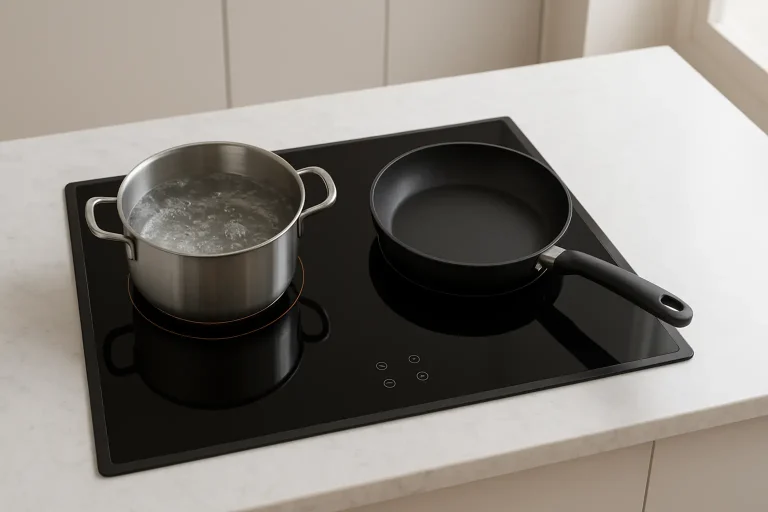
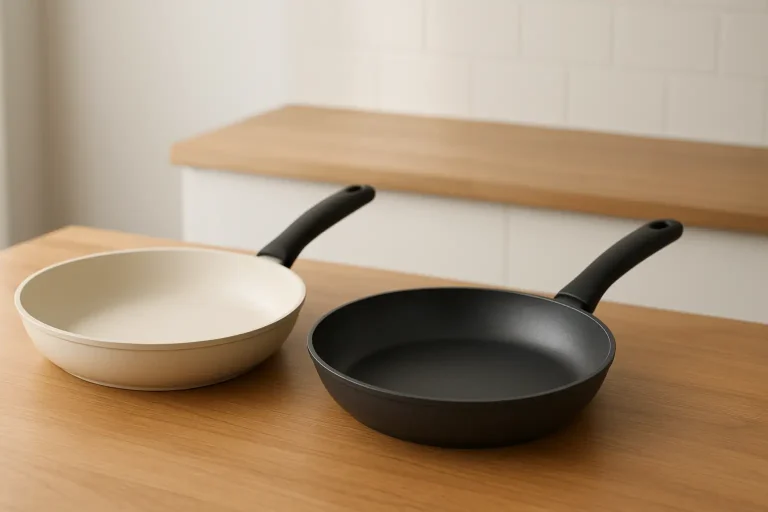
Automotive ceramic coating and ceramic cookware coating share silicon-based chemistry as a common foundation, but they are formulated for entirely different performance requirements. Cookware ceramic coatings are designed for food contact safety, non-stick release, and thermal resistance up to approximately 800°F (427°C). Automotive ceramic coatings are designed for UV resistance, hydrophobicity, chemical inertness, and surface hardness at ambient temperatures. The two products use different cross-linking agents, different binders, and different application and cure methods. You can read more about what cookware ceramic coatings actually contain in our detailed breakdown of what ceramic cookware coatings are made of and whether they contain PTFE.
How do I know if my ceramic coating is still working correctly?
The water bead test is the most reliable field check for coating condition. Pour a small amount of water from a height of 12 inches onto a horizontal panel. A functional ceramic coating produces tight, high-contact-angle beads that roll freely across the surface. Beads that spread flat, sheet across the surface, or do not roll easily indicate the hydrophobic layer has degraded significantly. The coating’s chemical protection (UV blocking, chemical etch resistance) typically outlasts the hydrophobic surface properties, so a coating that no longer beads water aggressively is not necessarily offering zero protection, but it is approaching the end of its effective service life and should be evaluated for recoating.
Can ceramic coating be removed if I want to sell the car or change products?
Ceramic coating cannot be removed with standard chemical strippers or wash products. Removal requires machine polishing with an abrasive compound to physically abrade the SiO2 layer from the clear coat surface. This process removes a few microns of clear coat along with the coating, which is why proper paint thickness measurement before coating application is standard practice at professional detailing shops. For most vehicles with adequate clear coat depth (50 to 100 microns is typical factory thickness), one removal polish does not create measurable long-term paint thickness concerns.
What is the difference between ceramic coating and paint sealant for scratch protection?
Paint sealants are synthetic polymer products that sit on the clear coat surface without forming a chemical bond. They provide a contact angle of approximately 90 to 95 degrees, compared to 100 to 120 degrees for ceramic coating. On the pencil hardness scale, quality paint sealants reach 4H to 6H, compared to 9H for ceramic coating. Sealants last 6 to 12 months before requiring reapplication, versus 2 to 5 years for ceramic coating. For scratch resistance specifically, the hardness difference is the most important factor: 9H ceramic coating resists soft material contact that 4H to 6H sealant does not. For budget-conscious owners, a quality paint sealant such as Meguiar’s Ultimate Fast Finish applied every 6 months provides meaningful chemical protection at a fraction of the cost of ceramic coating, with meaningfully reduced scratch resistance.
Will ceramic coating protect areas that are already chipped down to bare metal?
Ceramic coating should not be applied directly over bare metal chips. The SiO2 coating does not provide corrosion protection equivalent to primer and paint. A chip that exposes bare metal must be addressed with a touch-up paint pen, automotive touch-up paint, or professional spot repair before coating application. Applying ceramic coating over an unaddressed chip seals moisture against the bare metal under the SiO2 layer, creating conditions for accelerated corrosion that is harder to detect until significant rusting has occurred beneath the coating.
Does ceramic coating protect a car’s plastic trim and rubber seals?
Standard paint-grade ceramic coatings can be applied to hard plastics such as bumper covers and mirror housings with good adhesion and chemical protection results. Rubber seals, weather stripping, and flexible plastic trim pieces present a compatibility challenge because these materials flex significantly during temperature cycling, and a rigid SiO2 layer on a highly flexible substrate may micro-crack over time rather than flexing with the material. Flexible ceramic coating formulas designed specifically for plastic trim, such as Gtechniq C4, use modified polymer systems that maintain adhesion through substrate flex cycles. Using a paint-grade ceramic coating on rubber seals is not recommended.
Is ceramic coating on a car related to ceramic materials used in pottery and ceramics?
Automotive ceramic coating shares the silicon dioxide (SiO2) chemistry with ceramic glazes used in pottery, where SiO2 is a primary glass-forming component of most ceramic glazes. Both create glass-like surfaces through silica chemistry. In automotive coating, the SiO2 cross-links at room temperature through a chemical condensation reaction, rather than through kiln firing at cone 6 (2,232°F / 1,222°C) as in pottery glazes. The hardness and chemical inertness of both surfaces come from the same molecular source: the Si-O-Si tetrahedral network that makes silica-based glass highly resistant to chemical attack. The application chemistry and performance requirements diverge substantially from that shared starting point.
The Real Value of Ceramic Coating Is Chemical, Not Physical
Ceramic coating prevents scratches in a narrow and specific category: soft-contact swirl marks and light surface marring from daily use. This is a genuine and worthwhile protection that accumulates meaningful paint condition benefit over years of ownership.
Its true performance advantage is chemical. UV oxidation resistance, bird dropping etch resistance, road salt protection, and hydrophobic contamination release are where ceramic coating delivers results that wax, sealant, and uncoated paint cannot match over a multi-year service window. For drivers who want to buy their vehicle once and sell it in five years with paint that still looks professionally maintained, ceramic coating is one of the most cost-effective single investments available.
Start by evaluating your actual risk profile: if swirl marks and chemical damage are your primary concern, a quality ceramic coating applied over properly prepared paint is the right choice. If rock chips and physical impact are your primary concern, price in PPF on your high-impact zones first, then consider ceramic coating for the rest of the vehicle.