Famous Ceramic Traditions Around the World: A Cultural Guide

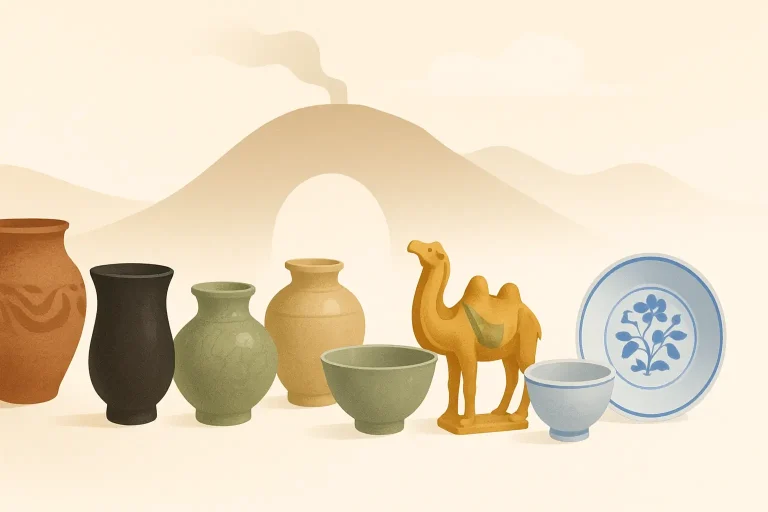
Every ceramic tradition on earth begins with the same three ingredients: clay, fire, and human intention. What separates a Japanese tea bowl from a Moroccan tagine or a Chinese porcelain vase is not just technique but centuries of accumulated cultural meaning, material knowledge, and artistic philosophy fired into every surface.
This guide covers the major ceramic traditions from East Asia, South Asia, the Middle East, Africa, Europe, and the Americas, including their defining materials, firing methods, signature surface treatments, historical origins, and what makes each tradition technically and culturally distinct.
What Makes a Ceramic Tradition? The Cultural and Technical Framework
A ceramic tradition is defined by the specific combination of local clay bodies, kiln technology, forming methods, surface decoration systems, and cultural use contexts that a community develops and transmits across generations. The tradition is not just aesthetic preference; it is a technical response to available materials and functional needs.
According to The History of World Ceramics by Caiger-Smith, the major differentiators between traditions are firing temperature, clay body composition, and the social role of the object. A utilitarian earthenware tradition serving daily cooking needs operates at entirely different technical and cultural parameters than a high-fire porcelain tradition serving imperial courts.
Understanding ceramic traditions requires understanding their material science. Earthenware fires between cone 010 and cone 2 (roughly 1650 to 2100°F / 900 to 1150°C), remains porous above 3% absorption, and relies on glaze or slip for waterproofing. Stoneware fires between cone 6 and cone 10 (2232 to 2381°F / 1222 to 1305°C) and vitrifies to under 1% absorption without glaze. Porcelain fires in the same high-fire range but uses refined kaolin-based clay that achieves translucency at full maturity.
These material differences shaped which cultures developed which traditions and what forms those traditions could produce.
Chinese Ceramic Traditions: The Origin of Porcelain and Imperial Glaze Culture
China is the origin point of true porcelain, developing high-fire vitrified ceramics approximately 1,000 years before Europe achieved the same result. Chinese potters at Jingdezhen, which remains the global center of Chinese porcelain production today, worked with a kaolin-rich clay body called gaoling, firing it to cone 10 to 12 (2381 to 2426°F / 1305 to 1330°C) in wood-fired dragon kilns and later updraft kilns.
The defining technical achievement of Chinese ceramics is the development of the reduction atmosphere glaze palette. Celadon, the iconic blue-green glaze of Song dynasty production (960 to 1279 CE), results from firing iron oxide in a carbon-rich kiln atmosphere. Iron oxide (Fe2O3) loses an oxygen atom to become ferrous oxide (FeO) under reduction conditions between cone 6 and cone 12. FeO scatters light at a wavelength the eye reads as blue-green, producing the characteristic celadon color that European potters attempted to replicate for centuries without understanding its chemistry.
Key Chinese glaze traditions include:
- Celadon (Qingci): Iron oxide reduction glaze, cone 10 to 12, blue-green to olive-green range depending on iron percentage (1% to 3% iron oxide) and reduction intensity.
- Jun ware: Opalescent blue glaze caused by liquid-liquid phase separation in a calcium-phosphorus flux system; copper additions produce purple-red splashes at 0.3% to 0.5% copper carbonate.
- Tenmoku (Jian ware): High-iron glaze (8% to 12% iron oxide) fired in reduction to cone 10 to 12, producing oil-spot and hare’s-fur surface patterns through iron crystallization during cooling.
- Blue and white (Qinghua): Cobalt oxide underglaze decoration under a clear glaze, firing to cone 9 to 11; cobalt levels of 0.5% to 1% produce the characteristic blue without graying.
- Famille rose and famille verte: Overglaze enamel traditions using low-fire enamels (cone 010 to 06) applied over high-fire porcelain and re-fired at 1290 to 1470°F (700 to 800°C).
Use the table below to compare the major Chinese glaze traditions across their technical requirements.
| Glaze Tradition | Firing Temperature | Atmosphere | Key Colorant | Clay Body | Food Safe After Firing | Primary Flux System |
|---|---|---|---|---|---|---|
| Celadon | Cone 10-12 (2381-2426°F / 1305-1330°C) | Reduction | Iron oxide 1-3% | Porcelain or high-fire stoneware | Yes, if under 1% absorption | Calcium-magnesium |
| Tenmoku / Jian | Cone 10-12 (2381-2426°F / 1305-1330°C) | Reduction | Iron oxide 8-12% | High-fire stoneware | Yes, vitrified body | Feldspar-calcium high-iron |
| Jun ware (opalescent) | Cone 10-11 (2381-2399°F / 1305-1315°C) | Reduction | Copper carbonate 0.3-0.5% | Porcelain | Yes | Calcium-phosphorus |
| Blue and white | Cone 9-11 (2300-2399°F / 1260-1315°C) | Oxidation | Cobalt oxide 0.5-1% | White porcelain | Yes | Feldspar-calcium clear |
| Famille rose enamel | Cone 010-06 refire (1290-1830°F / 700-1000°C) | Oxidation | Multiple oxide enamels | High-fire porcelain base | Depends on enamel composition | Lead-free flux (modern) |
| Yixing zisha | Cone 9-11 (2300-2399°F / 1260-1315°C) | Oxidation | Unglazed iron-rich clay | Zisha purple sand clay | Yes, unglazed vitrified surface | Unglazed, clay body matures |
Jingdezhen porcelain, available through Chinese porcelain clay suppliers, remains the benchmark for translucent high-fire work globally.
Chinese ceramic traditions set the technical and aesthetic vocabulary that Korean, Japanese, and Southeast Asian potters absorbed, adapted, and transformed into distinct national traditions over the following centuries.
Japanese Ceramic Traditions: Wabi-Sabi Philosophy and Firing as Transformation
Japanese ceramics developed a philosophy fundamentally opposite to Chinese court aesthetics. Where Chinese imperial ware valued perfection, symmetry, and technical control, Japanese ceramics cultivated wabi-sabi: the appreciation of imperfection, impermanence, and the marks of process. This philosophy produced some of the most technically sophisticated and culturally resonant ceramic traditions in the world.
The tea ceremony (chado) drove Japanese ceramic development from the 15th century onward. Tea masters valued hand-formed bowls with irregular rims, kiln marks, and unpredictable surface effects over mechanically perfect wheel-thrown porcelain. This demand created traditions that deliberately incorporated accident and atmospheric unpredictability as design elements.
Major Japanese ceramic traditions include:
Raku Ware: Post-Firing Reduction and Thermal Shock
Japanese raku (not to be confused with Western raku, which is a different process) is a hand-formed, low-fire tradition producing tea bowls fired rapidly in small kilns to cone 06 to 04 (1830 to 1940°F / 1000 to 1060°C). The clay body must withstand extreme thermal shock from being removed from the kiln at peak temperature. Raku-specific clay bodies contain 30% to 40% grog (pre-fired refractory material ground to particle sizes of 20 to 40 mesh) to prevent thermal cracking during rapid heating and cooling.
Traditional Japanese raku uses lead silicate glazes fired to very low temperatures. Modern Western raku uses lead-free alternatives and a post-firing combustion reduction technique where pieces are placed in a container with combustible organic material. This is a Western adaptation, not the traditional Japanese method.
Shino Ware: Thick Feldspar Glaze and Carbon Trapping
Shino is one of the most important glaze traditions in Japanese ceramics, originating in the Mino region (present-day Gifu Prefecture) during the Momoyama period (1573 to 1615). The glaze is a thick, crawling application of nearly pure feldspar (potassium or sodium feldspar, applied at specific gravity 1.55 to 1.65) fired in reduction to cone 10 to 11 (2381 to 2399°F / 1305 to 1315°C) in wood or gas kilns.
Carbon trapping occurs when carbon from the kiln atmosphere penetrates the thick, underfired outer glaze layer before it fully seals. The result is gray-black flash marks and carbon blush patterns inside the white feldspar surface. This only happens when the kiln atmosphere shifts from oxidation to reduction during the early stages of sintering, typically between cone 06 and cone 6. If reduction begins too late (above cone 8), the glaze surface seals before carbon can penetrate, and the fired result is a uniform white without the characteristic marks.
Bizen Ware: Unglazed High-Fire Wood Firing
Bizen ware from Okayama Prefecture is fired unglazed in anagama (single-chamber tunnel kilns) for 10 to 14 days at cone 9 to 12 (2300 to 2426°F / 1260 to 1330°C). Surface color, texture, and pattern come entirely from flame movement, wood ash deposition, and contact with the kiln floor material. No glaze is applied at any stage.
Hidasuki (fire marks) are the characteristic orange-red flame marks produced when rice straw wrapped around the piece burns during firing, leaving potassium and sodium flux paths across the clay surface. Goma (sesame) refers to natural wood ash glaze that forms when silica in the clay reacts with potassium and calcium in the deposited wood ash at temperatures above 2300°F (1260°C), forming a spontaneous glass coating without any human application.
Hagi Ware: Porous Earthenware and Glaze Absorption
Hagi ware from Yamaguchi Prefecture uses a coarse, milky-white stoneware clay fired to cone 8 to 10 (2280 to 2381°F / 1249 to 1305°C) with a thick, cloudy glaze containing wood ash and feldspar. The clay body intentionally retains 2% to 4% absorption after firing, meaning it continues to absorb tea and water with use.
This absorption property creates what Japanese aesthetics calls “wabi” in practice: the glaze slowly stains and changes over years of use, a process called “Hagi no nana-bake” (seven faces of Hagi), describing how the surface transforms through use. From a materials science perspective, this is controlled non-vitrification, where the clay body deliberately does not fully mature.
Japanese ceramic traditions are among the most studied and collected in the world. Reference books on Japanese ceramic history provide essential context for anyone working in these traditions or collecting historic pieces.
Japanese ceramics demonstrate that the highest technical achievement is not always maximum control; sometimes it is understanding your materials well enough to choreograph productive unpredictability.
Korean Ceramic Traditions: Celadon Refinement and Buncheong Innovation
Korean ceramics reached their first great peak during the Goryeo dynasty (918 to 1392 CE) with celadon production that contemporary Chinese connoisseurs considered superior to their own. Goryeo celadon used a distinctive blue-green color produced by iron oxide reduction in a calcium-magnesium flux system, fired to cone 9 to 11 (2300 to 2399°F / 1260 to 1315°C) in chamber kilns in the Jeolla Province.
The defining Korean contribution to celadon technology was the sanggam inlay technique: carving negative designs into leather-hard clay, filling the channels with white slip (kaolin-based, fired to white) or black slip (high-iron slip, fired to black), scraping the surface flush, then applying a translucent celadon glaze over the inlaid pattern. The fired result shows clean white or black decorative lines inside a celadon ground, a technical achievement that requires precise control of clay body dryness, slip viscosity, and firing atmosphere.
Buncheong ware, developed during the early Joseon dynasty (1392 to 1897 CE), represented a departure from the refined Goryeo aesthetic toward energetic, gestural surface decoration. Buncheong pieces used white slip applied over a gray stoneware body in various techniques including dipping, brushing, stamping, and inlay, creating surfaces that range from controlled geometric patterns to spontaneous, heavily textured finishes. The clay body fires to cone 8 to 10 (2280 to 2381°F / 1249 to 1305°C) with 1% to 3% absorption depending on firing temperature.
White porcelain (baekja) dominated the later Joseon period, reflecting Confucian values of purity and restraint. Korean white porcelain uses a highly refined kaolin body fired in oxidation to cone 10 to 12 (2381 to 2426°F / 1305 to 1330°C), producing a warm white surface without the blue-white quality of Chinese porcelain. Cobalt underglaze decoration, introduced from China, appears in Joseon blue-and-white work but with a characteristically Korean spontaneity in brushwork compared to the precise Chinese tradition.
Contemporary Korean potters working in traditional styles use high-fire white porcelain clay bodies rated to cone 10 to 12 to replicate the baekja aesthetic in modern studio contexts.
Japanese and Korean Traditions Compared: Technical Specifications Side by Side
Use the table below to compare the major Korean and Japanese ceramic traditions against their key technical parameters before attempting to work in either tradition.
| Tradition | Country | Firing Range | Atmosphere | Clay Body Absorption | Forming Method | Defining Surface Treatment |
|---|---|---|---|---|---|---|
| Goryeo Celadon | Korea | Cone 9-11 (2300-2399°F / 1260-1315°C) | Reduction | Under 1% | Wheel-thrown, mold-pressed | Sanggam inlay under celadon glaze |
| Buncheong | Korea | Cone 8-10 (2280-2381°F / 1249-1305°C) | Reduction | 1-3% | Wheel-thrown, handbuilt | White slip dipping, stamping, inlay |
| Joseon White Porcelain | Korea | Cone 10-12 (2381-2426°F / 1305-1330°C) | Oxidation or light reduction | Under 0.5% | Wheel-thrown | Unglazed or clear glaze, cobalt underglaze |
| Shino | Japan | Cone 10-11 (2381-2399°F / 1305-1315°C) | Wood firing, reduction | Under 1% | Handbuilt, slab, wheel | Thick feldspar glaze, carbon trapping |
| Raku (Japanese) | Japan | Cone 06-04 (1830-1940°F / 1000-1060°C) | Oxidation (traditional) | 5-15% (intentional) | Hand-formed only | Lead or lead-free low-fire glaze |
| Bizen | Japan | Cone 9-12 (2300-2426°F / 1260-1330°C) | Wood firing, variable | Under 2% | Wheel-thrown, handbuilt | Unglazed, ash deposit, hidasuki marks |
| Hagi | Japan | Cone 8-10 (2280-2381°F / 1249-1305°C) | Reduction | 2-4% (intentional) | Wheel-thrown | Thick ash-feldspar glaze, porous body |
Islamic and Middle Eastern Ceramic Traditions: Tin Glaze and Geometric Mastery
Islamic ceramics produced one of the most influential technical innovations in ceramic history: tin-opacified lead glaze, developed in Iraq during the 9th century CE. Tin oxide (SnO2) at 5% to 10% concentration in a lead-silicate glaze base creates an opaque white surface that covers the red or buff earthenware body completely. This white ground enabled the precise geometric and calligraphic decoration that defines the Islamic aesthetic tradition.
The chemistry works because tin oxide particles remain undissolved in the molten glaze during firing at cone 010 to 04 (1650 to 1940°F / 900 to 1060°C), scattering light at all wavelengths to produce white opacity. Firing the tin glaze in an oxidation atmosphere is essential: a reduction atmosphere converts tin oxide to metallic tin, causing the glaze to turn gray or collapse entirely.
The Iznik tradition of Ottoman Turkey (16th to 17th century CE) represents the technical apex of Islamic ceramic decoration. Iznik potters achieved a specific bright red color that European manufacturers could not replicate until the 20th century. The Iznik red is Armenian bole (a red iron-bearing clay with high silica content) applied in a thick slip layer under a thin clear lead glaze and fired to cone 04 to 02 (1940 to 2040°F / 1060 to 1115°C). The thick slip layer raises above the glaze surface under magnification, a physical characteristic used to authenticate historic Iznik pieces.
Persian luster ware, produced from the 9th to 13th centuries CE in Baghdad, Kashan, and later Samarkand, achieved an iridescent metallic surface through a reduction re-firing process. Silver and copper oxide compounds dissolved in an acidic medium were applied over an already-fired tin glaze surface and re-fired at cone 020 to 016 (1112 to 1346°F / 600 to 730°C) in a heavily reducing atmosphere. The metal oxides reduced to metallic silver and copper films less than 1 micron thick on the glaze surface, creating the characteristic gold and ruby luster effect.
Moroccan zellige tile, while technically a cut-tile mosaic rather than a painted ceramic tradition, uses earthenware tiles fired to cone 06 to 04 (1830 to 1940°F / 1000 to 1060°C) and colored with metal oxide stains applied before or after glaze firing. The tile body absorbs between 5% and 12% water, making it unsuitable for indoor food surfaces but ideal for architectural applications where the porous body bonds well to mortar.
Traditional Islamic pottery forms, including the hammam bowl and the tagine base, were designed to function with the porous, low-fire earthenware bodies common to the region. Tagine bases fire to cone 06 to 04 and intentionally retain 8% to 12% absorption, allowing slow moisture release during stovetop cooking to regulate interior humidity.
Understanding how water absorption affects ceramic function is critical when working with traditional Middle Eastern forms. The relationship between absorption rate and functional use is explained in detail in our technical guide to ceramic water absorption ratings and what the numbers mean for functional applications.
Islamic ceramic traditions influenced Spanish, Italian, Dutch, and ultimately global tin-glaze traditions through trade routes across the Mediterranean, making them one of the most consequential technical transfers in ceramic history.
African Ceramic Traditions: Pit Firing, Burnishing, and Matrilineal Knowledge Systems
African ceramics encompass some of the oldest continuous ceramic traditions in the world, with fired clay vessels from central and west Africa dated to approximately 9,400 BCE by radiocarbon analysis. Unlike the kiln-based traditions of Asia and the Middle East, most African ceramic traditions developed around pit firing and open firing techniques that produce earthenware in the cone 010 to 06 range (1650 to 1830°F / 900 to 1000°C).
Pit firing in sub-Saharan Africa typically involves burying or surrounding unfired greenware with combustible organic material (grass, dung, wood, bark) and igniting it in a shallow pit or on open ground. The firing temperature reaches 1200 to 1650°F (650 to 900°C) and the atmosphere is uncontrolled, shifting between oxidation and reduction as organic material burns and smolders. The result is earthenware with 8% to 20% absorption and surface colors ranging from black to orange-red depending on atmosphere and post-firing smudging with organic smoke.
The Zulu and Ndebele traditions of southern Africa use a distinctive burnishing and graphite application technique. Leather-hard pieces are burnished with a smooth stone to compress the clay surface particles, achieving a surface density that approximates vitrification without high-fire temperatures. After firing, graphite is rubbed into the surface while the piece is still hot, filling micro-pores and creating a metallic sheen. The fired absorption rate remains high (10% to 20%) but the graphite treatment temporarily reduces water permeability for functional use.
West African Akan pottery (Ghana) uses a coil-building tradition with elaborate incised and impressed surface decoration applied at the leather-hard stage. Clay bodies contain significant grog (40% to 50% temper material, including crushed shell, sand, and grit) to survive open firing without thermal shock cracking. Finished pieces fired in open bonfires reach cone 010 to 08 (1650 to 1700°F / 900 to 925°C) with absorption rates of 12% to 18%.
In many African ceramic traditions, pottery making is exclusively a female craft, transmitted through matrilineal family structures as a combination of technical skill, spiritual knowledge, and social role. Yoruba pottery in Nigeria and Zulu pottery in South Africa are both examples of traditions where the right to make specific vessel forms is inherited through female lineage and connected to ceremonial functions beyond the utilitarian.
For contemporary potters exploring African surface techniques, terra sigillata and burnishing slip formulas replicate the compressed, polished surface of traditional African burnished ware at low-fire temperatures accessible in electric studio kilns.
Pre-Columbian and Indigenous American Ceramic Traditions: Coil Building and Atmospheric Firing
Pre-Columbian ceramic traditions across North, Central, and South America developed entirely without the pottery wheel, which was introduced only after European contact in the 16th century. All forming was done by hand using coil building, pinching, press molding, and mold-forming techniques, often achieving wall thickness consistency of 3 to 5mm that rivals wheel-thrown production in uniformity.
Casas Grandes (Paquimé) ware from northern Mexico and the American Southwest (flourishing approximately 1200 to 1450 CE) combined geometric polychrome slip painting with thin-walled coil building. Clay bodies were low-iron desert clays with minimal temper, achieving fired absorption rates of 10% to 18% at cone 010 to 06 firing temperatures. The polychrome slips used iron oxide (red-brown), manganese oxide (black), and kaolin (white), applied at the leather-hard stage and burnished before firing.
Pueblo pottery traditions of the American Southwest, including Hopi, Acoma, San Ildefonso, and Santa Clara, represent living traditions with unbroken continuity. The San Ildefonso black-on-black tradition, developed in its modern form by Maria Martinez in the early 20th century, uses a matte slip design painted on a polished (burnished) clay surface before firing. Both the matte design areas and the polished background contain the same iron oxide-bearing clay; the difference in light reflection between matte and shiny surfaces creates the design contrast.
The firing process for Southwest Pueblo pottery uses an outdoor wood-firing method at cone 010 to 06 (1650 to 1830°F / 900 to 1000°C). Black ware (San Ildefonso and Santa Clara) achieves its black color by smothering the kiln with pulverized dung or ash at peak temperature, creating a dense reduction atmosphere that converts red iron oxide to black magnetic iron oxide (Fe3O4) throughout the clay body and slip layers. The color is not a glaze; it is a fired clay surface carbonized and reduced to produce a metallic black finish with absorption rates of 5% to 12%.
Nazca ware from coastal Peru (100 BCE to 800 CE) achieved some of the most complex polychrome slip-painted surfaces in pre-Columbian ceramics, using up to 11 distinct slip colors applied with fine brushes to burnished earthenware fired at cone 010 to 06. Modern analysis by the Journal of Archaeological Science identifies the colorants as iron oxides (red, brown, orange), manganese oxides (black, dark purple), and kaolin-based white slip, all fixed to the surface at firing temperatures between 1475 and 1830°F (800 to 1000°C).
Mayan ceramic traditions of Mesoamerica (200 to 900 CE) include remarkable fine orange ware, a hard, near-vitrified earthenware with absorption rates of 2% to 5% achieved through careful selection of low-iron, high-silica clay bodies fired to the upper limit of earthenware temperatures (cone 04 to 02, approximately 1940 to 2050°F / 1060 to 1120°C). Fine orange ware functioned as a prestige trade ceramic across Mesoamerica, its hardness and surface quality distinguishing it from common earthenware production.
For contemporary potters exploring coil-building techniques similar to those used in American indigenous traditions, low-fire earthenware clay bodies in the cone 010 to 04 range replicate the material properties of traditional Southwest and Mesoamerican wares.
European Ceramic Traditions: Maiolica, Delftware, and the Industrial Revolution
European ceramic traditions developed along two divergent paths before the 18th century: the tin-glaze earthenware tradition (maiolica, faience, delftware) adapted from Islamic precedents, and the stoneware tradition of Germany and England that developed independently from earlier salt-glaze and wood-fire techniques.
Italian maiolica, flourishing from the 15th to 18th century in Faenza, Deruta, Urbino, and Gubbio, used a lead-tin opaque white glaze base at cone 04 to 02 (1940 to 2050°F / 1060 to 1120°C) over a buff earthenware body. Majolica painters applied metal oxide colorants directly to the unfired tin glaze surface; the porous, absorbent glaze surface pulled the colorant into the glaze on contact, preventing the color from being wiped away. This single-fire technique (glaze and decoration fired together) required painters to work with confidence, as corrections were extremely difficult once the brush touched the absorbent surface.
The Gubbio luster tradition, developed by Giorgio Andreoli around 1500 CE, adapted Persian luster technology to Italian maiolica bodies, adding silver and copper-based luster overglaze decoration fired at cone 020 to 016 (1112 to 1346°F / 600 to 730°C) in a local reduction atmosphere created by burning sulfur in the kiln chamber.
Dutch Delftware (17th to 18th century) adapted tin-glaze technology to produce Dutch-market versions of Chinese blue-and-white porcelain at a fraction of the cost, using local earthenware bodies at cone 04 to 02 (1940 to 2050°F / 1060 to 1120°C). The Delft blue color uses cobalt oxide at 0.5% to 2% concentration in a clear overglaze applied over the white tin-glaze base.
German stoneware from the Rhineland, particularly Cologne, Frechen, Raeren, and Westerwald, developed a salt-glaze tradition beginning in the 14th century. Salt glazing involves throwing common salt (sodium chloride) into the kiln at peak temperature, typically cone 9 to 10 (2300 to 2381°F / 1260 to 1305°C). The sodium volatilizes and combines with silica and alumina in the clay body surface to form a thin sodium-alumino-silicate glass coating directly on the clay, with no pre-applied glaze necessary. The characteristic orange-peel texture of salt glaze results from the sodium vapor depositing unevenly across the clay surface.
Key Specifications for German Salt-Glaze Stoneware:
- Firing temperature: Cone 9-10 (2300-2381°F / 1260-1305°C)
- Atmosphere: Oxidation to neutral; salt introduced at peak
- Clay body: High-silica gray or buff stoneware, absorption under 1% after firing
- Salt quantity: 1 to 2 pounds of salt per cubic foot of kiln interior per firing
- Glaze thickness: 0.1 to 0.3mm (thin skin rather than glaze coating)
- Food safety: Yes, sodium silicate glass is non-porous and lead-free
Josiah Wedgwood’s industrial innovations in the late 18th century transformed English ceramics from a craft tradition into a manufacturing industry. Wedgwood’s development of jasperware (a fine stoneware body colored with metal oxides throughout the clay mass, not just on the surface) and creamware (refined lead-glazed earthenware at cone 04 to 02, with off-white cream color from controlled iron and titanium content) established the template for industrial ceramic production that persists today.
The food safety implications of lead-containing traditional European glazes are significant for contemporary collectors using historic pieces for food service. Our guide to FDA approval standards for ceramic cookware coatings covers which traditional glaze types are safe for food contact and which require precautions.
European ceramic traditions demonstrate how trade, conquest, and industrial capitalism transformed regional craft knowledge into global manufacturing systems, with both gains in accessibility and losses in material and cultural specificity.
South Asian Ceramic Traditions: Terracotta, Blue Pottery, and Regional Stoneware
Indian ceramic traditions span one of the longest continuous production histories of any culture, from the Indus Valley Civilization (3300 to 1300 BCE) through contemporary artisan workshops. Terracotta production in India uses local red-firing earthenware clays at cone 010 to 06 (1650 to 1830°F / 900 to 1000°C), with absorption rates of 8% to 20% in traditional hand-formed ware and 4% to 10% in contemporary wheel-thrown production.
Khurja blue pottery from Uttar Pradesh is a distinctive tradition that does not use clay as its primary material. The Khurja body is a mixture of quartz powder (75%), powdered glass (20%), and Multani mitti (Fuller’s earth, 5%), bound with katira gum and kite glue. This frit-based body is non-plastic and must be press-molded or cast rather than thrown on a wheel. It fires to cone 06 to 04 (1830 to 1940°F / 1000 to 1060°C) with near-zero absorption after firing, achieving vitrification at earthenware temperatures because the body is already mostly glass.
The blue color in Khurja ware comes from cobalt oxide (0.5% to 1.5%) in a transparent lead-silicate glaze. Contemporary Khurja production has largely shifted to lead-free flux systems using boron frits as the primary flux, maintaining the visual character of the tradition while addressing food-safety concerns around lead content in functional ware.
Kutch pottery from Gujarat uses a distinctive combination of coil building and paddle-and-anvil technique. Potters support the interior of the forming vessel with a rounded anvil stone while striking the exterior with a wooden paddle wrapped in cord or fabric. The paddle marks compress and texture the exterior surface while thinning the wall, achieving structural strength without reducing wall thickness. This technique is particularly effective for large storage vessels where wall thickness must be minimized to reduce weight while maintaining structural integrity.
Sri Lankan traditional pottery uses iron-rich red clay bodies fired in open fires or small updraft kilns at cone 010 to 06 (1650 to 1830°F / 900 to 1000°C), producing unglazed red earthenware with 12% to 18% absorption. Water pots (chatties) intentionally exploit this porosity: water slowly seeps through the pot wall and evaporates from the exterior surface, cooling the contents by approximately 5 to 10°F (3 to 6°C) below ambient temperature. This evaporative cooling function requires 8% to 15% absorption and is destroyed if the pot is sealed with glaze or sealant.
Southeast Asian Ceramic Traditions: Khmer Stoneware and Thai Celadon
Southeast Asian ceramics developed distinct regional identities while absorbing significant technical influence from China through trade relationships. The region’s most technically significant traditions are the high-fire stoneware and celadon traditions of Cambodia, Thailand, and Vietnam, all of which independently developed reduction firing and iron-oxide glaze systems parallel to Chinese development.
Khmer stoneware from Cambodia (9th to 14th century CE) produced brown-glazed and green-glazed functional ware and architectural elements fired to cone 9 to 11 (2300 to 2399°F / 1260 to 1315°C) in large wood-fired updraft kilns. The clay body is a high-iron, coarse stoneware with absorption rates of 1% to 3% after firing. Iron content in the clay body of 4% to 8% contributes to the characteristic dark brown coloration visible in unglazed areas, while the glazed surfaces show green to dark brown colors depending on glaze iron content and firing atmosphere.
Thai celadon from the Sukhothai and Si Satchanalai kilns (13th to 16th century CE) represents one of the finest celadon traditions outside China. Sawankhalok ware (named for the Si Satchanalai area) used a refined clay body with 1% to 2% iron content, fired to cone 9 to 10 (2300 to 2381°F / 1260 to 1305°C) under reduction in wood-fired climbing kilns. The glaze is a classical calcium-magnesium-iron celadon with iron content of 1% to 3%, producing colors from blue-green to olive-gray depending on reduction intensity and cooling rate.
Vietnamese blue-and-white ceramics from the 14th to 15th century CE developed independently of Chinese influence using local cobalt sources and indigenous clay bodies. The Hoi An excavations, analyzed in research published by the Southeast Asian Ceramics Museum, identified Vietnamese blue-and-white pieces with cobalt compositions chemically distinct from Chinese sources, confirming independent production using local manganese-bearing cobalt minerals that produce a slightly grayer blue than the pure cobalt of Jingdezhen production.
Latin American Colonial and Contemporary Traditions: Talavera and Studio Fusion
Mexican Talavera, produced in Puebla since the 16th century CE, is a direct descendant of Spanish maiolica, which was itself derived from Islamic tin-glaze traditions. Talavera uses a specific local earthenware clay body, fired to cone 04 to 02 (1940 to 2050°F / 1060 to 1120°C) under a thick tin-opacified lead glaze. Traditional Talavera de Puebla holds a Denomination of Origin protection under Mexican law, requiring production within a specific geographic area using specified local materials and traditional methods.
The absorption rate of traditional Talavera bodies (3% to 8%) raises food-safety questions for functional pieces, particularly because the traditional lead-silicate glaze formulas can leach lead at detectable levels when the glaze is damaged or when the piece is subjected to acidic foods and beverages. Contemporary Talavera producers have increasingly adopted lead-free barium or zinc-flux systems that maintain the visual character of the traditional glaze while meeting modern food-safety standards.
Oaxacan black clay (barro negro) from San Bartolo Coyotepec represents a different tradition: unglazed, pit-fired earthenware burnished to a metallic black sheen. The black color results from the same reduction smothering technique used in Southwest Pueblo black ware, firing at cone 010 to 06 (1650 to 1830°F / 900 to 1000°C) and smothering the fire at peak temperature to carbonize the clay surface. Absorption rates are high (10% to 18%), making barro negro unsuitable for liquid storage without a sealant treatment, but its decorative and ceremonial function does not require watertight performance.
Understanding Ceramic Traditions Through Materials Science
Every ceramic tradition around the world is ultimately a solution to the same problem: how to use locally available clay and fuel to produce objects that serve specific human needs. The differences between traditions reflect different local materials, different available fuel sources, and different cultural priorities.
High-fire traditions (cone 6 to 12, 2232 to 2426°F / 1222 to 1330°C) developed where wood fuel was abundant, kiln technology was sophisticated, and the cultural demand was for vitrified, durable objects. East Asian traditions exemplify this path. Low-fire traditions (cone 010 to 04, 1650 to 1940°F / 900 to 1060°C) developed where fuel was scarce, technology was simpler, or where the function of the object (evaporative cooling, ceremonial use, architectural decoration) was better served by porous, lower-temperature earthenware.
The materials science of ceramics does not change across cultures. Silica melts at 3110°F (1710°C) in every country. Iron oxide reduces to ferrous oxide in a carbon-rich atmosphere whether the kiln is in Jingdezhen or Stoke-on-Trent. What changes is how human beings have discovered, refined, and passed down the knowledge of how to work with these universal physical facts within specific cultural contexts. For a foundational understanding of how ceramic materials behave across all these traditions, the complete materials science guide to what ceramics are and how they work provides the technical grounding that connects all these traditions through their shared physics and chemistry.
Understanding the material science foundation behind any ceramic tradition allows contemporary potters and collectors to appreciate not just the visual beauty of these objects but the precise technical intelligence embedded in every surface and firing decision.
Here is an interactive tool that lets you explore which ceramic tradition best matches your studio’s current kiln type and forming approach.
Interactive Tool
Find the Ceramic Tradition That Matches Your Studio
Answer 2 questions to discover which world ceramic tradition aligns with your kiln and forming method.
What Contemporary Potters Can Learn from World Ceramic Traditions
Every major world ceramic tradition contains technical innovations that contemporary studio potters can apply directly in their own work. The challenge is understanding which elements of a tradition are aesthetic choices and which are technical necessities dictated by the available materials and firing methods.
Carbon trapping in Shino ware requires a specific sequence of atmosphere changes in a wood or gas kiln that cannot be replicated in an electric kiln, regardless of glaze formula. Attempting to reproduce Shino’s characteristic marks using an electric kiln produces a different result: a thick crawling feldspar glaze without the carbon-blush interior. That result is its own valid surface, but it is not Shino in any technical sense.
Celadon green, on the other hand, can be approached in an electric kiln using titanium dioxide additions (3% to 5%) that scatter light at blue-green wavelengths through a different mechanism than iron reduction. The result looks similar to celadon but is chemically entirely different. Contemporary potters should understand both the authentic technical path and the modern approximation before deciding which direction serves their work.
Burnished earthenware surfaces, used across African, Pre-Columbian, and South Asian traditions, are directly transferable to contemporary studio practice without any modification. Terra sigillata formulas applied to leather-hard ware and burnished with a smooth stone or spoon before firing at cone 06 to 04 replicate the compressed, polished surface of traditional burnished ware with predictable, repeatable results.
The salt-glaze tradition of Germany produces a surface that cannot be achieved by any other method. Salt volatilizes at 1650 to 1832°F (900 to 1000°C) and bonds permanently with the clay surface, creating a skin of sodium aluminosilicate glass. No commercially available glaze replicates this surface texture; the glaze is literally the kiln atmosphere interacting with the clay body. Contemporary potters with access to a salt kiln have access to a technique with 700 years of refinement behind it.
Understanding how different world traditions approached food safety, lead content, and functional durability is increasingly important as contemporary collectors use historic pieces for modern cooking and dining. The FDA standards for ceramic coatings used in food preparation provide the regulatory framework for evaluating whether specific traditional glaze types are safe for contemporary food use.
The most productive approach to studying world ceramic traditions is not to copy their aesthetics but to understand their technical logic. Every tradition solved specific problems with specific materials under specific constraints. Understanding those constraints is what allows contemporary potters to either replicate a tradition authentically or adapt it intelligently to modern studio conditions.
Collecting World Ceramics: Authentication, Condition, and Provenance
Collecting historic ceramics from world traditions requires understanding both the visual characteristics that define authentic pieces and the physical evidence that distinguishes genuine historic work from reproduction. Authentication approaches vary significantly by tradition and period.
For Chinese porcelain, thermoluminescence (TL) dating measures the accumulated radiation dose in quartz and feldspar crystals within the clay body since the last firing, providing a date range of plus or minus 50 to 100 years for any piece fired before approximately 1900. TL dating costs $300 to $600 per test through specialized laboratories and is considered reliable evidence in major auction house authentication processes.
For Japanese and Korean ceramics, technical analysis of glaze composition by X-ray fluorescence (XRF) can identify the specific kiln site and period based on trace element profiles that vary with local clay and glaze material sources. Research published in the Journal of Archaeological Science by Sasaki and Nakazawa demonstrated that Seto and Mino kiln wares from different periods show statistically distinct iron and titanium ratios that allow attribution without visual analysis alone.
For Pre-Columbian ceramics, thermoluminescence dating is again the primary authentication tool, combined with analysis of the mineral temper composition. Southwest Pueblo pottery from specific historic periods uses temper materials (crushed pottery sherds, volcanic rock, sand) specific to geographic areas that can be matched to known geological sources.
Condition assessment for functional use is a separate question from authentication. A genuine Goryeo celadon bowl with 1% to 2% absorption and a fully intact glaze surface is food-safe for serving. The same bowl with a fine network of glaze crazing (thermal expansion mismatch cracks in the glaze surface) is no longer food-safe, because bacteria and food acids can penetrate the craze network and reach the porous clay body.
For contemporary collectors using historic ceramics for food service, the absorption rate of the clay body and the integrity of the glaze surface are more relevant safety factors than the age of the piece. Our guide to how ceramic absorption rates determine functional safety and appropriate use contexts applies to historic functional ceramics as directly as to contemporary tiles.
Frequently Asked Questions About Famous Ceramic Traditions Around the World
Which country invented porcelain, and when did other countries achieve the same result?
China invented true porcelain during the Tang dynasty (618 to 907 CE), firing kaolin-rich clay bodies to cone 10 to 12 (2381 to 2426°F / 1305 to 1330°C) to achieve translucency and near-zero absorption. Europe did not achieve equivalent high-fire porcelain until 1709, when Johann Friedrich Bottger at the Meissen manufactory in Germany first successfully fired a white, translucent porcelain body using European kaolin deposits from Saxony, approximately 800 years after Chinese development of the same material.
Korean potters achieved celadon and white porcelain independently during the Goryeo period (918 to 1392 CE), adapting Chinese techniques to local materials. Japanese porcelain production began in the early 17th century at Arita (Hizen Province) after Korean potters brought to Japan during Toyotomi Hideyoshi’s invasions (1592 to 1598) identified local kaolin deposits at Izumiyama, Arita. American commercial porcelain production began in the mid-19th century using New Jersey and Delaware kaolin deposits.
Can I use traditional maiolica or Talavera pieces for everyday food service?
Historic maiolica and Talavera pieces made before approximately 1980 should not be used for acidic foods or beverages. Traditional maiolica and Talavera glazes used lead silicate as the primary flux, and lead leaches from the glaze surface at detectable levels when exposed to acidic foods (tomatoes, citrus, vinegar, wine) or when the glaze is chipped or crazed. The US Food and Drug Administration sets a leachable lead limit of 3 parts per million for flatware and 2 parts per million for cups, standards that many historic lead-glaze pieces exceed.
Contemporary maiolica and Talavera produced after the widespread adoption of lead-free barium and zinc flux systems (post-1990 for most manufacturers) is generally food-safe if the glaze is intact and the piece carries a lead-free certification mark. When in doubt, use a lead-test kit (available at hardware stores for approximately $10 to $15) on any historic glazed piece before using it for food service.
What is the difference between Japanese raku and Western raku?
Japanese raku is a 16th-century hand-forming tradition producing low-fire tea bowls for the tea ceremony. Traditional Japanese raku uses a lead silicate glaze fired to cone 06 to 04 (1830 to 1940°F / 1000 to 1060°C), then cooled slowly in the kiln without any post-firing reduction treatment. The defining characteristics are hand-formed (never wheel-thrown) asymmetric shapes and direct removal from the kiln at peak temperature using iron tongs.
Western raku is a technique developed by American ceramist Paul Soldner in the 1960s, using Japanese raku as a loose inspiration but adding a post-firing reduction step not present in the Japanese tradition. In Western raku, pieces are removed from the kiln at cone 06 to 04 (1830 to 1940°F / 1000 to 1060°C) and placed in a container with combustible organic material, producing heavy carbon-black reduction effects and metallic luster in copper-containing glazes. Western raku produces non-food-safe ware due to the high absorption rate (10% to 25%) and carbon contamination of the clay body. Traditional Japanese raku does not use this post-firing combustion process.
Why does celadon glaze only work in a reduction kiln?
Celadon color requires iron oxide (Fe2O3) to convert to ferrous oxide (FeO) during firing. This conversion only happens in a carbon-rich (oxygen-deficient) kiln atmosphere between cone 012 and cone 10. Gas and wood kilns can create this atmosphere by restricting air intake. Electric kilns fire in full oxidation and cannot reduce iron oxide to its ferrous form, regardless of what glaze formula is used.
In oxidation, iron oxide remains as Fe2O3 and produces yellow, orange, and brown colors. In reduction, the same iron content produces the blue-green range of celadon colors. The same glaze recipe applied in an electric kiln and a gas reduction kiln produces visually unrelated results. Some contemporary potters create celadon-lookalike glazes in electric kilns using copper, titanium, and cobalt combinations that produce blue-green visually, but these are not celadon glazes by chemistry or mechanism.
Are unglazed wood-fired ceramics like Bizen ware safe for food use?
Yes, fully vitrified unglazed high-fire stoneware is food-safe. Bizen ware fired to cone 9 to 12 (2300 to 2426°F / 1260 to 1305°C) achieves under 2% absorption in the clay body itself. At this absorption level, the clay body is functionally non-porous and does not harbor bacteria or absorb food acids. The surface colors, including hidasuki flame marks and natural wood ash deposits, are chemically inert iron oxide and potassium-calcium silicate glass, neither of which presents a food-safety risk.
Unglazed earthenware fired below cone 4 (under 2100°F / 1150°C) is a different situation entirely. Unglazed terracotta, pit-fired pottery, and other low-fire unglazed ware retains 8% to 20% absorption and is not suitable for food contact without a food-safe sealant. The distinction is firing temperature: high-fire vitrification removes the porosity concern, while low-fire earthenware retains it regardless of whether glaze is applied.
Can I replicate Shino glaze effects in an electric kiln?
You can replicate the thick, crawling, textural quality of Shino glaze in an electric kiln by applying a nearly pure potassium or sodium feldspar glaze at specific gravity 1.55 to 1.65 (about twice the thickness of a standard dipping glaze). The glaze will crawl, bubble, and create the characteristic pitted surface of Shino in oxidation firing. What you cannot replicate is the carbon trapping: the gray-black blush marks visible inside authentic Shino glaze result from carbon penetrating the thick, partially sintered glaze layer during the reduction phase of a gas or wood firing.
Electric kiln Shino-inspired glazes fire to a warm white or orange-pink (from trace iron in the feldspar) with surface texture but without carbon marks. Many contemporary potters working in electric kilns use a small amount of silicon carbide (0.1% to 0.5%) in their feldspar glaze formulas to create localized reduction effects within the glaze layer, producing light carbon trapping and blush marks even in an oxidation atmosphere. This is a technical workaround, not a replication of the original wood-fire chemistry.
What clay body should I use to work in the tradition of African pit-fired ceramics?
Traditional African pit-fired earthenware uses heavily tempered local red or buff clays with 30% to 50% coarse temper material (crushed shell, volcanic grit, river sand, or crushed pottery sherds) to prevent thermal shock cracking during open firing. The equivalent in contemporary studio practice is a low-fire earthenware body with added coarse sand or grog at 30% to 40% by dry weight, rated for cone 010 to 06 (1650 to 1830°F / 900 to 1000°C). Red low-fire earthenware clay bodies at this temperature range provide the closest match to traditional African ceramic materials available through commercial suppliers.
Burnishing is essential for replicating the surface quality of traditional African ware. Burnish the piece at the firm-leather-hard stage using a smooth river stone, the back of a metal spoon, or a dedicated burnishing tool. Burnishing after the piece has dried too far will produce surface cracking rather than compression. The target is a piece that still shows slight coolness when held to the cheek (indicating 10% to 15% remaining moisture) but does not deform under hand pressure.
How do I know if a claimed piece of historic Iznik ware is authentic?
Authentic historic Iznik ware from the 16th and 17th centuries has several technical characteristics verifiable without scientific analysis. The Iznik red color (Armenian bole slip) sits visibly raised above the glaze surface under magnification of 10x or more; reproductions paint the red as an in-glaze or underglaze color that lies flat. The tin-opacified lead glaze on authentic pieces shows a specific crazing pattern from thermal expansion mismatch between the thick glaze and the earthenware body. Authentic pieces fire at cone 04 to 02 (1940 to 2050°F / 1060 to 1120°C), producing a specific density and ring tone when tapped that differs from later reproductions fired at different temperatures.
For definitive authentication, X-ray fluorescence (XRF) analysis of the glaze composition or thermoluminescence (TL) dating of the clay body provides chemical evidence. Major auction houses require TL dating for Iznik pieces valued above approximately $5,000. The Topkapi Palace Museum in Istanbul and the Victoria and Albert Museum in London both maintain reference collections used by specialists for comparative visual authentication.
What is the pottery tradition behind the iconic blue-and-white tile work in Moroccan architecture?
Moroccan architectural tile work (zellige) is technically a cut-tile mosaic rather than a painted ceramic tradition. Individual earthenware tiles are glazed in single solid colors using tin-opacified or metal-oxide colored lead glazes, fired to cone 06 to 04 (1830 to 1940°F / 1000 to 1060°C), then hand-cut into small geometric shapes (1 to 5 cm) by specialist craftsmen called maallems. The geometric patterns are assembled face-down in sand molds, then grouted and installed as panels.
The painted tile tradition in Morocco (qishariyya or painted earthenware panels) is a separate technique where entire tile panels are painted with metal oxide pigments on an unfired tin-glaze surface and fired as single units, similar to Spanish Valencian tilework. The blue color in both traditions uses cobalt oxide at 0.5% to 2% in a tin or lead-silicate glaze base. Contemporary Moroccan zellige is still hand-cut by specialist craftsmen in Fez, where the craft has been practiced continuously for over 1,000 years.
Can traditional ceramic armor or structural ceramic techniques from historic traditions tell us anything useful about modern ceramic applications?
The densely vitrified stoneware and high-alumina ceramic bodies developed in East Asian high-fire traditions share structural principles with modern technical ceramics. Song dynasty Ding ware porcelain fired to cone 10 to 12 achieves compressive strength of 500 to 700 MPa, comparable to modern technical alumina ceramics used in industrial applications. The relationship between vitrification, crystal structure, and mechanical strength that ancient Chinese potters empirically mastered is now understood in detail through materials science. The application of dense ceramic bodies to impact-resistant applications is explored in detail in our technical analysis of how modern ceramic armor stops projectiles, which explains the same material physics at work in modern defense applications.
What does “food safe” mean specifically for ceramics, and which world traditions reliably produce food-safe ware?
Food-safe ceramics must meet two conditions: the clay body must have an absorption rate under 3% after firing (to prevent bacterial growth in micro-pores), and the glaze must not leach toxic materials (primarily lead, cadmium, barium, or lithium) at levels exceeding FDA limits when in contact with food or beverages. The FDA sets 3 ppm leachable lead for flatware and 0.5 ppm for cups in contact with acidic liquids.
High-fire vitrified traditions (Chinese porcelain, Korean white porcelain, Japanese stoneware, German salt-glaze, English Wedgwood creamware fired at cone 6 or above) reliably produce food-safe ware when the glaze is intact and lead-free. Low-fire tin-glaze traditions (maiolica, Talavera, Delftware, Iznik) are food-safe only when the glaze is lead-free and undamaged; historic pieces made before lead-free reformulation of traditional glazes require testing before food use. Unglazed earthenware traditions (African pit-fire, Pueblo black ware, Bizen) are food-safe only when fired to full vitrification, which most low-fire traditions do not achieve.
How does the sanggam inlay technique in Korean Goryeo celadon actually work?
Sanggam inlay requires carving the design into the clay at the leather-hard stage, when the clay has dried to approximately 15% to 20% moisture content. At this stage, the clay is firm enough to hold a clean carved edge without deforming, but still moist enough to accept slip without cracking. The carved channels are filled with either white slip (kaolin-based, cone 10 to 11 firing range) or black slip (high-iron, 8% to 12% iron oxide) pressed into the grooves and slightly overfilled.
After the slip dries to match the moisture content of the surrounding clay body (24 to 48 hours covered loosely), the excess slip is scraped flush with a metal rib, revealing clean inlay lines within the carved areas. A celadon glaze at specific gravity 1.40 to 1.45 is then applied by dipping, covering both the inlaid areas and the surrounding clay surface. During firing at cone 9 to 11 in reduction, the celadon glaze becomes translucent, and the white and black inlaid slip colors are visible through the glaze as cream-white and dark gray-black lines. The contrast between inlaid colors and the celadon ground is the defining visual characteristic of Goryeo ware.
The Living Legacy of World Ceramic Traditions
The ceramic traditions covered in this guide are not museum artifacts. They are living technical systems, still practiced by contemporary potters who have inherited both the physical methods and the cultural contexts that give those methods meaning.
Every cone temperature, every glaze formula, every forming technique in these traditions represents accumulated problem-solving refined over hundreds of years. A contemporary studio potter who understands why Goryeo potters carved sanggam at the leather-hard stage rather than the bone-dry stage, or why Bizen potters wrap pieces in rice straw rather than paper, is accessing technical intelligence that no single lifetime of studio experimentation could replicate.
The most productive relationship with world ceramic traditions is one of informed engagement: understanding the material logic, learning the technical requirements, and then making a deliberate choice about whether to work within a tradition, adapt it to modern materials, or use it as a departure point for entirely new work. Study the traditions through their materials, fire them at the temperatures they require, and read the surfaces they produce as the record of physics and chemistry that they are.
| Tradition Region | Typical Firing Range | Kiln Type | Clay Body Absorption | Defining Surface Treatment | Primary Historical Period |
|---|---|---|---|---|---|
| China (Jingdezhen) | Cone 10-12 (2381-2426°F) | Wood or gas, reduction | Under 0.5% | Celadon, blue-and-white, tenmoku | Tang dynasty onward (618 CE) |
| Japan (Shino, Bizen, Raku) | Cone 06 to 12 (1830-2426°F) | Anagama, small raku kilns | Under 2% (Bizen), 5-15% (Raku) | Unglazed ash deposit, thick feldspar, carbon trap | Momoyama period onward (1573 CE) |
| Korea (Goryeo, Joseon) | Cone 9-12 (2300-2426°F) | Chamber kilns, reduction | Under 1% | Sanggam inlay, white slip buncheong | Goryeo dynasty (918 CE) |
| Islamic (Iraq, Turkey, Persia) | Cone 010-04 (1650-1940°F) | Updraft earthenware kilns | 3-10% | Tin-opacified glaze, luster overglaze | Abbasid Caliphate onward (9th century CE) |
| Africa (Sub-Saharan) | Cone 010-06 (1650-1830°F) | Pit firing, open bonfire | 8-20% | Burnished clay, graphite, smoke blackening | Continuous from 9400 BCE |
| Pre-Columbian Americas | Cone 010-06 (1650-1830°F) | Open fire, pit firing | 5-18% | Polychrome slip, burnished black ware | Nazca 100 BCE, Pueblo 700 CE |
| Europe (Italy, Germany, UK) | Cone 04 to 10 (1940-2381°F) | Updraft, salt, bottle kilns | Under 1% (stoneware), 3-8% (maiolica) | Tin-glaze painting, salt glaze, jasperware | Medieval period onward (14th century CE) |
| South Asia (India) | Cone 010-06 (1650-1830°F) | Updraft wood kilns | 4-20% | Terracotta unglazed, Khurja blue glaze, burnished | Indus Valley (3300 BCE onward) |
The full technical foundation underlying all these traditions, from clay mineralogy through firing chemistry, is covered in our complete guide to ceramic materials science and how clay bodies transform under heat. Start there to build the technical vocabulary that makes studying any specific world tradition more productive.