Ceramic Mugs: Complete Guide to Types Safety and Buying

Most people assume a ceramic mug is just a ceramic mug, but the clay body, glaze chemistry, and firing temperature determine whether it is safe for daily use, how long it lasts, and whether it keeps your coffee hot or cold.
This guide covers every major ceramic mug type (stoneware, porcelain, earthenware, bone china, and handmade studio mugs), glaze safety standards, food safety testing, buying criteria, and care practices, with firing temperatures, absorption rates, and cost ranges for each category.
What Is a Ceramic Mug? Materials, Firing, and What Makes One Different from Another
A ceramic mug is a fired clay vessel with a handle, designed for hot or cold beverages. The clay body type, firing temperature (measured in cone numbers), and glaze composition determine its durability, thermal performance, and food safety.
According to the Digitalfire Reference Library by Tony Hansen, ceramic materials fall into three primary firing ranges: low-fire earthenware (cone 06 to cone 04, approximately 1828°F to 1945°F / 998°C to 1063°C), mid-fire stoneware (cone 4 to cone 6, approximately 2124°F to 2232°F / 1162°C to 1222°C), and high-fire stoneware and porcelain (cone 8 to cone 10, approximately 2305°F to 2381°F / 1263°C to 1305°C).
The firing temperature determines whether the clay vitrifies. Vitrification is the process by which clay particles fuse into a dense, glass-like matrix with an absorption rate below 1%, making the body impermeable to liquids without glaze.
A mug made from non-vitrified clay (above 3% absorption) relies entirely on its glaze for liquid containment. If that glaze crazes (develops a network of fine cracks), liquid seeps into the clay body, bacteria accumulates, and the mug becomes unsafe for repeated food use.
Key Specifications for Ceramic Mug Clay Bodies:
- Low-fire earthenware: cone 06 to cone 04 (1828°F to 1945°F / 998°C to 1063°C), absorption rate 3% to 15%
- Mid-fire stoneware: cone 4 to cone 6 (2124°F to 2232°F / 1162°C to 1222°C), absorption rate 0.5% to 3%
- High-fire stoneware: cone 8 to cone 10 (2305°F to 2381°F / 1263°C to 1305°C), absorption rate under 1%
- Porcelain: cone 6 to cone 10 (2232°F to 2381°F / 1222°C to 1305°C), absorption rate under 0.5%
- Bone china: cone 6 to cone 8 equivalent (2232°F to 2305°F / 1222°C to 1263°C), absorption rate under 0.5%
The 6 Main Types of Ceramic Mugs: Clay Bodies, Firing Ranges, and What Each One Means for You
Ceramic mug types are defined by clay body composition and firing range, not by shape or brand. Understanding the type tells you whether the mug is food-safe, how thermally stable it is, and how much it costs to produce.
Stoneware Mugs: The Most Common Type for Everyday Use
Stoneware is a dense, coarse-to-medium textured clay body that fires to vitrification between cone 4 and cone 10 (2124°F to 2381°F / 1162°C to 1305°C). It is the most widely used clay body for commercial and handmade ceramic mugs because it is durable, chip-resistant, and thermally stable.
According to clay body technical data sheets from Laguna Clay Company, mid-fire stoneware fired to cone 6 achieves an absorption rate of 0.5% to 2%, depending on the specific body formulation and firing schedule. That absorption rate qualifies it as vitrified or near-vitrified, meaning the mug body resists liquid penetration even if the glaze crazes.
Stoneware mugs typically cost $8 to $35 at retail for commercially produced pieces. Handmade studio stoneware mugs range from $25 to $85 depending on the potter and complexity.
Key Specifications for Stoneware Mugs:
- Firing range: cone 4 to cone 10 (2124°F to 2381°F / 1162°C to 1305°C)
- Absorption rate: 0.5% to 3% depending on cone and body formulation
- Texture: slightly gritty to smooth, may show speckles from iron particles in the clay
- Thermal shock resistance: high, suitable for dishwasher, microwave (without metallic glaze)
- Price range: $8 to $35 commercial, $25 to $85 handmade studio
Stoneware mugs are the best default choice for daily beverage use because they combine vitrification-level density with thermal mass that keeps drinks warm longer than thin-walled alternatives.
Porcelain Mugs: The Highest-Fired and Most Translucent Option
Porcelain is a refined, high-kaolin clay body that fires to near-zero absorption at cone 6 to cone 10 (2232°F to 2381°F / 1222°C to 1305°C). Fired correctly, porcelain achieves an absorption rate below 0.5% and produces a translucent, bright-white surface that transmits light through thin walls.
The American Ceramics Society notes that porcelain’s high kaolin content (typically 40% to 60%) gives it exceptional whiteness and translucency but lower plasticity than stoneware. This makes throwing thin-walled porcelain mugs more technically demanding, which is reflected in higher studio prices ($35 to $120 per mug).
Porcelain mugs are the most food-safe clay body type when fired to full maturity. An absorption rate below 0.5% means liquid cannot penetrate the body even if the interior glaze chips or crazes.
Key Specifications for Porcelain Mugs:
- Firing range: cone 6 to cone 10 (2232°F to 2381°F / 1222°C to 1305°C)
- Absorption rate: under 0.5% at full maturity
- Texture: very smooth, white to off-white, translucent in thin sections
- Thermal shock resistance: moderate; thinner walls are more susceptible to cracking from rapid temperature changes
- Price range: $12 to $45 commercial, $35 to $120 handmade studio
For those comparing these two clay types in detail, our analysis of stoneware versus porcelain performance for hot beverages covers thermal retention, glaze behavior, and daily-use durability side by side.
Earthenware Mugs: Low-Fire Clay with Important Limitations
Earthenware is a low-fire clay body that fires between cone 06 and cone 04 (1828°F to 1945°F / 998°C to 1063°C). It does not fully vitrify at these temperatures, leaving an absorption rate of 3% to 15% depending on the clay body and firing temperature.
Because earthenware is porous, the glaze carries the full burden of making the mug food-safe. A well-applied, lead-free commercial glaze on earthenware creates a safe drinking surface. However, if the glaze crazes, chips, or is applied too thinly, the porous clay body beneath absorbs liquid and bacteria over repeated use cycles.
Earthenware mugs are common in mass-produced decorative and novelty lines where cost is prioritized over long-term durability. They typically cost $4 to $18 at retail.
Key Specifications for Earthenware Mugs:
- Firing range: cone 06 to cone 04 (1828°F to 1945°F / 998°C to 1063°C)
- Absorption rate: 3% to 15%, not vitrified
- Texture: smooth to slightly sandy, often terracotta-colored or white-bodied
- Thermal shock resistance: lower than stoneware; more susceptible to cracking from temperature changes
- Price range: $4 to $18 commercial
Bone China Mugs: The Lightest and Most Translucent Commercial Option
Bone china is a refined clay body containing 30% to 45% calcined bone ash (calcium phosphate), feldspar, and kaolin. It fires to vitrification at cone 6 to cone 8 equivalent temperatures (2232°F to 2305°F / 1222°C to 1263°C) and achieves a bright white color, high translucency, and absorption rates below 0.5%.
According to Wedgwood’s published technical documentation, the addition of bone ash acts as a flux, lowering the vitrification temperature while increasing translucency and whiteness beyond what standard porcelain achieves. This makes bone china mugs the lightest weight per volume of any common ceramic mug type.
Bone china is almost exclusively produced commercially because the specialized raw materials and firing requirements make studio production impractical. Retail prices range from $15 to $65 per mug for established brands.
Key Specifications for Bone China Mugs:
- Composition: 30% to 45% calcined bone ash, feldspar, kaolin
- Firing range: cone 6 to cone 8 equivalent (2232°F to 2305°F / 1222°C to 1263°C)
- Absorption rate: under 0.5%
- Weight: lightest of all ceramic mug types per equivalent volume
- Price range: $15 to $65 commercial
Terra Cotta Mugs: Traditional Earthenware with Specific Use Limitations
Terra cotta is an unrefined, iron-rich earthenware clay that fires to a characteristic red-orange color at cone 06 to cone 02 (1828°F to 2048°F / 998°C to 1120°C). Its absorption rate of 5% to 18% makes unglazed terra cotta unsuitable for mugs that will hold liquid repeatedly.
Traditional terra cotta mugs used in some cultures (Mexican barro, Spanish terracota cups) are glazed with lead-free commercial glazes or left unglazed for specific beverage traditions where the porous body is intentional (cooling water through evaporation). For repeated hot beverage use with commercial glazes, terra cotta mugs are functional but require careful glaze integrity monitoring over time.
Studio Handmade Mugs: Variable Clay Bodies and Individual Glaze Chemistry
Studio handmade mugs are thrown or hand-built by individual potters using any clay body from earthenware to high-fire porcelain. The safety and durability of a handmade mug depends entirely on the potter’s clay body choice, glaze formulation, and firing discipline.
A handmade mug fired to cone 6 on a vitrified stoneware body with a commercial lead-free liner glaze meets the same food safety standards as any commercial mug. A handmade mug fired in an underpowered kiln at cone 04 on a porcelain body intended for cone 10 is unsafe regardless of how it looks.
Studio mugs range from $20 to $200 depending on the potter’s reputation, technique, and materials. For details on what to look for in handmade mugs from a food safety standpoint, see our guide on verifying food safety in handmade ceramic dishes and mugs.
Use the table below to compare all six ceramic mug types across the specifications that matter most for buying decisions.
Product Comparison
Ceramic Mug Types Compared: Clay Body, Firing Range, and Food Safety
Key specifications compared across all major ceramic mug types. Source: Digitalfire Reference Library, Laguna Clay technical data sheets, manufacturer specifications.
| Mug Type | Firing Range | Cone | Absorption Rate | Food Safe (when new) | Retail Price Range |
|---|---|---|---|---|---|
| Stoneware | 2124°F to 2381°F (1162°C to 1305°C) | Cone 4 to 10 | 0.5% to 3% | Yes, with lead-free glaze | $8 to $85 |
| Porcelain | 2232°F to 2381°F (1222°C to 1305°C) | Cone 6 to 10 | Under 0.5% | Yes, highly food-safe | $12 to $120 |
| Earthenware | 1828°F to 1945°F (998°C to 1063°C) | Cone 06 to 04 | 3% to 15% | Yes, if glaze intact | $4 to $18 |
| Bone China | 2232°F to 2305°F (1222°C to 1263°C) | Cone 6 to 8 | Under 0.5% | Yes, highly food-safe | $15 to $65 |
| Terra Cotta | 1828°F to 2048°F (998°C to 1120°C) | Cone 06 to 02 | 5% to 18% | Only if fully glazed | $5 to $25 |
| Studio Handmade | Varies by clay body and potter | Cone 04 to 10 | Varies widely | Depends on glaze and firing | $20 to $200 |
Absorption rates sourced from Laguna Clay technical data sheets and Digitalfire Reference Library. Prices are retail averages at time of publication.
For most daily use scenarios, a mid-fire stoneware or porcelain mug at cone 6 or higher gives the best combination of durability, food safety, and value.
Ceramic Mug Glaze Safety: What You Need to Know Before You Buy or Use
Ceramic glaze is a glass coating fused to the clay surface at temperatures above 1,800°F. The glaze creates the color, surface texture, and the primary food-contact barrier on any porous clay body. Whether a glaze is safe depends on its chemical composition, firing temperature, and whether it was fired correctly to full maturity.
The primary safety concerns with ceramic mug glazes are lead and cadmium leaching. Lead was used historically as a flux in low-fire glazes because it produced a brilliant, fluid surface at low temperatures. Cadmium was used to produce bright reds, oranges, and yellows. Both metals can dissolve into acidic beverages (coffee, tea, citrus juices) at levels that cause cumulative toxicity with repeated use.
Lead and Cadmium in Ceramic Glazes: How the Risk Works
Lead leaches from ceramic glazes when the glaze was improperly formulated, underfired, or contains soluble lead compounds not fully converted to stable silicates during firing. According to the FDA’s compliance program for ceramic ware (CPG Sec 545.450), the acceptable lead release limit for ceramic mugs is 0.5 parts per million (ppm) when tested with 4% acetic acid solution at 22°C for 24 hours.
Lead leaching occurs through a specific mechanism: if the glaze was not fired to full maturity, lead oxide (PbO) does not fully integrate into the silica glass network. The remaining unstable lead compounds dissolve when the glaze surface contacts acidic liquids. This happens even if the glaze looks smooth and intact.
The condition that triggers leaching is an underfired glaze, which means the kiln did not reach the cone temperature required for the specific glaze formula. A glaze that looks glossy at cone 04 may still contain soluble lead compounds if its formula required cone 06 for full integration.
The failure mode is invisible. A leaching glaze does not look different from a safe glaze. The only way to confirm safety is laboratory testing with acetic acid solution, or purchasing from manufacturers who certify lead-free formulations.
All major commercial food-safe ceramic glazes sold in the United States today are lead-free. The practical risk applies to vintage ceramic mugs (made before the 1970s regulatory changes), imported mugs from markets with lower regulatory standards, and handmade mugs from potters who use untested glaze recipes with metal oxide colorants.
For a complete breakdown of which glaze types and mug categories carry lead risk and how to test for it, see our detailed guide on lead glaze risks in vintage mugs and cracked ceramic pieces.
Glaze Crazing: When a Safe Mug Becomes Unsafe
Crazing is a network of fine cracks in the glaze surface caused by a thermal expansion mismatch between the glaze and the clay body. The glaze’s coefficient of thermal expansion (CTE) is higher than the clay body’s, so the glaze contracts more during cooling and puts itself under tension until it cracks.
In plain terms: the glaze and clay body cool at different rates. When the glaze pulls harder than the clay allows, it fractures into a web of fine lines.
A crazed glaze on a stoneware or porcelain mug with an absorption rate below 1% presents minimal health risk because the vitrified clay body does not absorb liquid through the cracks. A crazed glaze on earthenware with a 5% or higher absorption rate is a hygiene problem because liquid and bacteria accumulate in the cracks and absorb into the porous clay beneath.
According to Daniel Rhodes in “Clay and Glazes for the Potter,” crazing occurs most often when the silica-to-flux ratio in the glaze produces a CTE significantly above 6.5 to 7.0 (on the standard expansion scale), while most cone 6 stoneware bodies have a CTE of 5.5 to 6.5. The fix is reformulating the glaze to lower its CTE or switching to a clay body with higher silica content that more closely matches the glaze.
For functional mugs, a crazed glaze is a signal to stop using the piece for beverages if the underlying clay body is earthenware or low-fire. Stoneware and porcelain mugs with light crazing can continue in use with normal washing, but deep crazing that catches a fingernail should be treated as a discard signal regardless of clay body type.
Which Glaze Colors Carry the Highest Risk?
Glaze color is determined by metal oxide colorants. Most colorants used in current commercial ceramics production are stable when fired correctly to the specified cone range. However, certain colorants deserve attention for specific use cases.
Colorants with historically documented leaching risk include: lead-based frits (now banned in food-contact ceramics in the US and EU), barium carbonate (used as a flux and colorant modifier, not food-safe in raw form but stable when fired correctly), and cadmium-selenium red and orange stains (which require firing above 1,800°F for stability and lose stability above 2,100°F).
Copper carbonate, iron oxide, cobalt carbonate, and manganese dioxide are the most common colorants in studio ceramics and commercial production. These are stable in fired glazes at their intended cone range. Manganese dioxide warrants additional attention in studio settings because of inhalation risk from raw manganese dust during mixing, not from the fired surface.
The practical takeaway: bright red, orange, and yellow ceramic mug surfaces from unknown sources deserve more scrutiny than earth tones, blues, and greens. These colors are most likely to use cadmium-selenium or lead-based frits in lower-regulation production environments.
How Ceramic Mugs Perform for Hot Beverages: Thermal Retention and Wall Thickness
Ceramic mugs retain heat better than glass and most plastics but lose heat faster than vacuum-insulated stainless steel. The heat retention of a ceramic mug depends primarily on wall thickness, clay body density, and whether the mug has a lid.
A standard 12-ounce stoneware mug with 6mm to 8mm walls loses approximately 20°F to 30°F (11°C to 17°C) within the first 10 minutes from an initial fill temperature of 195°F (90°C), based on physics of conductive and radiative heat transfer from ceramic surfaces. A double-walled ceramic mug loses approximately 10°F to 15°F (5.5°C to 8.3°C) over the same period.
Porcelain mugs with thinner walls (3mm to 5mm) lose heat faster than stoneware because less thermal mass is available to retain warmth. Bone china, the thinnest commercial ceramic type, loses heat the fastest of all ceramic mug categories.
For a direct comparison of ceramic versus vacuum-insulated metal performance across multiple time intervals, see our side-by-side test of how ceramic and stainless steel mugs compare for keeping drinks hot.
Wall Thickness and Its Effect on Both Heat and Durability
Wall thickness in ceramic mugs ranges from 3mm (thin-walled porcelain and bone china) to 10mm (heavy stoneware production ware and diner-style mugs). Each additional millimeter of wall thickness adds both thermal mass and chip resistance at the rim and handle junction.
Commercial diner-style mugs (Sweethome Chicago style, Hall China) are typically 8mm to 10mm thick and are specifically engineered for thermal stability and chip resistance under institutional use. These mugs retain heat well but feel heavy at 14 to 18 ounces empty.
Specialty thin-walled porcelain coffee mugs at 3mm to 4mm walls feel delicate and transmit the temperature of the beverage through the wall more directly to the hand, which many espresso drinkers prefer for sensory feedback. The trade-off is lower thermal retention and higher chip risk at the rim.
Ceramic Mug Safety: Microwave, Dishwasher, and Freezer Compatibility
Whether a ceramic mug is safe in a microwave, dishwasher, or freezer depends on its glaze type, clay body density, and any metallic decoration applied over or under the glaze. Not all ceramic mugs are safe in all appliances, and the consequences of using an incompatible mug range from ruined decoration to thermal fracture.
Microwave Safety for Ceramic Mugs
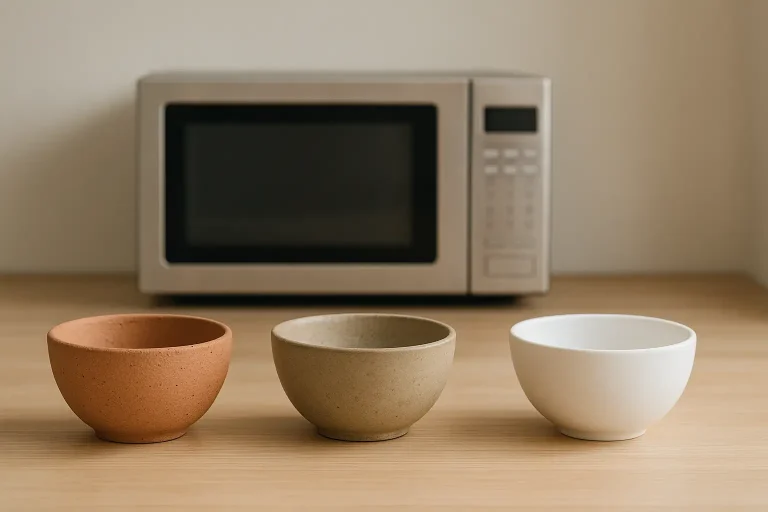
Ceramic mugs without metallic glazes, metallic lusters, or metallic overglaze decoration are generally microwave-safe when the clay body is vitrified and the glaze is fully fused. Microwaves heat water molecules in the beverage, not the ceramic itself, so a dense, low-absorption ceramic body does not heat from microwave energy alone.
The exceptions are: metallic lusters (gold, platinum, silver rim decoration), underglaze metallic accents, and any glaze containing metallic particles not fully integrated into the glass matrix. These cause arcing in microwave ovens and can crack the glaze or the mug body.
A mug that becomes very hot in the microwave with no liquid inside has excessive moisture trapped in the clay body or a glaze that absorbs microwave energy. This is a sign of underfiring or a high-absorption clay body and the mug should not be used for microwave heating.
Dishwasher Safety for Ceramic Mugs
Vitrified stoneware and porcelain mugs with correctly fitted, lead-free glazes are dishwasher-safe. The concern is not the heat of the dishwasher wash cycle (typically 120°F to 160°F / 49°C to 71°C) but the alkaline detergent chemistry, which can etch or degrade certain glaze surfaces over hundreds of cycles.
Matte glazes, raw clay rims, unglazed exteriors, and overglaze enamel decoration are most susceptible to dishwasher degradation. Commercial matte glazes on stoneware mugs often show gradual dulling after 50 to 100 dishwasher cycles because the calcium-magnesium crystalline surface structure is mildly soluble in high-alkaline detergent.
Hand washing with mild dish soap is recommended for any mug with overglaze decoration, gold or platinum luster, or raw unglazed clay surfaces. Fully glazed, food-grade commercial stoneware and porcelain mugs are safe for standard dishwasher cycles.
Our broader guide on what makes ceramic dinnerware last through repeated dishwasher use covers body density, glaze fit, and rim reinforcement in detail.
Freezer Safety and Thermal Shock Resistance
Vitrified ceramic mugs can withstand freezer storage at 0°F (-18°C) without damage if the transition to and from freezer temperature is gradual. The risk is thermal shock, which is rapid temperature change across the ceramic body that creates differential expansion and causes cracks or glaze spalling.
Moving a ceramic mug directly from the freezer to a boiling liquid is the highest-risk scenario. A temperature differential of more than 150°F to 200°F (83°C to 111°C) applied rapidly can crack even vitrified stoneware, though properly made, dense stoneware and porcelain have much higher thermal shock resistance than earthenware.
Earthenware mugs should not be used for freezer-to-microwave transitions. Their higher porosity and lower firing temperature leave them more susceptible to thermal fracture under rapid temperature change.
Here is a quick-reference tool to help you match your specific mug use case to the safest option before buying.
Interactive Tool
Find the Right Ceramic Mug Type for Your Needs
Answer 2 questions to get a personalized ceramic mug recommendation.
How to Buy a Ceramic Mug: The Complete Buying Guide
Buying a ceramic mug involves five decisions: clay body type, glaze safety certification, wall thickness, capacity, and handle geometry. Getting all five right for your specific use case produces a mug you will use for years. Getting one wrong produces a mug that chips, loses heat too fast, or causes health concerns over time.
Clay Body: Match the Type to Your Use Case
For daily hot beverage use with dishwasher and microwave cycling, choose stoneware fired to cone 6 or higher with an absorption rate below 3%. For the best long-term food safety with the thinnest walls, choose porcelain at cone 6 to cone 10. For budget everyday use where aesthetics matter more than longevity, commercial earthenware with intact full-coverage glaze is acceptable but not the most durable option.
Avoid unglazed or partially glazed ceramic mugs for hot beverages unless the clay body is confirmed vitrified (absorption under 1%). An unglazed stoneware exterior is fine. An unglazed or bare interior on a high-absorption clay is a hygiene risk.
Glaze Safety: What to Look For on Labels and Listings
Look for these specific certifications and descriptions when buying ceramic mugs: “lead-free glaze,” “cadmium-free,” “FDA compliant,” “AP non-toxic” (Arts and Creative Materials Institute certified), and “California Proposition 65 compliant” for mugs sold in the US.
Commercial mugs from major US and EU brands (Fiesta, Le Creuset, Emile Henry, Wedgwood, Denby) are tested and certified to meet FDA leaching limits (0.5 ppm lead, 0.25 ppm cadmium for cups and mugs). Independent studio potters who sell food-safe work should be able to confirm their glaze supplier and cone range.
Vintage ceramic mugs made before approximately 1970 in the United States or from international markets with lower regulatory standards warrant caution. Our full discussion of how to identify high-risk vintage mugs and test for lead glaze covers the specific brands and production periods most associated with elevated lead levels.
Capacity: Standard Sizes and What They Mean
Ceramic mugs are produced in standard capacities: 8 ounces (espresso and double espresso, 240ml), 10 to 12 ounces (standard coffee, 295ml to 355ml), 14 to 16 ounces (large drip coffee and latte, 415ml to 475ml), and 20 to 24 ounces (oversized “soup mug” style, 590ml to 710ml).
Capacity affects heat retention directly. A 12-ounce mug loses heat faster than a 16-ounce mug filled to the same level because the surface-area-to-volume ratio is higher. For maximum heat retention in a ceramic mug without a lid, a 14 to 16-ounce stoneware mug with 7mm to 9mm walls is the optimal combination.
Handle Geometry and Ergonomics
Handle size, attachment thickness, and loop clearance determine how comfortable a ceramic mug is during extended use. A handle that requires two fingers but is advertised as a standard mug is an ergonomic mismatch. Standard handle loop clearance for a one-handed grip is 40mm to 50mm internal measurement.
Handle attachment joints are the most structurally vulnerable point on any ceramic mug. A handle attached with insufficient clay-to-body contact area or fired while the clay body was too wet causes handle separation under thermal stress. This is most common in mass-produced low-cost mugs and some studio mugs where production speed was prioritized over drying and attachment time.
When buying a handmade stoneware coffee mug, check the handle attachment area for hairline cracks at the joint before first use. Run a fingernail across both attachment points. Any crack is a structural defect that will propagate under thermal cycling.
Price Guide: What You Get at Each Budget Level
Use the table below to match your budget to the realistic quality level for ceramic mugs at each price point.
Price Comparison
Ceramic Mug Price Tiers: What You Actually Get at Each Budget Level
Price per mug, sorted lowest to highest. Prices verified at time of publication.
$4 to $10
Low-fire earthenware, fully glazed, food-safe when new, limited chip resistance, absorption rate 3% to 15%
$10 to $25
Cone 6 stoneware, vitrified, dishwasher and microwave safe, lead-free certification standard. Best value tier.
$25 to $65
Fully vitrified under 0.5% absorption, brand-certified food safety, refined aesthetics, thinner walls
$35 to $85
Variable clay body and glaze, confirm cone range and food-safe glaze directly with the potter before purchasing
$65 to $200
Highest-tier studio work, cone 8 to 10 porcelain or specialty high-fire stoneware, collector and art-object quality
Price ranges reflect retail averages at time of publication. Studio prices vary by potter reputation and complexity.
For most buyers, the $10 to $25 mid-range commercial stoneware tier delivers the best combination of food safety, durability, and value per use year.
Top Ceramic Mug Brands and Products: What to Buy at Every Price Point
The best ceramic mug brands consistently use vitrified clay bodies, certified lead-free glazes, and production firing schedules that reach the target cone. The following brands and categories represent reliable choices across each price tier.
Best Commercial Stoneware Mugs for Daily Use
Fiesta Tableware (made in the USA since 1936) produces vitrified stoneware mugs fired to cone 6 with a cadmium-free, lead-free glaze in over 30 colors. Their 12-ounce and 15-ounce mugs retail for $10 to $18 and are confirmed dishwasher and microwave safe.
Key Specifications for Fiesta Stoneware Mugs:
- Clay body: vitrified stoneware, cone 6 (2232°F / 1222°C)
- Glaze: lead-free, cadmium-free, AP certified
- Capacity: 12 ounces and 15 ounces standard
- Dishwasher safe: yes
- Microwave safe: yes (no metallic decoration)
- Price: $10 to $18 per mug
Denby (UK, established 1809) produces high-fire stoneware mugs fired to cone 8 to cone 10 with a significantly denser body than standard commercial stoneware. Denby mugs retail for $18 to $35 and carry a 10-year chip warranty on most lines.
Le Creuset stoneware mugs are produced from a high-density stoneware body fired at elevated temperatures with an enamel-like glaze coating. They retail for $20 to $30 and are confirmed for dishwasher, microwave, freezer, and oven use up to 500°F (260°C).
Browse the current selection of dishwasher-safe stoneware coffee mugs across all major brands to compare current pricing and color availability.
Best Porcelain Mugs for Coffee and Tea
Ancap (Italian hard porcelain, vitrified) produces espresso and cappuccino cups that are fully vitrified, stackable, and designed for commercial use. Their porcelain is fired at high temperature to achieve an absorption rate below 0.3%. Prices range from $12 to $28 per cup.
Rosenthal (German porcelain, established 1879) produces premium thin-walled porcelain mugs in the $25 to $65 range. Their porcelain is fired to full vitrification and certified to EU ceramic safety standards. The Thomas by Rosenthal line offers dishwasher-safe pieces with contemporary design at the accessible end of their range.
For everyday use, standard 12-ounce porcelain coffee mugs from commercial-grade brands like Sweethome Chicago, World Tableware, and American Metalcraft offer fully vitrified bodies at $6 to $14 per mug through restaurant supply channels.
Best Bone China Mugs for Lightweight Elegance
Wedgwood (UK, established 1759) produces bone china mugs with 30% to 45% bone ash content, giving the thinnest commercial ceramic wall at full food-safety standard. Their Jasperware and Wedgwood White lines retail for $20 to $55 per mug and are dishwasher safe without metallic decoration.
Maxwell and Williams (Australian, commercial bone china) offers bone china mugs in the $8 to $18 range that deliver genuine bone china lightness and translucency at accessible pricing. Confirmed dishwasher safe for most non-metallic decorated lines.
Browse bone china coffee and tea mugs to compare translucency, weight, and decoration style across brands at current pricing.
Best Handmade Studio Ceramic Mugs
Handmade stoneware mugs from independent potters offer the highest tactile and aesthetic quality in ceramic mugs, but require verification of clay body, glaze safety, and cone range before purchase. The safest handmade studio mugs use commercial cone 6 stoneware clay bodies from Laguna, Standard Ceramic, or Sheffield Pottery, with commercial lead-free brushing or dipping glazes from Amaco or Spectrum.
When purchasing from Etsy, local potters markets, or craft fairs, ask the potter three questions: what clay body they use and its cone range, what glaze line or glaze recipe they use and whether it is certified lead-free, and what cone temperature they fire to. A potter who can answer all three specifically is producing food-safe work.
Search for handmade stoneware mugs from established studio potters on Amazon Handmade as a starting point for verified studio ceramic pieces.
Ceramic Mug Care and Maintenance: How to Make Your Mugs Last
Proper care extends the usable life of ceramic mugs by preventing thermal shock, glaze degradation, and handle joint failure. The care requirements differ by clay body type, glaze surface, and decoration method.
Washing: Dishwasher vs Hand Wash
Fully vitrified commercial stoneware and porcelain mugs with gloss or satin glazes and no metallic decoration are dishwasher safe for hundreds of cycles without degradation. Place mugs on the top rack to reduce the force of the spray arm on the handle joint and rim.
Hand wash with mild dish soap and warm water for: mugs with gold or platinum luster decoration, matte glaze surfaces, raw unglazed rims or exteriors on high-absorption clay bodies, and any mug where the glaze shows existing crazing. Hot water and dish soap in a craze network on earthenware accelerates bacterial contamination.
Stacking and Storage
Stacking ceramic mugs concentrates weight on the rim of the lower mug, which is the thinnest, most chip-vulnerable area. If you must stack, use felt pad mug protectors between pieces to cushion contact points. Never stack more than 3 mugs of standard commercial weight.
Store ceramic mugs handle-outward on an open shelf or with hooks. Storing handle-in causes repeated rim contact with neighboring mugs during retrieval, which accelerates rim chipping over months of daily use.
Thermal Cycling: What to Avoid
The highest-risk thermal action for ceramic mugs is pouring boiling liquid into a cold mug. Preheat ceramic mugs by rinsing with warm tap water for 30 seconds before adding coffee or tea. This reduces the temperature differential at the moment of pour from approximately 130°F to 160°F (72°C to 89°C) to approximately 50°F to 80°F (28°C to 44°C).
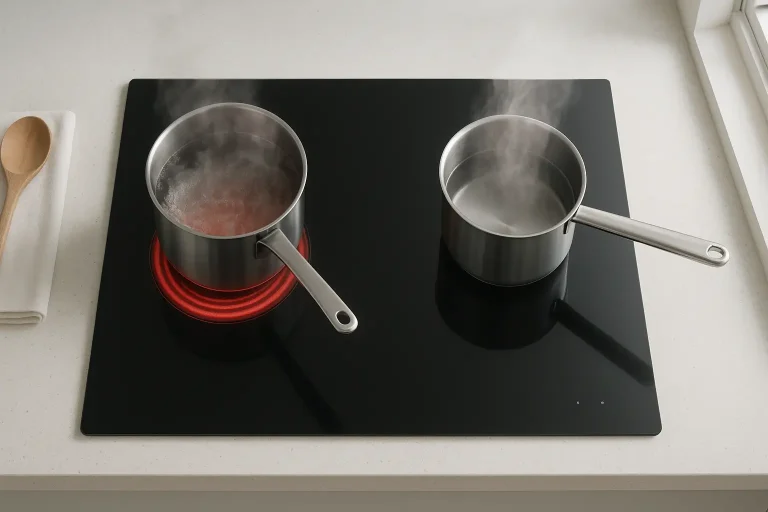
Never place a ceramic mug directly on a gas burner or electric coil heating element. Ceramic is not designed for direct-contact heat. It is designed for convective heat from hot liquid and radiant heat from a microwave or oven environment.
When to Replace a Ceramic Mug
Replace a ceramic mug when: the interior glaze shows deep crazing that catches a fingernail on a porous (earthenware) body, the handle shows a hairline crack at either attachment joint, the rim has chips that expose clay body on a high-absorption piece, or the interior has persistent staining that does not release after soaking with baking soda and warm water (indicates glaze degradation or craze-saturated clay body).
Surface staining from coffee and tea tannins on vitrified stoneware or porcelain is cosmetic only. It does not indicate glaze failure. Clean with a paste of baking soda and water, soak for 15 minutes, and scrub with a non-abrasive sponge. A dedicated ceramic mug stain remover product works for persistent tannin buildup.
Ceramic Mug Glaze Chemistry: Why Surface Appearance Tells You More Than You Think
The appearance of a ceramic mug’s glaze surface (gloss, satin, or matte) directly reflects its underlying flux chemistry, which in turn determines its food safety durability, acid resistance, and dishwasher tolerance. Understanding glaze surface types helps you predict long-term performance before buying.
Gloss Glazes: The Most Durable Food-Contact Surface
Gloss glazes are fully melted, smooth glass surfaces formed by high silica content and balanced flux chemistry. A well-formulated gloss glaze at cone 6 or higher achieves 6 to 7 Mohs hardness (comparable to window glass), making it resistant to surface scratching, acid etching, and dishwasher alkalinity.
Gloss glazes work because silica (SiO2) is the primary glass former and constitutes 60% to 70% of a standard high-fire glaze formula. When silica melts fully at the target cone, it forms a continuous glass network that physically excludes water and acid molecules from reaching the clay body. This happens only when the kiln reaches the temperature required for full silica vitrification, which for cone 6 glazes is 2232°F (1222°C).
If a gloss glaze is underfired (the kiln does not reach the target cone), the silica network is incomplete, the surface is microscopically porous, and both acid etching and leaching risk increase. An underfired gloss glaze often looks identical to a correctly fired one to the naked eye.
Matte Glazes: Beautiful but Requiring More Care
Matte glazes achieve their non-reflective surface through calcium or barium-driven micro-crystallization during the cooling phase of the firing cycle. According to John Britt’s “The Complete Guide to Mid-Fire Glazes,” calcium matte glazes form anorthite (CaO-Al2O3-2SiO2) micro-crystals during controlled slow cooling, which scatter light rather than reflecting it uniformly.
In plain terms: matte glazes are not simply a lower-gloss version of gloss glazes. They are a fundamentally different surface structure formed by crystals growing in the glass during cooling.
These micro-crystals are mildly soluble in high-alkalinity dishwasher detergent over repeated cycles. Most commercial matte glazes on stoneware mugs show gradual dulling after 50 to 100 dishwasher wash cycles. This is a surface aesthetic change, not a food safety issue, but it means matte mugs benefit from hand washing to maintain their original surface quality.
Reactive Glazes: What the Color Variation Means
Reactive glazes (also called variegated, effect, or flowing glazes) produce color variation across the mug surface through controlled phase separation, iron saturation effects, or deliberate flux imbalance during firing. Popular commercial examples include Amaco Potters Choice (iron-bearing cone 6 reactive glazes) and the Spectrum 1100 series.
The color variation in reactive glazes comes from localized changes in the flux-to-silica ratio across the surface during melting. Where flux concentrates, the glaze flows more and produces a more gloss area. Where alumina concentrates, the glaze is more viscous and produces a matte or textured area. Iron oxide produces different colors depending on local oxygen availability during firing: red-brown in oxidation, blue-grey-green in reduction.
Reactive glazes are food-safe when fired correctly. The variation in surface appearance is chemical, not physical, meaning the glaze surface is continuous glass across both the glossy and matte areas.
For the technical background on how colorants interact with flux and silica in food-contact glazes, our deep reference on glaze chemistry including raw materials and colorant behavior at cone 6 and cone 10 covers the underlying formulation science.
Common Ceramic Mug Problems and How to Fix Them
Most ceramic mug problems fall into four categories: glaze crazing, handle cracks, interior staining, and thermal shock fracture. Each has a specific cause and a specific response, from simple cleaning to safe disposal.
Interior Glaze Crazing: Cause, Risk Level, and Response
Crazing appears as a network of fine lines in the glaze, often most visible when you hold the mug up to the light. The cause is a CTE mismatch: the glaze contracted more than the clay body during cooling, placing the glaze under tensile stress until it cracked.
Risk assessment: crazing on a vitrified stoneware or porcelain mug (absorption under 2%) is primarily cosmetic. The clay body does not absorb liquid through the cracks in any meaningful quantity. Crazing on earthenware (absorption above 3%) is a hygiene concern and the mug should be retired from beverage use.
There is no repair for a crazed glaze. The mismatch is in the fired chemistry. A refiring does not fix the problem. The correct response is evaluation of the clay body type and a decision on whether to continue using the mug based on the absorption rate of the body beneath the crazed glaze.
Handle Cracks: When They Are Safe vs When to Discard
A hairline crack at the handle attachment joint is a structural failure beginning, not a cosmetic issue. The handle-to-body joint fails under thermal cycling when the joint was formed with insufficient scored-and-slipped surface contact, when the attachment was made at incompatible moisture levels between handle and body, or when the firing schedule was too rapid through the quartz inversion temperature range (1063°F / 573°C).
A mug with a cracked handle joint should not be used for hot beverages. Thermal expansion from pouring near-boiling liquid causes the crack to propagate, and handle separation while the mug is filled is a burn risk. Discard or repurpose as a pen holder or planter where no thermal cycling occurs.
Coffee and Tea Staining: Removal and Prevention
Coffee and tea tannins deposit on glaze surfaces over time, appearing as brown-grey discoloration inside the mug. On fully vitrified, gloss-glazed mugs, this is surface adhesion only and does not indicate glaze damage.
Effective removal: fill the mug with a solution of 2 tablespoons of baking soda per 8 ounces of warm water, soak for 15 to 20 minutes, and scrub with a soft sponge. For persistent staining, white vinegar (5% acidity) applied for 10 minutes and rinsed thoroughly removes tannin deposits from gloss glaze surfaces without etching. Do not use abrasive scrubbers (steel wool, harsh powders) on glaze surfaces as they scratch the glass surface and accelerate future staining.
Thermal Fracture: Why Mugs Crack During Use
Thermal fracture in ceramic mugs occurs when a temperature differential of more than 100°F to 150°F (56°C to 83°C) is applied to a localized area of the ceramic body faster than the body can equilibrate. The expanding zone pulls against the cooler zone, creating tensile stress that exceeds the fracture threshold of the ceramic.
The most common scenarios are: pouring boiling water into a cold mug retrieved from a cold cupboard in winter, placing a hot mug directly on a cold granite or stone countertop, and placing a frozen mug (taken from a freezer) directly in a microwave at full power. Preheating with warm water before filling eliminates most thermal fracture risk in daily use.
Ceramic Mugs vs Other Mug Materials: How They Compare
Ceramic mugs compete directly with stainless steel vacuum-insulated mugs, glass mugs, and plastic travel mugs across four performance dimensions: heat retention, taste neutrality, safety, and durability.
Use the table below to choose the right mug material for your specific use case based on the factors that matter most.
Product Comparison
Ceramic vs Stainless Steel vs Glass vs Plastic: Mug Material Comparison
Key performance dimensions compared across mug material types for daily beverage use.
| Feature | Ceramic | Stainless Steel (Vacuum) | Glass | Plastic (BPA-free) |
|---|---|---|---|---|
| Heat retention at 30 min | 155°F to 165°F from 195°F start | 175°F to 185°F from 195°F start | 140°F to 150°F | 145°F to 158°F |
| Taste neutrality | Excellent, no flavor transfer | Good, minor metallic note with some beverages | Excellent | Fair, some plastics absorb flavors |
| Microwave safe | Yes (without metallic glaze) | No | Yes (borosilicate) | Only if labeled microwave-safe |
| Chip and break resistance | Moderate (rim most vulnerable) | Excellent | Low to moderate | Excellent |
| Chemical safety | Excellent (lead-free, inert glass surface) | Excellent (food-grade 18/8 steel) | Excellent | Good (BPA-free, verify phthalate-free) |
| Price range | $8 to $85 | $18 to $55 | $8 to $40 | $5 to $25 |
Heat retention values are estimates based on thermal physics of each material type. Actual values vary by wall thickness, lid presence, and ambient temperature. Chemical safety assumes correctly manufactured, food-grade products in each category.
Ceramic mugs are the best choice for microwave-reheatable home use where taste neutrality and aesthetics matter. Vacuum-insulated stainless steel is the better choice for transport and maximum heat retention over 2 or more hours.
Specialty Ceramic Mugs: Travel Mugs, Double-Walled Mugs, and Novelty Types
Beyond standard ceramic mugs, several specialty categories serve specific use cases with distinct construction requirements and safety considerations.
Ceramic Travel Mugs with Lids
Ceramic travel mugs are typically stoneware or porcelain bodies with a lid and a wider base for stability. They are not insulated in the same way as vacuum stainless steel travel mugs, so heat retention is limited by the ceramic wall alone (approximately 30 to 45 minutes before dropping below drinkable temperature).
The primary advantage of a ceramic travel mug over plastic or stainless steel is taste neutrality. Many specialty coffee drinkers prefer ceramic for flavored coffee and single-origin coffees where metallic notes from stainless steel are noticeable. Look for stoneware travel mugs with silicone lids for the best combination of taste neutrality and spill resistance.
Double-Walled Ceramic Mugs
Double-walled ceramic mugs are produced by throwing or pressing two separate ceramic shells and joining them before firing, with an air gap between the walls. The air gap acts as a thermal break, reducing heat transfer from the beverage to the outer wall and extending heat retention compared to a single-wall mug of the same diameter.
Construction quality varies significantly in double-walled ceramic mugs. The joint between the inner and outer wall is the structural weak point. Most double-walled double-walled ceramic mugs are handwash only because dishwasher heat and water pressure can penetrate the join between the two walls over time.
Novelty and Printed Ceramic Mugs
Novelty ceramic mugs with photographic prints, logos, or multi-color graphics applied to the exterior use one of three decoration methods: decal application (ceramic transfer paper applied over the glaze and re-fired at a lower temperature), sublimation printing onto a poly-coated stoneware surface, or direct printing with ceramic inks fired in a low-temperature kiln pass.
Decal-decorated mugs on vitrified stoneware are food-safe on the interior (where the glaze is unaffected) but the exterior decal layer can degrade in dishwashers at high heat. Sublimation-printed mugs use a polymer coating over the ceramic exterior that is not food-grade and should not be used on the interior or rim contact surface.
Check any novelty mug: if the decoration extends onto the interior or the rim contact area, verify the printing method and whether the decorated surface area is food-safe. Many budget novelty mugs produced for promotional purposes use exterior-only decoration applied over an unglazed or low-quality stoneware body. These are often safe for beverage use but not for long-term daily cycling.
Frequently Asked Questions About Ceramic Mugs
Are all ceramic mugs food-safe?
No. Ceramic mugs are food-safe only when made with a lead-free, cadmium-free glaze, fired to the temperature specified for that glaze formula, and applied to a clay body that was correctly matured at that firing temperature. Commercial mugs from US and EU manufacturers are tested to FDA and EU ceramic leaching standards (0.5 ppm lead limit for cups). Vintage mugs made before the 1970s, imported mugs from markets with lower regulatory standards, and some handmade mugs with untested glaze recipes may not meet these standards.
The safest approach: buy from manufacturers who publish their lead-free certification, and ask studio potters directly about their glaze source and cone firing range before purchasing handmade pieces.
Can I use a cracked ceramic mug for coffee?
It depends on where the crack is and what clay body the mug is made from. A hairline crack in the exterior decoration or on the outer wall of a vitrified stoneware or porcelain mug (absorption under 2%) is a cosmetic issue but does not create a hygiene or safety problem as long as the interior glaze remains intact. A crack that extends through the interior glaze surface of any mug, or any crack on an earthenware mug body (absorption above 3%), makes the mug unsafe for repeated beverage use because the porous clay beneath absorbs liquid and bacteria through the break.
A mug with a cracked handle joint should always be retired from hot beverage use due to the burn risk from handle separation during filling.
What is the difference between stoneware and ceramic mugs?
All stoneware mugs are ceramic mugs, but not all ceramic mugs are stoneware. “Ceramic” is the parent category that includes earthenware, stoneware, porcelain, and bone china. Stoneware is a specific clay body that fires to vitrification between cone 4 and cone 10 (2124°F to 2381°F / 1162°C to 1305°C), producing an absorption rate of 0.5% to 3%. Earthenware mugs are also ceramic but fire at lower temperatures, do not vitrify, and have absorption rates of 3% to 15%. When a mug is labeled “ceramic” without specifying clay type, it is most commonly earthenware or low-density stoneware at the commercial mass-market price tier.
How do I know if a vintage ceramic mug contains lead?
You cannot determine lead content by appearance alone. Vintage mugs from before approximately 1970 in the United States, and mugs imported from markets with lower regulatory standards at any time, are the highest-risk categories. Bright glossy glazes in red, orange, yellow, and bright white on pre-1970 American and European production ware, as well as painted folk pottery from some regions, were commonly formulated with lead frits. A home lead test kit (such as LeadCheck or 3M LeadCheck swabs) can detect surface lead on the glaze. For a definitive result, an XRF (X-ray fluorescence) test by a lab or health department provides quantified lead content in ppm.
Is it safe to drink from a ceramic mug with a crazed glaze?
On a vitrified stoneware or porcelain body (absorption rate below 2%), mild crazing presents minimal health risk for continued use because the dense clay body does not absorb liquid through the glaze cracks in any significant quantity. On earthenware (absorption rate above 3%), a crazed glaze should be treated as a discard signal for beverage use because the porous clay beneath the cracks absorbs liquid with each use cycle, accumulating bacteria that standard washing does not fully remove. When in doubt about the clay body type, retire the mug from hot beverage use and repurpose it as a planter or utensil holder.
Can I microwave a ceramic mug with a gold rim?
No. Gold rim decoration on ceramic mugs is applied as a metallic luster overglaze (real gold or gold-colored metallic compounds) fired at a very low temperature (cone 022 to 018, approximately 1063°F to 1173°F / 573°C to 634°C) over the primary glaze. Metallic lusters contain metal particles that cause arcing in microwave ovens, producing sparks, potential glaze damage, and microwave interior damage. This applies to all metallic rim decoration: gold, platinum, silver, and copper. Always transfer to a microwave-safe ceramic mug without metallic decoration for reheating.
Why does my ceramic mug get very hot on the outside when I microwave it?
A ceramic mug that becomes very hot on the outside in the microwave without a liquid inside, or that heats the exterior faster than the beverage, has one of two issues: the clay body has an elevated water absorption rate that allows the microwave to heat the moisture trapped in the body, or the glaze contains materials that absorb microwave energy directly. Both conditions indicate an underfired or high-absorption clay body. Stop using the mug for microwave heating. Fully vitrified stoneware and porcelain mugs with standard lead-free glazes do not heat in the microwave without liquid present because the dense glass-matrix surface absorbs negligible microwave energy.
What is the safest ceramic mug for hot drinks?
The safest ceramic mug for daily hot beverages is a fully vitrified mid-fire or high-fire stoneware or porcelain mug, fired to cone 6 or higher (2232°F / 1222°C or above), with a certified lead-free and cadmium-free glaze on all food-contact surfaces. Commercially certified options from Fiesta (USA, cone 6 stoneware), Denby (UK, high-fire stoneware), Le Creuset (high-density stoneware), Ancap (Italian hard porcelain), and Wedgwood (bone china) all meet FDA leaching standards. For handmade mugs, confirm the potter uses commercial lead-free glaze and fires to cone 6 or higher.
How long do ceramic mugs last?
A properly made, vitrified stoneware or porcelain mug with a correctly fitted food-safe glaze can last decades under normal use with no degradation in food safety. The practical lifespan limit is mechanical damage (chipping, handle fracture, or thermal cracking), not chemical degradation. Earthenware mugs have a shorter functional lifespan because repeated thermal cycling and repeated washing gradually degrades glaze integrity on a porous body, making replacement every 2 to 5 years appropriate for daily-use earthenware pieces. Commercial diner-grade stoneware mugs (Hall China, Steelite) are designed for 3 to 5 years of institutional daily use before replacement is economically indicated.
Can I put a ceramic mug in the freezer?
Yes, vitrified stoneware and porcelain mugs can go in the freezer safely. The risk is not the freezer temperature itself but rapid temperature transitions. Do not move a frozen ceramic mug directly into the microwave on high power or pour boiling liquid into it. Allow the mug to warm to room temperature over 10 to 15 minutes before exposing it to hot liquid or microwave heat. Earthenware mugs are more vulnerable to freeze-thaw cycling because moisture absorbed into the porous body expands when frozen, which can cause internal micro-fractures that weaken the body over repeated cycles.
Why does coffee taste different in a ceramic mug versus a stainless steel mug?
Fully vitrified ceramic (stoneware and porcelain) has a chemically inert glass surface that does not interact with the acids, oils, or dissolved compounds in coffee or tea. The taste of the beverage is unchanged by contact with the ceramic surface. Stainless steel (specifically 18/8 food-grade steel) is also highly inert, but some tasters detect a subtle metallic note, particularly with high-acidity light roast coffees or green and white teas, because the slightly ionic surface of stainless steel interacts minimally with acidic compounds at contact points. The ceramic mug provides strict taste neutrality for most tasting contexts. For a systematic comparison of both materials across multiple beverage types, our article on ceramic versus stainless steel for taste and temperature performance covers both dimensions in detail.
Do I need to season a new ceramic mug before using it?
No. A correctly fired, fully glazed ceramic mug requires no seasoning, curing, or preparation before first use beyond a standard hand wash with warm soapy water to remove manufacturing dust. “Seasoning” as a preparation step is sometimes recommended for unglazed clay vessels (like clay cooking pots or unglazed terra cotta) where the porous body benefits from oil impregnation to reduce water absorption. For a standard stoneware, porcelain, or earthenware mug with a full interior and exterior glaze, this step is not applicable and provides no benefit.
Is it safe to use earthenware mugs for hot drinks?
Earthenware mugs are safe for hot beverages when new, fully glazed, and purchased from certified manufacturers using lead-free glaze formulas. The limitation is long-term durability. The porous clay body (3% to 15% absorption) means the mug relies entirely on its glaze for liquid containment. As the glaze crazes or chips over months of thermal cycling and washing, the clay beneath absorbs liquid and becomes progressively harder to fully sanitize. For daily hot beverage use with dishwasher cycling, a mid-fire stoneware mug provides significantly better long-term hygiene performance than earthenware at a comparable or only slightly higher price point.
What does “oven-safe” mean for ceramic mugs, and can I put my mug in the oven?
Oven-safe designates that a ceramic piece can withstand sustained radiant heat in a conventional oven at the labeled temperature limit (typically 450°F to 500°F / 232°C to 260°C) without thermal fracture or glaze damage. Not all ceramic mugs are oven-safe. Thin-walled porcelain and bone china mugs are generally not rated for oven use due to their lower mass and higher thermal shock sensitivity. Thick-walled stoneware mugs from brands that specifically state oven-safe ratings (Le Creuset stoneware, Emile Henry, Hall China) are designed for oven use. Placing a mug labeled “microwave-safe only” in a conventional oven is a fracture risk. Always verify the manufacturer’s stated temperature limit before oven use.
A well-chosen ceramic mug from a vitrified stoneware or porcelain body with a certified lead-free glaze, matched to your daily use habits, is one of the safest and most durable drinking vessels you can own.
Start with the clay body type: confirm stoneware or porcelain at cone 6 or higher for any mug you will use daily with hot beverages. Then verify the glaze certification, choose the wall thickness that fits your heat retention expectations, and pick the capacity that matches your actual pour volume. These four decisions produce a mug that performs consistently for years, and our guide on food safety standards for ceramic mugs and dishes gives you the verification checklist to apply to any piece before it reaches your kitchen shelf.