Ceramic Home Decor Guide: Vases Planters Wall Art and Accessories

A $180 handmade vase and a $20 factory vase hold the same flowers. The difference shows up in the clay body, the glaze, and how each piece looks after five years on display.
This ceramic home decor guide covers vases, planters, wall art, and accessories, with clay body science, real price ranges, styling rules, and care steps for each category. You will learn which pieces earn their price, which budget buys look expensive, and how to keep unglazed terracotta from ruining your furniture.
What Is Ceramic Home Decor?
Ceramic home decor is any decorative object made from fired clay, including vases, planters, wall art, candle holders, and small accessories. The clay body and its firing temperature control how the piece looks, feels, and survives daily life.
Earthenware, stoneware, and porcelain sit behind nearly every piece on the market. Each fires at a different temperature, and that temperature decides hardness, color depth, and water absorption.
Earthenware and Terracotta: The Warm, Porous Option
Terracotta is a type of earthenware, and its name means baked earth in Italian. It fires between cone 04 and cone 02 (1,945 to 2,048°F / 1,061 to 1,120°C), according to the Orton pyrometric cone standard.
The red-orange color comes from iron oxide in the clay. The body stays porous after firing, with a water absorption rate of 8 to 15 percent.
That porosity is the mechanism behind terracotta’s famous breathability. It works only when the surface stays unglazed, because glaze seals the walls like a coat of glass.
Glaze a terracotta piece and the breathability disappears, so the two finishes serve different jobs. Typical prices run $10 to $30 for an 8-inch planter.
Key Specifications: unglazed terracotta decor
- Firing range: cone 04 to cone 02 (1,945 to 2,048°F / 1,061 to 1,120°C)
- Water absorption: 8 to 15 percent, porous
- Color source: iron oxide in the clay body
- Typical price: $10 to $30 for an 8-inch planter
Stoneware: The Durable Studio Standard
Stoneware is a type of clay body that vitrifies between cone 5 and cone 10 (2,167 to 2,345°F / 1,186 to 1,285°C), which makes it dense and durable. Most handmade decor you see at craft fairs is mid-fire stoneware from suppliers like Laguna Clay or Standard Ceramic.
Vitrification happens because heat fuses the silica particles into a dense, glass-like structure. It begins around cone 4 (2,146°F / 1,174°C) and completes near cone 6 for most mid-fire bodies.
Orton defines cone 6 as 2,232°F (1,222°C) at a standard ramp rate, and slower ramps reach the same heat work at lower setpoints. Fire below the maturing range and the piece stays porous, so it sweats under wet flowers and can crack in frost.
Well-fired stoneware absorbs under 2 percent water and survives decades of handling. It also carries the speckled, earthy glazes that define modern ceramic decor.
Key Specifications: mid-fire stoneware decor
- Firing range: cone 5 to cone 10 (2,167 to 2,345°F / 1,186 to 1,285°C)
- Water absorption: under 2 percent when vitrified
- Shrinkage: 10 to 13 percent from wet clay to fired piece
- Typical price: $25 to $60 factory, $60 to $180 handmade
Porcelain: The Refined, Translucent Choice
Porcelain is a high-fire white clay body that turns slightly translucent in thin sections when held to light. It matures between cone 6 and cone 10 (2,232 to 2,345°F / 1,222 to 1,285°C) and absorbs under 0.5 percent water.
That density gives porcelain its glassy, luminous surfaces. It costs more because the body is harder to form and shrinks 12 to 15 percent from wet to fired.
Porcelain suits minimal rooms, bathrooms, and any spot where a piece reads best in white. Factory porcelain decor runs $30 to $90, and handmade porcelain starts near $80.
Porcelain differs from stoneware in whiteness, translucency, and refinement rather than in basic durability. Pick stoneware for texture, and pick porcelain when the form itself is the statement.
Terracotta breathes, stoneware endures, and porcelain refines: match the clay to the job before you shop. The next question is which form fits the specific spot you have in mind.
Which Ceramic Decor Piece Fits Your Space?
The right ceramic decor piece matches the surface it sits on, the light in the room, and the mood you want. A 10-inch vase disappears on a floor, and a 30-inch floor vase crowds a small side table.
Use the finder tool below to get a starting recommendation based on your placement and style answers.
Interactive Tool
Find the Right Ceramic Decor Piece for Your Space
Answer 2 questions to get a personalized ceramic decor recommendation.
Treat the result as a starting point, not a final answer. Scale it up or down using the sizing rules in the sections that follow.
Placement first, style second, and product last: that order prevents the most expensive ceramic decor mistakes.
How Do You Choose a Ceramic Vase?
Choose a ceramic vase by height, neck width, and finish before color. Floor vases work best at 24 to 36 inches tall, and table vases at 8 to 14 inches.
Florists cut stems 1.5 to 2 times the vase height for balanced arrangements. That ratio keeps bouquets from flopping or toppling.
Vase Shapes and What They Hold Best
Shape controls which stems look good, and four shapes cover most homes.
- Bottle vase: a narrow neck over a rounded body that holds 3 to 5 stems elegantly.
- Cylinder vase: straight walls that support full bouquets of 12 stems or more.
- Bud vase: a 4 to 8 inch vessel built for one or two stems, grouped in threes.
- Amphora or urn: a wide body with a narrow top that suits dried stems and branches.
A tall ceramic floor vase in the 28 to 36 inch range anchors an empty corner with dried branches or pampas grass. Set it beside a chair, not in a walking path.
Key Specifications: tall floor vase
- Height: 28 to 36 inches
- Weight: 6 to 10 pounds when empty
- Finish: matte glaze hides dust and water marks
- Best use: dried stems, branches, or standalone sculpture
For tables, a matte stoneware table vase at 10 to 12 inches handles daily styling. Group small bud vases in three heights for a softer look than one large arrangement.
Matte vs Glossy Glaze on Vases
Matte glazes hide water lines and fingerprints, which makes them the practical pick for vases you actually fill. Glossy glazes catch light and add energy, but they show mineral rings within weeks of use.
Unglazed or textured exteriors need a glass insert for fresh flowers. The porous walls wick water outward and can ring your table.
Reactive glazes pool and break over curves, and that movement gives factory vases a handmade look. Expect to pay $30 to $60 for good ones.
For most rooms, one 10 to 12 inch matte stoneware vase in a neutral glaze covers most everyday styling jobs.
How Do You Choose a Ceramic Planter That Keeps Plants Healthy?
A ceramic planter keeps plants healthy when it has a drainage hole, a matching saucer, and a clay body that matches your watering habits. Unglazed terracotta pulls moisture out of the soil, and glazed stoneware holds it in.
Repot into a pot only 1 to 2 inches wider than the current root ball, because oversized pots stay wet too long. Roots sitting in damp soil invite rot within weeks.
The mechanism behind terracotta’s breathability is simple: its fired walls stay porous, so water and air move through them. This only happens when the exterior and interior stay unglazed.
Seal the inside with glaze or paint, and the pot holds water like plastic, which invites root rot in plants that hate wet feet.
A terracotta planter with a drainage hole remains the best value at $12 to $25 for an 8-inch pot. Add a saucer or cork pad under every one.
Key Specifications: unglazed terracotta planter
- Firing range: cone 04 to cone 02 (1,945 to 2,048°F / 1,061 to 1,120°C)
- Water absorption: 8 to 15 percent
- Watering interval: soil dries every 3 to 5 days
- Frost risk: high, absorbed water expands when it freezes
Use the side-by-side comparison below to decide between unglazed terracotta and glazed stoneware before you buy.
Product Comparison
Unglazed Terracotta vs Glazed Stoneware Planters – Side by Side
The two dominant ceramic planter bodies compared on price, firing, and plant health.
| Feature | Unglazed terracotta | Glazed stoneware |
|---|---|---|
| Typical price, 8-inch | $12 to $25 | $18 to $45 |
| Firing range | Cone 04 to 02 (1,945 to 2,048°F / 1,061 to 1,120°C) | Cone 5 to 6 (2,167 to 2,232°F / 1,186 to 1,222°C) |
| Water absorption | 8 to 15 percent, porous | Under 2 percent, near vitrified |
| Soil drying speed | Fast, water every 3 to 5 days | Slow, water every 7 to 10 days |
| Best plants | Herbs, succulents, cacti, lavender | Ferns, pothos, monstera, calathea |
| Frost risk | High, walls can split after a freeze | Low when absorption is under 2 percent |
| Our verdict | Best breathability for dry-loving plants | Best color and moisture retention |
Firing data follows Orton pyrometric cone standards. Price ranges reflect typical retail at time of publication.
Frost deserves one warning before you put ceramic outside. Water expands roughly 9 percent when it freezes, and porous walls that have absorbed water can split in a single hard freeze.
High-fired stoneware with absorption under 2 percent, or a maker’s frost-proof rating, survives winter far better. A glazed stoneware planter with saucer also holds moisture longer, which tropical plants love.
Hanging options follow the same rules. A ceramic hanging planter needs a drainage hole and a hook rated for the wet weight of soil plus pot.
Buy terracotta for herbs, succulents, and lavender, and glazed stoneware for ferns and tropical plants: that single match prevents most planter failures.
What Should You Know About Ceramic Wall Art?
Ceramic wall art covers relief tiles, sculptural panels, and mounted wall vessels, and its advantage over prints is real physical depth. Most pieces weigh 3 to 12 pounds, so hanging hardware matters as much as style.
High-fired stoneware and porcelain resist humidity, which makes them safe for bathroom walls where paper art fails. Unglazed earthenware needs a sealer in steamy rooms.
Tile sets read as modern and architectural. A set of three to five 6-inch ceramic wall art tiles in mixed glazes fills a hallway better than one large print.
Weight drives the hanging rules. A single 12-inch stoneware relief tile can weigh 4 pounds, so use anchors rated for at least double the piece’s weight.
Small tiles need museum putty to stop knocks from shifting them. Press a pea-sized ball between tile and wall, and the piece stays level.
Humidity follows the clay body rules. Unglazed earthenware in a steamy bathroom absorbs moisture and can grow mildew unless sealed, while vitrified porcelain shrugs it off.
Layout gets easier with a system. Our companion walkthrough on layout and hanging tips for sculptural wall decor covers full gallery-wall planning before you drill.
Pick high-fired pieces for humid walls, and hang everything with anchors rated well above the actual weight: those two habits prevent every serious wall art failure.
Which Ceramic Accessories Are Worth Buying First?
Start with accessories that organize daily clutter, because catchall dishes, trays, and canisters earn their spot every single day. Purely decorative objects like figurines should come last.
Budget $15 to $45 for factory pieces and $40 to $120 for handmade versions of the same items. Below that floor, thin walls and single-coat glazes are common.
Candle holders: a set of three ceramic candle holders in stepped heights gives a mantel instant structure. Glazed stoneware versions handle candle heat without damage.
Bookends: weight is the whole game here. Solid ceramic bookends need 2 to 3 pounds each to hold a row of hardbacks.
Canisters: a glazed ceramic canister set turns counters into decor. Look for ground or cork lids that seat tightly.
Key Specifications: glazed ceramic canisters
- Material: vitrified stoneware, under 2 percent absorption
- Lid fit: ground rim or cork for an airtight seal
- Capacity: 24 to 64 ounces for typical sets
- Food safety: look for a lead-free, food-safe glaze label
Catchall dishes: a small ceramic catchall dish by the door collects keys and rings. Its real job is stopping scratches on the console beneath it.
Trays: a decorative ceramic tray groups candle holders and vases into one visual unit. That grouping is the fastest decluttering move in decor.
Buy the pieces that touch your daily routine first: a tray, a catchall dish, and candle holders deliver the most function per dollar in ceramic home decor.
Is Handmade Ceramic Decor Worth the Extra Cost?
Handmade ceramic decor earns its premium when the piece anchors a room, because a one-of-a-kind form and glaze do work factory pieces cannot. A $150 hand-thrown vase and a $40 factory vase differ in wall thickness, glaze depth, and finish character.
Small accessories show much smaller gaps between the two tiers. That is where budget buys make sense.
Behind the price sits real process cost. Each kiln load runs 8 to 14 hours of firing plus 12 to 24 hours of cooling, and a failed glaze means the maker absorbs the loss.
Clay itself costs $18 to $25 per 25-pound bag for mid-fire stoneware, so material is never the driver. Time, skill, and kiln risk are.
The chart below shows where the premium gap is large and where budget pieces perform nearly as well.
Value Analysis
When Handmade Ceramic Decor Wins, and When It Does Not
Performance gap between handmade and factory pieces by decor category
Premium wins big
Premium wins big
Premium usually wins
Gap is small
Gap is small
Gap is small
Editorial assessment based on glaze depth, wall thickness, firing quality, and one-of-a-kind variation between handmade and factory pieces. Not a sponsored ranking.
Read the chart as a spending plan. Save for handmade wall art and floor vases, and buy budget candle holders, small planters, and catchall dishes without guilt.
Spend on one or two handmade anchors, then fill in with well-chosen budget pieces where the gaps stay small.
How Much Should You Expect to Spend?
Ceramic home decor prices run from $12 for a factory bud vase to $250 and up for handbuilt wall sculpture. Factory pieces cluster between $15 and $65, and handmade pieces cluster between $80 and $300.
Below $15, thin walls and single-coat glazes are common. Weight is the fastest quality check at any price.
The price chart below shows typical pieces at each tier so you can spot overpriced buys.
Price Comparison
Ceramic Home Decor – Typical Prices by Piece
Typical retail prices across the four categories, sorted lowest to highest. Prices verified at time of publication.
$12
$26
$28
$34
$42
$48
$65
$140
$210
Handmade prices vary widely by maker, region, and firing method. Factory prices reflect typical online retail at time of publication.
Entry Level: $15 to $40
Factory-made pieces at this level are consistent, functional, and light. Bud vases, candle holders, and catchall dishes all perform fine here.
Check the base for rough spots that can scratch shelves. A 12-inch vase under 2 pounds signals thin walls.
Mid Range: $40 to $120
This is the sweet spot for daily-use decor. You get thicker walls, layered or reactive glazes, and honest weight.
Most factory floor vases and quality planters live here. Spend in this range for anything you handle weekly.
Artisan Level: $120 and Up
At this level you are buying one-of-a-kind work from a named maker. Ask about the clay body, the firing range, and the glaze’s food safety status.
Buy direct at craft fairs or from studio websites when you can, since gallery markups add 40 to 100 percent.
Expect $25 to $60 for solid everyday pieces, and $120 or more when you want one handmade centerpiece.
How Do You Style Ceramic Decor Like a Designer?
Designers arrange ceramic decor in odd-numbered groups of three or five, with heights that step through at least three levels. One tall vase, one medium piece, and one low bowl read as finished.
Two matching objects at the same height read as a store display. Odd numbers and stepped heights fix that instantly.
The Three-Height Rule for Vignettes
Build every tablescape from a tall piece at 12 to 24 inches, a medium piece at 6 to 10 inches, and a low piece at 2 to 4 inches. The stepped heights guide the eye in a scan that feels intentional.
- Place the tall piece slightly off center on the surface.
- Add the medium piece beside it with a small overlap in the sightline.
- Set the low piece in front to bridge the two heights.
- Step back 6 feet and check that the three tops form a diagonal line.
- Remove one object if the grouping feels crowded, then stop editing.
Leave 40 to 50 percent of the surface empty. Negative space is what makes the grouping read as styled instead of stored.
Mixing Finishes Without Clutter
Limit each room to two or three glaze families. Matte plus one glossy accent reads calm, while four competing glazes read busy.
Match undertones rather than exact colors. Warm speckled glazes sit with terracotta, and cool whites sit with porcelain.
Room-by-Room Placement
Entryways suit one tall floor vessel plus a catchall dish on the console. Living rooms anchor around a coffee table tray that groups the vignette.
Vase proportion sets the tone of every vignette. Our walkthrough on matching vase style and size to your room goes deeper on shape pairings.
Kitchens turn storage into display. Open shelves let everyday ceramics work as decor, and our guide to choosing dinnerware sets that display well on open shelves covers which plates and bowls earn the space.
Cooking pieces carry the same display power. Our walkthrough on choosing ceramic bakeware that doubles as kitchen decor explains which dishes look as good as they bake.
Bathrooms want vitrified porcelain, since steam ruins porous earthenware and paper art alike. A small bud vase with a single stem beats a shelf of bottles.
Rotate a few pieces by season instead of redecorating. Our ideas for swapping in holiday ceramics as the seasons turn keep the base look intact.
Group odd numbers, step the heights, and leave nearly half the surface empty: those three rules do most of the work in ceramic styling.
How Do You Care for Ceramic Decor?
Ceramic decor care takes minutes per month. Dust with a dry microfiber cloth, wash glazed pieces with mild soap and warm water, and keep unglazed terracotta out of the sink.
Unglazed clay absorbs water, so soaking a terracotta piece can leave mineral staining inside the walls. Wipe it with a damp cloth and dry it fully instead.
Fired glaze surfaces resist scratching at roughly the level of glass, so skip abrasive pads and steel wool. A pack of microfiber cleaning cloths handles every routine job safely.
Crazing deserves a plain explanation. It happens when the glaze shrinks slightly more than the clay body during cooling, which leaves a fine web of stress lines in the glass layer.
In display pieces those lines are cosmetic and often valued. In a vase or planter they give water a path to the porous body underneath, so use a liner or a sealer.
Use the table below to diagnose the six most common ceramic decor problems before you replace a piece.
| Problem | Likely cause | Fix |
|---|---|---|
| White crust on terracotta | Soluble salts wicking through porous walls | Brush dry, then wipe with 1 part white vinegar to 4 parts water |
| Water rings under vases | Condensation or slow seepage with no barrier | Add a felt pad or saucer under any piece that holds water |
| Fine web of cracks in the glaze | Crazing from a glaze and body expansion mismatch | Display as is, or seal the interior for water use |
| Musty smell in planters | Algae and soil trapped in the clay pores | Scrub with dilute vinegar and dry in sun for a full day |
| Dull film on glossy glaze | Hard water mineral deposits | Wipe with warm vinegar water, rinse, and buff dry |
| Chipped rims and edges | Impact or thermal shock | Fill with clear two-part epoxy and sand smooth |
For unglazed pieces that see water, apply a penetrating sealer for unglazed ceramic once a year. It blocks stains while keeping the matte look.
A monthly wipe-down, a saucer under every planter, and sealer on unglazed water pieces prevent nearly every common ceramic decor problem.
Frequently Asked Questions About Ceramic Home Decor
Are ceramic or glass vases better for fresh flowers?
Glass vases win for stem visibility and water clarity, while ceramic vases win for stability, style, and opaque walls that hide aging water. A weighted ceramic vase with a base of 4 inches or wider resists tipping from heavy arrangements.
Ceramic walls insulate the water from room heat, so stems often last a day or two longer in warm rooms. Use glass for tulips and gerbera daisies, where the stems are part of the display.
Keep an opaque ceramic cylinder for mixed bouquets, because it hides the water line and the stem clutter. Line any unglazed ceramic vase with a glass insert before filling it.
Can you put water directly in an unglazed ceramic vase?
No, plain water seeps through unglazed ceramic walls, because fired earthenware stays porous with an absorption rate of 8 to 15 percent. Within hours you get a damp ring on the table and mineral streaks on the vase.
Use a glass or plastic insert inside, or seal the interior with a food-safe penetrating sealer. Check sealed interiors each season, because sealer films wear first at the base where water sits longest.
Unglazed vases hold dried stems, branches, and pampas grass with no liner at all. That is the safe default use.
Why did my ceramic vase crack when I washed it with hot water?
Thermal shock cracked it, which means a fast temperature swing stressed the body until it split. Sudden swings of 100°F or more can crack glazed ceramics, and a cold piece meeting hot tap water is a classic case.
You often hear a clean ping, then a hairline appears and grows with the next wash. The glaze usually crazes first, because the glass layer takes stress before the clay does.
Wash ceramic in lukewarm water and change temperatures slowly. A shocked vase can still hold dried stems, but it will never again hold water.
Why does water seep through the bottom of my glazed vase?
Crazing is the usual cause, meaning a fine web of glaze cracks gives water a path into the porous clay body beneath. Run a fingertip inside the vase, and you will likely feel the hairline ridges.
Confirm the seep by filling the vase and leaving it on a paper towel for 2 hours. A damp spot under the center means the leak is real.
Fix it with a glass insert for fresh flowers, or with a clear epoxy sealer rated for constant water contact. Display-only use sidesteps the problem entirely.
Is it safe to serve food from a decorative ceramic bowl?
No, serve food only from bowls marked food safe and lead free, because decorative glazes can leach lead or cadmium. Acidic foods like citrus, tomatoes, and vinegar dressings pull metals from unsafe glazes fastest.
Vintage and imported decor pieces carry the highest risk, since labeling standards vary and older glazes often used lead as a flux. Heat speeds the leaching process.
A decorative bowl is fine for keys, potpourri, or wrapped candies. Buy a labeled food-safe bowl for anything you eat.
Are ceramic decor pieces safe around babies and pets?
Ceramic decor is safe around babies and pets when heavy pieces are anchored, small pieces sit above reach, and chipped pieces are repaired or removed. A tipped floor vase can weigh 8 to 15 pounds, and broken ceramic shards cut like glass.
Museum putty under table pieces and wall anchors for art cover the two real risks. Test stability by pressing the top of each table piece at a 45-degree angle.
Anything that rocks gets putty or a lower placement. Replace any piece with a chipped rim inside a child’s reach, because chip edges stay sharp.
How do you fix a chipped ceramic vase at home?
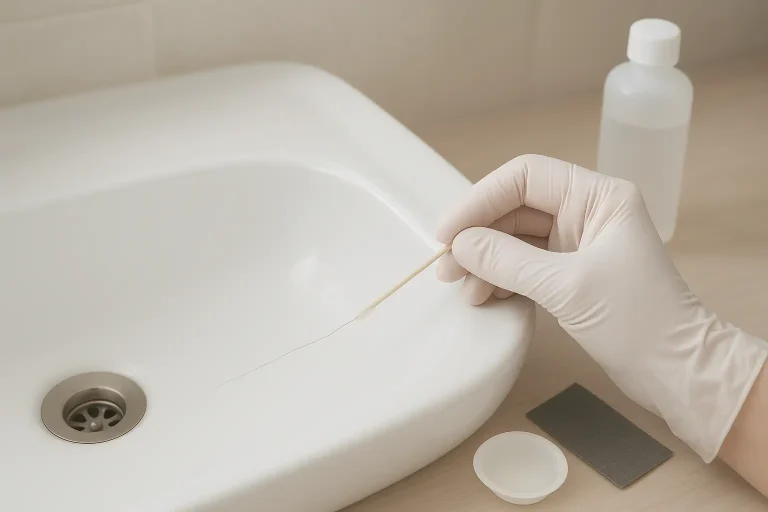
Fix a chip with clear two-part epoxy, which dries hard, glossy, and nearly invisible on most glazes. Fill the chip in thin layers, let each layer cure for 24 hours, and finish with 600-grit wet sandpaper.
Wear nitrile gloves and work in a ventilated room. Skip single-part super glue for water contact, because it clouds and breaks down under moisture.
A repaired vase can hold dried stems or stand alone as sculpture. For fresh flowers, add a glass insert so water never touches the repair.
How do you drill a drainage hole in a glazed ceramic planter?
Drill it with a diamond-tipped hole saw, water, and low speed, because glazed stoneware is hard enough to burn out regular masonry bits. Mark the base center, keep a trickle of water on the spot, and let the bit cut under light pressure.
A 3/8 to 1/2 inch hole suits most houseplants. Tape a ring of painter’s tape over the spot first so the bit cannot skate.
Stop pushing the moment the bit breaks through, because the final layer chips out under force. Wear safety glasses, since fine ceramic dust flies.
How do you get musty smells out of a ceramic planter?
Scrub the planter inside and out with 1 part white vinegar to 4 parts warm water, then dry it in direct sun for a full day. The musty smell comes from algae and soil buildup in the pores of unglazed clay, and vinegar plus sunlight breaks it down.
For stubborn odor in porous terracotta, coat the inside with a baking soda paste and rinse it off after an hour. Let the piece dry completely before repotting.
Trapped moisture restarts the cycle, so empty saucers after watering. Repeat the full treatment once a season for planters that stay damp.
Can you paint a glazed ceramic vase to change its color?
Yes, you can repaint a glazed vase with a bonding primer plus acrylic paint, but the finish sits on top of the glaze and stays decorative. Scuff the surface with 400-grit paper, prime, then apply 2 to 3 thin coats.
The paint layer chips under impact and cannot take water or dishwashing. Bake-on paints made for glass and ceramic hold up better, if you follow the curing temperature exactly.
Paint is best for color experiments on inexpensive vases. For a permanent color change, buy a different piece.
Do I need to seal a new terracotta planter before using it?
No, a terracotta planter needs no sealer for normal plant use, because the porous walls are the feature that keeps roots aired and the soil balanced. Seal only the outside lower half if you want to slow water loss in hot, dry rooms.
Sealing the interior cancels the clay’s main advantage, so skip it for herbs, succulents, and cacti. Seal the exterior base if the pot sits on wood, since mineral moisture can stain the surface.
Choose a matte penetrating sealer rather than a glossy coating, because gloss films trap moisture and peel.
Is porcelain decor worth the price over stoneware?
Porcelain is worth the premium for bright whiteness, thin walls, or a humid bathroom, and it offers little practical gain over vitrified stoneware elsewhere. Each body absorbs under 2 percent water and survives decades of display.
Porcelain costs more mostly because it is harder to form and shrinks 12 to 15 percent from wet clay to fired piece. Choose porcelain for minimal rooms and stoneware for speckled, earthy glazes.
The best value play mixes the two: stoneware for large pieces, porcelain for small accents.
Can you mix ceramic decor with wood and metal in one room?
Yes, mixing ceramic with wood and metal is a standard designer move, and it works when each material appears at least twice in the room. One ceramic vase alone on a metal table reads random, while ceramic plus wood plus a second ceramic piece reads layered.
Match undertones, so warm terracotta sits with warm woods and brass, and cool whites sit with gray tones and chrome. An all-ceramic shelf can read as a showroom, while wood absorbs visual weight and metal adds edge.
Start near a 60 to 40 mix of ceramics to other materials, then adjust by eye.
Ceramic home decor rewards three simple calls: terracotta for breathability, vitrified stoneware for durability, and porcelain for refinement. Style in odd-numbered groups at three heights, spend on one handmade anchor, and protect surfaces with saucers and sealer.
Start with one 10 to 12 inch matte stoneware vase styled in a group of three, then build outward one room at a time. Readers taking on window upgrades can also see how nanoceramic window film manages heat and UV rays.