Best Ceramic Vases: Buying Guide by Style and Size

The most common ceramic vase mistake never shows up in the store aisle. It appears the moment the first fresh stems go into water at home.
A $14 bud vase sized with the 1.5 to 2 times rule beats a $110 floor urn chosen on looks alone. This guide to the best ceramic vases covers clay bodies, the eight core shapes, florist sizing rules, honest price tiers, and styling room by room.
What Makes a Ceramic Vase Worth Buying?
A ceramic vase is worth buying when its clay body is fully vitrified and absorbs under 2 percent water, with a glazed or sealed interior. Color, texture, and shape are style decisions stacked on that watertight base, never substitutes for it.
Vitrified means fired hot enough that clay particles fuse into a dense, nearly pore-free body. Ron Roy and John Hesselberth in Mastering Cone 6 Glazes (2004) treat absorption under 1 percent as the working target for ware that holds water daily.
Kilns measure maturity in cones: small clay pyramids that bend when the ware absorbs a set dose of heat. The Orton cone chart lists cone 6 at 2232°F (1222°C).
Earthenware: Warm Looks, Porous Walls
Earthenware is a low-fire body, matured around cone 04 to cone 03, or roughly 1945 to 1974°F (1063 to 1075°C).
Clay never fully fuses at those temperatures, so fired pieces commonly absorb 10 to 15 percent water through open pores. Terracotta planters behave exactly the same way.
This is why an unglazed earthenware vase sweats: capillary pores wick water outward through the walls until a damp ring forms beneath it. The failure shows up within hours on a dry afternoon.
The fix is cheap. Seal the interior with a clear waterproof sealant made for ceramics, then let it cure fully before filling.
Stoneware: The Workhorse Body
Stoneware is a mid- to high-fire body, with most studio versions maturing at cone 5 to cone 6 (2167 to 2232°F, 1186 to 1222°C).
Fluxes in the body melt enough silica at cone 6 to lock the structure glassy and tight, and pores close to under 2 percent absorption. The glassy phase is the mechanism, and heat-work, not just temperature, is what produces it.
Under-fired stoneware is the failure mode to know: a cone 04 vase body stays porous, seeps slowly, and stains furniture. Check the maker’s cone rating before trusting a piece with fresh water.
Key Specifications:
- Firing range: cone 5 to 6 (2167 to 2232°F, 1186 to 1222°C) for most bodies
- Fired absorption: 0.5 to 3 percent, with under 2 percent the functional target
- Surface: speckled or smooth, with walls thicker than porcelain
- Typical price: $20 to $60 production, $60 to $200 handmade
Porcelain: Density and Polish
Porcelain is a dense white body fired cone 6 to cone 10 (2232 to 2345°F, 1222 to 1285°C), often thin-walled by design.
Its fired absorption sits under 0.5 to 1 percent, so a glazed porcelain vase holds water almost like glass. Chips reveal a clean white core, which makes damage easy to spot and impossible to hide.
Key Specifications:
- Firing range: cone 6 to 10 (2232 to 2345°F, 1222 to 1285°C)
- Fired absorption: under 0.5 to 1 percent, near-glass density
- Surface: smooth white body, frequently translucent at thin edges
- Typical price: $35 to $90 production, $100 to $400 fine and handmade
Glaze is the thin glass skin fused to the clay in the kiln, and glaze fit decides whether water truly stays inside. Crazing is the failure to watch: the glaze shrinks a touch more than the clay beneath it and splits into a fine web.
Frank and Janet Hamer’s The Potter’s Dictionary of Materials and Techniques pins crazing on exactly that expansion mismatch between glaze and body. Moisture then wicks through the crack network into the clay, leaving ring stains and a sour smell at the rim.
In plain terms: a crazed vase still looks whole but leaks water slowly through thousands of hairline cracks. Test by standing it on a paper towel, filling it for two hours, and checking for damp.
To keep a crazed favorite working, drop in removable vase liner inserts before adding water.-shop quality checks take four minutes in a store:
- Flick the wall with a knuckle: dense, vitrified bodies ring, porous bodies thud.
- Run a fingertip inside the neck: smooth, sealed glaze is what you want to feel.
- Check the foot ring, the unglazed ring on the base, for even color and flat sanding.
- Fill the piece, set it on a paper towel overnight, and look for damp rings by morning.
Compare stoneware and porcelain, the two dominant vase bodies, across the specs that change what you pay for and how long a piece lasts.
Product Comparison
Stoneware vs Porcelain Vases: Side by Side
Feature-for-feature comparison of the two vase bodies you meet most often, using Orton cone data and studio absorption ranges.
| Feature | Stoneware vase | Porcelain vase |
|---|---|---|
| Firing range | Cone 5-6 (2167-2232°F / 1186-1222°C) | Cone 6-10 (2232-2345°F / 1222-1285°C) |
| Water absorption | 0.5-3%, tight bodies under 2% | Under 0.5-1%, glass-like density |
| Key differentiator | Visible clay character: speckle and warm tones | Refined white body with near-glass smoothness |
| Price | $20-60 production; $60-200 handmade | $35-90 production; $100-400 fine |
| Weight and handling | Thick-walled and grounded in the hand | Thin-walled but dense, balanced feel |
| Chip behavior | Chips blend with the speckled surface | Chips show as clean white marks |
| Best for | Farmhouse, bohemian, and Japandi rooms | Classic, formal, and gallery-styled rooms |
| Our verdict | The dependable default for daily use | The upgrade choice for polish |
Both bodies appear in handmade and production lines; figures blend Orton cone data with common studio ranges for functional ware.
Stoneware wins for daily-life durability, while porcelain delivers formality and glassy polish. Rooms and their moods come next, and the right starting point is the room itself, not the glaze.
Which Vase Style Fits Your Room?
Choose the room’s dominant style language before shopping: modern minimal, warm farmhouse, Japanese organic, or classic traditional. Silhouette, glaze color, and size then fall into place without second-guessing.
Answer the two questions below and the tool pairs your style and intended use with a specific vase shape, a working size, and a realistic price band.
Interactive Tool
Find the Right Ceramic Vase for Your Room
Answer two questions to get a vase shape, size range, and realistic price band.
Modern and Minimal
Minimal rooms call for restraint: cylinders, slim columns, and small bud forms in matte white, bone, or charcoal glazes. Production matte stoneware vases nail the look for under $50.
Heath Ceramics built its reputation on exactly this matte-stoneware aesthetic, and pieces in that spirit anchor a shelf without shouting. A plain cylinder between two book stacks does the work three decorative objects would.
Warm Farmhouse
Farmhouse style wants cream and linen-toned glazes over visible speckle, on recognizable workaday forms like pitchers, jugs, and lidded jars. An 8 to 10 inch ceramic pitcher vase fits a kitchen island perfectly.
A farmhouse vase earns its place twice when the table follows suit. See our guide to styling your table in the same look for dinnerware that keeps the room consistent.
Japanese and Organic
Wabi-sabi interiors prize irregular, quiet forms: squat tokkuri bottles, moon jars, and roughly textured stoneware with matte slip finishes. Robin Hopper’s The Ceramic Spectrum (2008 edition) catalogs glaze names like celadon and tenmoku, the vocabulary you will meet on labels here.
A celadon-glazed porcelain bud vase reads calm on a low table with a single branch. Textured, bare-clay stoneware belongs on the same shelf at 8 to 12 inches.
Classic and Traditional
Formal rooms favor glossy, complicated profiles: flared trumpets, lidded ginger jars, and amphora shapes descended from the Greek vessels in the Metropolitan Museum of Art. Wedgwood’s jasperware and blue-and-white delft set the formal tone centuries back, and those lines still work.
Style bucket first, specific piece second; nearly every purchase gets easier after that. The next section names the eight silhouettes hiding inside every catalog.
What Are the Eight Core Vase Shapes?
Eight silhouettes cover nearly every ceramic vase on the market: bud, bottle, cylinder, gourd, lidded ginger jar, amphora, trumpet, and floor urn. Learn the eight and any shelf, from big-box to gallery, becomes readable at a glance.
Bud vases stand 4 to 6 inches with 0.75 to 1.5 inch necks and ask for one stem at a time. Ceramic bottle vases run 8 to 12 inches tall with a 1 to 2 inch neck that flatters long-stemmed singles and short pampas.
The straight-sided cylinder, 10 to 16 inches, grips mixed bouquets with its 3 to 4 inch mouth and reads modern without effort. Gourds put bulge over height in an 8 to 12 inch body with a 2 to 3 inch neck, made for loose posies.
The British Museum’s famous moon jar, a plain porcelain sphere, proves how far one round form can carry a whole room. Its takeaway stands: pieces that read quiet in catalogs often read strongest in person.
Lidded ceramic ginger jars stand 10 to 14 inches and work best with nothing inside at all; the lid is the point. A ginger jar is a lidded form, meaning its silhouette stays complete whether or not it ever holds water.
The amphora narrows at neck and foot while swelling at the waist, named for ancient Mediterranean storage jars. Ceramic amphora urns in the 12 to 24 inch range suit foyers and grand side tables.
Trumpet vases flare from a 3 inch neck to a 4 to 5 inch rim, built for hydrangeas, roses, and garnish-heavy centerpieces, typically 12 to 18 inches tall. Floor urns and columns start at 24 inches and top out near 40, wide-mouthed enough for pampas and bare branches.
Use the table below to match a vase shape to your arrangement, display spot, and budget in one pass.
Ceramic Reference
The Eight Vase Shapes: At-a-Glance Specs
Heights, openings, and typical prices for widely available production pieces at time of publication.
| Vase shape | Height | Opening | Typical price | Best for |
|---|---|---|---|---|
| Bud | 4-6 in | 0.75-1.5 in | $8-15 | Single stems, grouped displays |
| Bottle | 8-12 in | 1-2 in | $18-35 | Long-stemmed singles, short pampas |
| Cylinder or column | 10-16 in | 3-4 in | $25-50 | Mixed bouquets, modern shelves |
| Gourd or jug | 8-12 in | 2-3 in | $20-45 | Farmhouse kitchens, posies |
| Amphora or urn | 12-24 in | 3-5 in | $40-90 | Foyers, statement entries |
| Ginger jar (lidded) | 10-14 in | Lidded | $35-80 | Pure decor, pair styling |
| Trumpet flare | 12-18 in | 4-5 in rim | $30-70 | Rose and hydrangea centerpieces |
| Floor column or urn | 24-40 in | 4-6 in | $60-200 | Dried branch statements, corners |
Heights refer to the vase body, not including stems. Set prices are noted where three-piece bud groups are the standard offering.
Bud and bottle shapes serve singles, while gourds, jars, and trumpets serve abundance. Size turns those silhouettes into working tools, so the next section runs the numbers.
How Do You Choose the Right Vase Size?
Size a vase to its stems first: florists teach that the finished arrangement should run about 1.5 to 2 times the interior vase height. Floral design programs, including the Floral Design Institute, present this proportion rule as baseline training.
In numbers, a 10 inch cylinder wants 15 to 20 inch stems, while a 28 inch floor urn needs branches near 40 to 55 inches. Get opening width right next, because width decides whether stems stand or splay.
Key Numbers to Shop By:
- Stem rule: finished stems at 1.5 to 2 times interior vase height
- Mixed bouquet neck: 3 to 4 inches
- Single-stem neck: 0.75 to 1.5 inches
- Dining centerpiece: under 10 to 12 inches tall to keep sightlines clear
- Console vases: 12 to 18 inches, and mantel vases: 8 to 14 inches
- Floor vases: 24 inches and up, with a base near one third of the height
A 9 inch cylinder on a dining table keeps faces visible across the plates; anything taller belongs on a buffet. Mantels fit the 8 to 14 inch band, and consoles carry 12 to 18 inch pieces without crowding the lamp.
Stability is the hidden sizing spec: top-heavy arrangements on narrow bases tip when a draft or a cat gets involved. Keep the loaded base at least one third of the total height and the physics handles the rest.
On the tall end, tall dried pampas stems near 40 inches pair with a 24 to 28 inch floor urn, a low-effort statement for a dead corner.
Read your vase height against your arrangement type below; every cell pre-computes the stem lengths before you shop.
Size Reference
Vase Height and Stem Length by Arrangement Type
Stem lengths pre-computed with the florist proportion rule; find your height and arrangement type.
| Vase height and arrangement type | Single stems | Mixed bouquet | Dried branches | No stems, display only |
|---|---|---|---|---|
| Under 6 in | 8-12 in stems one or two only |
Does not work neck crowds the mix |
Skip goes top-heavy |
Yes, in threes group bud vases |
| 6 to 9 in | 10-16 in stems rose or ranunculus |
12-16 in stems tight posy, 2 in neck |
12-18 in stems yarrow, bunny tails |
Yes beside book stacks |
| 10 to 14 in | 15-24 in stems pussy willow branch |
16-24 in stems sweet spot, 3-4 in opening |
24-36 in stems pampas works here |
Yes mantel anchor |
| 15 to 24 in | 24-40 in stems curly willow, manzanita |
28-42 in stems full, heavy arrangement |
36-60 in stems large pampas, fan palms |
Yes console anchor |
| Over 24 in | 36-72 in stems bare branch sculpture |
Skip needs scaffolding |
36-72 in stems floor pampas statement |
Yes corner anchor, 10-12 in base |
Values follow the floral proportion rule, finished stems at 1.5 to 2 times interior vase height, as taught by the Floral Design Institute, with dried stems allowed to run taller for sculptural effect. The highlighted cell marks the most common buy: a 10 to 14 inch cylinder carrying a mixed fresh bouquet.
Height sets the math, width sets the behavior, and base geometry keeps everything upright. With measures fixed, the practical question left is what you should spend.
How Much Should a Ceramic Vase Cost?
Production ceramic vases cluster into three honest price bands. Small machine-made pieces like sets of three ceramic bud vases run about $10 to $30, mid-range stoneware with real presence runs $31 to $80, and handmade studio work starts near $80.
Fine porcelain and vintage art pottery sit above those bands. Historic art pottery such as Rookwood of Cincinnati regularly clears hundreds to thousands at auction, and museums collect it for good reason.
What Each Band Buys:
- $10 to $30: slip-cast earthenware and small bud forms, best for grouping
- $31 to $80: jiggered or wheel-thrown stoneware, the sweet spot for a first serious vase
- $80 to $250: handmade studio pieces carrying hours of forming, glazing, and two firings
The raw materials inside a $120 studio vase total under $10; the sticker buys time, skill, and firing risk. A single glaze firing runs 8 to 14 hours plus overnight cooling, and one slipped firing writes off the whole batch.
At time of publication, production stoneware from studios like Heath Ceramics commonly lists between $80 and $200. The American Craft Council’s juried shows offer the other honest place to see handmade pricing in person.
The chart below shows typical prices by shape and size, sorted from a $14 bud trio to a $110 fluted floor column.
Price Comparison
What Ceramic Vases Cost by Size and Style
Typical retail prices per piece, sorted lowest to highest at time of publication.
$14 per set
$18
$28
$34
$45
$68
$89
$110
Bands reflect typical retail prices for widely available designs at time of publication, with set pricing noted for bud trios. Handmade studio work often doubles or triples these figures because a single glaze firing alone runs 8 to 14 hours before the kiln even starts cooling.
A fair price checks out against this chart, and so does a suspicious deal: a $19 “handmade” floor urn was slip-cast in a mold. Learn to spot mold seams inside the neck and thin, perfectly even walls, and you will never overpay for mass production.
Buy in the $31 to $80 band unless you are collecting, and treat handmade pricing as an informed splurge. With a budget fixed, the practical question becomes where the piece lives best.
How Do You Style Ceramic Vases Room by Room?
Style a vase as one shape in a rectangle of working space: match its height to the surface it stands on and to the objects beside it. Most styling mistakes are proportion mistakes hiding behind the word taste.
Display designers lean on the rule of three, and a walk through the Victoria and Albert Museum’s ceramics galleries shows the same odd-numbered logic. Groupings of three or five read finished; pairs read formal; singles read deliberate.
On the Dining Table
Keep centerpieces under 10 to 12 inches so guests keep eye contact across the table. One low gourd or three bud vases in a line handles most dinners.
Plate-and-glaze coordination doubles the effect; dinner plates in the same glaze family tie the vase and the table together. Stick to two colors at most or the scheme turns noisy.
Entertaining raises the ceiling; platters and low bowls that finish a table set the height anchor for your centerpiece. Keep the tallest dish rim and the vase mouth within a few inches.
For stem control in a low bowl, a kenzan pin frog, a weighted brass base of pins, holds each stem vertical. Hide it under a collar of leaves and the mechanics disappear.
On a Console or Entry Table
Pair one 12 to 18 inch vase with a lamp and one low bowl: three heights in a triangle composition. Odd-number logic does the arranging for you.
The lighting half of the vignette matters just as much; see our full lamp and pendant light guide for bases that share your vase’s glaze. Keep the lamp shade bottom and the vase rim within 6 inches of each other.
On Mantels and Shelves
Group in odd numbers, three or five pieces, with the vase as the tall center or the offset anchor. Vary heights by 3 to 5 inches so the grouping does not read as a fence.
Shelves suit the smaller end of the range: a 6 to 10 inch bud or bottle form sits between bookends without fighting the books for space. Open shelving elsewhere in the room benefits from the same thinking.
Odd-number groupings scale up from vases too; the wider world of planters, wall art, and tabletop accents follows the same rule. Change one element per season, never the whole group.
Floor Statements in Dead Corners
One large ceramic floor vase at 24 to 32 inches plants an empty corner; two flanking a fireplace look intentional at any budget. Give each piece at least 6 inches of clearance from the wall.
Leave floor pieces empty or load them with dried stems, topping 2 inches of sand for heavy bamboo that needs ballast. Nothing fresh-cut belongs this low.
Routines go stale fast; swapping in holiday and winter ceramic displays gives the same corner a second season. One in, one out is the storage-smart approach.
Match height to surface, group in odds, and give floor pieces real weight. Treated right, a ceramic vase outlives every trend cycle, which makes care the next quiet skill worth learning.
How Do You Clean and Care for a Ceramic Vase?
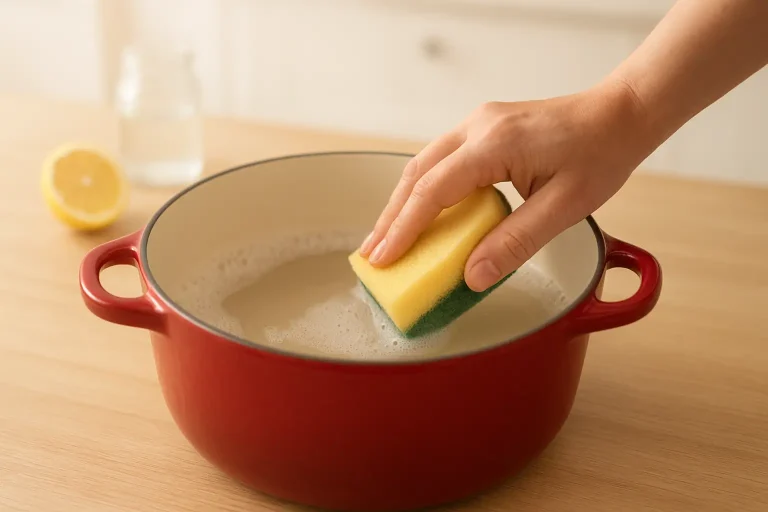
Rinse a vase with warm water and mild dish soap within a day of emptying spent stems, and change arrangement water every two to three days. That habit alone prevents most staining and mineral rings.
- Empty the vase and rinse the interior with warm water and one drop of mild dish soap.
- Brush the neck with a long bottle brush for vases if stems left residue in a narrow throat.
- For white film, soak 30 to 60 minutes in a 1:1 mix of white vinegar and warm water.
- Rinse twice, dry the exterior, and store the vase upside down on a towel until fully dry inside.
The film itself is calcium and magnesium left behind as water evaporates, so pieces that dry out slowly crust fastest. Acid dissolves those deposits, which is why the vinegar soak works without scrubbing.
In plain terms: letting water sit and evaporate is what ruins interiors, and dumping then drying is what saves them. A monthly vinegar rinse keeps even lazy weeks from leaving a ring.
Unglazed and crazed interiors need different rules: no long soaks, no dishwasher heat, and either a liner or fresh-water-only use. Dishwasher detergent etches matte glazes over cycles and widens craze lines one wash at a time.
Outdoor winter storage depends on absorption, and lab testing under ASTM C373 measures it directly as percent water taken on by boiling. A vase survives freezes only if its body absorbs under about 1 percent, the same cutoff behind frost-proof labels on quality planters.
Saturated porous walls fail because water expands roughly 9 percent when it freezes and wedges cracks open from the inside. Empty everything before the first frost, lift the base off frozen ground with pot feet, and bring small vases indoors.
Water hygiene plus freeze awareness covers most of vase longevity. The last variable is dodging the buying mistakes that other guides skip.
Which Vase-Buying Mistakes Should You Avoid?
Five mistakes cover most regrettable vase purchases, from the wrong neck width to the wrong wall material. Check five things and returns become rare.
Wide mouth, single stems. Roses and ranunculus in a 4 inch mouth splay into a scramble within an hour. Buy a 0.75 to 1.5 inch neck for singles, or grow into a pin frog.
No liner or seal on a porous body. Unglazed earthenware or blistered interiors seep within the hour and mark furniture. Liners and clear sealants solve it for a few dollars.
Tall arrangement on a small base. Loaded pampas above a 10 inch base is asking for a tip-over. Keep the base near a third of the total height.
Wrong room scale. A 6 inch vase disappears on a living room floor, and a 26 inch urn crowds a bookshelf. Match the placement bands in the sizing section before checkout.
Bare unglazed foot on soft wood. A rough foot ring sandpapers mantels and consoles one slide at a time. Smooth the foot flat or apply self-adhesive felt pads cut to size.
Neck width, interior seal, base geometry, room scale, and foot finish: five checks, then regrettable purchases stop. Questions still come up once a vase is home, so here are the ones readers actually send.
Frequently Asked Questions About Ceramic Vases
Can I put fresh flowers in an unglazed ceramic vase?
You can, but only with the moisture blocked, because an unglazed interior wicks water out through microscopic pores in the clay. Drop in a bag or cup as a liner first, or brush on a clear waterproofing sealant and let it cure fully.
A quick test settles the question. Stand the vase empty on a paper towel overnight, fill it, and recheck the towel after two hours.
A spreading damp ring means seepage, so move the piece to dried stems or seal the interior before the next bouquet.
Why is my ceramic vase sweating beads of water on the outside?
Water beads usually mean one of two things: condensation on a cold glazed surface in a humid room, or slow seepage through a porous or crazed body. Dry the outside completely, wait two hours, and check whether a damp ring returns under the base.
Condensation wipes away and harms nothing. Seepage returns from inside the walls and needs a liner or sealant.
If beads reappear on a dry surface within the hour, treat the interior, not the room air.
Do I need a glass or plastic liner inside a stoneware vase?
You need a liner only when the interior is unglazed, craze-marked, or porous; a hard, sound glaze over vitrified stoneware holds water on its own for years. An overnight towel test on a protected surface confirms it before you spend on inserts.
Crazed interiors keep working for dried stems with no liner at all. Fresh water in a crazed body is exactly what causes the staining.
Cut-down milk jugs make free temporary liners, trimmed to hide below the vase rim.
How do I clean inside a vase with a neck my hand cannot fit through?
Swirl a quarter cup of uncooked rice in warm water with one drop of dish soap for two minutes, and the grains scour the walls for you. Follow with a clear rinse, then repeat weekly through flower season.
For set-in film, add the vinegar soak from the care section works: wait, the longer-necked brush in that same section reaches the shoulder curve a swish misses. After cleaning, dry upside down overnight so humidity does not linger.
Why did my vase crack when I added warm tap water to a cold piece?
Thermal shock cracked it: the inner wall expands faster than the outer wall, and the tensile stress splits the clay along a clean line. Fill vases with room-temperature water near 68 to 72°F (20 to 22°C), especially stoneware and crazed pieces.
Ceramic conducts heat poorly, so temperature differences across a wall create stress rather than evening out. That holds from kitchen tiles to kiln shelves.
The piece cannot be un-cracked; repurpose it for dried stems, or repair with food-safe epoxy only if water duty is over.
Can a ceramic vase survive winter outdoors?
A ceramic vase survives winter outdoors only if its fired body absorbs under about 1 percent water, the lab cutoff behind frost-proof labels. Porous pieces wick rain that expands roughly 9 percent when it freezes and wedges the walls apart.
Empty outdoor pieces before the first frost and lift them off soil with pot feet so melted water can escape. Sealed water under a frozen vase is the other classic killer.
Check the maker’s absorption data before relying on any “weather resistant” claim, and bring small vases inside regardless.
How do I remove the white film inside my vase and keep it from coming back?
The film is calcium and magnesium that settles out of hard water and bakes on as the water level drops and evaporates. A 1:1 soak of white vinegar to warm water for 30 to 60 minutes lifts it without scrubbing sensitive matte glaze.
Citric acid works as a gentler alternative at one part acid to 20 parts warm water for the same hour. Both need two clear rinses afterward.
Between cleanings, dump and refresh arrangement water every two to three days; evaporation, not the vase itself, makes the ring.
Are vintage glazes on old vases safe for holding water and flowers?
Treat vintage vases with unknown glazes as decor for dried stems, because FDA lead and cadmium limits govern dinnerware only. Old red, orange, and yellow glazes relied on lead and cadmium pigments, safe inside a solid surface but risky on flaking, chipped, or crazed ones.
Chips and craze lines are exactly where those surfaces release pigment and dust, so inspect before filling. Pieces still wearing their original glossy glaze intact pose little practical risk around flowers.
Home lead test kits answer the question for under fifteen dollars when a big thrift find needs certainty.
Can I use a decorative ceramic vase as a planter?
Use it as a cachepot, meaning the plant stays in its nursery pot and sits inside the vase, lifted out to drain at the sink. Direct potting works only with a drilled drainage hole, which risks cracking thin walls and voids most warranties.
Roots need air exchange, so standing water inside a sealed vase turns potting soil to swamp within days. The cachepot method sidesteps the problem completely.
If direct planting matters to you, choose an unglazed body so walls breathe, sit it on a saucer, and skip drilling any vase you actually love.
Is crackle glaze a defect or was it made that way?
Intentional crackle is a designed surface, a controlled glaze-fit trick fired in on purpose, descended from Song dynasty guan and ge ware. Crazing is the uncontrolled cousin that keeps growing upward from the base in widening webs over the years.
Run a fingernail across the pattern: manufactured crackle feels like an even, planned net; crazing sprouts fine random offshoots at the edges.
The Hamers’ Potter’s Dictionary of Materials and Techniques describes crazing as a body-to-glaze expansion mismatch, which tells you the maker did not plan it. A crazed piece deserves dried stems or a liner, while true crackle holds water like any sound glaze.
Should I buy matching vase pairs or single pieces?
Buy pairs only for symmetrical spots, such as mantel flanks, console ends, or bedside tables, and buy singles for shelves, corners, and odd groupings. Within a pair, keep heights within two to three inches so the eye reads the match.
Mixed heights in a supposed pair read accidental, which defeats the entire point of symmetry. Identical glazes matter more than identical shapes.
Start with two 10 to 12 inch cylinders; that single purchase covers most modern mantel setups.
How heavy should a floor vase be to stay stable?
A stable floor vase carries about one third of its height in base diameter, and water adds 8.3 pounds per gallon to the working weight. Two gallons plus a two-inch gravel layer adds about 17 pounds of ballast to a 30 inch urn.
Weight held low in the vessel is what stops tip-overs, while tall top stems lever the column when the base runs light. Center the heavy layer, bowl-style, rather than piling it against one wall.
Load test on level tile before styling, adding sand in two-inch layers until a shoulder push does not rock it.
Those answers, plus the sizing chart and the finder tool above, cover nearly every vase situation a household runs into. The next stop is simply choosing one honest piece and starting.
Final Thoughts on Buying the Best Ceramic Vases
The best ceramic vases all pass the same two-part test: a vitrified body with a sound interior, then a size matched to your stems and surface. Stoneware covers most homes, porcelain polishes formal rooms, and earthenware works when you seal or line it.
Run the numbers before checkout: stems at 1.5 to 2 times vase height, a 3 to 4 inch opening for mixed bouquets, and one third of the height in base. Start with one honest mid-range piece near the $35 mark, then build odd-number groupings around it as your eye develops.