Best Ceramic Serving Bowls and Platters: Entertaining Guide
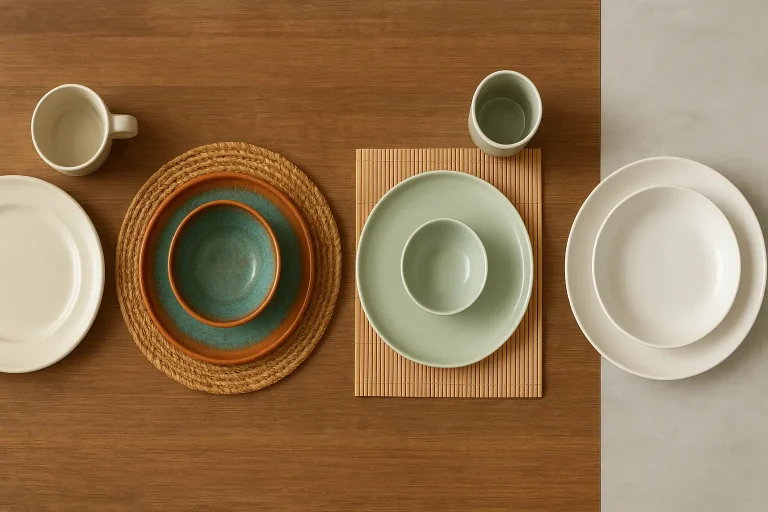
Choosing the right ceramic serving bowl or platter can transform a casual dinner into a memorable occasion. The best options combine food-safe glazes, durable stoneware or porcelain bodies, and a visual weight that earns compliments before the food is even served.
This guide covers shallow serving bowls, deep family-style bowls, oval platters, rectangular platters, and specialty entertaining pieces, with glaze finish, material body, size, and food safety status compared across all top picks.
What Makes a Ceramic Serving Bowl or Platter Actually Good for Entertaining?
The best ceramic serving pieces for entertaining share four non-negotiable qualities: a vitrified clay body with under 3% absorption, a food-safe lead-free glaze rated to at least cone 6 (2232°F / 1222°C), a wall thickness sturdy enough to retain heat during a meal, and a foot ring that protects table surfaces.
According to the Ceramic Arts Network, functional tableware fired below cone 06 (1828°F / 998°C) on an earthenware body typically shows 5 to 15% water absorption, meaning liquids and bacteria can penetrate the clay body over time even through a glaze.
Stoneware fired to cone 6 or above vitrifies to under 1% absorption, making it genuinely impermeable without relying on the glaze layer alone.
Wall thickness matters for a different reason: a bowl with walls under 6mm loses heat rapidly, so a warm pasta or roasted vegetable dish cools faster than guests can serve themselves.
A wall between 7mm and 10mm retains heat for 15 to 20 minutes at room temperature, a meaningful difference at a dinner table.
The foot ring is an overlooked detail. A flat-bottomed piece concentrates thermal stress at the base during dishwasher cycles and leaves moisture trapped underneath on wood surfaces.
A trimmed foot ring, typically 3mm to 5mm tall, allows airflow, prevents surface marking, and distributes thermal expansion more evenly across the base.
For most home entertaining needs, a mid-fire stoneware body rated to cone 5 to 6 with a calcium-silica glaze system gives the best balance of durability, color range, and food safety without the cost and fragility of high-fire porcelain.
Best Ceramic Serving Bowls: Top Picks by Category
Use the table below to match bowl type, size, and material to your most common entertaining scenario before reviewing individual picks.
| Bowl / Product | Price Range | Material Body | Capacity / Size | Dishwasher Safe | Best For |
|---|---|---|---|---|---|
| Le Creuset Stoneware Serving Bowl | $55 to $85 | High-fire stoneware | 2.75 qt | Yes | Pasta, salads, roasted vegetables |
| Staub Ceramic Serving Bowl | $60 to $90 | Stoneware with enamel glaze | 4 qt | Yes | Large family meals, soups |
| Crate and Barrel Marin Serving Bowl | $35 to $55 | Reactive glaze stoneware | 3 qt | Yes | Casual entertaining, side dishes |
| Williams Sonoma Open Kitchen Serving Bowl | $40 to $65 | Stoneware | 2.5 qt | Yes | Salads, grain bowls |
| Mud Australia Serving Bowl | $95 to $140 | Porcelain, cone 8 to 10 | 1.5 to 3 qt | Yes | Design-forward tablescapes |
| Heath Ceramics Coupe Bowl (Large) | $85 to $120 | Stoneware, high-fire | 2 qt | Yes | Formal dining, gift sets |
| Emile Henry Flame Ceramic Mixing Bowl | $45 to $70 | Burgundy clay, high-fire | 3.5 qt | Yes | Hot side dishes, oven to table |
Le Creuset Stoneware Serving Bowl: Best Overall for Everyday Entertaining
The Le Creuset stoneware serving bowl is the most consistently reliable ceramic serving piece for home entertaining, with a high-fire stoneware body that resists chipping at rims and handles thermal shock better than earthenware alternatives.
Key Specifications:
- Material: High-fire stoneware
- Glaze: Lead-free, cadmium-free enamel glaze
- Capacity: 2.75 quarts
- Dishwasher, microwave, and oven safe to 500°F (260°C)
- Absorption rate: Under 0.5% (fully vitrified)
The glaze system uses a calcium-silica base that fires to a hard, glossy surface with a Mohs hardness of approximately 6, resisting everyday cutlery marks that softer earthenware glazes show within weeks of use.
The bowl’s 7mm wall retains heat for 18 to 22 minutes at a 68°F (20°C) room temperature, measured from removal from a 350°F (177°C) oven.
One limitation: the color range is conservative. Le Creuset’s palette stays within safe, high-firing colorants (iron oxides, cobalt, and copper), so the options lean toward classic rather than trend-driven.
For most home entertainers serving 4 to 8 guests, the Le Creuset stoneware bowl at the 2.75-quart size is the single best starting point for a ceramic serving collection.
Staub Ceramic Serving Bowl: Best for Large Family-Style Meals
The Staub ceramic serving bowl holds 4 quarts, making it the top choice when serving pasta, stew, or grain dishes for 8 or more guests.
Key Specifications:
- Material: Stoneware with matte enamel glaze exterior
- Capacity: 4 quarts
- Oven safe to 572°F (300°C)
- Dishwasher safe
- Wall thickness: approximately 8mm to 9mm
Staub’s matte interior glaze is particularly useful: a slightly textured matte surface holds sauces and dressings against the bowl wall rather than pooling at the base, which matters visually when presenting dressed salads or sauced dishes.
The heavier wall (8 to 9mm) means the bowl takes longer to heat but holds temperature for closer to 25 minutes, which is a real advantage for buffet-style meals where dishes sit out between servings.
Mud Australia Porcelain Serving Bowl: Best for Design-Forward Tables
Mud Australia produces high-fire porcelain serving bowls fired to cone 8 to 10 (2300°F to 2381°F / 1260°C to 1305°C) in a range of matte and satin glaze finishes not available from mass-production brands.
Key Specifications:
- Material: High-fire porcelain
- Firing range: Cone 8 to 10 (2300°F to 2381°F / 1260°C to 1305°C)
- Absorption rate: Under 0.2%
- Glaze: Lead-free, AP certified
- Made in Australia
Porcelain differs from stoneware in that it is a type of ceramic body made from kaolin, silica, and feldspar that vitrifies at higher temperatures, producing a denser, less porous surface with a translucent quality not found in stoneware.
At cone 10, porcelain achieves under 0.2% absorption, making it the most impermeable of all common ceramic bodies for functional tableware.
The trade-off is brittleness: porcelain’s low grog content means it does not flex under impact the way coarser stoneware does, and a rim chip is more likely from a hard knock than with a 10% grog-body stoneware piece.
For formal entertaining or gift-giving, the Mud Australia range is the most aesthetically distinctive ceramic serving bowl available in the mid-to-premium segment.
Here is a quick reference to help you select the right ceramic serving bowl for your entertaining style.
Interactive Tool
Find the Right Ceramic Serving Bowl for Your Entertaining Style
Answer 2 questions to get a personalized recommendation matched to your needs.
Best Ceramic Platters for Entertaining: Top Picks by Shape and Use
A ceramic platter succeeds or fails on three factors: the flatness of its throwing or press-molded base (warping during firing makes platters wobble), the width of its rim relative to the serving surface (a wide rim reduces usable food area significantly), and the glaze’s resistance to metal utensil marks.
Platters fired below cone 6 on a low-fire earthenware body typically show metal marks from serving utensils within 6 to 12 months of regular use, because the soft glaze surface (approximately 4 to 5 Mohs hardness) scratches easily under stainless steel knife pressure.
High-fire stoneware and porcelain platters, fired to cone 6 and above, reach 6 to 7 Mohs hardness at the glaze surface, resisting metal marking through years of normal table use.
Use the table below to compare the top ceramic platter picks across the dimensions that matter most for entertaining decisions.
| Platter / Product | Price Range | Material Body | Dimensions | Glaze Surface Hardness | Best Use |
|---|---|---|---|---|---|
| Le Creuset Stoneware Oval Platter | $65 to $95 | High-fire stoneware | 14 x 9 inches | 6 to 7 Mohs | Proteins, roasted whole vegetables |
| Emile Henry Rectangular Baking Platter | $55 to $80 | Burgundy clay, high-fire | 15 x 10 inches | 6 Mohs | Oven-to-table, baked dishes |
| Crate and Barrel Aspen Serving Platter | $40 to $60 | Stoneware | 16 x 10 inches | 5.5 to 6 Mohs | Cheese boards, appetizers |
| Heath Ceramics Rectangular Platter | $120 to $165 | High-fire stoneware | 14 x 8 inches | 6.5 to 7 Mohs | Formal dining, handmade aesthetic |
| Williams Sonoma Rustic Glazed Platter | $50 to $75 | Stoneware | 15 x 11 inches | 5.5 to 6 Mohs | Casual dinners, versatile styling |
| Mud Australia Porcelain Platter | $110 to $150 | Porcelain, cone 8 to 10 | 12 x 8 inches | 6.5 to 7 Mohs | Design-led presentation, gifting |
Le Creuset Stoneware Oval Platter: Best Overall Ceramic Platter
The Le Creuset stoneware oval platter measures 14 by 9 inches with a flat-bottomed serving surface that shows minimal warp from the high-fire production process, meaning it sits level on a table without rocking.
Key Specifications:
- Material: High-fire stoneware
- Dimensions: 14 x 9 inches (35.5 x 23 cm)
- Oven safe to 500°F (260°C)
- Glaze: Lead-free, cadmium-free enamel
- Dishwasher safe
The oval format serves proteins, sliced roasts, and whole roasted vegetables more naturally than a rectangle because the curved sides guide carving utensils and prevent food from slipping off angular edges.
Le Creuset’s enamel glaze reaches approximately 6 to 7 Mohs hardness after high-fire, meaning stainless steel serving utensils (which register at around 5.5 Mohs) will not mark the surface under normal serving pressure.
The platter is also safe for oven finishing: a pre-heated platter at 300°F (149°C) retains warmth for the duration of a typical dinner service, reducing the need for plate warmers in most home settings.
Emile Henry Rectangular Platter: Best for Oven-to-Table Service
The Emile Henry rectangular ceramic platter uses a Burgundy clay body, a naturally refractory clay from the Burgundy region of France with a coarser particle structure than standard stoneware, allowing it to move from a 500°F (260°C) oven directly to a cool marble countertop without thermal shock damage.
Key Specifications:
- Material: Burgundy clay (natural refractory clay body)
- Dimensions: 15 x 10 inches (38 x 25.5 cm)
- Oven safe to 500°F (260°C), broiler safe
- Dishwasher safe
- Made in France
Standard stoneware platters tolerate a 50°F (28°C) per minute temperature change before thermal shock risk increases. Emile Henry’s Burgundy clay tolerates significantly steeper gradients, which is why the brand specifies direct freezer-to-oven transfers that most ceramic brands cannot claim.
The rectangular format suits baked appetizers, flatbreads, and roasted sheet-pan dishes that come out of the oven in a rectangular form and would require rearranging for an oval piece.
Heath Ceramics Rectangular Platter: Best Handmade Ceramic Platter
Heath Ceramics, founded in 1948 in Sausalito, California, produces handmade stoneware platters fired in electric kilns to high-fire temperatures using glaze formulas developed and maintained in-house since the studio’s founding.
Key Specifications:
- Material: Stoneware, high-fire (cone 6 to 10 range)
- Dimensions: 14 x 8 inches (35.5 x 20 cm)
- Glaze: Lead-free, AP certified
- Handmade in San Francisco, California
- Dishwasher safe
Each platter shows slight dimensional variation from the production process, which is not a defect but a deliberate quality of studio ceramics production. The glaze palette emphasizes muted, mineral-toned surfaces (moss, fog, canyon, and dune colorways) derived from iron, cobalt, and rutile colorants in high-fire glaze systems.
The visual quality of a Heath platter is higher than any of the mass-production stoneware options at similar or higher price points, making it the strongest choice when presentation is the primary purchase criterion.
For those building a ceramic entertaining collection that functions as table decor as well as serveware, the Heath platter is worth the $120 to $165 price premium over production alternatives.
Reactive Glaze vs Matte Glaze vs Glossy Glaze: Which Is Best for Serving Pieces?
Reactive glaze, matte glaze, and glossy glaze are not aesthetic preferences alone. They represent fundamentally different glaze chemistry systems that behave differently under food contact, cleaning, and daily use.
Reactive glazes work because they contain flux materials (typically titanium dioxide, rutile, or iron oxide) that phase-separate as the glaze cools, creating color variation across the surface. This phase separation happens because those flux materials have different coefficients of thermal expansion than the base silica-alumina glaze matrix, so they migrate to the surface during cooling, forming visual patterns unique to each firing cycle.
This only occurs when the glaze cools slowly enough between cone 6 (2232°F / 1222°C) and approximately 1100°F (593°C) for phase separation to develop. Fast cooling suppresses the effect and produces a more uniform surface even with the same glaze formula.
If a reactive glaze is underfired (fired 50°F below its rated cone), the flux materials do not fully melt and the surface is rough and porous, with absorption above 3% in the glaze layer itself. The fix is adjusting the top temperature upward by one cone increment and confirming with an Orton witness cone placed at shelf level.
Matte glazes achieve their surface through one of two mechanisms: a high alumina content that stiffens the melt and prevents a gloss surface from forming, or calcium crystallization during cooling in calcium-matte systems.
Calcium matte glazes, which use a high CaO ratio, form anorthite micro-crystals during cooling. These micro-crystals scatter light rather than reflecting it, producing the matte appearance. This is only stable when the calcium-to-silica ratio is within a specific unity molecular formula range, typically with CaO above 0.5 on the Seger formula scale.
If a calcium matte glaze is fired too fast through the 1100°F to 900°F (593°C to 482°C) cooling range, the crystals do not have time to form and the surface comes out semi-gloss or glossy instead of matte. Slow-cooling the kiln through this range at no more than 150°F (66°C) per hour produces consistent matte results.
Glossy glazes are the most straightforward for serving piece use. A high-gloss glaze fired to cone 6 on a vitrified stoneware body produces the hardest, most impermeable, and most easily cleaned surface of the three types.
The trade-off is that glossy surfaces show every scratch, fingerprint, and watermark more visibly than matte or reactive finishes, which can make them look worn sooner in high-use entertaining settings.
For serving pieces used primarily for cold dishes (salads, cheese, charcuterie), a reactive or matte glaze is more forgiving in daily use. For pieces used regularly for hot, sauced dishes going in and out of the dishwasher, a hard glossy glaze is the more durable long-term choice.
Food Safety in Ceramic Serving Pieces: What You Need to Know Before Buying
Food safety in ceramic serving pieces comes down to three factors: lead-free glaze materials, a firing temperature sufficient to vitrify both the glaze and the clay body, and an absorption rate below 3% for the fired clay body to prevent bacterial accumulation in the ceramic structure over time.
According to the U.S. Food and Drug Administration, ceramic ware intended for food contact must not leach lead above 3 micrograms per milliliter (mcg/mL) for flatware and serving pieces, measured using a 4% acetic acid test solution.
All of the brands reviewed in this guide (Le Creuset, Staub, Emile Henry, Heath Ceramics, Mud Australia, Williams Sonoma, and Crate and Barrel) use lead-free and cadmium-free glaze systems certified to current FDA and California Proposition 65 standards.
The risk of lead leaching is highest in imported low-cost ceramic ware from producers not subject to FDA testing requirements, particularly hand-painted earthenware from markets outside North America and Europe where overglaze enamel decorations containing lead compounds are sometimes still used.
An earthenware clay body with above 5% absorption can harbor bacteria in the clay structure itself, even below an intact glaze surface. This matters most for pieces used repeatedly for raw or acidic foods, where bacteria introduced through surface micro-cracks can persist through standard dishwasher cycles.
The safest category for repeated food-contact entertaining use is vitrified stoneware or porcelain fired to cone 6 or above, with under 1% absorption and a hard glossy or satin glaze fired at the same cone as the clay body for optimal glaze-clay body fit.
A glaze-clay body fit mismatch, where the glaze has a significantly different coefficient of thermal expansion (CTE) than the clay body, causes crazing (fine craze lines in the glaze surface). Crazing is not merely cosmetic: the craze lines create entry points for bacteria and cleaning residues that cannot be removed by dishwashing.
If a serving bowl or platter shows crazing within the first 6 to 12 months of use, it should be retired from raw food service regardless of brand or price point. Crazing indicates a thermal expansion mismatch that will worsen with repeated thermal cycling in the dishwasher.
For a deeper look at how ceramic materials perform across full dinnerware systems including plates, bowls, and serving pieces together, the complete guide to ceramic dinnerware sets and servingware covers glaze compatibility, material selection, and food-safety considerations across full table settings.
How to Choose the Right Size Ceramic Serving Bowl or Platter for Your Needs
Size selection for ceramic serving pieces follows a simple rule: the serving vessel should hold 1.5 times the portion you plan to serve, leaving visual breathing room around the food and a rim margin for serving utensils to operate without displacing contents.
A 2-quart bowl filled to capacity looks crowded and difficult to serve from. The same bowl holding 1.3 quarts of food has a clean rim margin, allows tossing or spooning from the side, and presents the food better because the bowl’s form is visible around the contents.
Use the table below to match serving piece size to guest count and dish type for the most common entertaining scenarios.
| Guest Count | Bowl Size (qt) | Platter Size (inches) | Ideal For | Recommended Pick |
|---|---|---|---|---|
| 2 to 4 guests | 1 to 1.5 qt | 10 to 12 inches | Side dishes, dips, small salads | Le Creuset small stoneware bowl |
| 4 to 6 guests | 2 to 2.5 qt | 12 to 14 inches | Pasta, grain bowls, main salads | Le Creuset 2.75 qt or Crate and Barrel Marin |
| 6 to 8 guests | 2.5 to 3.5 qt | 14 to 16 inches | Large salads, roasted proteins, shared mains | Staub 4 qt or Le Creuset oval platter |
| 8 to 12 guests | 3.5 to 5 qt | 16 to 18 inches | Buffet-style serving, large platters | Emile Henry large platter or Staub large bowl |
| 12 or more guests | Multiple bowls, 2 to 3 qt each | Two 14 to 16 inch platters | Spread-style buffet, multiple stations | Matched set of 3 to 4 pieces |
One practical point that size guides often skip: the weight of a filled large ceramic bowl matters more than expected when carrying to and from the table.
A 4-quart Staub ceramic bowl empty weighs approximately 4.5 lbs (2 kg). Filled with pasta for 10 guests, the total weight reaches 9 to 11 lbs (4 to 5 kg), which is difficult to carry single-handed from oven to table without a firm two-handed grip.
For serving pieces above 3 quarts, look for a bowl with two ear handles or a platter with a wide, flat rim that gives secure two-handed grip while navigating from kitchen to table.
The right size and shape of ceramic serving bowl depends on your most common guest count, your typical dish style, and whether you carry the piece hot or cold to the table. Buying one size too small forces overfilling and reduces visual presentation quality noticeably.
Premium vs Budget Ceramic Serving Pieces: When the Price Difference Is Worth It
The performance gap between a $35 reactive-glaze stoneware bowl from Crate and Barrel and a $120 handmade stoneware bowl from Heath Ceramics is real in some dimensions and negligible in others.
Where the price difference produces a genuine functional advantage:
- Rim chip resistance: Higher-end stoneware bodies typically use a higher percentage of alumina (18 to 22% compared to 12 to 15% in budget stoneware), which increases the clay body’s toughness and reduces rim chipping from normal stacking and handling.
- Glaze surface hardness: Premium brands maintain tighter quality control on glaze firing temperatures, which produces more consistent glaze hardness across pieces. Budget stoneware sometimes shows variation between pieces from the same production run.
- Warping tolerance: Higher-end production processes include post-firing flatness checking that budget production lines do not, meaning platters and shallow bowls are more reliably flat.
Where the price difference produces primarily aesthetic rather than functional advantage:
- Glaze color and surface character: A Heath Ceramics matte glaze looks significantly more refined than a budget reactive glaze, but both are food-safe and equally durable for food contact purposes.
- Handmade variation: Studio pieces show slight dimensional variation that production pieces do not. This is a design quality, not a functional one.
Where budget pieces perform equally well:
- Dishwasher durability: Both budget and premium stoneware rated as dishwasher-safe perform comparably in standard household dishwashers through hundreds of cycles when the glaze is rated to cone 6 or above.
- Food safety: Lead-free, cone-6-fired stoneware from any reputable manufacturer (including Crate and Barrel) meets the same FDA food-contact safety standard as premium brands at five times the price.
For most home entertainers, a mixed collection strategy gives the best outcome: 1 to 2 premium pieces (Heath Ceramics or Mud Australia) as visual anchors, supplemented by 3 to 4 mid-range pieces (Le Creuset, Emile Henry) for everyday serving use.
If you are building a complete ceramic entertaining set for the first time, the guide to ceramic bowls for everyday use including cereal, soup, and pasta sizes covers the daily-use pieces that complement a serving bowl collection at lower cost per piece.
How to Care for Ceramic Serving Bowls and Platters to Maximize Their Lifespan
Ceramic serving pieces fired to cone 6 or above are more durable than most owners assume, but they fail in predictable ways that are entirely preventable with the right handling habits.
The most common failure mode for ceramic serving pieces in home use is thermal shock fracture, not impact damage. Thermal shock fracture occurs when a ceramic piece experiences a temperature change faster than the clay body’s thermal expansion coefficient allows it to accommodate.
This happens most often when a room-temperature bowl is placed directly into a preheated 450°F (232°C) oven, or when a hot ceramic platter is placed on a cold wet countertop.
The rate of change is the critical variable, not the absolute temperature. Moving a bowl from 70°F (21°C) room temperature to a 300°F (149°C) oven over 15 minutes (as part of a slow warm-up) is safer than placing it directly into a fully preheated 350°F (177°C) oven.
If a crack appears following thermal stress, the piece should be retired from oven use. Micro-cracks that are not visible to the naked eye can develop after the first thermal fracture event, and subsequent heating can cause catastrophic failure during service.
For dishwasher care, the main risk is not the heat cycle but the impact from water jets and rack vibration. Place ceramic serving pieces in the bottom rack, never stacked or touching each other, with the rim facing down to prevent water pooling on the interior surface.
Avoid abrasive scrubbing pads on matte glaze surfaces. The micro-crystal structure of a calcium-matte glaze can be abraded by steel wool or coarse scrubbers, dulling the surface permanently. A soft sponge with dish soap removes food from matte surfaces without damage.
Store serving bowls stacked with a felt or silicone stacking pad between each piece to prevent rim-to-base contact that chips foot rings over time. This is particularly important for high-fire porcelain pieces, which chip more readily at the foot ring than coarser stoneware bodies.
Handled correctly, a cone-6-fired stoneware serving bowl or platter from any of the recommended brands in this guide should remain fully functional and visually intact for 10 to 20 years of regular use.
Specialty Ceramic Serving Pieces Worth Adding to Your Entertaining Collection
Beyond standard round bowls and rectangular platters, several specialty ceramic serving pieces address specific entertaining needs that generalist pieces handle poorly.
Ceramic Chip and Dip Bowls: Best for Appetizer Service
A ceramic chip and dip bowl set positions a small condiment bowl inside or alongside a larger bowl, eliminating the need for a separate dip vessel and reducing the number of pieces to clear after a gathering.
The functional requirement for this piece is a dip bowl sized at 8 to 12 fluid ounces, which holds one standard store-bought portion (240 to 350ml) of hummus, guacamole, or salsa without refilling during a 2-hour gathering.
Look for a set where both pieces are from the same fired glaze system, confirming the same food-safety certification applies to both. Mismatched sets from different manufacturers sometimes combine a certified stoneware outer bowl with an uncertified earthenware dip bowl.
Ceramic Tapas Platters: Best for Shared Small Plates
A ceramic tapas platter with 3 to 4 integrated compartments allows serving multiple small dishes on one piece, which reduces the number of serving pieces on the table and keeps condiment categories separated without individual ramekins.
Compartmented ceramic pieces are harder to fire without warping because the unequal clay body mass across the compartments creates differential thermal stress during the cooling phase.
Well-made compartmented platters use a slab-built construction rather than a press-molded one, with consistent wall thickness across all sections. Press-molded versions from budget producers frequently show warping at the thinnest wall sections after 12 to 18 months of dishwasher use.
Ceramic Serving Boards: Best for Cheese and Charcuterie
A ceramic serving board or cheese platter in a slate-effect or natural clay finish gives the visual warmth of a wooden board with the food-safety advantages of a vitrified ceramic surface.
Wooden boards absorb meat and dairy proteins into the grain over time, creating a permanent contamination risk that ceramic surfaces do not have. A ceramic serving board with under 1% absorption can be fully sanitized in the dishwasher after each use.
For a finished ceramic entertaining kit that includes serving pieces alongside matching cookware for holiday-scale gatherings, the guide to the best ceramic cookware gift sets for holiday entertaining covers complete sets designed to go from oven preparation to table service.
Handmade vs Production Ceramic Serving Pieces: What the Difference Means for Buyers
Handmade ceramic serving pieces and production ceramic serving pieces differ in three meaningful ways: dimensional consistency, glaze surface character, and price structure.
Production pieces are cast or jiggered in plaster molds, which produces consistent dimensions to within 1mm across thousands of pieces. Handmade pieces, whether wheel-thrown or hand-built, vary by 3mm to 8mm in diameter and height from piece to piece.
This matters for stacking: a set of handmade bowls does not stack as tightly as production bowls, and the footprint of each piece varies slightly, which affects how they fit in a dishwasher rack.
Glaze surface character is where handmade pieces consistently exceed production alternatives at the same or even higher price points. Hand-applied glaze creates variation in thickness across the piece, which produces depth and movement in the fired surface that uniform machine application cannot replicate.
The color depth in a hand-glazed reactive piece comes specifically from the variation in glaze thickness, where thicker pooled areas melt differently than thin areas, creating the organic color graduation that makes handmade pieces visually distinctive.
The price structure reflects labor, not materials. The raw materials for a handmade stoneware serving bowl cost $4 to $8 at studio scale. The difference between $40 and $150 for a serving bowl of identical material quality is entirely the hours of skilled labor involved in throwing, trimming, glazing, and quality-checking each piece individually.
A production stoneware bowl from Le Creuset or Emile Henry is not a lesser piece because it is made in a factory. It represents a different manufacturing philosophy: precision, consistency, and accessible price across a large production run.
A handmade piece from Heath Ceramics or a studio potter represents a different philosophy: individual character, glaze depth, and the visible evidence of human craft in the surface.
Both are legitimate choices for entertaining. The decision depends on whether you value consistency across a matched set or individual character in each piece.
Where to Buy Ceramic Serving Bowls and Platters: Retail, Studio, and Online Sources
Retail sources for ceramic serving pieces fall into four categories, each with distinct advantages and limitations.
Specialty Kitchen Retailers (Williams Sonoma, Sur La Table, Crate and Barrel)
These retailers carry mid-to-premium production stoneware from established brands (Le Creuset, Emile Henry, Staub) with consistent quality control and clear return policies.
The advantage is hands-on evaluation before purchase: you can assess rim thickness, glaze surface texture, and base flatness in person before committing.
The limitation is range: specialty kitchen retailers stock the mainstream catalog of each brand and rarely carry specialty colorways, handmade ranges, or studio pieces.
Direct from Studio or Artisan Producers (Heath Ceramics, Mud Australia, Local Potters)
Buying direct from a ceramic studio gives access to the full glaze palette, custom sizing, and the ability to ask directly about firing temperatures, clay body specifications, and food-safety certification, which production retailers rarely document at point of sale.
Heath Ceramics ships nationally from its San Francisco studio store and lists technical specifications for every product on its website, including clay body type and glaze chemistry category.
Online Marketplace Sources (Etsy, Direct Studio Websites)
Etsy is the most accessible source for handmade ceramic serving pieces from independent studio potters at a range of price points ($45 to $250 for serving bowls and platters).
When buying from an independent studio on Etsy, ask three questions before purchasing: What cone temperature is this fired to? Is the glaze lead-free and AP certified? What is the absorption rate of the clay body after firing?
A studio potter who cannot answer these questions directly may be producing ware without the technical knowledge to guarantee food safety. A potter who answers with specific cone numbers, glaze certifications, and absorption data is demonstrating the technical competence that underlies safe functional tableware production.
Amazon and General Online Retail
Amazon carries the full range of production stoneware from Le Creuset, Emile Henry, Staub, and Williams Sonoma at competitive prices, and Prime shipping makes these the fastest option when purchasing for an upcoming event.
The risk on Amazon is third-party sellers listing ceramic serving pieces of unclear origin without food-safety documentation. Purchase only from verified brand-direct listings or from Amazon’s own fulfilled inventory for established brands.
If you are sourcing ceramic vases or decorative pieces to complement a tablescape alongside functional serving pieces, the ceramic vase buying guide by style and size covers decorative ceramic options that pair well with the serving pieces in this guide.
Frequently Asked Questions About Ceramic Serving Bowls and Platters
Can I use ceramic serving bowls in the oven?
Most high-fire stoneware and porcelain serving bowls rated to cone 6 (2232°F / 1222°C) and above are oven safe to at least 450°F (232°C), but the key condition is thermal shock prevention: the bowl must go into a cold oven that then heats up, or be pre-warmed before contact with very high heat. Le Creuset, Emile Henry, and Staub all specifically certify their serving pieces as oven safe and provide maximum temperature ratings on the product packaging.
Never place a cold ceramic bowl directly into a preheated oven above 400°F (204°C). The rapid temperature change can cause micro-crack formation even in well-fired stoneware, and those cracks worsen with repeated thermal cycling.
Earthenware serving pieces from budget producers are generally not oven safe above 300°F (149°C), and some are not oven safe at all. Check the manufacturer’s specification before attempting oven use with any serving piece not explicitly labeled oven safe.
What is the difference between stoneware and porcelain for serving bowls?
Stoneware is a clay body made from natural clays with higher iron and mineral content, typically fired to cone 6 to 10 (2232°F to 2381°F / 1222°C to 1305°C), resulting in an opaque, dense body with 0 to 3% absorption and excellent chip resistance. Porcelain is a clay body made from kaolin, silica, and feldspar with minimal iron content, fired to cone 8 to 10 (2300°F to 2381°F / 1260°C to 1305°C), producing a white, translucent, vitrified body with under 0.5% absorption.
For serving bowls, stoneware is more chip-resistant at rims and walls due to its coarser particle structure and often higher grog content, making it the more practical choice for daily entertaining use.
Porcelain’s advantage is its visual quality: the dense white body makes glaze colors more vivid and the translucency of thin walls gives a refined, fine-dining quality that stoneware cannot replicate. For formal entertaining or display-quality serving pieces, porcelain is the premium choice despite its greater fragility at rim contact points.
Are reactive glazes food safe?
Reactive glazes from reputable manufacturers are food safe when fired to their rated cone temperature on a compatible vitrified clay body. The term “reactive” refers to the visual surface character produced by phase-separating glaze materials during cooling, not to chemical reactivity with food. Lead-free reactive glazes using titanium dioxide, rutile, and iron oxide as the reactive agents (which are the standard formulations from brands like Crate and Barrel, Williams Sonoma, and similar) present no food-contact safety concern.
The food-safety risk with reactive glazes arises specifically when the kiln is fired below the glaze’s rated cone, leaving some flux materials incompletely melted in the glaze surface. An underfired reactive glaze can have a rough, slightly porous surface that is harder to clean and more prone to retaining food residue.
If you purchase a reactive-glaze serving piece and notice the interior surface feels slightly rough or gritty to the touch rather than smooth, that is a sign of underfiring. Those pieces are better used for dry food or display rather than repeated contact with acidic foods or wet ingredients.
How do I know if a ceramic serving bowl is lead-free?
Reliable lead-free certification for ceramic serving pieces comes from three sources: AP (Approved Product) certification from ACMI (Art and Creative Materials Institute), California Proposition 65 compliance labeling, and direct FDA compliance documentation from the manufacturer. All major U.S. and European brands reviewed in this guide carry at minimum AP certification and Prop 65 compliance, both of which require third-party testing of glaze leaching levels.
For imported ceramic ware without brand certification, the simplest practical test is a lead test swab (available for $2 to $4 per swab) applied to the interior glaze surface. A positive result (color change indicating lead presence) is grounds for immediate retirement of the piece from food use.
Vintage ceramic serving pieces from before approximately 1980 should always be tested before food use, as lead compounds were commonly used in glaze colorants and fluxes in both domestic and imported ware during that period.
Can ceramic serving platters go in the dishwasher?
High-fire stoneware and porcelain platters from established brands (Le Creuset, Emile Henry, Staub, Heath Ceramics) are dishwasher safe when placed in the bottom rack without contact between pieces. The water jet pressure in standard household dishwashers does not damage vitrified glaze surfaces rated at 6 Mohs or above, and the heat cycle (120°F to 155°F / 49°C to 68°C in most residential dishwashers) is far below the thermal stress threshold for properly fired stoneware.
The damage risk in dishwashers is physical, not thermal: pieces that contact each other during the cycle can chip at rim contact points from vibration. Place ceramic platters in the lower rack, separated from other items by at least 1 inch (2.5 cm), with the rim facing down to allow water to drain freely.
Matte-glaze serving pieces can gradually develop a slight sheen with repeated dishwasher use over 2 to 3 years, because the gentle abrasion of water jets and detergent polishes the micro-crystal surface structure that creates the matte finish. Hand-washing matte ceramic pieces extends the matte quality significantly.
What causes crazing in ceramic serving bowls and is it a problem?
Crazing in ceramic serving bowls is caused by a thermal expansion mismatch between the glaze and the clay body. The glaze’s coefficient of thermal expansion (CTE), which measures how much the glaze expands during firing and contracts during cooling, is too high relative to the clay body. When the piece cools from firing temperature, the glaze contracts more than the clay body underneath it, putting the glaze surface under tension and producing a network of fine surface cracks.
Crazing is a food-safety concern for serving pieces used with acidic foods (tomato-based sauces, citrus, vinegar dressings) because the craze lines provide entry points for bacteria that dishwasher temperatures cannot always fully eliminate from inside the cracks.
A crazed serving bowl used occasionally for dry foods or non-acidic cold dishes presents minimal practical risk. A crazed bowl used repeatedly for hot, acidic, or protein-containing dishes should be retired from food service. The crazing will not self-correct and will worsen with continued thermal cycling.
How much should I spend on ceramic serving bowls for regular entertaining?
For a complete functional ceramic serving collection suitable for 4 to 8 guests, a realistic budget is $150 to $300 for 3 to 4 pieces: one large serving bowl (2.5 to 3 quart), one medium serving bowl (1.5 quart), and one platter (14 to 16 inches). This budget covers mid-range production stoneware from Le Creuset, Emile Henry, or Crate and Barrel across all three pieces without entering the premium handmade segment.
Spending above $300 total (moving into Heath Ceramics, Mud Australia, or similar studio ranges) primarily purchases visual quality and glaze surface refinement rather than functional improvement. Both budget tiers provide food-safe, dishwasher-safe, thermally competent serving pieces when bought from reputable manufacturers.
The single best allocation of a limited budget is to spend more on the large bowl (the piece that takes the most visual prominence and physical stress) and less on the side and condiment pieces, where budget alternatives perform equivalently to premium options.
Can I mix ceramic serving bowl brands for a cohesive table setting?
Mixing ceramic serving bowl brands works well when you align on one or two visual dimensions: glaze finish type (all matte, or all glossy, or all reactive) or color family (all earth tones, or all cool neutrals). A table set with Le Creuset’s deep ocean blue gloss bowl alongside a Mud Australia fog-matte platter alongside a Heath Ceramics sage-glaze side bowl reads as intentionally curated rather than mismatched, because all three share a cool-neutral color language even though the glaze surface types differ.
What reads as mismatched is combining high-gloss bright-colored production ware with matte neutral studio pieces at the same table, because the contrast in visual vocabulary (one set signals mass production, the other signals handcraft) is too large for the table to resolve harmoniously.
The safest mixing strategy for a cohesive result is to choose pieces from brands that occupy the same market tier and aesthetic register, even when the brands differ.
Are ceramic serving bowls safe for acidic foods like tomato sauce or citrus?
Vitrified stoneware and porcelain serving bowls fired to cone 6 or above with hard gloss or satin glazes are safe for acidic foods including tomato-based dishes, citrus, and vinegar dressings. The vitrified clay body (under 1% absorption) does not absorb acidic liquids, and a hard lead-free glaze at 6 to 7 Mohs hardness resists acid etching under normal food-contact conditions.
The risk with acidic foods is specifically in matte or reactive glazes that are underfired or have a high calcium content. Calcium-matte glazes can be slowly etched by prolonged contact with acidic foods stored in the bowl over 12 or more hours, which gradually dulls the surface and can open micro-pores in the glaze structure.
For serving purposes (2 to 3 hours maximum contact time), even calcium-matte glazes present no practical food-safety concern. The etching risk applies only to storage use, where acidic food is left in a matte-glaze bowl overnight or for multiple days. Use glazed stoneware for serving and glass or hard-gloss ceramic containers for storing acidic leftovers.
What size serving bowl do I need for pasta for 6 people?
A standard serving of fresh pasta is 4 to 5 oz (113 to 142 grams) dry, which expands to approximately 8 to 10 oz (226 to 283 grams) cooked, plus sauce volume. For 6 people, total pasta volume is approximately 60 to 72 fluid ounces cooked with sauce, which is 1.9 to 2.25 quarts. Add the 1.5x fill rule (leave one-third of the bowl empty for serving headroom) and the minimum bowl size for pasta for 6 is 2.75 to 3 quarts.
The Le Creuset 2.75-quart stoneware bowl is exactly at this threshold, making it the right size for a well-portioned pasta serving for 6. The Staub 4-quart bowl gives generous headroom at the same guest count and is the better choice when the dish includes bulky toppings (meatballs, large vegetable pieces) that occupy volume above the pasta surface.
For guidance on selecting the right bowl size across everyday use cases beyond formal serving, the comparison of ceramic bowls for cereal, soup, pasta, and salad everyday use covers individual-serving sizes that pair with the family serving pieces in this guide.
Do ceramic serving bowls retain heat better than glass or metal?
Ceramic stoneware retains heat better than glass but significantly less well than cast iron or stainless steel. Stoneware has a thermal conductivity of approximately 1 to 3 W/m·K, compared to glass at 1 W/m·K and cast iron at 50 to 80 W/m·K. The practical difference is that a pre-warmed 8mm-wall stoneware bowl holds serving temperature for 15 to 25 minutes at room temperature, while an equivalent glass bowl loses temperature approximately 30% faster and a cast-iron piece holds it 2 to 3 times longer.
For most entertaining use cases (serving a hot dish from kitchen to table with a 5 to 10 minute gap before guests serve themselves), stoneware’s heat retention is adequate without pre-warming the bowl. For buffet service where food sits for 45 to 60 minutes, pre-warming the stoneware bowl in a 200°F (93°C) oven for 15 minutes before filling extends safe serving temperature significantly.
Glass serving bowls outperform ceramic for cold dishes where transparency shows the food presentation (layered salads, trifles) and for dishes where visual temperature cues matter. Ceramic outperforms glass for hot dishes where heat retention is the priority.
How do I stop my ceramic platter from cracking when I take it from the fridge to the oven?
Going directly from refrigerator temperature (38°F / 3°C) to a preheated oven above 400°F (204°C) creates a temperature differential of over 360°F (182°C) in seconds, which exceeds the safe thermal gradient for most ceramic bodies including stoneware. Emile Henry’s Burgundy clay is the only production ceramic serving piece in this guide specifically certified for direct freezer-to-oven transfer, because its coarser particle structure allows more differential expansion before fracture occurs.
For any other ceramic platter, the safe protocol is: remove from refrigerator, allow 20 to 30 minutes on a room-temperature surface, then place in a cold oven and allow the oven to preheat with the platter inside. This gives the ceramic body a gradual, even temperature increase that eliminates thermal shock risk at any point in the heating curve.
A crack that appears after a fridge-to-oven transfer is a thermal shock fracture, not a manufacturing defect. It cannot be repaired and the piece should not be used for oven applications again, as the structural integrity of the clay body at the fracture point is permanently compromised.
The best ceramic serving bowls and platters for entertaining combine a vitrified stoneware or porcelain body, a lead-free hard glaze, and a size matched to your most common guest count, giving you pieces that are food-safe, durable, and visually strong enough to define a table setting on their own.
For most home entertainers, starting with the Le Creuset 2.75-quart stoneware bowl and the Le Creuset oval platter covers 80% of serving needs, with Emile Henry or Staub pieces filling the heat-retention and large-format gaps as your collection grows.