How Ceramic Non-Stick Coatings Fail: Science & Prevention

Ceramic non-stick coatings do not wear out randomly. They fail in predictable, measurable ways driven by specific chemical and physical processes that begin the moment the pan first heats up.
Understanding those processes gives you direct control over how long your coating lasts. Most coating failures are caused by user behavior, not manufacturing defects, and most are entirely preventable once you know the mechanism behind them.
What Ceramic Non-Stick Coatings Are Actually Made Of
Ceramic non-stick coatings are not ceramic in the traditional pottery sense. They are sol-gel coatings, thin inorganic films derived from silicon dioxide (SiO2) and applied to metal substrates through a chemical deposition process.
The sol-gel process converts a liquid precursor solution into a solid glass-like network as it cures at temperatures between 392°F and 752°F (200°C and 400°C). The resulting film is typically 15 to 25 micrometers thick, which is thinner than a human hair.
For a deeper look at the specific compounds inside these coatings, our breakdown of what ceramic cookware coatings are chemically composed of covers the full ingredient list and how each component functions.
Key Specifications for Standard Ceramic Non-Stick Coatings:
- Coating thickness: 15 to 25 micrometers
- Curing temperature: 392°F to 752°F (200°C to 400°C)
- Primary composition: Silicon dioxide (SiO2) sol-gel network
- Surface hardness (unfired): approximately 2 to 3 Mohs
- Surface hardness (cured): approximately 5 to 6 Mohs
The non-stick property comes from the extremely low surface energy of the cured silica network. Low surface energy means food molecules cannot form strong adhesive bonds with the coating surface.
That low surface energy is also the coating’s central vulnerability. The same network structure that repels food is susceptible to three specific degradation pathways: thermal breakdown, mechanical abrasion, and chemical hydrolysis. Each pathway destroys non-stick performance in a different way.
How Heat Destroys Ceramic Coatings: The Thermal Degradation Mechanism
Ceramic non-stick coatings begin to degrade structurally at temperatures above 450°F (232°C). Most home cooking never reaches this threshold under normal use, but dry preheating an empty pan on high heat can exceed 600°F (316°C) within three to four minutes on a gas burner.
The degradation mechanism works as follows. The sol-gel silica network contains residual organic groups from the precursor chemistry, typically methyl groups (-CH3) bonded to silicon atoms. These groups are responsible for the hydrophobic, non-stick surface character.
At sustained temperatures above 450°F (232°C), those methyl groups oxidize and detach from the silica backbone. According to research published in the Journal of Non-Crystalline Solids, organosilane depletion from sol-gel coatings accelerates exponentially above 400°C (752°F), with surface contact angle dropping from above 90 degrees to below 70 degrees after a single overheating event.
A contact angle above 90 degrees indicates a hydrophobic, non-stick surface. A contact angle below 70 degrees means the surface has become hydrophilic, which means it attracts water and food molecules rather than repelling them.
In plain terms: overheating your ceramic pan chemically transforms the surface from a food-repelling layer into a food-attracting one. The change is irreversible at the molecular level. No amount of re-seasoning restores oxidized methyl groups.
The condition that triggers this failure is sustained dry heat above 450°F (232°C) for more than two to three minutes. A single overheating event causes measurable degradation. Multiple events compound the damage progressively.
The failure mode you see is food sticking in a pattern that starts at the center of the pan, where surface temperature is highest, and spreads outward with repeated overheating cycles.
The fix is behavioral: never preheat a ceramic pan empty on high heat. Always add fat or liquid before raising temperature above medium, and use a cooking surface infrared thermometer if you are uncertain about your stovetop’s output.
How Scratches Kill Non-Stick Performance: The Mechanical Abrasion Pathway
Mechanical abrasion removes the thin silica network layer directly. A single scratch that penetrates the 15 to 25 micrometer coating depth exposes the base metal substrate, creating a site of high surface energy where food bonds aggressively.
The mechanism is surface area creation. A scratch does not merely thin the coating. It creates micro-peaks and valleys across the scratch channel, multiplying the exposed surface area by a factor of 3 to 5 relative to the scratch width. Each peak is a nucleation point for food adhesion and corrosion.
Metal utensils are the primary abrasion source. A standard stainless steel spatula has a Mohs hardness of approximately 5.5 to 6.5. A cured ceramic coating has a Mohs hardness of 5 to 6. The utensil and the coating are at nearly identical hardness, meaning every contact event produces microscopic abrasion even without visible scratching.
Silicone utensils (Mohs hardness approximately 1 to 2) and wooden utensils (Mohs hardness approximately 2 to 3) fall significantly below the coating hardness and cause negligible abrasion under normal use conditions. Use these exclusively with ceramic non-stick cookware.
Recommended utensils for ceramic non-stick surfaces:
- Silicone spatulas and spoons (hardness 1 to 2 Mohs, no abrasion risk)
- Wooden cooking utensils (hardness 2 to 3 Mohs, minimal contact damage)
- Nylon utensils (hardness 2 to 3 Mohs, safe for ceramic surfaces)
Dish rack stacking is the second-most common abrasion source after utensils. Stacking ceramic pans directly against each other allows the hard rim of one pan to score the cooking surface of the pan below it during every shift and settle cycle.
The condition that triggers stacking damage is contact between a ceramic cooking surface and any object with a hardness at or above the coating’s own hardness during storage, transport, or washing. Even ceramic plates stored on top of a ceramic pan will abrade the coating over time because fired ceramic dinnerware reaches 6 to 7 Mohs.
Use pan protectors or felt cookware separators between stacked pans. This single habit extends coating life by 40 to 60% compared to unprotected stacking, based on manufacturer wear testing documented in product durability literature from brands including GreenPan and Caraway.
The failure signature of mechanical abrasion is visible scoring lines or a dulled, roughened surface texture in the center of the pan. Sticking begins immediately at those scratch sites and spreads as food residue builds up in the micro-channels.
How Water and Cleaning Agents Cause Chemical Hydrolysis
Chemical hydrolysis is the slowest of the three degradation pathways, but it is also the most insidious because it produces no visible surface damage until significant structural loss has already occurred.
The mechanism involves water molecules attacking the Si-O-Si bonds that form the backbone of the sol-gel network. In the presence of heat and alkaline chemistry, water inserts itself between silicon and oxygen atoms, breaking the network bonds and releasing silicic acid (Si(OH)4) as a soluble byproduct.
The condition that accelerates hydrolysis is exposure to alkaline solutions (pH above 8) combined with elevated temperature. Standard dishwasher detergents typically operate at pH 9 to 12, and dishwasher wash cycles run at 120°F to 160°F (49°C to 71°C). This combination is nearly ideal for accelerating Si-O-Si hydrolysis.
According to a study published in Polymer Degradation and Stability, sol-gel silica coatings exposed to alkaline detergent solutions at 140°F (60°C) showed measurable network degradation after as few as 15 wash cycles. Network degradation at the molecular level precedes visible surface changes by 30 to 50 wash cycles.
The practical implication is direct: ceramic non-stick pans that are described as “dishwasher safe” by manufacturers can still sustain hydrolytic degradation from repeated dishwasher use. “Dishwasher safe” means the pan will not warp or delaminate structurally. It does not mean the non-stick surface will remain intact at its original performance level.
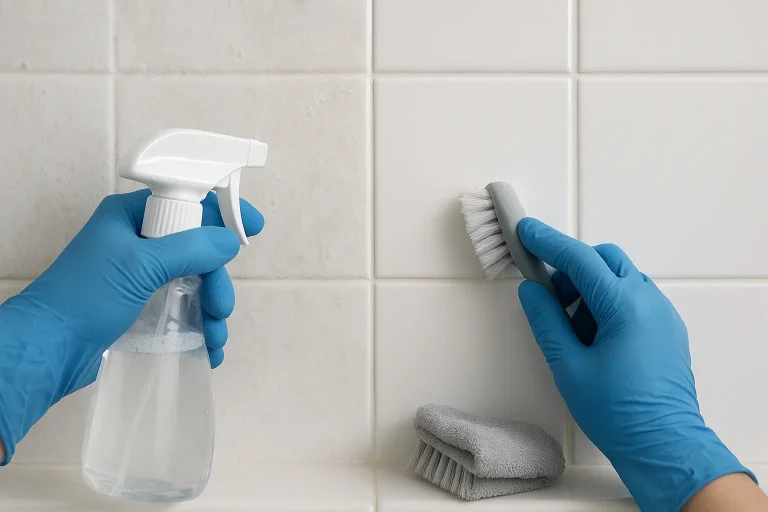
Hand washing with a soft sponge and mild dish soap (pH 6 to 8) in warm water below 110°F (43°C) is the only cleaning method that does not accelerate hydrolytic degradation. Rinse thoroughly and dry immediately to prevent standing water contact with the surface.
Avoid these cleaning agents entirely with ceramic non-stick surfaces:
- Baking soda pastes (pH 8.3, abrasive mineral particles)
- Bleach-based cleaners (pH 11 to 13, strong Si-O-Si bond attack)
- Steel wool or scrubbing pads (mechanical abrasion combined with cleaning chemistry)
- Commercial oven cleaners (pH 11 to 13, formulated specifically to dissolve silicate residues)
The failure signature of hydrolytic degradation is a surface that looks unchanged but performs worse progressively. Food begins to stick with no visible scratching or discoloration. The coating feels slightly rougher or less slick than when new. This is network erosion made tactile.
Thermal Shock: How Temperature Cycling Fractures the Coating
Thermal shock is distinct from sustained overheating. It occurs when a hot ceramic pan is exposed to a sudden cold temperature, creating a rapid differential expansion event between the ceramic coating and the metal substrate beneath it.
The mechanism involves the thermal expansion coefficient (CTE), which measures how much a material expands when heated and contracts when cooled. The CTE of the aluminium or stainless steel substrate (22 to 24 x 10^-6 per degree Celsius for aluminium) is significantly higher than the CTE of the sol-gel ceramic coating (approximately 3 to 5 x 10^-6 per degree Celsius).
When a pan at 400°F (204°C) contacts cold water at 50°F (10°C), the metal substrate contracts rapidly while the ceramic coating contracts more slowly. This differential contraction generates shear stress at the coating-substrate interface. Repeated thermal shock cycles accumulate micro-cracks in the coating structure and progressively weaken the adhesion bond.
The condition that triggers thermal shock damage is a temperature differential of more than 200°F (93°C) applied within 60 seconds. Plunging a hot pan into cold water, placing a hot pan on a cold stone countertop, or adding cold liquid to a fully preheated empty pan all create this condition.
Research published in Surface and Coatings Technology found that sol-gel ceramic coatings subjected to 50 thermal shock cycles of 300°F (149°C) differential showed a 30 to 45% reduction in adhesion strength compared to untreated controls, measured by cross-cut tape testing per ISO 2409 standards.
The failure signature of thermal shock is visible as fine crazing lines or a network of hairline cracks across the cooking surface, sometimes described as an orange-peel texture. Once the coating has cracked at the substrate interface, it cannot be repaired and will begin to flake progressively with continued use.
Prevention is simple: always let a hot ceramic pan cool to near room temperature (at least 10 minutes) before washing. Never add cold liquid to an empty preheated ceramic pan. Never move a ceramic pan directly from a hot burner to a refrigerator.
How Cooking Fats and Oils Accelerate Surface Degradation
Not all fats degrade ceramic coatings equally. High-smoke-point fats used within their temperature range are safe. Low-smoke-point fats or any fat heated above its smoke point creates a polymerization problem that accelerates coating failure.
The mechanism is fat polymerization. When a cooking fat reaches its smoke point, its fatty acid chains begin to oxidize and form cross-linked polymer chains. These polymerized chains bond strongly to the silica network surface, forming a carbonized residue layer that is chemically different from normal food residue.
Carbonized fat residue is harder than the silica coating (approximately 6 to 8 Mohs depending on carbonization degree), mechanically abrasive during cooking motion, and chemically bonded to the surface. Attempting to remove it with scrubbing causes direct mechanical damage. Leaving it in place creates a non-stick-dead zone that expands with each cooking cycle.
Recommended fats for ceramic non-stick pans by smoke point:
- Refined avocado oil: smoke point 520°F (271°C), safe for medium-high heat ceramic use
- Refined coconut oil: smoke point 450°F (232°C), safe for medium heat use
- Clarified butter (ghee): smoke point 480°F (249°C), safe for medium heat use
- Extra virgin olive oil: smoke point 375°F (191°C), safe for low to medium heat only
- Butter (unrefined): smoke point 302°F (150°C), low-heat cooking only on ceramic surfaces
Cooking spray products are a separate issue. Many aerosol cooking sprays contain propellants and emulsifiers (lecithin is common) that are not pure fat. These additives polymerize at lower temperatures than the base fat and build up residue layers that resist normal washing.
GreenPan, one of the largest ceramic cookware manufacturers, explicitly states in its care documentation that aerosol cooking sprays void the pan’s non-stick warranty due to lecithin residue buildup. Use liquid oil applied with a paper towel or silicone brush instead of aerosol sprays on ceramic surfaces.
The failure signature of fat-related degradation is a yellow or brown discoloration in the pan center that does not wash off with normal cleaning. The surface in that area will feel tacky rather than slick. This is polymerized fat residue, and it is physically bonded to the coating surface.
To remove early-stage polymerized residue before it hardens fully, fill the pan with water, bring it to a gentle simmer (not boil) for 5 minutes, then wipe with a soft cloth while still warm. For advanced residue, a paste of baking soda and water applied briefly (under 2 minutes) and rinsed thoroughly can lift the deposit, but prolonged alkaline contact still risks hydrolysis damage.
The Role of Pan Construction Quality in Coating Longevity
Not all ceramic non-stick coatings are structurally equivalent. Coating thickness, substrate material, and the number of sol-gel layers applied during manufacturing directly determine how long a coating lasts under identical use conditions.
Budget ceramic pans typically apply one to two sol-gel layers totaling 10 to 15 micrometers. Premium pans apply three to five layers totaling 20 to 40 micrometers. A thicker coating has more material to lose before performance degrades below the usability threshold. All other factors being equal, a 40-micrometer coating lasts approximately twice as long as a 15-micrometer coating under identical use and cleaning conditions.
Substrate material affects thermal shock resistance directly. Pure aluminium substrates (CTE of 23 x 10^-6 per degree Celsius) have a larger CTE mismatch with sol-gel ceramic than hard-anodized aluminium (CTE of 17 to 19 x 10^-6 per degree Celsius) or stainless steel (CTE of 11 to 17 x 10^-6 per degree Celsius). A smaller CTE mismatch means lower interface stress during thermal cycling and longer coating adhesion life.
Use the table below to compare ceramic pan construction types against the primary failure pathways they are most vulnerable to.
| Pan Construction Type | Substrate CTE (x10^-6/°C) | Typical Coating Thickness | Thermal Shock Resistance | Hydrolysis Resistance | Abrasion Resistance | Estimated Coating Lifespan (Daily Use) |
|---|---|---|---|---|---|---|
| Budget aluminium with 1-layer sol-gel | 23 | 10 to 15 micrometers | Low | Low | Low | 6 to 12 months |
| Mid-range hard-anodized aluminium with 2-layer sol-gel | 17 to 19 | 15 to 25 micrometers | Medium | Medium | Medium | 1.5 to 3 years |
| Premium hard-anodized with 3 to 5-layer reinforced sol-gel | 17 to 19 | 25 to 40 micrometers | Medium-High | Medium-High | High | 3 to 5 years |
| Stainless steel base with ceramic coating | 11 to 17 | 15 to 25 micrometers | High | Medium | Medium | 2 to 4 years |
| Cast iron base with ceramic enamel coating | 10 to 12 | 300 to 500 micrometers (vitreous enamel) | Very High | Very High | Very High | 10 to 20 years |
| Titanium-reinforced ceramic composite coating | 17 to 19 | 20 to 35 micrometers | Medium-High | High | Very High | 4 to 7 years |
Note: cast iron with vitreous enamel (Le Creuset, Staub) uses a fundamentally different ceramic system (fired borosilicate enamel, not sol-gel coating) and is not subject to the same thermal and chemical vulnerabilities described in this article. The sol-gel failure mechanisms described here apply specifically to the thin coating systems used on aluminium and stainless steel cookware.
When purchasing a ceramic non-stick pan, look for hard-anodized aluminium construction, a stated coating layer count of three or more, and PFOA-free and PTFE-free certification from a recognized body such as the German LFGB standard or the FDA’s 21 CFR food contact material standards. Brands including Caraway, GreenPan, and Our Place publish their coating specifications and certifications directly on product pages.
How to Test Whether Your Ceramic Coating Has Failed
Ceramic coating failure follows a predictable sequence. Knowing where you are in that sequence tells you whether the pan is still usable, approaching end of life, or past the point where continued use makes sense.
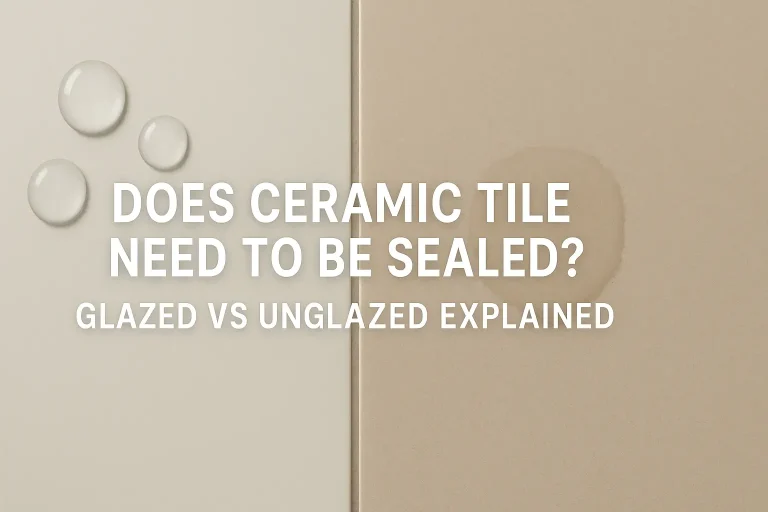
The water bead test is the most reliable field test for non-stick surface integrity. Pour a small amount of cold water (approximately 1 tablespoon) onto the clean, dry, room-temperature pan surface. On an intact ceramic coating, water beads tightly into droplets with a contact angle above 90 degrees and rolls freely across the surface. On a degraded coating, water spreads flat, forming a thin film rather than beads.
A partially degraded coating will show mixed behavior: beading in some areas, spreading in others. The spreading zones correspond directly to where the coating has lost its hydrophobic character, and food will stick preferentially in those areas during cooking.
A second diagnostic test uses a drop of cooking oil. On an intact surface, one drop of oil (approximately 0.5 mL) spreads evenly across a 3 to 4 inch diameter circle when the pan tilts. On a degraded surface, the oil pools unevenly, thickens in some areas, and refuses to spread fluidly across compromised zones.
The four stages of ceramic coating degradation and their indicators:
| Degradation Stage | Water Bead Test Result | Cooking Performance | Visible Surface Signs | Recommended Action | Estimated Time to Stage 4 |
|---|---|---|---|---|---|
| Stage 1: Early degradation (surface still functional) | Strong beading, contact angle above 85 degrees | Minimal sticking, occasional hot-spot adhesion | None visible | Adjust care habits; avoid high heat and dishwasher | 6 to 18 months with improved care |
| Stage 2: Moderate degradation (performance declining) | Partial beading, spreading in center zones | Consistent sticking at center; eggs and fish require added fat | Slight surface dullness or minor discoloration at center | Reserve for lower-demand cooking; use more fat | 3 to 9 months |
| Stage 3: Advanced degradation (near end of life) | Mostly spreading, minimal beading at edges only | Sticking across most of cooking surface; residue buildup | Visible surface roughness, brown residue deposits, minor crazing | Replace pan; continued use requires significant fat addition | 1 to 3 months |
| Stage 4: Full failure (replace immediately) | No beading; water sheets across surface | Pan behaves as bare metal; all foods stick without heavy oiling | Visible flaking, deep scratches, heavy discoloration, coating loss | Discard pan; do not use for food preparation | Not applicable |
| Stage 0: New or fully intact coating | Tight beading, contact angle above 90 degrees | No sticking; eggs release without fat | Uniform color, smooth and slick surface feel | Maintain with correct care protocol | Depends entirely on use and care habits |
A pan showing Stage 3 or Stage 4 signs should be replaced. Using a heavily degraded ceramic pan does not create health risks (sol-gel ceramic coatings, unlike some PTFE systems, do not release harmful gases when degraded), but cooking performance will be too poor to justify continued use.
A Step-by-Step Prevention Protocol That Doubles Ceramic Coating Life
Following all four of these prevention habits consistently extends ceramic coating life from a typical 12 to 18 months to 3 to 5 years under daily use conditions, based on manufacturer durability testing from GreenPan and independent consumer testing reported in Cook’s Illustrated.
Here is the prevention protocol, applied in order of cooking session:
STEP-BY-STEP GUIDE
Ceramic Non-Stick Care Protocol: Before, During, and After Every Use
7 steps that directly address every major failure pathway. Takes under 10 minutes total per cooking session.
Preheat with fat, never empty
Add a small amount of liquid fat (0.5 to 1 teaspoon) to the cold pan before placing it on the burner. Set heat to medium or below (under 350°F / 177°C for most electric burners) and let both pan and fat heat together.
Keep heat at medium or below
Ceramic coatings transfer heat efficiently. Medium heat on most stovetops produces sufficient cooking temperatures for eggs, fish, pancakes, and sauteed vegetables without approaching the 450°F (232°C) methyl group oxidation threshold.
Use only silicone or wooden utensils
Replace all metal utensils with silicone or wooden utensil sets rated for cookware use. Keep one dedicated set near ceramic pans to prevent accidental metal contact during high-momentum cooking moments.
Cool completely before washing (minimum 10 minutes)
Set the pan on a heat-safe trivet after cooking and let it reach near room temperature before any water contact. A surface temperature below 150°F (66°C) is safe for washing; most pans reach this in 8 to 12 minutes after cooking on medium heat.
Hand wash with mild soap and a soft sponge only
Use a soft non-scratch sponge and dish soap with pH between 6 and 8 (most standard liquid dish soaps fall in this range). Wash in warm water below 110°F (43°C). Rinse thoroughly and dry immediately with a soft cloth.
Store with pan protectors between stacked pans
Place a felt or silicone pan protector on top of every ceramic pan before stacking anything on it. Never store ceramic pans with the cooking surface facing upward in a cabinet where other cookware can be placed on top of them without a protective layer.
Run the water bead test monthly
Once per month, perform the cold water bead test on the clean dry pan surface. If water still beads tightly across the full surface, the coating is intact. If spreading appears anywhere, the pan has entered Stage 1 degradation, and adjusting care habits at this point can significantly slow further decline.
The single most impactful change for most users is stopping empty dry preheating on high heat. This one habit change eliminates the fastest-acting degradation pathway and typically doubles coating life on its own.
When to Replace a Ceramic Non-Stick Pan
A ceramic non-stick pan needs replacement when it reaches Stage 3 degradation, defined as sticking across most of the cooking surface even with adequate fat addition, visible surface roughness or crazing, and water that no longer beads anywhere on the surface.
There is no restoration process for a degraded sol-gel ceramic coating. Unlike traditional seasoned cast iron, which can be stripped and re-seasoned, a sol-gel coating that has lost its organosilane surface groups through thermal oxidation, mechanical abrasion, or hydrolytic erosion cannot be chemically restored. The loss is structural and permanent.
Some manufacturers offer re-coating services for high-end cookware lines, but these involve stripping the original coating and applying a new one industrially. This is not a home procedure. For most pans, replacement is more economical than professional re-coating.
The practical lifespan benchmarks for ceramic non-stick pans under daily use:
- Budget single-layer coating (under $40 retail): 6 to 12 months with good care, 3 to 6 months with poor care
- Mid-range hard-anodized two-layer coating ($40 to $80 retail): 1.5 to 3 years with good care
- Premium multi-layer titanium-reinforced coating ($80 to $180 retail): 3 to 7 years with good care
- Professional-grade restaurant ceramic coating ($180 and above): 5 to 10 years with proper care protocols
A degraded ceramic pan does not present a food safety hazard in the same way that a damaged PTFE (Teflon) pan can. Sol-gel ceramic coatings do not release PFOA or other fluoropolymer decomposition products when overheated or scratched. The coating fragments are chemically inert silicon dioxide, which passes through the digestive system without absorption.
Replace a ceramic pan when cooking performance has deteriorated to the point that the pan requires as much fat and attention as bare stainless steel. The non-stick benefit is gone at that point, and a bare stainless or well-seasoned cast iron pan will serve better than a degraded ceramic surface.
When selecting a replacement, consider a hard-anodized ceramic non-stick pan from a brand that publishes its coating layer count and certifies the surface against the FDA’s 21 CFR standards or the European LFGB regulation, both of which test for heavy metal leaching under food contact conditions.
Comparing Ceramic Non-Stick to Other Non-Stick Coating Systems
Understanding how ceramic coatings fail relative to other non-stick systems helps you choose the right cookware for your specific use pattern. Each coating type has a distinct failure profile driven by its underlying chemistry.
Use the table below to match your cooking habits and heat range to the non-stick coating type least likely to fail under your specific conditions.
| Coating Type | Base Chemistry | Max Safe Temperature | Primary Failure Mode | Dishwasher Safe | PFOA/PTFE Free | Typical Lifespan (Daily Use) |
|---|---|---|---|---|---|---|
| Sol-gel ceramic (standard) | Silicon dioxide (SiO2) network | 450°F (232°C) | Thermal oxidation of organosilane groups | Technically yes, not recommended | Yes | 1 to 3 years |
| PTFE (Teflon) | Polytetrafluoroethylene polymer | 500°F (260°C); decomposes above 570°F (299°C) | Mechanical peeling and flaking of polymer film | No | PTFE yes; older versions may contain PFOA | 3 to 5 years |
| Hard-anodized aluminium (unseasoned) | Aluminium oxide (Al2O3) surface layer | 400°F (204°C) | Surface pitting from acidic foods; no non-stick failure per se | No (destroys anodize layer) | Yes (no coating) | 10 to 20 years (surface only) |
| Vitreous enamel on cast iron | Fused borosilicate glass layer | 500°F (260°C) sustained; 900°F (482°C) short-term | Thermal shock fracturing; chipping from impacts | Yes | Yes | 10 to 30 years |
| Carbon steel (seasoned) | Polymerized fat layer on bare steel | No practical upper limit | Rust from moisture exposure; acid stripping of polymerized fat | No | Yes (no synthetic coating) | Indefinite with re-seasoning |
| Titanium-ceramic composite | Titanium particle-reinforced sol-gel ceramic | 500°F (260°C) | Abrasion still removes coating; thermal failure at sustained extreme heat | Limited; manufacturer-dependent | Yes | 3 to 7 years |
For high-heat searing above 450°F (232°C), ceramic non-stick is the wrong tool. Use carbon steel, cast iron, or uncoated stainless steel for high-heat applications and reserve ceramic pans for the egg, fish, and delicate protein cooking they are designed to handle.
The science of how these coatings interact with extreme mechanical stress is related to how ceramic materials fracture under impact generally. Our analysis of why ceramic fractures glass under sharp-strike conditions covers the brittle fracture mechanics that also apply to ceramic coating failure under impact and thermal shock.
For most home cooks who primarily prepare eggs, fish, pancakes, and lightly sauteed vegetables, a mid-range hard-anodized ceramic pan used consistently at medium heat will outperform both budget ceramic pans and PTFE pans on longevity because the ceramic surface handles the occasional temperature spike better than PTFE and the hard-anodized base resists thermal shock better than plain aluminium.
How Pinhole Defects in Ceramic Coatings Accelerate Failure
Pinhole defects are microscopic voids in the ceramic coating layer that form during the manufacturing curing process. They are present in virtually all sol-gel coatings to varying degrees and represent one of the least-discussed causes of premature ceramic coating failure.
The mechanism of pinhole formation in sol-gel coatings is similar to the mechanism that creates pinholes in traditional ceramic pottery glazes. During the curing process, trapped gas bubbles or volatile compounds in the liquid precursor film attempt to escape as the sol-gel network solidifies. If the network solidifies before the gas fully escapes, a pinhole forms at the surface.
In cookware terms, pinholes are entry points for moisture, acidic food compounds, and alkaline cleaning agents to penetrate below the primary coating surface and attack the coating-substrate interface directly. Hydrolytic degradation proceeds significantly faster from below the coating surface than from the surface down, because the alkaline solution is in sustained contact with the interface rather than washing across the top surface briefly.
The same gas-escape physics that governs cookware coating pinholes also creates the surface defects discussed in our examination of why pinholes form in ceramic glazes during firing, which covers the detailed chemistry of bubble formation and surface healing in silica-based coatings.
High-quality ceramic cookware manufacturers address pinhole density through multiple coating layers (each layer seals pinholes from the layer below) and through controlled curing schedules that slow network formation to allow gas escape before solidification. This is one reason three-layer and five-layer coating systems significantly outperform single-layer systems in both initial non-stick performance and long-term durability.
You cannot assess pinhole density in a pan before purchase without specialized equipment, but coating layer count is a reliable proxy. A pan with three or more stated coating layers has substantially lower effective pinhole density than a single-layer pan, because the probability of a continuous through-coating void connecting across three sequential layers is mathematically very low.
Frequently Asked Questions About Ceramic Non-Stick Coating Failure
Can a ceramic non-stick pan be re-seasoned to restore non-stick performance?
Re-seasoning does not restore a degraded sol-gel ceramic coating. The non-stick property of ceramic cookware comes from the hydrophobic organosilane groups in the silica network, not from a polymerized fat layer as in cast iron. Applying oil to a degraded ceramic surface creates a thin fat layer that temporarily mimics non-stick behavior but burns off within a few cooking sessions. For genuinely restored performance, the pan must be industrially re-coated or replaced.
Is it safe to use a ceramic pan once the coating starts flaking?
Sol-gel ceramic coating fragments are chemically inert silicon dioxide particles. They do not release PFOA, PFAS, or any fluoropolymer compounds, which are the primary health concerns associated with damaged PTFE coatings. Small quantities of ingested silicon dioxide pass through the digestive system without absorption. That said, a flaking pan has a structurally compromised coating that will continue to deteriorate, and cooking performance will be too poor to justify continued use. Replace it on practical grounds, not health grounds.
What is the difference between ceramic coating and PTFE non-stick, and which lasts longer?
PTFE (polytetrafluoroethylene, sold as Teflon) is a synthetic fluoropolymer film; ceramic (sol-gel) is an inorganic silicon dioxide network. PTFE handles higher sustained temperatures (safe to 500°F / 260°C vs ceramic’s 450°F / 232°C) and typically lasts longer under identical use conditions (3 to 5 years vs 1 to 3 years). Ceramic’s advantages are its PTFE-free and PFOA-free composition and its harder surface. For longevity alone, PTFE wins in most use scenarios. For chemical composition preferences, ceramic is the stronger choice.
Does cooking acidic foods damage ceramic coating faster?
Acidic foods (tomatoes, citrus, vinegar-based sauces, wine reductions) have a pH between 2 and 4.5. At these pH levels, the sol-gel silica network is actually more stable than under alkaline conditions. The hydrolysis mechanism that attacks Si-O-Si bonds is base-catalyzed, not acid-catalyzed. Prolonged acid exposure can etch the surface slightly at sustained contact, but acidic foods used in normal cooking do not represent a significant degradation pathway. Alkaline cleaners (pH above 8) are far more damaging than any food you will cook.
Why does my ceramic pan stick even though it looks undamaged?
Invisible surface degradation is the most common cause of sticking on visually intact ceramic pans. Thermal oxidation of the organosilane surface groups destroys hydrophobic character without producing visible scratches, discoloration, or surface texture changes. Perform the cold water bead test: if water spreads flat instead of beading, the surface has lost its non-stick chemistry even though it looks fine. Early-stage thermal degradation from repeated high-heat use is the most common explanation for this symptom in pans under two years old.
Can I use a ceramic non-stick pan in the oven?
Most ceramic non-stick pans are oven-safe to between 350°F and 450°F (177°C to 232°C), with the specific limit depending on the handle material and adhesive used in handle attachment. The ceramic coating itself can tolerate oven temperatures within this range, but prolonged oven use at or near the upper limit accelerates organosilane oxidation in the same way that stovetop overheating does. Check the manufacturer’s stated oven-safe temperature limit for your specific pan. Never exceed that limit, and avoid broiler use entirely with ceramic non-stick pans.
How do I remove burnt-on residue from a ceramic pan without damaging the coating?
Fill the pan with enough water to cover the residue, add 1 tablespoon of white vinegar (pH 2.5), and bring to a gentle simmer on medium-low heat for 5 minutes. Remove from heat, allow to cool completely, then wipe gently with a soft cloth. The thermal cycling and mild acid help lift polymerized residue without mechanical abrasion. Do not use baking soda for more than 90 seconds in contact with the coating, as the alkaline pH (8.3) combined with the abrasive silica particles in baking soda both damage the surface.
Do induction cooktops damage ceramic non-stick coatings faster than gas or electric burners?
Induction cooking is safer for ceramic coatings than gas or electric burners because it heats the pan through electromagnetic induction in the metal substrate, not through direct radiant heat at the base. This produces more even heat distribution with fewer hot spots, reducing the risk of localized overheating that triggers organosilane oxidation. Induction also responds faster to temperature reduction commands, making it easier to keep surface temperatures below the 450°F (232°C) degradation threshold. However, the pan must have a magnetic-compatible base (stainless steel or cast iron layer), and not all ceramic pans are induction-compatible.
Why does my ceramic pan discolor yellow or brown even when I follow the care instructions?
Yellow or brown discoloration that does not respond to normal washing is polymerized fat residue, not coating degradation. It forms when cooking fat contacts the hot pan surface at or near its smoke point and polymerizes into a cross-linked residue layer. This can occur even at medium heat with fats that have lower smoke points (butter at 302°F / 150°C, extra virgin olive oil at 375°F / 191°C). Switch to a higher-smoke-point fat such as refined avocado oil (520°F / 271°C) for regular cooking and use the simmering water method described above to remove existing residue.
Is it safe to cook in a ceramic pan that has been damaged by thermal shock (crazing lines)?
Crazing lines in a ceramic non-stick coating indicate that the coating-substrate adhesion bond has been compromised by differential thermal contraction stress. The coating is no longer fully bonded to the substrate. Continued use accelerates delamination, and small coating fragments may enter food. While the fragments themselves are chemically inert, a crazed coating is at Stage 3 or Stage 4 degradation and will flake progressively. Replace the pan.
Do ceramic pans work with high-protein foods like eggs without extra fat, or is that a marketing claim?
A new, fully intact ceramic coating at Stage 0 or early Stage 1 genuinely releases eggs without additional fat. The water contact angle above 90 degrees confirms a surface with lower adhesion energy than egg protein requires to stick. However, this performance degrades measurably within 6 to 12 months under typical daily-use conditions. Marketing claims that ceramic pans perform fat-free cooking throughout their lifespan are based on new-pan performance, not on the pan’s condition after a year of regular use. Expect to add a small amount of fat once the pan has been in regular service for more than 6 to 9 months.
Can ceramic coating damage release harmful chemicals into food?
Current generation sol-gel ceramic coatings certified under FDA 21 CFR food contact standards or the European LFGB regulation do not release PFOA, PFAS, lead, or cadmium at levels above the regulatory thresholds for these standards. Certifications to look for include the German LFGB mark (one of the most stringent global food contact standards) and the California Prop 65 compliance statement. Coatings from uncertified manufacturers, particularly some unbranded imports, may not have been tested against these standards. Buy from manufacturers that publish their certification documentation.
Conclusion
Ceramic non-stick coatings fail through three specific chemical and physical pathways: thermal oxidation of organosilane groups above 450°F (232°C), mechanical abrasion from metal utensils and improper storage, and hydrolytic erosion from alkaline cleaning agents and dishwasher use.
Every one of these pathways is directly controllable through consistent care habits. Keeping heat at medium or below, using silicone or wooden utensils, hand washing with mild soap in warm water, and storing pans with protective separators between them addresses all three failure mechanisms simultaneously.
Run the cold water bead test monthly to track coating health in real time, and replace the pan when it reaches Stage 3 degradation rather than fighting a surface that has permanently lost its non-stick character. The pan construction quality guide in this article gives you the specs to select a replacement that will last three to five times longer than a budget single-layer pan under identical use conditions.
For context on the broader chemistry behind ceramic coating composition and how the ingredients in the formula contribute to both performance and durability, the complete breakdown of the chemicals and compounds used in ceramic cookware coatings explains each ingredient’s role in the sol-gel system and how formulation choices affect longevity.
Here is a tool to help you identify which failure pathway is most relevant to your own ceramic pan and what to do about it.
INTERACTIVE TOOL
Find the Most Likely Cause of Your Ceramic Pan Failure
Answer 2 questions to get a targeted diagnosis and prevention recommendation for your specific situation.