How Much Do Ceramic Braces Cost? Pricing & Insurance Guide

Ceramic braces cost between $3,500 and $8,000 for a full treatment, which puts them $500 to $1,500 more expensive than traditional metal braces at most orthodontic practices across the United States.
That price gap exists for a specific reason: the polycrystalline or monocrystalline aluminum oxide brackets used in ceramic braces require more precise manufacturing than stamped metal, and the material behaves differently under orthodontic forces, which affects how frequently adjustments are needed.
What Are Ceramic Braces and Why Do They Cost More Than Metal?
Ceramic braces use tooth-colored or clear brackets made from alumina (aluminum oxide, Al2O3) bonded to the front surface of each tooth, with a metal archwire running through the bracket slots to apply orthodontic force.
The brackets are either polycrystalline alumina (opaque white) or monocrystalline alumina (nearly transparent), and both types are harder and more brittle than the stainless steel used in conventional metal braces.
The cost premium comes from three manufacturing factors.
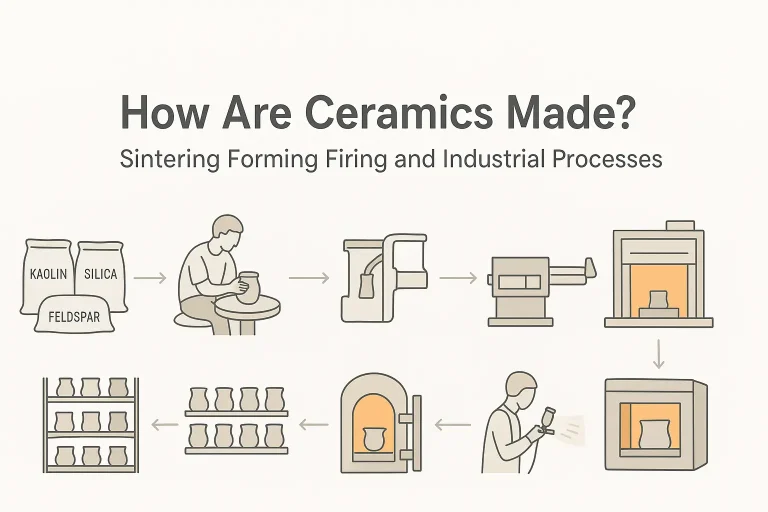
First, alumina brackets must be sintered at extremely high temperatures to achieve the density and surface hardness needed for bracket function, which requires more energy and precision than metal stamping.
Second, the slot precision in ceramic brackets must be tighter than in metal brackets because alumina has lower fracture toughness (approximately 3-4 MPa·m^0.5 versus 200 MPa·m^0.5 for stainless steel), meaning any micro-crack from a poorly cut slot can propagate during treatment.
Third, ceramic brackets create more friction with the archwire than metal brackets, which can require additional clinical time to achieve the same tooth movement, and that chair time is factored into the treatment fee.
According to a study published in the American Journal of Orthodontics and Dentofacial Orthopedics, ceramic brackets generate 50 to 400% more friction than comparable metal brackets depending on bracket design, archwire material, and ligation method.
That friction difference means some orthodontists charge a higher base fee for ceramic cases because treatment may require more appointments to complete the same movement safely.
Key Material Specifications for Ceramic Braces:
- Bracket material: polycrystalline or monocrystalline aluminum oxide (Al2O3)
- Hardness: 9 on the Mohs scale (harder than tooth enamel at 5-6 Mohs)
- Fracture toughness: 3-4 MPa·m^0.5 (significantly more brittle than stainless steel)
- Archwire compatibility: stainless steel, nickel-titanium, or heat-activated NiTi
- Bonding method: same composite resin adhesive system as metal braces
The hardness figure matters beyond aesthetics. Ceramic brackets at 9 Mohs can abrade the enamel of opposing teeth when patients bite down, which is why some orthodontists avoid placing ceramic brackets on lower teeth.
This clinical consideration influences total treatment cost because a mixed-material treatment (ceramic on top, metal on bottom) is priced differently than full ceramic on both arches.
For most patients comparing ceramic braces to metal, the core trade-off is straightforward: you pay more for the cosmetic benefit of less visible brackets while accepting slightly longer or more frequent appointments in some cases.
How Much Do Ceramic Braces Cost? A Full Price Breakdown
The national average cost for ceramic braces in the United States is approximately $4,000 to $6,500 for full upper and lower arch treatment, based on data from the American Association of Orthodontists and orthodontic practice surveys.
This range reflects treatment only, not retainers, initial records, or post-treatment imaging, which add $500 to $1,200 to the total.
Use the table below to understand how ceramic brace costs vary by treatment scope, geography, and provider type before requesting quotes.
| Treatment Scenario | Average Low | Average High | Key Cost Driver | Typical Duration |
|---|---|---|---|---|
| Upper arch only (ceramic), lower arch metal | $3,000 | $4,500 | Mixed material pricing, fewer ceramic brackets | 18-24 months |
| Full ceramic (upper and lower) | $4,000 | $6,500 | Full bracket set, potential increased chair time | 18-30 months |
| Mild crowding or spacing cases | $3,500 | $5,000 | Shorter treatment, fewer adjustments | 12-18 months |
| Complex bite correction with ceramic | $5,500 | $8,000 | Extended treatment, additional auxiliaries | 24-36 months |
| Pediatric ceramic braces (age 10-16) | $3,200 | $5,500 | Growing dentition, potential phase 1 prior | 18-24 months |
| Adult ceramic braces (age 18+) | $4,500 | $7,500 | Denser bone, potentially longer treatment | 20-30 months |
What Is Included in the Ceramic Braces Treatment Fee?
Most orthodontic practices bundle the following into a single all-inclusive treatment fee: bracket placement, all adjustment appointments during active treatment, archwire changes, and bracket replacements if a bracket debonds during treatment.
Retainers are almost never included in the base fee. Expect to pay $150 to $500 per retainer, and $300 to $800 for a Hawley or Essix retainer set after treatment ends.
Pre-treatment records (panoramic X-rays, cephalometric X-ray, photographs, and digital impressions or study models) add $200 to $500 and are usually billed separately before the treatment contract is signed.
Dental extractions, if needed to create space, are billed by your general dentist and typically cost $150 to $350 per tooth, or $800 to $2,500 for surgical removal of impacted teeth.
How Geographic Location Affects Ceramic Brace Pricing
Orthodontic fees in high-cost-of-living metropolitan areas (New York City, San Francisco, Boston, Seattle) run 30 to 50% higher than national averages, pushing full ceramic treatment to $7,000 to $9,000 for complex cases.
In rural areas and lower cost-of-living regions (Midwest, rural South, rural Mountain West), the same treatment scope often falls between $3,500 and $5,500.
The difference is not bracket quality. The same ceramic bracket systems (3M Clarity, Ormco Radiance, American Orthodontics Mystique) are priced similarly to orthodontists nationwide.
The variation reflects practice overhead: rent, staff wages, and local market competition all influence the fee a practice needs to charge to remain profitable.
Orthodontist vs General Dentist Pricing for Ceramic Braces
Board-certified orthodontists (specialists who completed a 2-3 year residency after dental school) typically charge $500 to $1,500 more than general dentists offering orthodontic services.
The higher fee reflects additional training and the fact that orthodontists diagnose and treat more complex cases, which affects outcome predictability for patients with bite problems beyond mild crowding.
For straightforward cases involving mild crowding or spacing with no skeletal discrepancy, a general dentist with orthodontic training can produce the same result at a lower cost.
For patients with overbite, underbite, crossbite, or significant skeletal asymmetry, an orthodontist’s additional training is clinically relevant and the cost difference is justified.
Does Dental Insurance Cover Ceramic Braces?
Most dental insurance plans that include orthodontic benefits cover ceramic braces at the same reimbursement level as metal braces, up to the plan’s lifetime orthodontic maximum, which typically ranges from $1,000 to $3,500 per covered individual.
The key condition is that the plan covers orthodontic treatment at all. Roughly 60% of employer-sponsored dental plans include orthodontic benefits, and individual dental insurance plans often exclude orthodontics entirely or impose separate waiting periods of 12 to 24 months.
According to the National Association of Dental Plans, orthodontic benefits in employer group plans most commonly provide 50% coinsurance up to a lifetime maximum, meaning the insurer pays half of covered costs until the cap is reached.
On a $5,500 ceramic braces treatment with a $2,000 lifetime maximum, insurance would contribute $2,000 (not 50% of $5,500), leaving the patient responsible for $3,500 out of pocket.
Key Insurance Variables That Affect Your Ceramic Braces Coverage:
- Lifetime orthodontic maximum: $1,000 to $3,500 (most common range in employer group plans)
- Coinsurance rate: 50% of covered charges up to the lifetime maximum (standard)
- Age limits: many plans cover orthodontics only for dependents under age 18 or 19
- Adult orthodontic coverage: available in some plans but often at a lower maximum ($1,000-$1,500)
- Waiting period: 12 to 24 months after enrollment before orthodontic benefits activate
- Coordination of benefits: if covered under two plans (e.g. parent’s employer plans), benefits may stack up to each plan’s maximum
Will Insurance Pay the Same for Ceramic as for Metal Braces?
Yes, in nearly all cases. Insurance plans reimburse based on the orthodontic procedure code (D8080 for comprehensive orthodontic treatment, adolescent; D8090 for comprehensive orthodontic treatment, adult), not the bracket material.
The plan does not distinguish between metal and ceramic brackets when calculating benefits. The patient absorbs the cost difference between what the plan reimburses and the total fee charged by the orthodontist.
This means the out-of-pocket difference between choosing ceramic and metal braces equals the price gap quoted by the orthodontist, which is typically $500 to $1,500 for a full treatment.
Insurance does not penalize you for choosing ceramic, but it also does not close the price gap between the two bracket types.
How to Maximize Insurance Benefits for Ceramic Braces
Request a pre-authorization or benefits verification letter from your insurance company before starting treatment.
This document confirms your lifetime maximum, remaining balance (if you have used some benefits previously), coinsurance percentage, and whether the specific procedure codes your orthodontist uses are covered under your plan.
If treatment spans two calendar years, ask your orthodontist whether the fee can be billed in two segments to potentially apply two years of annual maximums if your plan resets annually rather than using a lifetime maximum.
Some plans use annual maximums of $1,000 to $2,000 per year rather than a single lifetime cap, and a treatment that starts in November and ends 18 months later crosses three calendar years, potentially accessing three separate annual benefit periods.
Enrolling in a Flexible Spending Account (FSA) or Health Savings Account (HSA) before treatment starts allows you to pay the remaining out-of-pocket balance with pre-tax dollars, effectively reducing the real cost by your marginal tax rate (typically 22-32% for most households).
On a $3,500 out-of-pocket balance after insurance, an FSA or HSA saves $770 to $1,120 depending on your tax bracket.
Ceramic Braces vs Metal Braces vs Clear Aligners: Full Cost Comparison
The right treatment choice depends on the complexity of your case, your aesthetic priorities, and your budget, but cost differences between the three main adult orthodontic options are significant enough to warrant a direct comparison before committing to a treatment plan.
Use the table below to compare the three primary orthodontic options across the factors that affect both cost and clinical outcome.
| Feature | Metal Braces | Ceramic Braces | Clear Aligners (Invisalign) | Self-Ligating Ceramic Braces |
|---|---|---|---|---|
| Average total cost (US) | $3,000-$6,000 | $3,500-$8,000 | $3,000-$9,000 | $4,500-$8,500 |
| Insurance coverage | Full orthodontic benefit | Full orthodontic benefit (same codes) | Full orthodontic benefit (most plans) | Full orthodontic benefit |
| Visibility | Highly visible silver brackets | Tooth-colored, low visibility | Nearly invisible when worn | Tooth-colored, low visibility |
| Archwire friction | Low (stainless steel on stainless steel) | High (50-400% more than metal) | N/A (no brackets or archwire) | Low (self-ligation reduces friction) |
| Staining risk | None (metal does not stain) | Moderate (tie elastics stain; brackets less so) | Aligners yellow with certain foods | Low (no elastics with self-ligation) |
| Complex case capability | Excellent (all case types) | Good (most cases; not ideal for severe bite) | Moderate (limited for complex skeletal cases) | Good (same limitation as standard ceramic) |
| Removal for eating | No | No | Yes | No |
| Typical treatment duration | 18-24 months | 18-30 months | 12-24 months (mild-moderate cases) | 18-26 months |
When Ceramic Braces Cost More Than Clear Aligners
Clear aligners (Invisalign, Spark, 3M Clarity Aligners) range from $3,000 to $9,000 depending on case complexity, and the upper end of that range overlaps with or exceeds the cost of full ceramic braces.
For mild crowding cases treated with a limited aligner series (Invisalign Lite, 14 trays maximum), patients often pay $3,000 to $4,500, which is comparable to or cheaper than ceramic braces for the same case.
For comprehensive adult aligner treatment involving bite correction, the fee rises to $5,000 to $9,000, which can exceed ceramic braces by $1,000 to $3,000 for similar case complexity.
The cost difference at the complex end exists because aligner treatment requires more planning labor (digital treatment setup, attachment placement, refinement trays) than fixed appliance treatment.
Self-Ligating Ceramic Braces: Are They Worth the Extra Cost?
Self-ligating ceramic brackets (Damon Clear, In-Ovation C) eliminate the elastic or metal tie that holds the archwire in conventional bracket slots, replacing it with a built-in clip or sliding door mechanism.
This design reduces archwire friction significantly, which is the main clinical disadvantage of standard ceramic brackets.
Self-ligating ceramic braces cost $500 to $1,500 more than conventional ceramic braces because the bracket manufacturing is more complex and the hardware requires more precise fabrication.
The clinical trade-off: lower friction means tooth movement can be more efficient, but self-ligating ceramic brackets are bulkier in profile than conventional ceramic brackets, which some patients find less comfortable.
According to a review in the European Journal of Orthodontics, self-ligating bracket systems do not consistently reduce overall treatment time compared to well-managed conventional brackets, but they do require fewer emergency appointments for broken elastics or tie wire poking.
For patients who want ceramic braces and are concerned about the friction disadvantage, self-ligating ceramic is a legitimate upgrade, not a marketing upsell, but the evidence for dramatically shorter treatment times is not conclusive.
Here is the ceramic braces cost comparison tool to help you estimate your out-of-pocket cost based on your insurance situation and treatment type.
COST CALCULATOR
Ceramic Braces Out-of-Pocket Cost Estimator
Adjust the sliders and inputs to estimate your net cost after insurance and tax savings.
Estimate only. Assumes insurance covers up to its maximum directly. Tax savings assume full out-of-pocket balance is paid through FSA or HSA. Consult your insurer and tax advisor for exact figures.
What Factors Make Ceramic Braces More or Less Expensive?
The orthodontist’s quoted fee is not arbitrary. Six specific clinical and operational factors determine where your treatment falls within the $3,500 to $8,000 range for ceramic braces.
Understanding these factors helps you evaluate whether a quote is reasonable and whether the variables you control (case timing, provider choice, payment structure) can reduce your total cost.
Case Complexity and Severity of Misalignment
Orthodontists assess case complexity before quoting a fee. A patient with mild crowding and no skeletal discrepancy requires 18 months and 18 to 24 adjustment appointments. A patient with a significant overbite, rotations, and spacing issues may require 30 months and 36 appointments.
The bracket material (ceramic vs metal) does not change the complexity fee. The additional cost of ceramic is a flat markup applied on top of whatever the base case complexity fee would be.
Number of Teeth Requiring Brackets
Standard comprehensive orthodontic treatment bonds brackets to 28 teeth (14 upper, 14 lower), excluding third molars.
Limited treatment (e.g. upper anterior crowding only, six front teeth) uses far fewer brackets, which reduces both the laboratory cost of the bracket set and the clinical time for placement, resulting in a lower fee of $2,000 to $3,500.
Ceramic Bracket Brand and System
Not all ceramic brackets cost the same to manufacture or purchase. The major systems used by orthodontists in the United States include:
- 3M Clarity Advanced (polycrystalline): the most widely used ceramic bracket system in US orthodontics
- Ormco Radiance Plus (monocrystalline): higher clarity, higher cost, better stain resistance
- American Orthodontics Mystique (polycrystalline): mid-tier pricing, widely available
- Damon Clear (self-ligating, polycrystalline): passive self-ligation, higher bracket cost
- In-Ovation C (self-ligating, polycrystalline): interactive self-ligation design
Monocrystalline brackets (Ormco Radiance) add approximately $300 to $700 to the practice’s bracket cost for a full set versus polycrystalline systems, and this difference is partially passed to the patient.
Tie Material: Elastic vs Self-Ligating Systems
Conventional ceramic brackets use small elastic ties (ligatures) or metal ties to secure the archwire. These ties are inexpensive but require replacement at each appointment and are the primary source of staining in ceramic braces.
Self-ligating ceramic brackets eliminate this component but cost more per bracket. The per-appointment time saved with self-ligation may partially offset the higher bracket cost over a long treatment, but the net financial impact depends on the practice’s fee structure.
Orthodontist Experience and Practice Reputation
An orthodontist who trained at a top residency program, holds board certification from the American Board of Orthodontics (ABO), or practices in a high-demand urban market will charge more than a recent graduate in a suburban or rural area.
ABO board certification indicates the orthodontist has completed a rigorous case documentation and written examination process beyond licensing requirements, but it does not guarantee better clinical outcomes for routine cases.
Payment Timing: Down Payment and Monthly Plans
Most orthodontic practices offer a discount of $100 to $500 for patients who pay the full treatment fee upfront at the start of treatment.
Monthly payment plans spread the remaining balance after insurance over the treatment period (typically 18 to 30 months) with no interest, making ceramic braces accessible without financing charges if paid within the treatment window.
Third-party financing through CareCredit or Lending Club Patient Solutions allows patients to finance orthodontic fees over 12 to 60 months, but plans longer than the no-interest promotional period accrue interest at 14.9% to 26.99% APR, which can add $500 to $2,000 to the effective total cost.
Always exhaust FSA/HSA funds and in-house payment plans before using third-party financing for orthodontic treatment.
The six factors above collectively explain why two patients in the same city, both getting full upper and lower ceramic braces, can receive quotes $2,000 apart from different orthodontists.
How to Reduce the Out-of-Pocket Cost of Ceramic Braces
Five legitimate strategies reduce what you actually pay for ceramic braces without compromising clinical quality: maximizing insurance benefits, using tax-advantaged accounts, choosing the right provider tier, timing treatment strategically, and negotiating payment terms.
None of these strategies involve switching to a lower quality bracket system or accepting substandard clinical care.
Use Dental School Orthodontic Clinics
Accredited dental school orthodontic clinics (programs at Harvard, NYU, Columbia, University of Michigan, UCLA, and dozens of others) offer ceramic braces treatment at 50 to 70% below private practice rates, typically $2,000 to $4,000 for comprehensive treatment.
Treatment is performed by orthodontic residents supervised by licensed faculty orthodontists. The trade-off is longer appointment times (3 to 5 hours per visit versus 30 to 60 minutes in private practice) and less scheduling flexibility.
The clinical outcome for most cases treated in accredited programs is equivalent to private practice. The ADA Commission on Dental Accreditation (CODA) sets standards that all accredited programs must meet, and faculty supervision ensures the same clinical protocols apply.
Dental school clinics are most appropriate for non-urgent, non-complex cases where the patient can commit to less convenient scheduling.
Obtain Multiple Quotes Before Committing
Orthodontic fees for the same treatment can vary by $1,000 to $2,500 between practices in the same metropolitan area.
Most orthodontists offer free initial consultations. Getting three to five quotes before signing a treatment contract takes three to five hours of your time and can save more than $1,500 at no clinical downside.
When comparing quotes, request an itemized fee breakdown that separates: bracket and archwire cost, bonding appointment fee, adjustment appointment fee, retainers, records, and debonding appointment.
Some practices bundle all components into a single global fee (simpler to evaluate), while others itemize (allowing direct comparison of specific cost components).
Negotiate Payment Terms for Additional Savings
Ask directly whether the practice offers a discount for full upfront payment. This is standard in orthodontics and most practices will confirm a $150 to $500 reduction for patients who pay the full balance at bond-in.
Also ask whether the practice participates in your dental insurance network. In-network providers have negotiated fee schedules with insurance companies, which can reduce your total cost by more than the difference between network and out-of-network reimbursement rates.
Time FSA Enrollment to Coincide with Treatment Start
FSA elections must be made during your employer’s open enrollment period, before the plan year begins.
If you know you are starting ceramic braces treatment in the next 6 to 12 months, elect the maximum FSA contribution your employer allows (up to $3,050 per year under IRS rules for a single individual) and use those funds to pay for orthodontic costs from day one of the plan year.
FSA funds are available in full on January 1st of the plan year even if you have not yet contributed the full annual amount through payroll deductions. This front-loading benefit means you can access the entire year’s FSA election immediately to pay for a large orthodontic expense at the start of the year.
On a $3,050 FSA contribution at a 22% marginal tax rate, the tax savings equal $671, reducing the effective cost of that $3,050 payment to $2,379.
Combining insurance benefits, FSA savings, and an upfront payment discount can reduce the real cost of $5,500 ceramic braces treatment by $1,800 to $3,000 for a patient with good employer dental coverage.
Ceramic Braces Pricing by Bracket Type: A Detailed Comparison
The specific ceramic bracket system your orthodontist uses has a measurable effect on both the treatment cost and the clinical experience. The four main bracket categories differ in transparency, staining behavior, archwire friction, and price.
Use the table below to compare the four ceramic bracket categories across the factors that affect both cost and aesthetics during treatment.
| Bracket Type | Material | Transparency Level | Stain Resistance | Archwire Friction | Relative Cost vs Standard Metal |
|---|---|---|---|---|---|
| Polycrystalline alumina (standard) | Al2O3, multiple crystal grains | Opaque white/ivory | Moderate (elastic ties stain) | High (50-200% above metal) | +$500 to +$1,000 |
| Monocrystalline alumina (clear) | Al2O3, single crystal (sapphire) | High clarity, near-transparent | High (bracket does not stain) | High to moderate (smoother slot surface) | +$800 to +$1,500 |
| Self-ligating ceramic (polycrystalline) | Al2O3 with built-in clip mechanism | Opaque white/ivory | Good (no elastic ties) | Low (passive or interactive ligation) | +$1,000 to +$1,800 |
| Ceramic with metal slot (hybrid) | Al2O3 body, stainless steel archwire slot | Opaque white | Moderate (bracket does not stain) | Low (metal-on-metal at the slot) | +$600 to +$1,200 |
| Clear/tooth-colored composite brackets | Reinforced composite resin | Moderate to good | Poor (composite stains easily) | Moderate to high | +$200 to +$600 |
| Standard metal (reference) | Stainless steel | None (silver/metallic) | Excellent (no staining) | Baseline reference (lowest) | Reference price ($3,000-$6,000) |
Monocrystalline vs Polycrystalline Ceramic Brackets: Which Is Worth the Premium?
Monocrystalline alumina brackets (sold under brand names including Ormco Radiance Plus and Adenta Crystal) are grown as a single crystal rather than fused from multiple ceramic grains, producing the near-glass clarity that gives them their “clear” appearance.
This single-crystal structure eliminates the grain boundaries present in polycrystalline brackets, which are the optical interfaces that scatter light and produce the chalky white appearance of standard ceramic brackets.
The clinical implication of this structural difference is important: monocrystalline brackets are harder and more brittle than polycrystalline brackets.
The fracture toughness of monocrystalline alumina is approximately 2.5 MPa·m^0.5 versus 3.5 to 4.0 MPa·m^0.5 for polycrystalline, meaning clear brackets break more easily under the forces generated by biting and orthodontic mechanics.
For adult patients with strong biting forces or habits (bruxism, nail biting, eating hard foods), polycrystalline brackets with their slightly lower clarity but higher fracture toughness represent a more durable choice.
For patients primarily concerned with aesthetics during a relatively short treatment (under 18 months, mild case), monocrystalline brackets offer the best cosmetic result at the cost of a $300 to $700 premium and slightly higher fracture risk.
Ceramic Braces for Adults vs Children: How Age Affects Cost and Coverage
Adult orthodontic treatment with ceramic braces costs more than pediatric treatment on average because adult bone density slows tooth movement, extending treatment duration and the number of required adjustments.
Children and adolescents undergo tooth movement through an active growth phase, which means the periodontal ligament (the soft tissue connecting the tooth root to the alveolar bone) responds more readily to orthodontic force, requiring less force and less treatment time to achieve the same movement.
Insurance Coverage Differences Between Adult and Pediatric Ceramic Braces
Most employer dental plans provide orthodontic benefits for dependents under age 18 or 19 at the full lifetime maximum ($1,000 to $3,500).
Adult orthodontic coverage (age 18 and over) is included in fewer plans and typically at a reduced lifetime maximum of $1,000 to $1,500, even when the adult was a covered dependent as a child and used some or all of the pediatric maximum.
Individual dental insurance plans purchased on the ACA Marketplace rarely include adult orthodontic benefits. Plans targeting self-employed adults and retirees almost never include orthodontics.
Adults who did not have orthodontic treatment as children and are starting as adults face the highest out-of-pocket exposure: no prior benefit use, but often limited or no adult coverage.
Phase 1 and Phase 2 Treatment and Its Effect on Total Ceramic Braces Cost
Some children receive Phase 1 (early interceptive) orthodontic treatment between ages 7 and 10 using expanders or partial braces to address skeletal discrepancies while the jaw is still growing.
Phase 2 (comprehensive) treatment follows at ages 11 to 14 when permanent teeth have erupted. Ceramic braces are typically placed in Phase 2, not Phase 1, because children at 7 to 10 years old rarely need or benefit from ceramic aesthetics.
The total cost of two-phase treatment is $4,500 to $8,500, with Phase 1 accounting for $1,500 to $3,000 and Phase 2 (ceramic) accounting for $3,000 to $6,000.
Most orthodontists apply a Phase 1 credit toward Phase 2 fees if both phases are completed at the same practice, reducing the Phase 2 fee by $500 to $1,500.
Insurance applies a single lifetime maximum across both phases combined, not a separate maximum per phase, so a child who uses $1,500 of a $2,000 lifetime maximum in Phase 1 has only $500 remaining for Phase 2 ceramic braces.
This intersection of two-phase treatment and limited insurance lifetime maximums is one of the most significant sources of unexpected out-of-pocket cost for families, and it requires careful benefits planning before starting Phase 1.
Ceramic Braces Staining, Maintenance, and Hidden Costs
The ongoing cost of ceramic braces goes beyond the initial treatment fee. Staining, breakage, and dietary restrictions create maintenance expenses that metal brace patients do not face to the same degree.
Understanding these costs before choosing ceramic brackets prevents unpleasant financial surprises during treatment.
Why Ceramic Brackets Stain and What It Costs to Fix
The staining in ceramic braces comes from two sources: the elastic ties (ligatures) that hold the archwire in the bracket slot, and in some cases, the bracket body itself (primarily in lower-quality polycrystalline brackets).
Elastic ties are made from polyurethane, which absorbs chromogenic molecules from coffee, tea, red wine, curry, tomato-based sauces, and tobacco.
Staining occurs at the mechanism level because polyurethane is a porous polymer at the micro-scale. Chromogenic compounds (tannins in tea and red wine, curcumin in curry, nicotine metabolites in tobacco) penetrate the surface of the elastic and bind to the polymer chain.
This staining occurs within 48 to 72 hours of exposure to strongly pigmented foods or beverages, and it cannot be removed by brushing or whitening.
Elastic ties are replaced at each adjustment appointment (every 4 to 8 weeks) at no additional cost in most bundled treatment fees.
This means staining is temporary and resolves with each appointment, but during the 4 to 8 week intervals between appointments, stained elastic ties are visible at normal conversational distance.
Self-ligating ceramic brackets (Damon Clear, In-Ovation C) eliminate elastic ties entirely. The archwire is held by a built-in clip mechanism on the bracket, which does not stain.
This is a genuine advantage for patients who consume coffee, tea, or wine regularly, and it justifies part of the $500 to $1,500 self-ligation premium for those patients specifically.
Bracket Breakage: How Often It Happens and What It Costs
Ceramic bracket breakage (debonding) occurs at a rate of approximately 3 to 8% of brackets over a full treatment course, compared to 1 to 3% for metal brackets, according to manufacturer clinical data and published orthodontic literature.
The higher breakage rate is a direct consequence of alumina’s lower fracture toughness compared to stainless steel.
Most orthodontic treatment contracts include one or two free bracket replacements. Beyond that allowance, replacement of a debonded ceramic bracket costs $50 to $150 per bracket at most practices.
Patients who repeatedly break brackets (three or more during treatment) may face $150 to $600 in additional fees not covered by the original treatment contract.
Ceramic brackets break most commonly from: biting into hard foods (raw carrots, apples, crusty bread, hard candy), trauma to the mouth, and excessive force during sports without a mouthguard.
A properly fitted orthodontic mouthguard designed for braces reduces bracket breakage risk during contact sports and costs $15 to $40, which is substantially less than a single ceramic bracket replacement fee.
Professional Cleaning Costs During Ceramic Brace Treatment
Orthodontic patients are recommended to schedule professional dental cleanings every 3 to 4 months during active treatment (versus the standard 6-month interval) because fixed appliances create additional plaque retention sites.
At $100 to $200 per cleaning, the additional two to four cleanings per year during an 18 to 24 month treatment period add $200 to $800 to the total cost of orthodontic treatment, and this cost is borne by the patient’s general dental plan or out of pocket.
Specialized water flossers for orthodontic patients ($40 to $80) and interdental brushes for braces ($8 to $15 per pack) reduce plaque accumulation between professional appointments and can reduce the frequency of emergency cleaning visits for patients with good home hygiene compliance.
Investing $60 to $100 in home cleaning tools at the start of treatment is financially sound compared to the cumulative cost of additional professional cleanings.
Ceramic braces carry modest hidden costs in the form of bracket replacements and additional cleaning appointments, but for most patients these total $200 to $600 over the full treatment and do not materially change the comparison with metal braces or clear aligners.
Ceramic Braces vs Ceramic Coating, Tiles, and Tint: Why This Matters for Your Search
The word “ceramic” appears across multiple product categories that are entirely unrelated to dental orthodontics, including automotive ceramic coating, window tint film, and floor tile installation.
If you arrived at this page searching for the cost of ceramic window tint for your vehicle or ceramic tile installation for a home renovation, the pricing structures are completely different from dental ceramic braces, and the relevant guides are linked at the end of this section.
Automotive ceramic window tint and whether the upgrade price is justified involves nano-ceramic particles in a polyester film rather than the aluminum oxide bracket material used in orthodontic braces. The products share a material family name but have no application overlap.
Similarly, ceramic tile installation cost analysis and DIY versus professional ceramic tile installation pricing relates to fired clay floor and wall tiles, not dental appliances.
Frequently Asked Questions About Ceramic Braces Cost
Are ceramic braces more expensive than metal braces?
Ceramic braces cost $500 to $1,500 more than metal braces for the same treatment case, with national averages of $4,000 to $6,500 for ceramic versus $3,000 to $6,000 for metal. The premium reflects higher bracket manufacturing costs and in some cases additional clinical time due to greater archwire friction in ceramic systems.
The price gap is consistent across providers and geographic markets, though the absolute dollar difference is larger in high-cost metropolitan areas where both treatment types are priced higher.
Does insurance cover ceramic braces the same as metal braces?
Yes. Insurance plans that include orthodontic benefits reimburse ceramic braces at the same rate as metal braces because both are billed under the same orthodontic procedure codes (D8080 for adolescent, D8090 for adult comprehensive treatment). The insurer does not distinguish bracket material when calculating benefits.
The practical result is that the patient absorbs the full $500 to $1,500 cost difference between ceramic and metal, because insurance applies its benefit to the total fee regardless of bracket type.
Can I switch from metal to ceramic braces partway through treatment?
Switching bracket materials mid-treatment is clinically possible but involves debonding all existing metal brackets, rebonding ceramic brackets in the same positions, and potentially replacing archwires. Most orthodontists charge $300 to $800 for a mid-treatment bracket system change, in addition to the difference in bracket material cost.
The transition is most commonly requested by adult patients who start treatment expecting to tolerate metal brackets visually but find them more conspicuous than anticipated after starting work or social commitments.
Do ceramic braces take longer than metal braces?
Not always, but ceramic brackets create more archwire friction than metal, which can slow some tooth movements. The friction difference is most clinically significant during the space-closure phase of treatment, where sliding mechanics are used. A study in the American Journal of Orthodontics and Dentofacial Orthopedics found treatment time was 1 to 3 months longer on average for ceramic versus metal in similar case types.
Self-ligating ceramic brackets reduce friction substantially and can close the treatment time gap with metal, making them a reasonable choice for patients who prioritize both aesthetics and treatment efficiency.
What happens if a ceramic bracket breaks during treatment?
A broken ceramic bracket stops orthodontic force on that tooth and requires a prompt replacement appointment. Most treatment contracts include one or two bracket replacements at no charge. Beyond that allowance, replacement fees run $50 to $150 per bracket at most practices.
Ceramic brackets break at roughly twice the rate of metal brackets (3 to 8% versus 1 to 3% of brackets over a full treatment) due to alumina’s lower fracture toughness compared to stainless steel, so factoring in one to two potential out-of-pocket replacements is prudent when budgeting.
Are ceramic braces safe for patients with alumina allergies?
True contact allergy to aluminum oxide is extremely rare. Alumina brackets have been used in orthodontics since the late 1980s with a well-established safety profile, and no peer-reviewed literature documents clinically significant alumina bracket allergy at meaningful frequency.
Patients with documented metal allergies (typically nickel) should note that the archwire running through ceramic brackets is usually nickel-titanium (NiTi) or stainless steel. If you have a confirmed nickel allergy, ask your orthodontist about titanium archwire options as an alternative to standard NiTi wire.
Do ceramic braces damage tooth enamel when removed?
Ceramic bracket debonding (removal at the end of treatment) carries a slightly higher risk of enamel fracture than metal bracket removal because alumina bonds to composite adhesive more strongly than stainless steel, and the brittle fracture mode of the bracket sometimes initiates at the enamel-adhesive interface rather than within the adhesive layer. An experienced clinician uses a debonding technique (controlled bracket fracture with a debonding plier) that minimizes this risk.
Choosing an orthodontist who routinely works with ceramic brackets reduces this risk because technique proficiency with ceramic debonding is skill-dependent. Ask about the provider’s ceramic brace experience specifically before treatment.
Is Invisalign cheaper than ceramic braces for adults?
For mild-to-moderate cases, Invisalign Lite or a comparable limited aligner series ($3,000 to $4,500) is often cheaper than full ceramic braces ($4,000 to $6,500). For comprehensive adult treatment involving bite correction and complex tooth movements, Invisalign comprehensive treatment ($5,500 to $9,000) frequently costs more than ceramic braces for the same case.
The comparison also depends on compliance. Aligners must be worn 20 to 22 hours per day to achieve planned tooth movement. A patient who wears aligners only 14 to 16 hours per day will extend treatment duration and potentially require additional refinement trays, adding $500 to $1,500 in extra fees not budgeted in the original fee.
Can I get ceramic braces at a dental school for less money?
Yes. Accredited dental school orthodontic clinics offer ceramic braces at 50 to 70% below private practice fees, typically $2,000 to $4,000 for comprehensive treatment. Treatment is performed by orthodontic residents under faculty supervision and must meet the same accreditation standards as private practice treatment.
The trade-off is longer appointment times (2 to 5 hours per visit compared to 30 to 60 minutes in private practice), limited scheduling flexibility, and the possibility of a case being reassigned if the supervising resident graduates. These are real limitations but not clinical quality concerns for most straightforward cases.
Does my FSA or HSA cover ceramic braces?
Yes. Orthodontic treatment (ceramic or metal braces, clear aligners) qualifies as a medical expense under IRS Publication 502 guidelines and is eligible for reimbursement from both FSA and HSA accounts. There is no restriction based on bracket material.
HSA funds roll over year to year with no expiration, making them particularly useful for multi-year orthodontic treatment. FSA funds typically expire at the end of the plan year (with a grace period of 2.5 months or a $640 rollover in some employer plans), so coordinate your FSA elections and orthodontic payment schedule to avoid forfeiting contributions.
Are ceramic braces worth the extra cost over metal braces?
The $500 to $1,500 premium for ceramic braces is justified for adults and older adolescents who interact professionally or socially in ways where visible metal brackets create self-consciousness or create perceptions of immaturity. Research published in the Angle Orthodontist found that adults rate their quality of life during orthodontic treatment higher with ceramic brackets than with metal, citing social confidence as the primary factor.
The premium is less clearly justified for younger adolescents (ages 11 to 14) who are surrounded by peers also wearing braces, for patients with complex cases where bracket breakage risk is elevated, or for patients whose primary concern is treatment efficiency rather than aesthetics.
What is the cheapest way to get ceramic braces?
The lowest legitimate cost for ceramic braces combines a dental school orthodontic clinic ($2,000 to $4,000 treatment fee) with FSA or HSA pre-tax payment (saving 22 to 32% of out-of-pocket cost) and an upfront full-payment discount where offered. This combination can bring total real cost to $1,400 to $3,000 for qualifying patients.
For private practice treatment, the cheapest approach is: use all available dental insurance benefits, elect the maximum FSA allowed, obtain three to five price quotes in your metropolitan area, and choose an in-network provider who offers an upfront payment discount. This approach typically reduces private practice costs by $1,500 to $3,000 compared to starting treatment without optimizing these variables.
Do ceramic braces cost more to maintain than metal braces?
Ceramic braces typically add $200 to $600 in maintenance costs over a full treatment course compared to metal braces, primarily from one to two additional professional cleanings per year, occasional bracket replacement fees, and recommended oral hygiene tools (water flosser, interdental brushes). These costs are not large enough to reverse the cost comparison with metal braces in most cases.
The one scenario where maintenance costs tilt significantly is a patient who breaks multiple ceramic brackets repeatedly. At $50 to $150 per replacement beyond the contract allowance, three to five bracket failures add $150 to $750 in unexpected fees. Patients with active contact sports participation or bruxism are higher-risk for this outcome.
The Real Cost of Ceramic Braces: Putting It All Together
Ceramic braces cost $3,500 to $8,000 depending on case complexity, geographic market, bracket type, and provider. After dental insurance ($1,000 to $3,500 benefit), FSA or HSA tax savings (22 to 32% of out-of-pocket balance), and any upfront payment discount, most patients with employer dental coverage pay $1,500 to $4,500 in real out-of-pocket cost for full ceramic brace treatment.
The premium over metal braces is $500 to $1,500 in the base fee and is fully supported by the bracket manufacturing cost difference. Insurance treats both identically, so the choice between ceramic and metal is yours to make on aesthetic and budget grounds without any insurance penalty for choosing the more cosmetic option.
For a complete clinical overview of how ceramic braces work, what to expect during treatment, and how they compare to clear aligners in case-by-case scenarios, the comprehensive guide to ceramic brace treatment and mechanics covers the full clinical picture from bracket placement to debonding.
Your next step is to request consultations from two to three orthodontists in your area, ask each for an itemized fee breakdown, verify your insurance benefits before your first appointment, and open an FSA election during your employer’s next open enrollment period if ceramic braces are in your near-term plans.