What Ceramic Coating Does NOT Protect Against: Limitations Explained

Ceramic coating does not protect against everything. Understanding exactly where its protection ends is the most important thing you can read before applying a coating or believing a detailer’s sales pitch.
This guide covers every category of damage that ceramic coating cannot stop: physical impact, deep scratches, rock chips, swirl marks from improper washing, chemical etching beyond the coating’s pH tolerance, rubber transfer, bird dropping stains left too long, UV degradation on cheap coatings, heat damage, and the coating’s own finite lifespan.
What Ceramic Coating Actually Does (Before Explaining What It Does Not)
A ceramic coating is a liquid polymer, typically silicon dioxide (SiO2) or titanium dioxide (TiO2), that bonds chemically to a vehicle’s clear coat and forms a semi-permanent glass-like layer between 1 and 10 microns thick.
That layer hardens to a surface rated between 9H and 10H on the pencil hardness scale, which measures resistance to scratching by graphite pencils of increasing hardness.
The coating also creates a hydrophobic surface with a water contact angle above 100 degrees, meaning water beads and sheets off rather than spreading across the paint.
What the coating does not do is replace the clear coat, act as a physical barrier against hard impacts, or make paint permanently invulnerable.
According to research published in Progress in Organic Coatings, SiO2-based coatings improve surface hardness and chemical resistance significantly but do not alter the underlying paint’s susceptibility to mechanical deformation from high-force impact.
The coating adds one extra layer of chemistry. It does not add one extra layer of physics.
Rock Chips and Physical Impact: The Clearest Limitation
Ceramic coating provides zero protection against rock chips, gravel impact, road debris, and any physical force that exceeds the tensile strength of the coating itself.
A rock striking a painted surface at highway speed generates a localized impact force measured in pounds per square inch that no 1-to-10-micron coating can absorb or deflect.
The physics are straightforward. A ceramic coating at 9H pencil hardness resists the dragging and scratching of softer materials. It does not resist sudden perpendicular impact from hard objects moving at high velocity.
When a rock hits a ceramic-coated surface, the coating cracks or chips along with the clear coat and base coat beneath it.
The ceramic layer is too thin to distribute impact energy across a wider surface area. A paint protection film (PPF), which runs 6 to 8 mils (150 to 200 microns) thick, can absorb and self-heal minor impacts because of its mass and thermoplastic polyurethane composition.
Ceramic coating has roughly 1/20th the thickness of PPF. There is no comparison for impact resistance.
Key Specifications for understanding the gap:
- Ceramic coating thickness: 1 to 10 microns (0.001 to 0.01 mm)
- Paint protection film thickness: 150 to 200 microns (0.15 to 0.20 mm)
- Clear coat thickness (factory): 35 to 50 microns
- Ceramic hardness rating: 9H pencil scale (scratch resistance only)
- PPF self-healing threshold: minor abrasions up to 3 microns deep
For vehicles driven on chip-prone highways, gravel roads, or behind trucks frequently, a paint protection film applied to the front bumper and hood is the only effective solution.
Ceramic coating can be applied on top of PPF to add hydrophobic properties and UV protection to the film itself. That combination protects against both rock chips and chemical contamination.
Deep Scratches and Swirl Marks: What “Scratch Resistant” Actually Means
Ceramic coating is scratch resistant, not scratch proof. That distinction changes everything about how you handle post-application car care.
The 9H hardness rating means the coating resists being scratched by materials softer than 9H graphite. It does not mean nothing can scratch it.
Any object harder than the coating, including sand particles, metal grit, and abrasive brushes, will scratch the ceramic layer.
Swirl marks are the most common post-coating complaint. They appear because the owner continues washing the car with the same technique used before coating.
An automatic car wash with rotating brushes is one of the fastest ways to induce swirl marks on any coated or uncoated surface. The brushes drag grit across the surface in circular patterns, creating micro-scratches visible under direct light.
The ceramic coating reduces the depth of these scratches compared to unprotected clear coat. However, it does not eliminate them.
According to detailing research cited by the International Detailing Association (IDA), a properly maintained ceramic coating reduces the depth of wash-induced micro-scratches by approximately 30 to 40 percent compared to bare clear coat. The scratches still occur.
Deep scratches that penetrate below the ceramic layer into the clear coat or base coat require full paint correction, including compounding, polishing, and reapplication of the coating. The coating itself cannot fill or heal those scratches.
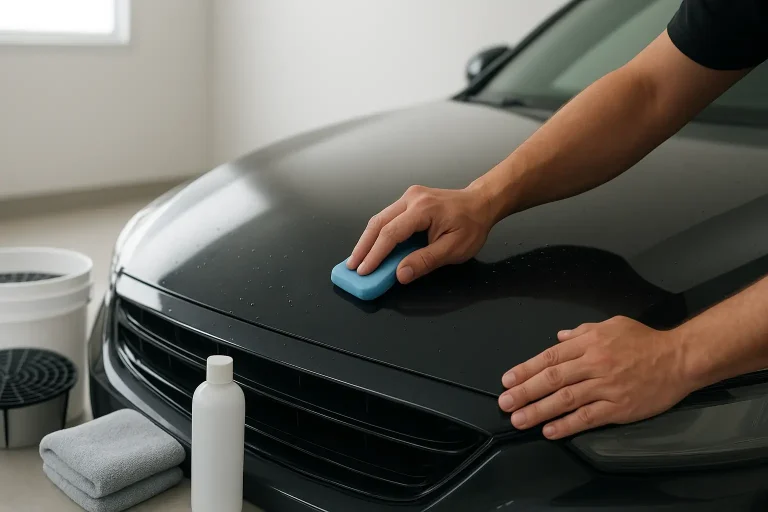
The correct washing protocol for ceramic-coated vehicles uses a two-bucket wash system with grit guards, a pH-neutral shampoo, and a clean microfiber wash mitt rinsed in a separate rinse bucket after each panel.
Skipping grit guards or reusing a contaminated mitt is the direct cause of most post-coating swirl complaints.
Chemical Etching: The pH Tolerance Boundary
Ceramic coating is highly resistant to chemicals within a pH range of approximately 2 to 11. Outside that range, the coating degrades, and the underlying clear coat becomes exposed.
Bird droppings are the most damaging real-world chemical threat to ceramic coatings. Fresh bird droppings have a pH between 3.5 and 4.5, which falls within the coating’s resistance range. The danger is uric acid concentration.
As bird droppings dry on a hot surface, the water evaporates and uric acid concentration increases. The localized pH can drop below 2 within 30 to 60 minutes on a surface above 100°F (38°C).
At that concentration, uric acid chemically etches the ceramic layer and, if left longer than 24 hours, penetrates through to the clear coat beneath.
The ceramic coating slows this process compared to unprotected clear coat. It does not stop it if the droppings are left untreated.
Removing bird droppings within 30 minutes of discovery on a coated vehicle prevents etching in most cases. A pH-neutral bird dropping remover spray softens the deposit for safe removal without abrasion.
Industrial fallout, iron particles from rail dust and brake dust, and harsh degreasers with pH above 12 present similar risks. The coating resists short exposure but degrades under prolonged or concentrated chemical contact.
Tree sap is another etching risk. Sap contains organic acids that react with coating chemistry under UV exposure and heat.
Fresh sap left on a coated surface for more than 24 hours can bond to the ceramic layer and require chemical removal or light polishing. Sap left for 48 hours or more on a hot, sun-exposed surface can etch through the coating entirely.
The practical rule is: ceramic coating buys time, not immunity. Contaminants that would instantly damage unprotected paint take longer to damage coated paint. They still damage it if left in place.
UV Degradation: How Ceramic Coating Helps and Where It Falls Short
Ceramic coating reduces UV damage to the clear coat beneath it by blocking a portion of ultraviolet radiation. It does not block all UV radiation, and it does not last forever.
The SiO2 network in a cured ceramic coating absorbs and reflects UV energy at wavelengths between 200 and 400 nanometers. This reduces clear coat oxidation and color fading measurably compared to uncoated paint.
Research published in Polymer Degradation and Stability confirms that SiO2-based coatings reduce UV-induced yellowing in automotive clear coats by 50 to 65 percent in accelerated weathering tests equivalent to 2 to 3 years of sun exposure.
That is a significant benefit. The limitation is the coating’s own degradation under the same UV exposure it is blocking.
Consumer-grade ceramic coatings with a rated lifespan of 1 to 2 years lose approximately 20 to 30 percent of their hydrophobic performance within 12 months of outdoor exposure in high-UV climates such as Arizona, Florida, and Southern California.
Professional-grade coatings rated at 5 to 7 years degrade more slowly but still require inspection and maintenance at the 2-to-3-year mark to assess whether the coating thickness has reduced below its functional threshold.
A coating that has degraded to less than 1 micron provides minimal UV protection and should be removed and reapplied.
The underlying paint continues to oxidize, fade, and chalk once the coating degrades, at the same rate as uncoated paint.
Parking in covered or shaded areas extends coating lifespan by 40 to 60 percent compared to daily outdoor parking in direct sun, based on field data from detailing franchises operating in high-UV regions.
Heat Damage: The Temperature Threshold Problem
Ceramic coatings are heat resistant up to approximately 1,200°F (650°C) for coatings marketed as high-temperature industrial formulations, and up to approximately 600°F (315°C) for automotive-grade consumer coatings.
For most daily driving, this means the coating handles exhaust pipe proximity, brake caliper heat, and direct summer sun without degradation.
The coating does not protect paint in situations that exceed these thresholds. Paint itself burns and blisters at temperatures above 300°F (149°C), so the practical limit is the paint system, not the coating.
The more relevant heat concern for coated vehicles is thermal shock, which is rapid temperature change rather than sustained high temperature. Washing a hot vehicle with cold water creates rapid thermal contraction in the coating layer.
Repeated thermal shock cycling weakens the bond between the ceramic layer and the clear coat, accelerating delamination and reducing coating lifespan.
The standard guidance is to wash coated vehicles after the surface has cooled below 100°F (38°C), which typically requires 30 to 60 minutes of shade time after driving in summer conditions.
Applying SiO2 spray booster products after each wash reinforces the topmost layer of the coating and extends thermal resistance at the surface boundary.
Rubber Transfer, Tar, and Industrial Contamination
Ceramic coating does not prevent rubber transfer from other vehicles, tar deposits from fresh road surfaces, or industrial fallout from attaching to the coated surface.
These contaminants bond to the ceramic surface chemically or mechanically in the same way they bond to uncoated clear coat. The coating reduces the adhesion strength, making removal easier. It does not create a fully non-stick surface.
Road tar, for example, contains hydrocarbon compounds that soften when heated and adhere to any surface they contact. A ceramic-coated panel attracts tar at the same rate as an uncoated panel but releases it more easily under solvent treatment.
A dedicated tar and iron fallout remover dissolves bonded contaminants without damaging the ceramic layer, provided the product’s pH stays between 5 and 10.
Rubber transfer from curb contact or parking barrier impact leaves black marks on coated paintwork that require light polishing or a mild abrasive pad for removal.
Heavy polishing to remove embedded rubber transfer will remove a portion of the ceramic layer. The layer is thin enough that aggressive compounding reduces it below its functional minimum.
Industrial fallout from rail lines, steel mills, and airports deposits iron particles on painted surfaces. These particles embed in the ceramic layer and cause orange rust spots if left untreated.
An iron decontamination spray applied twice per year removes these particles from coated surfaces before they can cause oxidation damage to the paint beneath.
Water Spots: A Common Post-Coating Disappointment
Ceramic coating does not prevent water spots. This is one of the most frequent misunderstandings among first-time coating owners.
The hydrophobic surface causes water to bead into smaller, tighter droplets rather than sheeting completely off the surface. Those tighter beads concentrate dissolved minerals into smaller contact points.
When the water evaporates, the minerals remain as deposits. On a ceramic-coated surface, those mineral deposits can be more concentrated and more visible than on an uncoated surface because of the smaller bead size.
Hard water with high calcium carbonate content (above 200 mg/L total dissolved solids) produces the most visible spotting on ceramic-coated finishes.
Removing water spots from a coated surface requires a dedicated water spot remover formulated for ceramic-coated surfaces. Standard window cleaners and acidic household products can degrade the coating chemistry.
Severe water spots that have etched into the ceramic layer require light polishing and spot reapplication of the coating.
The practical prevention is drying the vehicle immediately after washing with a clean waffle-weave microfiber drying towel before water evaporates naturally.
Coating Age and Maintenance: What Happens After Year One
Every ceramic coating degrades over time regardless of product quality, and the degradation is not uniform across the vehicle surface.
Horizontal panels (hood, roof, trunk) receive direct sun and precipitation and degrade 30 to 50 percent faster than vertical panels (doors, quarter panels) that are partially shielded.
The front bumper and leading edge of the hood degrade fastest due to continuous impact from airborne particulates at highway speeds.
A coating that was rated at 5 years when new may still perform well on door panels at year 3 while showing significant degradation on the hood.
Degraded coating does not peel away visibly in most cases. It thins gradually, and the first sign is reduced water beading. A water contact angle below 90 degrees indicates the hydrophobic layer has degraded below its functional threshold.
Most professional detailers recommend annual inspections and application of a ceramic coating maintenance topper spray every 3 to 6 months to replenish the hydrophobic surface chemistry between full reapplication cycles.
A coating that is not maintained degrades to a chemically inert residue that must be removed by polishing before a new coating can bond properly.
Recoating over a degraded coating without polishing produces inconsistent bonding and reduced performance life on the new layer.
What Ceramic Coating Does NOT Replace: The Complete List
Use the table below to match protection needs to the correct product before deciding whether ceramic coating alone is sufficient for your situation.
| Protection Need | Ceramic Coating | Paint Protection Film | Car Wax/Sealant | Correct Solution | Why Ceramic Coating Falls Short |
|---|---|---|---|---|---|
| Rock chips and gravel impact | No protection | Strong protection | No protection | PPF on impact zones | Too thin (1-10 microns) to absorb impact energy |
| Deep scratches (to base coat) | No protection | Partial protection | No protection | Paint correction before coating | Coating does not fill or bridge deep scratches |
| Swirl marks from washing | Reduces depth only | Not applicable | Reduces depth only | Correct wash technique | Coating reduces scratch depth 30-40%, does not prevent |
| Bird dropping etching (after 24 hrs) | Slows process only | Slows process | Minimal slowing | Prompt removal within 30 min | Uric acid concentration drops below pH 2 as droppings dry |
| Water spot formation | No prevention | No prevention | No prevention | Immediate drying after wash | Hydrophobic beading concentrates minerals in smaller spots |
| UV fading (long-term, 5+ years) | Partial protection | Partial protection | Minimal protection | Garaged storage plus coating | Coating degrades before paint protection is complete |
| Tar and industrial fallout adhesion | Reduces adhesion only | Reduces adhesion | Reduces adhesion only | Regular decontamination | Contaminants still bond; easier removal is not prevention |
| Coating self-renewal after damage | No self-healing | Self-healing (minor) | No self-healing | Maintenance toppers or recoat | SiO2 glass network does not flow at ambient temperatures |
Ceramic coating is the right product for UV resistance, chemical resistance in the pH 2-to-11 range, hydrophobic surface behavior, and gloss enhancement. It is the wrong product for impact protection, deep scratch prevention, or permanent water spot prevention.
The Self-Healing Myth: Why Ceramic Does Not Recover from Scratches
Some ceramic coating marketing uses the phrase “self-healing” in a way that creates genuine confusion among buyers. Standard ceramic coatings do not self-heal.
Self-healing technology in automotive protection refers specifically to thermoplastic polyurethane films that contain a polymer top coat that flows back to a level surface when heated above a threshold temperature (typically 140 to 160°F / 60 to 71°C).
The SiO2 or TiO2 glass network in a cured ceramic coating is a rigid, cross-linked inorganic material. It does not flow, reflow, or redistribute at any temperature below the point at which it would damage the paint system beneath it.
A scratch in a ceramic coating is a permanent mechanical removal of material from that location. The adjacent coating does not migrate to fill the gap.
Some premium ceramic coatings marketed with “self-healing” language contain a small percentage of polymer additives in the top layer that exhibit minor flow characteristics under heat gun application (above 140°F / 60°C). This can close very shallow surface marks (under 0.5 microns deep) under controlled conditions.
That behavior is not comparable to the self-healing capability of PPF and does not address any scratch visible to the naked eye under direct lighting.
Buyers comparing coating options should ask for specific test data on self-healing depth and conditions rather than accepting the term at face value.
Nano Ceramic Coating: Does Smaller Particle Size Change the Limitations?
Nano ceramic coatings use silicon dioxide particles in the 1 to 100 nanometer size range, compared to conventional coatings that use larger particle sizes. The smaller particles fill surface irregularities more completely and produce a denser, more uniform coating layer.
The denser layer improves chemical resistance slightly (extending pH tolerance toward 1.5 on the low end for premium formulations) and improves scratch resistance modestly by increasing the cross-link density of the cured network.
However, nano particle technology does not fundamentally change the physical limitations of a thin coating applied over a paint system. The coating is still 1 to 10 microns thick. It still cannot absorb rock chip impact. It still degrades under prolonged UV exposure.
For a detailed explanation of what nano particle size actually changes at the chemistry level, our breakdown of nano ceramic technology and what the particle size difference actually delivers covers the SiO2 network density, contact angle improvements, and where the claims exceed the evidence.
The core limitation list for nano ceramic coatings is identical to that for conventional ceramic coatings: no rock chip protection, no deep scratch prevention, no water spot prevention, no permanent protection, and degradation under continuous outdoor UV exposure.
Single Layer vs Multiple Layers: Does Thickness Change the Protection Profile?
Adding a second or third layer of ceramic coating increases total coating thickness and marginally improves chemical and scratch resistance, but does not change the fundamental protection categories where ceramic coating fails.
A single professional-grade layer deposits approximately 1 to 3 microns of cured material. A second layer adds another 1 to 2 microns, as each subsequent layer bonds to the previous cured layer with slightly reduced efficiency due to the smoother, less porous surface.
Two layers at 4 to 5 microns total thickness is still 30 to 40 times thinner than a paint protection film. The impact resistance gap between a two-layer ceramic coating and PPF does not meaningfully close with additional ceramic layers.
The practical benefit of a second layer is extended service life (adding 1 to 2 years to the coating’s rated lifespan) rather than expanded protection capability against new threat categories.
For a complete analysis of what layering actually changes versus what it does not, the layer count comparison covering thickness measurements, chemical resistance changes, and real-world durability data provides the specific performance data for single versus double application.
Paint Condition Before Coating: The Limitation That Starts Before Application
Ceramic coating locks in the paint condition present at the time of application. It does not hide, fill, or correct existing defects.
A paint surface with existing swirl marks, light scratches, oxidation, or water spot etching will show all of those defects more clearly after coating because the added gloss and depth amplify surface irregularities under direct lighting.
Professional coating application requires full paint correction before the coating is applied. This means washing, decontaminating, claying, compounding (if needed), polishing, and wiping the surface with an isopropyl alcohol (IPA) solution to remove all polish oils before the coating bonds.
Skipping paint correction and applying coating over defective paint is the single most common reason for coating owner dissatisfaction.
The coating performs exactly as rated on a defective surface. The surface just looks worse than it did before coating once the gloss enhancement makes every scratch more visible under showroom lighting.
A dual-action orbital polisher with a medium cut compound removes 70 to 80 percent of typical swirl marks and light scratches on factory clear coat without burning through the clear layer, provided the clear coat is above 2 mils (50 microns) total thickness.
The Material Science Behind Ceramic Coating Limitations
Ceramic coatings form their protective layer through a sol-gel process in which liquid SiO2 precursors hydrolyze and condense to form a cross-linked glass network on the paint surface.
The resulting network is dense, hard, and chemically stable, which explains the coating’s genuine strengths: chemical inertness across a wide pH range, UV absorption, and surface hardness above the clear coat below it.
The same chemistry that creates these strengths also defines the limitations. A glass network is rigid and brittle under point load.
When a sharp object applies concentrated force to a small area of the coating, the glass network fractures rather than deforming and recovering. This is why scratch resistance has a threshold and impact resistance is essentially zero.
The material properties of ceramic hardness, thermal behavior, and brittleness explain this behavior in detail, including the Mohs hardness comparison between different ceramic material types and why high hardness and low toughness coexist in the same material class.
The coating’s finite thickness also limits every protection mechanism. A thicker glass layer would improve impact resistance and increase the volume of material available before chemical etching reaches the clear coat. Thickness is constrained by the coating’s need to remain transparent, flexible enough to avoid delamination under thermal cycling, and thin enough to apply without runs or unevenness.
The current generation of consumer and professional ceramic coatings represents a well-optimized balance within those constraints. The constraints themselves are not going to be eliminated by chemistry improvements alone.
Understanding the Full Ceramic Coating Picture
The following chart shows what protection ceramic coating provides and where each protection category ends, based on published coating performance data and independent field testing by the International Detailing Association.
VALUE ANALYSIS
Where Ceramic Coating Protects Well and Where It Does Not
Protection strength by threat category, based on coating performance data and IDA field research
Coating excels here
Coating excels here
Moderate protection
Moderate protection
Very limited protection
No protection
No protection
Editorial assessment based on coating performance research from International Detailing Association field data and published SiO2 coating studies. Not a sponsored ranking.
Correct Expectations by Vehicle Use Case
The right way to evaluate ceramic coating is to match its actual capabilities to your specific driving conditions and protection priorities.
Daily Driver on Highway Commutes
A ceramic coating on a daily highway commuter vehicle delivers real UV protection, chemical resistance against road contaminants, and easier washing over a 2 to 3 year service window.
It does not protect the front bumper and hood leading edge from rock chips on high-speed roads.
The correct setup for this use case is PPF on the front bumper, hood, and A-pillars, with ceramic coating over the PPF and over all remaining painted surfaces.
Weekend and Show Vehicles with Garaged Storage
Ceramic coating provides its maximum value on low-mileage vehicles stored indoors. UV degradation slows dramatically without daily sun exposure.
The primary threats for this use case are bird droppings during outdoor shows and water spots from washing. Both require attention within 30 minutes to prevent etching through the coating.
A waterless wash spray detailer formulated for ceramic-coated surfaces removes light dust and bird dropping residue at shows without a full wash setup.
Off-Road and High-Abrasion Environments
Ceramic coating is the wrong primary protection for vehicles driven on unpaved roads, construction sites, or in environments with continuous abrasive airborne particulate.
PPF coverage on all forward-facing surfaces, combined with ceramic coating on doors and rear panels, provides the most appropriate protection profile for these conditions.
What Happens When Ceramic Coating Fails: Recognizing Degradation
Ceramic coating failure is gradual and follows a predictable sequence. Recognizing each stage helps owners decide between maintenance, topper application, or full recoat.
Stage 1 (6 to 18 months): Water contact angle drops from above 100 degrees to 90 to 95 degrees. Beading is still visible but water no longer sheets off aggressively. Topography inspection shows the coating surface has become slightly more irregular. A SiO2 spray maintenance booster applied every 3 months restores surface behavior at this stage.
Stage 2 (18 to 36 months on high-UV horizontal panels): Contact angle drops below 90 degrees in localized zones. Water no longer beads on the hood roof under direct sun but still beads on shaded door panels. The coating has thinned to below 1 micron on sun-exposed surfaces.
Stage 3 (full degradation): Flat water behavior across all panels. No visible beading. Surface feels like uncoated clear coat when tested with a water droplet. The coating has degraded to a residue layer that requires polishing to remove before recoating.
Attempting to apply a new coating over a fully degraded layer without polishing produces poor adhesion and a coating service life of less than 50 percent of the rated duration.
Ceramic Coating vs Car Wax vs Paint Sealant: What Each One Actually Does
Use the table below to match the correct protection product to each threat category before spending money on any single solution.
| Protection Category | Ceramic Coating | Paint Sealant (Synthetic) | Carnauba Wax | Paint Protection Film | Best Product Choice |
|---|---|---|---|---|---|
| UV resistance duration | 2 to 5 years (pro grade) | 4 to 6 months | 1 to 3 months | Partial (film degrades) | Ceramic coating |
| Chemical resistance (pH range) | pH 2 to 11 | pH 5 to 9 | pH 6 to 8 | pH 4 to 10 | Ceramic coating |
| Rock chip protection | None | None | None | Strong (150-200 microns thick) | PPF only |
| Scratch resistance | 9H (resistant, not proof) | Minimal | None | Self-healing top coat | PPF for self-healing; ceramic for resistance |
| Water spot prevention | None | None | None | None | Prompt drying (no product prevents) |
| Gloss enhancement | High (9 to 10 out of 10) | Moderate (6 to 7) | High warmth (8 out of 10) | Moderate (coating over PPF needed) | Ceramic for depth; wax for warmth |
| Application complexity | High (2 to 4 hour cure prep) | Low (30-minute application) | Low (spray or paste) | Very high (professional install recommended) | Wax or sealant for DIY ease |
| Cost range | $50 to $2,000 (DIY to pro) | $20 to $60 | $10 to $80 | $500 to $5,000 (professionally installed) | Depends on use case priority |
For most daily drivers who want protection that is easy to maintain and genuinely lasts, a professional-grade ceramic coating handles UV protection, chemical resistance, and easier washing better than any wax or sealant product on the market.
The Complete Guide to Ceramic Coating: Going Deeper on Application and Chemistry
Understanding what ceramic coating cannot do is most useful when paired with a complete picture of the application process, product selection, and surface preparation steps that determine whether the coating performs at its rated capability.
For the full application walkthrough, product comparison by SiO2 concentration and rated lifespan, and the surface preparation sequence from wash to IPA wipe, the complete ceramic coating application guide covering preparation, product selection, and curing conditions covers every step with specific timing, temperature requirements, and troubleshooting for common application errors.
Frequently Asked Questions About Ceramic Coating Limitations
Can ceramic coating stop a rock chip if it is thick enough?
No ceramic coating applied to automotive paint stops rock chips regardless of thickness. Even a 10-micron coating (the maximum practical thickness before coating stress causes cracking) is 15 to 20 times thinner than the 150 to 200 micron paint protection film required to absorb impact energy from road debris. The hardness of the coating (9H pencil scale) measures resistance to dragging contact, not resistance to perpendicular impact force from a projectile.
A rock traveling at highway speed concentrates force into a contact area smaller than 1 square millimeter. No coating layer thin enough to remain transparent and bonded to paint can distribute that force across a wide enough area to prevent paint damage.
Will bird droppings damage my ceramic coated car if I remove them within 30 minutes?
Removing bird droppings within 30 minutes on a surface below 80°F (27°C) prevents etching in most cases. At higher surface temperatures above 100°F (38°C), the 30-minute window shrinks to 10 to 15 minutes because heat accelerates water evaporation and increases uric acid concentration faster. Use a pH-neutral bird dropping remover spray and a damp microfiber cloth. Do not wipe dry droppings dry because grit in the droppings will scratch the coating.
Does ceramic coating make my car completely waterproof against water spots?
Ceramic coating does not prevent water spots. The hydrophobic surface causes water to form tighter, smaller beads rather than sheeting off completely. Those smaller beads concentrate dissolved minerals into smaller, more visible deposits when the water evaporates. Hard water above 200 mg/L total dissolved solids produces more visible spotting on ceramic-coated surfaces than on waxed or unsealed clear coat.
The only prevention is drying the vehicle with a clean microfiber towel before water evaporates. This applies after every wash and after rain exposure.
Can I apply ceramic coating over existing swirl marks to hide them?
Applying ceramic coating over existing swirl marks makes them more visible, not less. The high-gloss amplification effect of the coating increases reflectivity, which makes surface irregularities appear sharper under direct and angled lighting. Paint correction (polishing) must be completed before coating application. Any defects present at the time of coating are permanently locked in under the cured layer until the coating is removed and the paint is corrected.
Is a second coat of ceramic coating worth applying for better rock chip protection?
A second coat adds 1 to 2 microns of additional thickness and extends the coating’s service life by 1 to 2 years. It does not provide meaningful rock chip protection. The total thickness of two ceramic coating layers (4 to 5 microns) remains 30 to 40 times thinner than paint protection film. Adding ceramic layers improves chemical resistance and longevity. It does not change the coating’s fundamental inability to absorb impact energy.
Does ceramic coating protect against rust?
Ceramic coating applied to painted surfaces slows the penetration of moisture and salt into minor paint defects, which can slow surface rust formation at chip edges. It does not protect bare metal, underbody surfaces, wheel wells, or any area where paint is already fully absent. Ceramic coating is not a rust converter, rust inhibitor, or replacement for proper underbody rustproofing on vehicles in salt-belt climates. For exposed metal and underbody protection, a dedicated underbody rust inhibitor coating is the appropriate product.
Can I use any car wash soap on a ceramic coated vehicle?
pH-neutral shampoos with a pH between 6 and 8 are safe for ceramic-coated vehicles. Alkaline degreasers above pH 10 degrade the coating chemistry and reduce its hydrophobic performance after repeated use. Acidic wheel cleaners below pH 4 cause the same degradation. Dish soap is alkaline (pH 8 to 10.5) and strips the hydrophobic layer faster than automotive shampoo designed for coated finishes.
How do I know if my ceramic coating has failed?
The first and most reliable indicator is water behavior. Pour a small amount of water on the hood and observe the contact angle. A healthy coating produces tight beads with a contact angle above 100 degrees. Water that spreads flat or forms shallow, wide drops indicates the coating has degraded below its functional threshold. Testing should be done on a cool, clean surface for accurate results.
Will a clay bar treatment remove my ceramic coating?
A clay bar used on a ceramic-coated surface removes embedded surface contamination and can thin the outermost layer of the coating. Aggressive clay bars used with heavy pressure on a lightly coated surface can remove a measurable portion of the coating thickness. Use a fine-grade fine-grade clay bar rated safe for coated surfaces with plenty of clay lubricant and light pressure. Inspect the surface afterward for hydrophobic performance to confirm the coating is intact.
Does ceramic coating protect wheels from brake dust etching?
Ceramic coating on wheels reduces brake dust adhesion and makes cleaning easier, but it does not prevent brake dust from etching polished or clear-coated wheel surfaces if the dust is left for extended periods. Ferrous brake dust contains iron particles that oxidize when wet and can bond to wheel surfaces within 24 to 48 hours. A coated wheel requires the same decontamination frequency as an uncoated wheel. The practical benefit is that contamination requires less aggressive removal products and techniques.
Can ceramic coating be applied over existing car wax?
No. Wax residue prevents the ceramic coating precursors from bonding to the clear coat surface beneath. Ceramic coating must be applied to a chemically clean surface prepared with an isopropyl alcohol (IPA) solution at 70 to 99 percent concentration to remove all polish oils, wax residue, and surface contamination. Coating applied over wax cures on top of the wax layer rather than bonding to the clear coat. That layer bonds weakly, produces inconsistent hydrophobic performance, and delaminates within weeks rather than years.
Will ceramic coating protect painted plastic bumpers and trim the same way it protects metal panels?
Ceramic coating bonds to painted plastic surfaces and provides UV and chemical resistance similar to its performance on metal panels. Unpainted black plastic trim presents a different situation. The coating improves UV resistance on plastic trim and reduces fading, but the thermal expansion rate of plastic differs from metal, which increases the risk of coating stress cracking on trim pieces that experience wide temperature swings. A dedicated plastic trim ceramic coating formulated for flexible substrates provides better performance than a standard paint coating applied to plastic trim.
Is ceramic coating food-safe or hazardous during the curing process?
Automotive ceramic coatings are not food-safe products and are not tested or rated for food contact. During application and the initial curing phase (typically 24 to 72 hours), the solvent carrier in the liquid coating releases volatile organic compounds (VOCs) that require ventilation. Application in an enclosed garage without ventilation creates inhalation exposure to isocyanate compounds present in some formulations. Wear nitrile gloves during application and avoid skin contact with uncured coating. Once fully cured, the inert SiO2 glass network is chemically stable and does not off-gas.
Does ceramic coating change the color or finish appearance of matte paint?
Applying a standard glossy ceramic coating to matte or satin factory paint destroys the matte finish by adding a high-gloss top layer that eliminates the light-scattering micro-texture responsible for the matte appearance. Matte and satin paint surfaces require a dedicated matte-finish ceramic coating formulated to preserve satin and flat surface texture. Standard gloss coatings must never be applied to matte, satin, or flat paint regardless of the coverage area.
The Bottom Line on Ceramic Coating Limitations
Ceramic coating is a genuinely effective protection product within its actual capability range: UV resistance, chemical resistance across a wide pH range, hydrophobic surface behavior, and gloss depth.
It is the wrong product for rock chip protection, complete scratch prevention, water spot elimination, and permanent maintenance-free protection. Knowing exactly where it stops working tells you what additional products and habits are required to protect your vehicle completely.
For daily drivers, the combination of paint protection film on high-impact zones and ceramic coating over all remaining paint surfaces, maintained with correct washing technique and periodic topper applications, provides the most complete protection available at a reasonable total cost.