Pottery Gift Ideas and Best-Selling Pottery Projects for Beginners

The best pottery gift is usually not the most expensive one. A $14 bag of clay will get used ten times more often than a fancy gadget that sits in a drawer.
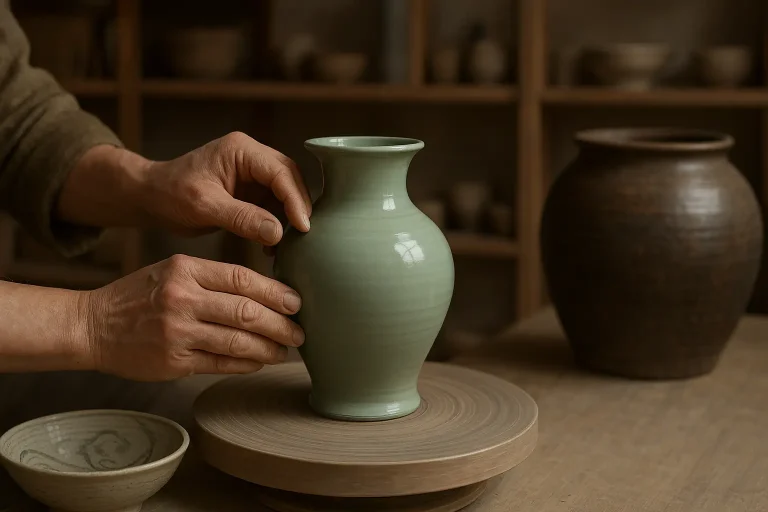
Potters and aspiring potters are practical makers, and they measure a gift by how much it helps them make something. If you are making pottery yourself to give as a gift, hand-thrown stoneware clay renders honest, durable pieces people keep for years.
This guide has two halves. You will find proven gift ideas for clay lovers at every budget, plus the best-selling projects a beginner can actually make, with costs, times, and real sell prices for each one.
Why Does Handmade Pottery Make Such a Good Gift?
Handmade ceramics beat almost anything on a store shelf because no two pieces are identical. Even a simple coil planter carries the maker’s fingerprints, stretched clay, and small asymmetries that a machine would reject.
Etsy seller data shows that buyers pay a premium for exactly that imperfection, listing “handmade,” “rustic,” and “organic texture” among trust-driving keywords in the ceramics category.
Function matters as much as looks. A fired stoneware mug with under 3% water absorption resists daily hot liquids, dishwashers, and years of daily use.
Air-dry clay pieces are decorative, while kiln-fired stoneware and porcelain pieces are functional ware, and understanding that single distinction protects you from half the mistakes this article prevents.
If you are buying for someone new to clay, our primer on what pottery actually involves explains the vocabulary used below in plain language.
Best Pottery Gift Ideas for Every Budget
Do not buy a person clay without knowing what additional equipment they own. Below is a breakdown of the best-performing pottery gift categories at three spending tiers, all safe for gift-giving.
Price Comparison
Popular Pottery Gifts, Sorted Lowest to Highest
Typical prices at time of publication, across major retailers.
$12 to $18
$15 to $25
$22 to $40
$55 to $80
$85 to $140
$380 to $500
$1,000 and up
Prices vary by brand and retailer; fireless-air-dry routes are always less expensive than kiln-required options.
Gifts Under $25: Small Tools and Consumables
Budget gifts for potters should follow one rule: buy useful things that get used up or worn out. That means clay, basic tools, and colorants, and nothing decorative.
A block of soft air-dry clay costs $12 to $18 and requires absolutely no kiln, letting anyone with a table start making the same day.
A beginner pottery tool kit bundles wooden modeling tools, sponges, and cutters for around $20 and works for hand-building and wheel work alike.
A needle tool, wire cutter, and loopy tool trio costs under fifteen dollars and handles daily–convenient hand-joining, cutting, and refining chores.
Orton pyrometric witness cones cost $10 to $15 per multi-pack and are genuinely appreciated by more advanced potters, since cone packs verify heat work in every firing.
Gifts in the $25 to $100 Range: Kits and Color
This mid-range hides some of the highest-impact pottery gifts available. It is the sweet spot where a quality kit or a set of reliable colorants can genuinely strengthen someone’s practice.
An all-in-one home pottery kit runs $55 to $80 for clay under basics, tools, paint, and instructions in one bundle, ideal for a someone testing whether clay is their thing.
An underglaze set lands in the $22 to $40 range and transforms basics like mugs into colorful statement pieces before the glaze firing.
Colorants like rutile, cobalt carbonate, and red iron oxide let experimenters mix custom results, and serious hobbyists will use every gram over time.
A quality hold-down banding wheel sits around $85 to $140 and serves both decorators and hand-builders for decorating traced patterns evenly.
Gifts Over $100: Wheels, Classes, and Kiln Access
Bigger purchases for clay lovers should center on capability, not novelty. A serious Tabletop rummage wheel, class access, and firing resources all fall in this category.
An entry-level electric wheel like the Speedball Artista typically sells between $400 and $500 and throws up to roughly 25 pounds of centered clay comfortably.
Our friends frequently ask us which wheel suits a first-time thrower, and our comparison walk-through of beginner-friendly wheels covers specific recommendations by motor power, size, and budget.
A pottery class series at a community studio costs around $100 to $300 and unlocks wheel access and firing services, which new ceramicists almost always outgrow solo.
A membership or firing credit at a local studio solves the biggest problem faced by beginners without kilns: getting work varnished safely past 2,000°F temperatures.
Do not buy a household pottery kiln without verifying voltage requirements and dedicated breaker circuits, since most require 240-volt service.
Can This Tool Help You Pick the Right Pottery Gift?
Before you commit to a purchase, answer two quick questions and the matcher below suggests one specific, tested-friendly gift option for that exact situation.
Interactive Tool
Find the Right Pottery Gift for Your Recipient
Answer two questions to get a personalized gift recommendation matched to experience level and budget.
Which Pottery Projects Sell Best for Absolute Beginners?
Five project types dominate the beginner side of the ceramics market: coil planters, pinch-pot creations, slab-built mugs, candle holders, and hanging vessels.
Comparing these five against each other is the fastest way to figure out which suits your hands and your budget, which is why the summary table below puts them on one page.
Project Comparison
Best-Selling Beginner Pottery Projects, At-a-Glance Comparison
Typical estimated materials cost, forming time, learn curve, and common sell price range for completed projects.
| Project | Materials Cost | Forming Time | Difficulty | Typical Sell Range | Needs a Wheel? |
|---|---|---|---|---|---|
| Pinch pots (spoon rests, small bowls) | $2 to $4 | 30 to 45 min | Very easy | $8 to $18 | No |
| Coil planters | $5 to $8 | 1.5 to 2 hrs | Easy | $22 to $40 | No |
| Slab-built mugs | $5 to $9 | 1.5 to 2 hrs adding a handle | Moderate | $18 to $34 | No |
| Candle holders and incense bowls | $3 to $6 | about 1 hr | Easy | $12 to $22 | No |
| Hanging macrame-style planters | $4 to $8 | 1 to 1.5 hrs | Moderate | $20 to $35 | No |
| Trinket plates and jewelry dishes | $2 to $5 | 30 to 45 min | Very easy | $10 to $16 | No |
Sell ranges reflect real listings on major craft marketplaces for unfussy, handmade-quality work; polished production-quality pieces sell higher.
Pinch Pots and Spoon Rests: The Fastest First Win
Pinch potting is the oldest forming method still practiced, and a single soft-handling air-dry clay ball lets a total novice finish one in about twenty minutes.
You press a thumb into a ball of clay and squeeze the wall thinner by rotating the piece with even pressure, and by wall thickness of roughly 1/4 inch you have a usable form.
The failure mode is simple to spot and fix, since pinching unevenly produces a lumpy, unstable foot that leaners call “wall wobble.”
Fix it by making a series of tiny rotations rand correcting the low spots with fingers, not a scraping kilned tool.
Coil Planters: Texture That Sells
Coil building allows unlimited height and organic texture variation, which directly mirrors why these pieces outsell smoother work in craft fair settings.
Roll even ropes of clay roughly the thickness of your thumb, stack them into a cylinder, and blend each joint with a wooden or steel rib.
Each seam gets scored with a knife and joined with slip, a mixture of clay and water that acts as paste, since unblended joints crack apart during the drying stage.
Buyers respond strongly to visible coil texture, and leaving some rings slightly show traduces a higher perceived handmade value than perfectly smoothed walls.
Candle Holders and Hanging Planters
Hanging pieces with integrated cords or drainage holes kept arriving on best-selling lists, particularly as plant ownership continues trending upward.
A drilled hole plus three evenly spaced top holes creates the classic macramé-hugger shape instantly recognizable to urban shoppers.
To protect plant roots, poke drainage holes in the base while the clay is soft, since retrofitted kicking a hole halfway through the drying stage cracks the plate.
Spoon Rests and Trinket Plates
Spoon rests are function-driven, giftable, and take about forty-five minutes to make, making them an exceptionally smart first attempted sale piece.
They also tolerate firmer texture experiments safely, since even slight pits barely matter for one purpose.
Slab-Built Mugs Before the Wheel
Slab building constructs cylinders from flat rolled-out sheets of clay, somewhat like building a tiny wall from damp leather rectangles.
Many successful Etsy sellers never touch a wheel, and craft fairs prove slab work is not a lesser process, just a different one.
Handles get attached by scoring both surfaces, applying slip, and holding firmly for ten to thirty seconds, since skipping the score-and-slip stage causes the joint to pop off during firing.
Your First Coil Planter, From Start to Finish
The coil planter is the beginner project with the widest gap between intimidation and actual difficulty, and it earns the highest typical selling price among basic hand-building forms.
Follow the six-step visual guide below and your first attempt, made with approximately two pounds of clay with a ten-to-fourteen-inch circumference result, unfolds inside two to three hours.
Step-by-Step Guide
How to Make a Coil Planter Step by Step
Six steps, about 2 hours of forming time including a 30-minute resting pause.
Prepare and weigh your clay
Break off about one pound of soft air-dry clay or damp stoneware, then knead it 30 to 40 firm turns until it feels completely uniform with no air pockets.
Make the base
Flatten a ball into a disc roughly 1/4 inch thick and about four inches across, smoothing the edges with your palm to remove small cracks.
Roll the first coils
Roll clay ropes about the width of your thumb, generally 3/8 to 1/2 inch thick, working from the center outward with light, even pressure.
Score, slip, and stack
Scratch parallel hash marks onto the top rim of the base, brush on a small amount of slip, then press the first coil firmly onto it, repeating for every added coil.
Blend the seams
Smooth each joint inside and out using a rib or your fingertip, keeping some rings visible near the rim for that handmade-texture appeal buyers respond to.
Dry slowly and dress the finish
Cover the planter loosely with plastic for 24 to 48 hours so moisture leaves slowly, which minimizes cracking, then sand gently and finish with paint or glaze appropriate to the clay type.
Times assume room conditions of about 70°F and 40% to 60% relative humidity; colder or damp rooms extend drying noticeably and help prevent cracking.
How Do You Price and Ship These Projects Once They’re Made?
Beginners routinely undervalue exactly these basic forms, because they compare them to big-box-store alternatives instead of to real handmade competitors.
Need a starting frame of reference?
Coil planters in the moderate range listed on major craft marketplaces sell in large volume between $28 and $40, and shipping weight stays manageable because they are hollow.
Sell ranges bend toward a heavier, thicker aesthetic that photographs well against concrete and linen, the texture shorthand of the current ceramics-buyer aesthetic.
When your friends ask where to start selling their own pieces, our write-up on craft-fair and online sales for pottery helps calculate the genuine break-even on pricing so you are never guessing.
Why Do Beginner Pottery Pieces Crack or Warp?
Most beginner disasters share one root cause: rushed drying, when water leaves the outer surface faster than the inner core.
Differential drying builds internal stress, because the shrinking shell pulls against the still-swollen interior, and the release channel becomes a crack along the weakest path, usually a seam.
This behavior presents as S-shaped dome cracks in bases and split walls near joins where a builder skipped blending.
Fix progression practically by providing even airflow: low, wide surfaces dry fastest, so place plates flat on mesh and cover complex forms with loosely draped plastic.
The critical concept is surface evaporation pacing, since superior craft really means controlling how quickly water exits, definitely not rushing to completion prematurely.
Drying covered at room temperature for 24 to 72 hours lets stress relax evenly through the whole body, reducing the temperature shock of fast drying.
Frequently Asked Questions About Pottery Gifts and Beginner Projects
Is air-dry clay food safe?
No, standard air-dry clay is not food safe, even after full hardening, because it hardens physically rather than chemically bonding at high temperature.
Air-dry clay never goes through the irreversible chemical change called vitrification, meaning the surface still absorbs moisture and harbor bacteria.
Use finishes labeled food safe only as a limited-risk workaround, and primarily keep these pieces decorative.
Do you need a pottery wheel or kiln to start?
No, and rolling pins bluntly prevent beginners from wasting money, since wheel throwing adds a steeper learning curve than most realize.
Pinch, coil, and slab techniques cover nearly every best-selling beginner item on this page with zero equipment past your hands.
Once your pieces require durability or food-safe conditions, community studios rent firing slots for a few dollars per shelf.
Why does homemade pottery crack in the oven or freezer?
Rapid thermal shock splits porous ceramics, and standard home curing occurs well below the heat tolerance a stoneware body demands.
That uneven temperature change stonewares handle gracefully only after slow cooling schedules, and thermal shock cracking otherwise occurs on heating bodies.
Treat unfinished low-fire craft pieces as decorative rather than subjecting them to rapid temperature swings.
Can you paint air-dry clay pieces with regular acrylic?
Yes, and standard craft acrylic is the most popular finishing choice, provided the clay is fully dry, sanded, then optionally primed with gesso.
Acrylics conform to the slight surface texture of air-dried clay and seal better on top of a primer layer.
Sealing finished decor with several coats of a protective clear spray extends durability considerably.
Which handmade Potter gifts sell best at markets?
Functional small forms like spoon rests, trinket plates, and planters outsell sculptural beginner experiments by a heavy margin.
People buy pottery more as usable decor than as artwork, especially when browsing quickly at fair stalls.
Stack several related pieces visually when merchandising interesting; grouped pieces move faster than singles-alone displays.
Does pottery clay expire?
Commercial moist clay lasts years in sealed plastic, but it hardens with exposure to circulating air, and refreshing dried material merely requires wedging in water or adding a slurry overnight.
Air-dry clays behave similarly, and open buckets eaten by drafts simply need sealing between uses.
Storing wrapped-and-sealed extends workable life indefinitely.
What should beginners do before their first kiln firing?
Dry pieces completely, including overnight stove or radiator struggles, since residual moisture literally explodes steam-violently inside hot kilns with a sudden crack.
Industry references like the Orton Foundation Manufacturereducational notes describe firing preheat schedules holding around 180°F specifically to drive off remaining pore water safely.
Check manufactures like a hairline crack beforehand, and when in doubt, choose a skilled studio member’s slow-bisque program first time out.
Can beginners glaze without hazardous chemicals?
Yes, certified commercial brushing glazes labeled lead-free eliminate mixing variables while hitting excellent results; refer to the Technical Association standards like ASTM D-4236 marking.
Glazes sold under prominent labeling for home studios remove respirator-on batching concerns for small-scale handwork.
Opt for mid-fire, food-safe blends marked for sink use whenever possible.
Conclusion
A thoughtful pottery gift, whether purchased or handmade, costs between $15 for consumables like clay or rising to five hundred dollars for a proper starter wheel, and the best choice depends intensely on the recipient’s current stage.
Coil planters, pinch-based spoon rests, and slab mugs remain the best-selling beginner products taking under two hours each, and they translate directly into giftable or sellable work.
Start small with a block of air-dry clay and one guided project, and you can advance later to verified stoneware options by consulting our brand-by-brand beginner clay comparison once you are ready to fire real functional ware.