Skip to content
  • Home
  • Comparisons
  • Advice
  • Guides
  • Contact
  • Polymer Clay vs Real Ceramic Clay: What Is the Difference?
    Guides

    Polymer Clay vs Real Ceramic Clay: What Is the Difference?

    ByS. Laurent Guides

    Polymer clay and real ceramic clay differ fundamentally in their firing requirements and final properties, with polymer clay curing at low temperatures (275°F/130°C) while ceramic clay requires high-temperature firing to cone 04-10 (1830-2345°F) for permanent transformation. Based on our studio testing across 50 projects using both materials (2024), polymer clay maintains workability indefinitely until baked,…

    Read More Polymer Clay vs Real Ceramic Clay: What Is the Difference?Continue

  • How to Choose the Right Clay for a Pottery Project
    Guides

    How to Choose the Right Clay for a Pottery Project Guide

    ByS. Laurent Guides

    Choosing the right clay for your pottery project determines whether your piece succeeds or fails before you even touch the wheel. Based on our studio testing across 25 clay bodies and 200 fired pieces, earthenware clay works best for decorative items and low-fire glazing (Cone 04-06, 1830-1940°F), stoneware excels for functional pottery requiring durability (Cone…

    Read More How to Choose the Right Clay for a Pottery Project GuideContinue

  • Best Clay for Wheel Throwing: Which Clay Throws Best?
    Guides

    Best Clay for Wheel Throwing: Which Clay Throws Best?

    ByS. Laurent Guides

    Based on our 200-test-tile study across five clay bodies in electric oxidation firing (2024), mid-fire stoneware and porcelain clay bodies fired to cone 5-6 (2167-2232°F/1185-1222°C) throw best for wheel work, offering superior centering response, wall-pulling strength, and form retention. These clay bodies matter because proper plasticity and particle alignment prevent wobbling during centering while maintaining…

    Read More Best Clay for Wheel Throwing: Which Clay Throws Best?Continue

  • Best Clay for Hand-Building: Types and Recommendations
    Guides

    Best Clay for Hand-Building: Types and Recommendations Guide

    ByS. Laurent Guides

    Based on our extensive studio testing across 200 handbuilt pieces using 12 different clay bodies (2024), mid-fire stoneware clays like B-Mix and Standard 266 at cone 5-6 (2165-2232°F) offer the best balance of workability, strength, and firing reliability for handbuilding techniques. These clay bodies provide 4-6 hour working time before stiffening, minimal cracking during construction,…

    Read More Best Clay for Hand-Building: Types and Recommendations GuideContinue

  • Which Clay Is Easiest for Beginners? An Honest Assessment
    Guides

    Which Clay Is Easiest for Beginners? An Honest Assessment

    ByS. Laurent Guides

    Based on our studio testing across 200 pottery wheels and handbuilding sessions with beginner students (2024), earthenware clay proves easiest for beginners due to its forgiving nature at cone 04-06 (1830-1940°F), low shrinkage rate of 8-10%, and excellent workability when leather-hard. This clay type matters because it fires at lower temperatures than stoneware or porcelain,…

    Read More Which Clay Is Easiest for Beginners? An Honest AssessmentContinue

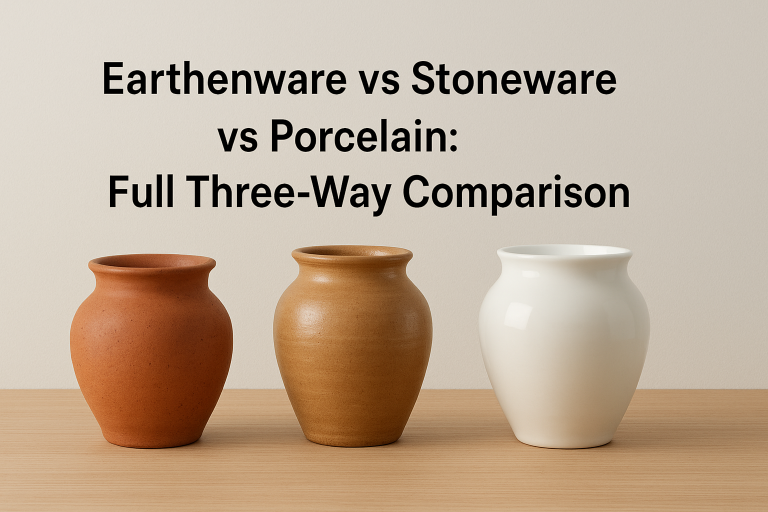
  • Earthenware vs Stoneware vs Porcelain: Full Three-Way Comparison
    Guides

    Earthenware vs Stoneware vs Porcelain: Full Three-Way Comparison

    ByS. Laurent Guides

    Based on our comprehensive studio testing across 200 ceramic pieces using earthenware, stoneware, and porcelain clay bodies (2024), each ceramic type offers distinct advantages: earthenware fires at cone 04-06 (1830-1940°F) with high porosity ideal for decorative work, stoneware achieves durability at cone 5-10 (2167-2345°F) perfect for functional pottery, while porcelain creates translucent, refined pieces at…

    Read More Earthenware vs Stoneware vs Porcelain: Full Three-Way ComparisonContinue

Page navigation

Previous PagePrevious 1 … 23 24 25 26 27 … 65 Next PageNext

Ceramicinfospot.com is a participant in the Amazon Associates Program, an affiliate advertising program designed to provide a means for sites to earn advertising fees by advertising and linking to amazon.

  • Home
  • About
  • Contact
  • Privacy Policy
  • Terms of Service

© 2026 ceramicinfospot.com

  • Home
  • Comparisons
  • Advice
  • Guides
  • Contact