Is Ceramic Recyclable? Environmental Impact & Disposal Guide

Ceramic cannot be recycled through your curbside bin, and most municipal recycling programs reject it entirely. That single fact shapes every disposal decision you will make with broken mugs, old tiles, cracked pots, and fired ceramic waste from a studio.
This guide covers the full scope of ceramic recyclability: why fired ceramic resists conventional recycling, what the environmental footprint of ceramic production actually looks like, how different ceramic types (tableware, tiles, sanitaryware, technical ceramics, and pottery) differ in their disposal options, and every practical route available for reuse, repurposing, donation, and responsible disposal.
What Makes Ceramic Difficult to Recycle?
Fired ceramic is chemically and physically transformed at temperatures between 1,800°F and 2,381°F (982°C and 1305°C), a process called vitrification that fuses silica, alumina, and flux minerals into a glass-like matrix. This transformation is irreversible.
Unlike glass, which melts at a manageable temperature and can be reprocessed repeatedly, fired ceramic has already undergone the maximum heat work it will ever tolerate. Remelting it requires temperatures that no standard recycling furnace reaches economically.
Why Fired Ceramic Cannot Enter the Glass Recycling Stream
Glass recycling facilities operate by melting cullet (crushed glass) at approximately 2,600°F (1,427°C). Ceramic fragments mixed into this stream do not melt at that temperature.
Instead, they remain as solid inclusions in the molten glass batch. According to the Glass Packaging Institute, even small quantities of ceramic contamination (above 10 parts per million in some specifications) cause structural defects in new glass containers, making the entire batch unusable.
Why Ceramic Cannot Enter the Metal or Paper Stream
Ceramic shares no processing pathway with metal or paper recycling. Its composition (silica, alumina, feldspars, and fired clay minerals) is chemically inert under the conditions used in those facilities.
Ceramic fragments also damage sorting equipment. The hard, abrasive surface of vitrified stoneware and porcelain scores conveyor belts, crushes screens, and jams optical sorters, which is why most materials recovery facilities (MRFs) list ceramic as a contaminant alongside stones and gravel.
The Distinction Between Unfired and Fired Ceramic
Unfired clay (greenware) and bisque-fired clay (clay fired once to cone 06, approximately 1,828°F / 998°C, without glaze) are physically closer to raw mineral material and can be reclaimed.
In a pottery studio, unfired clay scraps are simply rewedged back into usable clay bodies. Bisque-fired scraps can be ground and used as grog (a ceramic aggregate additive that reduces shrinkage and adds texture) in new clay bodies. Neither of these options applies to glaze-fired ceramic.
The Environmental Impact of Ceramic Production
Ceramic production carries a significant environmental footprint across three stages: raw material extraction, energy-intensive firing, and end-of-life disposal. Understanding each stage helps contextualize the recyclability problem.
Raw Material Extraction
Clay bodies for ceramics are mined from kaolin deposits, ball clay seams, stoneware clay beds, and feldspar quarries. According to the United States Geological Survey (USGS), the United States produces approximately 6 million metric tons of kaolin annually, with major deposits in Georgia, South Carolina, and California.
Mining disrupts topsoil, alters drainage patterns, and displaces native vegetation. Responsible producers implement reclamation programs, but the land disturbance footprint of ceramics raw material extraction is measurable and cumulative.
Firing Energy Consumption
A single glaze firing in a mid-size electric kiln (7 cubic feet, firing to cone 6 at 2,232°F / 1,222°C) consumes between 15 and 22 kilowatt-hours of electricity. Gas kilns firing to cone 10 (2,381°F / 1,305°C) consume the equivalent of 25 to 40 cubic feet of natural gas per firing.
Industrial ceramic tile manufacturing operates continuous tunnel kilns burning natural gas at temperatures up to 2,192°F (1,200°C) for 40 to 60 minutes per load. The European Ceramics Industry Association reports that energy accounts for 30 to 40 percent of total production costs in structural and floor tile manufacturing, reflecting the scale of thermal energy demand.
Carbon Footprint Per Ceramic Item
A life cycle analysis published in the Journal of Cleaner Production found that a standard ceramic floor tile (30cm x 30cm, 600g) generates approximately 2.3 to 3.1 kg of CO2 equivalent across its full production cycle, including raw material extraction, transport, firing, and finishing.
A ceramic mug (approximately 350g fired weight) produced in a small studio electric kiln generates an estimated 0.5 to 0.8 kg of CO2 equivalent per unit when fired in a shared kiln load. The per-unit footprint drops significantly when kilns are fired at full capacity, which is one reason production potters and tile manufacturers emphasize maximizing kiln loads.
Longevity as the Primary Environmental Offset
Ceramic’s durability is its strongest environmental argument. A well-fired stoneware mug with a vitrified body (absorption rate under 1%) and a properly fitted glaze (matching thermal expansion coefficients within 0.5 x 10^-6 per degree Celsius) can function without degradation for decades.
In contrast, a single-use plastic cup has an average use life measured in minutes. When amortized over a 20-year use period, the per-use carbon footprint of a ceramic mug is far lower than disposable alternatives, according to a life cycle study published in the International Journal of Life Cycle Assessment.
Types of Ceramic and How Recyclability Differs by Type
Not all ceramic is the same material. The ceramic category spans tableware, sanitaryware, floor and wall tiles, technical ceramics, and hand-thrown pottery, and each type differs in composition, firing temperature, glaze chemistry, and practical disposal options.
Use the table below to identify your ceramic type and understand the realistic disposal pathways available for each.
| Ceramic Type | Firing Range | Vitrification | Recyclable via MRF? | Best Disposal Route | Reuse Potential |
|---|---|---|---|---|---|
| Earthenware tableware | Cone 06-04 (1,828-1,940°F / 998-1,060°C) | Porous (3-8% absorption) | No | Donate, crush for garden use | High (charity shops, mosaic) |
| Stoneware tableware | Cone 6-10 (2,232-2,381°F / 1,222-1,305°C) | Vitrified (under 1% absorption) | No | Donate, mosaic art, hardcore aggregate | High |
| Porcelain tableware | Cone 6-12 (2,232-2,419°F / 1,222-1,326°C) | Fully vitrified (under 0.5%) | No | Donate, ceramic arts programs, mosaic | High |
| Ceramic floor and wall tiles | 1,832-2,192°F (1,000-1,200°C) | Semi-vitrified to fully vitrified | No | Construction aggregate (hardcore), tile resale | Medium to high |
| Sanitaryware (toilets, basins) | 2,192-2,300°F (1,200-1,260°C) | Fully vitrified | No (specialist only) | Inert construction aggregate | Low (size limits reuse) |
| Technical and industrial ceramics | Above 2,550°F (1,400°C) | Ultra-dense (near 0% absorption) | No (specialist programs only) | Manufacturer take-back, industrial grinding | Low for consumers |
Absorption rates sourced from ASTM C373 standard test method for water absorption of ceramic tile. Firing ranges from Orton Foundation cone temperature charts.
Ceramic Tile Disposal: The Largest Volume Problem
Ceramic tile represents the highest volume ceramic waste stream in the residential context. A full bathroom renovation can generate 50 to 150 kg of broken and removed tiles, and standard construction and demolition (C&D) waste collection does not always include ceramic tile as a separately diverted material.
In many regions, ceramic tile from renovations is legally classified as inert construction waste, meaning it can be accepted at C&D landfill facilities without hazardous waste processing. The key practical outlet is crushed ceramic tile as hardcore aggregate for road sub-base, drainage layers, and concrete fill, a use that diverts material from landfill even though it does not constitute recycling in the traditional sense.
Sanitaryware: Scale Creates the Disposal Challenge
A standard vitreous china toilet bowl weighs 25 to 40 kg and is entirely ceramic with no separable components. Most municipal waste systems cannot process this size and weight in standard collection.
In the United Kingdom, the Bathroom Manufacturers Association operates a sanitaryware take-back initiative through selected merchants. In the United States, some Habitat for Humanity ReStore locations accept intact toilets and basins for resale. Broken sanitaryware with no reuse potential is typically processed as inert construction fill.
Is Ceramic Recyclable? The Honest Answer by Scenario
The answer depends on what type of recycling you mean and what ceramic item you are handling. Conventional curbside or drop-off recycling: no. Industrial aggregate reprocessing: yes, in specific regional programs. Studio clay reclaim: yes, for unfired and bisque-fired clay only. Functional reuse without processing: yes, for intact items.
Curbside Recycling: Ceramic Is Not Accepted
No standard curbside recycling program in the United States, Canada, the United Kingdom, or Australia accepts fired ceramic. This includes broken mugs, plates, bowls, tiles, and pottery.
Placing ceramic in a recycling bin contaminates the entire load. The abrasive particles from broken ceramic damage sorting equipment, and ceramic fragments mixed with glass cullet render the glass batch unusable. The correct bin for a broken ceramic mug, with no reuse option, is general waste (landfill).
Specialist Industrial Recycling: Real but Limited
Several industrial-scale ceramic recycling programs exist, primarily in Europe, Japan, and some parts of North America. These programs focus on specific high-volume ceramic waste streams rather than consumer items.
Spain’s ASCER (the Spanish Ceramic Tile Association) has developed a tile recycling program that grinds ceramic tile waste into raw material for new tile production. The ground ceramic replaces a portion of virgin feldspar and silica in new tile body formulas, reducing raw material consumption by up to 15 percent in participating factories. This program is factory-focused and does not accept consumer tile waste directly.
Pottery Studio Clay Reclaim: The Most Practical Recycling Loop
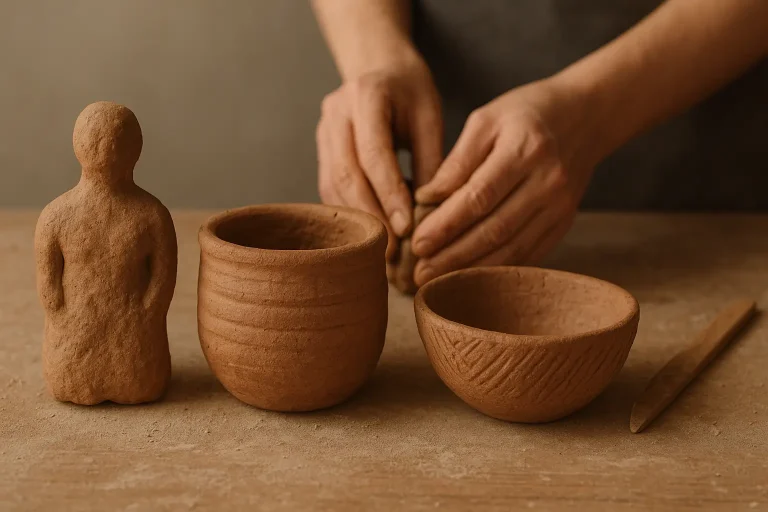
For working potters and ceramic artists, unfired clay represents a genuinely closed recycling loop. Throwing slop, trimming scraps, collapsed forms, and cracked greenware are collected in a slop bucket, allowed to dry to a leather-hard state, then rewedged back into usable clay.
A clay reclaim slop bucket with a tight-fitting lid keeps wet scraps workable for weeks in a studio environment. This reclaim process costs nothing, produces no waste, and can recover 30 to 50 percent of the clay used in a productive studio session.
Bisque-fired scraps (cone 06 fired, unglazed) can be ground using a ceramic ball mill or mortar and pestle and added back to clay bodies as coarse grog at 10 to 20 percent by dry weight. Grog particle sizes of 20 to 60 mesh reduce drying shrinkage, improve thermal shock resistance, and add surface texture to hand-built forms.
What Happens to Ceramic in Landfill?
Fired ceramic in landfill does not degrade. It does not leach significant toxins under normal conditions, it does not biodegrade, and it does not compress or break down over human-relevant timescales.
This inertness is actually an environmental neutral point rather than a hazard. The UK Environment Agency classifies uncontaminated fired ceramic as an inert waste, the lowest-risk category. It will not contaminate groundwater under standard landfill conditions and does not require special hazardous waste containment.
The Exception: Glazes Containing Heavy Metals
The inert classification changes when ceramic carries glazes formulated with heavy metal colorants. Older ceramic glazes, particularly those produced before the 1980s, commonly used lead oxide as a flux to lower melting temperature and create a smooth, glossy surface.
Lead-glazed ceramics fired to cone 06 to cone 2 (1,828°F to 2,048°F / 998°C to 1,120°C) can leach lead into acidic solutions if the glaze surface is crazed (showing a network of hairline cracks). In landfill conditions with acidic leachate, heavily leaded glazes on crazed ceramics represent a potential contamination risk, though the leaching rate from fully fused glaze surfaces is low.
Modern commercial glazes in the United States and European Union are required to meet ASTM C738 (cadmium release) and ASTM C927 (lead release) standards for any ware intended for food contact. Glazes certified AP (Approved Product) by the Art and Craft Materials Institute (ACMI) contain no materials in quantities considered toxic, including lead, cadmium, barium, and chrome. If you are disposing of pre-1980 ceramics with unknown glaze history, treating them as potentially lead-bearing is the conservative approach.
Technical Ceramics and Specialized Coatings
Technical ceramics used in industrial applications (alumina, zirconia, silicon carbide, boron nitride components) may carry coatings or be manufactured with additives that require specialist disposal. These should not enter general waste without checking the manufacturer’s safety data sheet (SDS).
For context, ceramic brake pads used in automotive applications contain ceramic fibers and metallic binders that require disposal according to automotive waste regulations, not general household ceramic guidance.
Practical Disposal Routes for Ceramic
Responsible ceramic disposal follows a hierarchy: reuse first, repurpose second, donate third, and landfill only when all other options are exhausted. Each route has specific practical requirements.
Donation: The Best First Option for Intact Ceramic
Intact ceramic tableware, even if mismatched or unfashionable, has significant reuse value. Charity shops (Goodwill, Salvation Army, British Heart Foundation, Vinnies) accept ceramic mugs, plates, bowls, and serving pieces in good condition.
Ceramic arts programs at schools, community colleges, and pottery studios actively seek second-hand bisqueware, kiln furniture, and even broken glaze-fired pieces for mosaic projects. Contact your local ceramics program before discarding any ceramic waste.
Repurposing in the Garden
Broken ceramic tiles and pottery shards have direct utility in garden settings. Coarse pieces (50mm or larger) placed at the base of plant pots improve drainage by preventing root-ball compaction against the pot base.
Crushed ceramic (10 to 20mm pieces) mixed into clay-heavy garden soil improves drainage and aeration in a similar manner to horticultural grit. The ceramic does not degrade and will not alter soil pH, unlike lime-based products. This approach permanently removes ceramic from the waste stream with a functional application.
Mosaic Art: High-Value Repurposing
Ceramic mosaic art is a practiced tradition dating to ancient Rome, and broken ceramic of any type is its primary raw material. Smashing a rejected batch of pottery or a box of broken tiles into 20 to 50mm tesserae with a tile nipper creates usable mosaic material at zero cost.
A tile nipper cuts ceramic cleanly and safely for mosaic work. Community mosaic projects, public art programs, and school art departments frequently seek donations of broken ceramic, glaze samples, and tile offcuts.
Construction Hardcore: Large-Volume Disposal
Large quantities of broken ceramic tile, bathroom ceramic, or kiln waste can be accepted at construction and demolition waste facilities as inert hardcore. Call ahead to confirm your local facility accepts ceramic, as acceptance policies vary by region.
Crushed ceramic tile is used in road sub-base construction as a partial replacement for natural aggregate. According to a study by the University of Sheffield, ceramic aggregate substitution at 20 to 30 percent of total aggregate volume in concrete mixes produces compressive strength comparable to standard aggregate mixes, with a reduction in virgin material consumption.
Kiln Waste from Studio Ceramics
Studio potters generating kiln waste (broken test tiles, failed glaze firings, kiln shelf spalls, and kiln wash debris) face a specific disposal challenge because the volume is continuous rather than a one-time renovation event.
Unglazed kiln furniture (shelves, posts, and cordierite kiln shelves) can be ground and used as grog in clay bodies. Glazed kiln waste with no heavy metals in the glaze formula is inert and can be disposed of as construction fill or garden drainage aggregate.
Kiln wash (typically a mix of alumina hydrate and silica) that has spalled off shelves should not be rewashed into glaze buckets. It is fine-particle alumina and silica. Contain it in a sealed bag and dispose of as general inert waste, taking standard silica dust precautions (dampening before sweeping and wearing a silica-rated N95 respirator) when handling dry kiln waste.
For a comprehensive understanding of how ceramic materials are classified at the compositional level, our overview of how ceramics are defined by their material science and composition explains the silica-alumina-flux chemistry that makes fired ceramic so durable and so difficult to reprocess.
Here is a complete decision guide for handling the most common ceramic disposal scenarios a household or studio will encounter.
PROCESS GUIDE
Ceramic Disposal Decision Guide by Item Type
Step-by-step disposal pathway for household and studio ceramic waste. Follow each step before moving to the next option.
Is the item intact and functional?
Donate to a charity shop, ceramics program, or community art project. This is always the preferred first route and extends the item’s useful life without any processing.
Is the item broken but still in usable pieces?
Offer to a mosaic artist, community arts program, or school art department. Broken tiles, mugs, and plates are valuable mosaic tesserae material at no cost to the recipient.
Can it be used in the garden?
Coarse ceramic shards work as pot base drainage. Crushed ceramic improves drainage in clay-heavy soil. Neither application requires further processing and permanently diverts material from landfill.
Is it a large volume of tile or sanitaryware?
Contact a construction and demolition waste facility or a Habitat for Humanity ReStore. Large ceramic volumes are accepted as inert hardcore aggregate at most C&D waste sites.
No reuse or repurposing option available?
Place in general waste (landfill). Never place ceramic in the recycling bin. Modern unglazed and lead-free glazed ceramics are inert in landfill and classified as non-hazardous waste under current environmental standards.
Ceramic vs Other Materials: Environmental Comparison
Ceramic’s recyclability problem needs context. Compared to alternative materials used for the same applications, ceramic performs well on durability and functional lifespan, which are the primary environmental metrics for consumer goods.
Use the table below to compare ceramic against common alternative materials on the environmental dimensions that matter most to disposal and lifecycle decisions.
| Material | Recyclable via Standard MRF? | Average Functional Lifespan | Biodegradable in Landfill? | Leaches Toxins? | Energy to Produce (approx. per kg) |
|---|---|---|---|---|---|
| Fired ceramic (glaze-fired) | No | Decades to centuries | No | No (modern lead-free glazes) | 6-9 MJ/kg |
| Soda-lime glass | Yes (dedicated glass stream) | Decades (fragile) | No | No | 15-20 MJ/kg |
| Polypropylene (plastic) | Yes (where marked #5) | 5-10 years (food contact) | No (400+ years) | Yes (microplastics, BPA in some grades) | 73-85 MJ/kg |
| Stainless steel | Yes (scrap metal) | Decades | No (rusts but not degrades) | Minimal (nickel leach possible) | 56-64 MJ/kg |
| Borosilicate glass | No (contaminates soda-lime stream) | Decades (thermal resistant) | No | No | 18-22 MJ/kg |
| Melamine (melamine-formaldehyde resin) | No | 3-5 years (degrades with heat) | No | Yes (formaldehyde at high temperatures) | 80-100 MJ/kg |
Energy intensity values sourced from the Inventory of Carbon and Energy (ICE) Database, University of Bath. Lifespan values are averages for functional consumer ware under normal use conditions.
One material frequently confused with ceramic is melamine, which mimics the appearance of ceramic tableware but is a thermoplastic resin with an entirely different material composition and environmental profile. Our guide explaining the key differences between melamine and actual ceramic tableware covers the compositional, safety, and disposal distinctions in detail.
Reducing Ceramic Waste at the Source
The most effective environmental strategy for ceramic is reducing waste generation before it occurs. This applies to both consumers and studio ceramicists.
Buying Decisions That Reduce Disposal Pressure
Choosing ceramic tableware rated for dishwasher and microwave use (vitrified stoneware or porcelain, absorption rate under 1%) extends functional lifespan significantly compared to lower-fired earthenware, which absorbs moisture through the unglazed base, cracks under thermal shock, and chips at a higher rate.
Buying from potters and manufacturers who use lead-free, cadmium-free, AP-certified glazes ensures the ceramic is safe for food contact throughout its life and inert at end-of-life disposal. Check for AP (Approved Product) certification from the ACMI on commercial ceramics, or ask studio potters directly about their glaze materials.
Studio Practice: Minimizing Kiln Waste
Test tiles are the most effective tool for reducing kiln waste in a pottery studio. A full kiln load of work glazed with an untested formula is a high-risk firing. Firing a set of ceramic test tiles with new glazes, glaze combinations, and application thicknesses before committing to a full load reduces the number of failed pots significantly.
Orton witness cones placed at multiple shelf levels inside the kiln confirm actual heat work at each position. A set of Orton pyrometric witness cones costs under $5 and prevents the most common cause of kiln waste: firing to the wrong effective temperature because of controller drift or thermocouple deterioration.
Glaze Application Consistency as Waste Reduction
Inconsistent glaze application is one of the top causes of kiln waste in studio ceramics. Glaze applied too thickly runs off the pot and fuses to the kiln shelf; glaze applied too thinly produces a dry, underfired surface. Both outcomes are avoidable with a glaze hydrometer to maintain consistent specific gravity (1.45 to 1.50 for most dipping glazes).
Measuring glaze thickness with a pin tool pushed through the wet glaze surface (target: 1.5 to 2.5mm for most cone 6 dipping glazes) is the fastest check available at the bench and eliminates guesswork that produces reject firings.
Emerging Ceramic Recycling Technologies
Several research programs are actively developing viable ceramic recycling pathways, though most remain at pilot or industrial scale and are not yet accessible to consumers or small studios.
Ceramic Tile Recycling in Industrial Manufacturing
The Spanish tile industry, centered in Castellon de la Plana, is the furthest advanced in circular ceramic production. Research published in the journal Ceramics International found that incorporating up to 30 percent recycled ceramic tile grog into new tile body formulations produced equivalent mechanical properties (modulus of rupture: 35 to 42 MPa) to all-virgin material formulations, with a 12 to 18 percent reduction in total raw material cost per tonne of tile produced.
This approach works because the recycled ceramic grog provides silica and alumina content equivalent to virgin feldspar, the most expensive mineral input in tile production. The limitation is processing cost: grinding fired ceramic tile to 0.5mm particle size requires high-energy milling, and the economic benefit only appears at factory scale.
Sanitaryware-to-Aggregate Programs
In Japan, the Ceramic Sanitary Ware Industrial Association operates a collection and grinding program that converts used sanitaryware into fine aggregate for road surfacing. Participating municipalities collect sanitaryware from demolition sites and deliver it to processing centers.
The processed aggregate replaces up to 20 percent of natural crushed stone in municipal road sub-base applications. Japan’s program diverts an estimated 30,000 tonnes of sanitaryware annually from landfill, according to association reporting.
Ceramic in Concrete: Research-Stage Applications
Multiple peer-reviewed studies, including research published in Construction and Building Materials, have tested ceramic powder (particle size below 75 microns) as a supplementary cementitious material in concrete. At substitution rates of 10 to 20 percent by weight of cement, fine ceramic powder produces pozzolanic reactions that increase 28-day compressive strength by 5 to 12 percent compared to standard Portland cement mixes.
This application is pozzolanic: the fine amorphous silica in ground ceramic reacts with calcium hydroxide (a cement hydration byproduct) to form additional calcium silicate hydrate (C-S-H), the primary strength-giving phase in concrete. The condition for this reaction is particle size below 75 microns and a calcium hydroxide environment, which means it requires specialized industrial grinding and is not applicable to household ceramic disposal.
Food Safety Considerations for Older Ceramic
Before disposing of ceramic, it is worth identifying whether it poses a food safety risk in continued use, which is a separate question from disposal. Ceramic that is no longer food-safe should be retired from use, but that does not change its disposal pathway.
Lead Glazes on Pre-1980 Ceramic
Lead was used as a flux in low-fire ceramic glazes at levels of 5 to 50 percent by weight in formulas fired to cone 06 to cone 2 (1,828°F to 2,048°F / 998°C to 1,120°C) because it produced a smooth, brilliant glaze surface at low cost. The United States banned lead in ceramic glazes for food-use ware under the Consumer Product Safety Improvement Act, but the manufacturing cutoff was gradual through the 1970s and 1980s.
Crazed glaze (a network of hairline surface cracks caused by thermal expansion mismatch) on pre-1980 ceramic significantly increases lead leaching risk because the cracks expose the glaze interior to acidic foods. A ceramic lead test swab kit ($10 to $20 for a pack of 10 swabs) provides a reliable home screen for leachable lead on suspected pre-1980 tableware. Any positive result means the item should be removed from food service and disposed of in general waste.
Cadmium in Red and Orange Glazes
Bright red and orange ceramic glazes produced before the 1990s commonly used cadmium selenide or cadmium sulfide as colorants. Cadmium is a known carcinogen, and cadmium-containing glazes on food-use ceramic are regulated under ASTM C738.
The visual signal for potential cadmium glazes is intense red, orange, or bright yellow coloration on tableware produced before approximately 1990. Modern versions of these colors use safer alternatives including iron, chrome, and encapsulated cadmium frits that meet ASTM leach standards. If the origin of a bright red or orange piece is unknown and it predates the 1990s, treat it as potentially cadmium-bearing and discontinue food use.
Ceramic used in non-food applications, such as tile, decorative objects, and window film (a ceramic-particle-based product distinct from fired tableware), does not carry food safety implications. For reference, ceramic window tint products use a completely different class of ceramic particle technology with separate environmental and regulatory considerations.
Ceramic Disposal Regulations by Region
Ceramic disposal regulations are primarily determined at the municipal or regional level, not by national law, in most countries. The key classification question is whether ceramic is classified as inert waste (standard landfill) or construction and demolition waste (specialist C&D facility).
United States
The US Environmental Protection Agency classifies uncontaminated fired ceramic (without heavy metal glazes) as non-hazardous solid waste. Disposal is governed by state and local regulations. In most states, small household quantities (broken mugs, plates) go to general solid waste. Large quantities from renovation (tiles, sanitaryware) may need to go to a C&D facility rather than a residential waste site, depending on the jurisdiction.
No federal mandate requires ceramic to be separated from general household waste, and no national curbside ceramic recycling program exists. Some municipalities within California, Oregon, and Massachusetts have piloted construction material drop-off programs that accept ceramic tile.
United Kingdom
The UK Environment Agency classifies clean, uncontaminated fired ceramic as inert waste under the European Waste Catalogue code 17 01 03. Household ceramic (broken mugs, plates) goes to general waste. Renovation ceramic (tiles, sanitaryware) can be taken to household waste recycling centres (HWRCs) that accept inert construction waste.
The Environment Agency’s definition of inert waste requires that the material does not dissolve, burn, or otherwise react when in contact with water, air, or other materials. Standard glaze-fired ceramic with modern lead-free glazes meets this definition.
European Union
The EU Waste Framework Directive (2008/98/EC) places ceramic in the inert waste category alongside concrete, bricks, and glass from construction. Member states are required to achieve 70 percent recovery of C&D waste by weight, and ceramic is counted within this target. Several EU countries, including Germany, the Netherlands, and France, have established C&D waste processing infrastructure that accepts and processes ceramic as aggregate.
Australia
In Australia, ceramic disposal is governed by state environment protection authority (EPA) guidelines. All state EPAs classify uncontaminated fired ceramic as non-hazardous solid waste. Victoria, New South Wales, and Queensland have transfer stations that accept mixed C&D waste including ceramic tile. Contact the relevant state EPA or your local council waste service for the nearest accepting facility.
Ceramic Non-Stick Cookware: A Separate Disposal Category
Ceramic non-stick cookware is chemically different from fired pottery or tile. It is a metal substrate (typically aluminum) coated with a sol-gel silica-based coating marketed as “ceramic non-stick.” This coating is not traditional fired ceramic and should not be disposed of in the same way as ceramic tableware or tile.
When the non-stick coating on ceramic cookware wears through, the pan’s metal body is recyclable as scrap metal at most metal recycling facilities. The worn silica coating does not require special hazardous waste disposal. For full details on how this type of coating works and when to replace it, our guide on how ceramic non-stick coatings actually work and degrade over time covers the chemistry and lifecycle of this product category.
Frequently Asked Questions About Ceramic Recyclability and Disposal
Can I put broken ceramic in my recycling bin?
No. Fired ceramic cannot go in any standard curbside recycling bin, including glass, mixed recycling, or paper and cardboard bins. Ceramic contaminates glass cullet batches, damages sorting equipment, and is rejected at all materials recovery facilities. The correct disposal route for broken ceramic with no reuse option is the general waste (landfill) bin.
Why can glass be recycled but ceramic cannot?
Glass is recycled by remelting at approximately 2,600°F (1,427°C), a temperature standard recycling furnaces can achieve economically. Ceramic has already been fired to between 1,828°F and 2,381°F (998°C and 1,305°C) and has undergone irreversible vitrification, meaning its minerals have fused into a stable glass-like matrix that cannot be remelted in the same type of furnace without contaminating the glass batch.
Ceramic also has a higher melting point than soda-lime glass and a different viscosity profile at high temperatures, making it physically incompatible with the glass recycling process. Even a small quantity of ceramic in a glass melt produces solid inclusions that cause structural failure in the final product.
Is ceramic better for the environment than plastic?
For durable, repeatedly used items (mugs, plates, cookware), ceramic has a lower environmental impact per use than single-use or short-lifespan plastic over any period exceeding 3 to 5 years. Ceramic requires 6 to 9 MJ of energy per kg to produce, compared to 73 to 85 MJ/kg for polypropylene, and ceramic does not leach microplastics, does not degrade in UV light, and does not produce toxic combustion products if incinerated.
The ceramic disadvantage is that it cannot be recycled at end of life, while many plastic types have established recycling streams. For a single-use scenario, the comparison reverses: a disposable plastic cup at 20 grams has a much lower absolute production footprint than a 350g ceramic mug if the mug is only used once.
What should I do with old dishes and mugs I no longer want?
Donate intact ceramic to a charity shop, food bank, or community kitchen first. If not accepted due to damage, offer broken pieces to a local ceramics program or mosaic artist. Large quantities of ceramic tile from a kitchen or bathroom renovation can go to a Habitat for Humanity ReStore (intact tiles) or a C&D waste facility (broken tiles). Broken ceramic with no reuse option goes to general household waste.
Can ceramic be used as compost or soil amendment?
Fired ceramic does not decompose and provides no nutritional value to soil, so it is not a compost ingredient. Coarsely crushed ceramic (10 to 20mm pieces) can improve drainage in clay-heavy garden soil in the same way as horticultural grit, and ceramic shards placed at the base of plant pots improve drainage through the root zone. These applications are permanent: the ceramic will remain in the soil indefinitely without degrading or altering soil pH.
Is antique ceramic with lead glaze safe to keep and use?
Antique ceramic with intact, un-crazed lead glaze surfaces poses low but non-zero leaching risk with acidic foods. Lead leaching from a smooth, fully fused lead glaze is minimal under normal use conditions. The risk increases significantly if the glaze is crazed (showing hairline cracks), chipped, or worn, because these surfaces expose the glaze interior to food contact. Use a lead test swab kit to screen suspected pre-1980 tableware before continued food use, and retire any piece that tests positive.
Antique ceramic used purely for display (not in contact with food or beverages) carries no food safety risk regardless of glaze type.
What is the difference between ceramic tile waste and pottery waste in terms of disposal?
Both are inert fired ceramic and go to the same disposal categories: reuse, repurpose, C&D facility, or general waste. The practical difference is scale and composition. Ceramic tile waste from a renovation is typically 50 to 150 kg of material with a consistent glaze type, suitable for C&D aggregate processing. Pottery studio waste includes test tiles, kiln wash, glaze drips, and mixed glaze types in smaller volumes, and is best managed through grog reclaim (unglazed pieces), garden drainage use, or standard general waste disposal.
Can I recycle ceramic flower pots?
Terracotta and ceramic garden pots are not accepted by curbside recycling. Intact pots in good condition can be donated to garden centers, community gardens, or neighbor networks. Cracked terracotta pots can be broken and used as pot base drainage material (crocks). Terracotta is earthenware fired to approximately cone 06 (1,828°F / 998°C) and is porous, making it easier to crush manually than vitrified stoneware or porcelain. Large quantities of broken terracotta pots are accepted at most C&D waste facilities as inert material.
Does ceramic last forever in landfill?
Fired ceramic does not biodegrade in landfill. Unglazed ceramic fragments will remain structurally intact on a timescale of thousands of years, which is why ceramic sherds are among the most common artifacts recovered at archaeological sites. Modern lead-free, fully vitrified ceramic (stoneware and porcelain) in landfill does not leach toxins, does not generate methane, and does not compact. Its inertness means it occupies landfill space permanently but does not contribute to groundwater contamination or greenhouse gas production.
Are ceramic brake pads and automotive ceramics disposed of differently than household ceramic?
Yes. Automotive ceramic components, including ceramic brake pads that contain metallic binders and ceramic fiber compounds, are classified as automotive waste and should be disposed of at an authorized automotive waste facility or returned to the parts supplier. They should not be treated as general household ceramic waste.
Can ceramic be melted down and reused?
Fired ceramic cannot be melted and reprocessed in any economically viable way outside of a specialist industrial facility. The melting point of most fired stoneware and porcelain is above 2,642°F (1,450°C), above the operating temperature of standard glass furnaces, and the melt viscosity at that temperature is too high for conventional casting or forming. Industrial-scale ceramic recycling programs work by grinding (not melting) fired ceramic into aggregate or grog for use in new ceramic production, not by remelt.
What should I do with ceramic kiln shelves and kiln furniture I no longer need?
Intact cordierite kiln shelves in usable condition can be sold or donated through ceramics community networks, pottery school programs, or local ceramic arts societies. Shelves with kiln wash deposits can be cleaned with a kiln shelf scraper and recoated with fresh kiln wash for continued use. Cracked or broken kiln shelves (cordierite and mullite compositions) can be broken into coarse grog and wedged into clay bodies at up to 15 percent by weight for texture and thermal shock resistance. No special disposal is needed for pieces that cannot be repaired or reused.
Is ceramic window tint the same kind of material as ceramic dishes and tiles?
No. Ceramic window tint uses nano-ceramic particles (typically titanium nitride or similar compounds) suspended in a polyester film base. It is not the same material as fired clay ceramic. For consumer disposal purposes, ceramic window tint film is treated as plastic film waste, not as ceramic. For information on how ceramic window tint technology differs from standard window film and its regulatory status, our guide on how ceramic window tint is applied and how it works covers the product category in detail.
Summary: The Most Important Decisions for Responsible Ceramic Disposal
Fired ceramic is not recyclable through any standard curbside or drop-off recycling program, and placing it in a recycling bin contaminates the load. The responsible disposal hierarchy is: donate intact pieces, offer broken pieces for mosaic or garden use, send large renovation quantities to a C&D waste facility, and use general waste only as a final option.
Ceramic’s environmental impact is front-loaded at extraction and firing, but its longevity means the per-use footprint is low for any item used over years or decades. Choosing well-made, vitrified, lead-free ceramic tableware, maintaining it to extend its life, and keeping it out of the recycling stream when it does reach end-of-life are the three most effective actions available to consumers and studio potters alike.