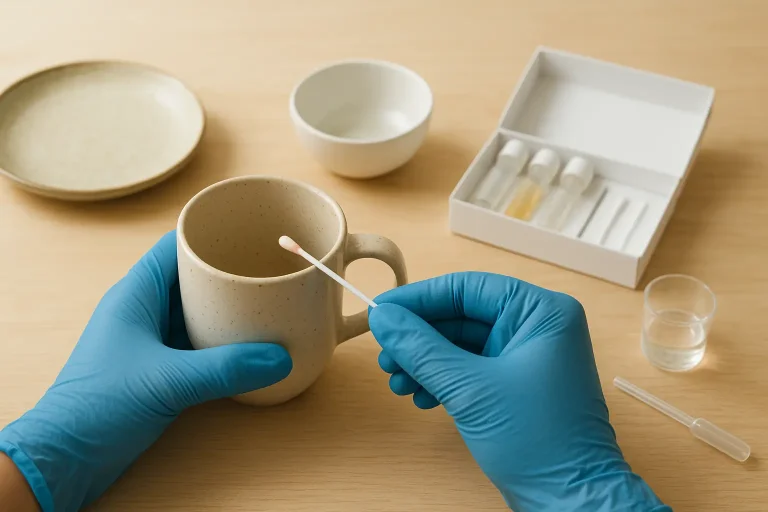
Kaolin, feldspath et silice : ingrédients essentiels de la glaçure céramique

Every ceramic glaze is glass, and glass needs exactly three raw materials to form: kaolin for stability, feldspar as the melting engine, and silica as the glass itself. Remove any one of the three and the batch fails in the kiln. Get the ratios right and you control gloss, durability, and fit at temperatures from cone 06 (1828°F / 998°C) to cone 10 (2381°F / 1305°C).
This guide covers the role of each core ingredient, the chemistry that binds them together, how ratios shift by cone range, and how to mix your first test batch from raw materials safely. It also covers the most common formulation mistakes and the fixes for each.
What Are Kaolin, Feldspar, and Silica in a Ceramic Glaze?
Kaolin, feldspar, and silica are the three structural materials that make up nearly every ceramic glaze formula, working together as stabilizer, flux, and glass former. A typical cone 6 (2232°F / 1222°C) studio glaze contains roughly 25 to 35 percent feldspar, 20 to 30 percent silica, and 10 to 20 percent kaolin. The rest is specialty fluxes and colorants.
According to Mastering Cone 6 Glazes by John Hesselberth and Ron Roy, published research used by thousands of studio potters, the fired glaze surface is a glass whose structure is built almost entirely from silica, stiffened by alumina, and melted by fluxes. Every raw material you add plays one of those three roles.
In plain terms: silica is the glass, feldspar is the heat that melts it, and kaolin is the glue that keeps the batch from sliding off the pot before it melts.
These are chemical categories, not brand preferences. A glaze mixed with 200-mesh silica flour and EPK kaolin behaves by the same rules as a factory-mixed glaze. The chemistry does not care where the powder came from.
Silica: The Glass Former
Silica (SiO2) is the only true glass former in a glaze, and it makes up 50 to 70 percent of most fired glaze structures. It melts at 3119°F (1714°C) on its own, which is hotter than any studio kiln can reach. Fluxes must pull it into solution.
Silica enters your recipe from two sources: flint or quartz powder added directly, and silica already locked inside feldspar and kaolin. Both count toward the same total.
This works because flux oxides break apart the silica network at the molecular level during firing, letting the silica flow into a continuous glass. It only occurs between cone 06 and cone 12 when enough flux is present.
If the flux is insufficient, the result is a dry, under-fired surface that never fully melts. Fix it by increasing feldspar or lowering the cone rating of the recipe.
Feldspar: The Primary Flux
Feldspar is the natural flux that melts first, pulling silica and alumina into a workable glass at cone 6 to cone 10 temperatures. Common studio feldspars include Custer, G-200, and sodium feldspar Nephaline Syenite. Feldspar typically makes up 25 to 45 percent of a recipe.
Feldspar is a type of naturally occurring mineral that contains silica, alumina, sodium, potassium, and sometimes calcium in a single crystal. That combination makes it a self-balancing ingredient: it melts, it stiffens, and it contributes glass at the same time.
Custer feldspar runs about 11 percent potash (K2O) and 3 percent soda (Na2O), which suits cone 6 to cone 10 oxidation work. It melts early because the alkali oxides disrupt the silica bonds at lower temperatures than silica alone.
Use too much feldspar and the glaze runs off the pot and welds it to the shelf. This happens because the excess flux keeps the melt too fluid after the surface seals. Fix it by trimming feldspar back and restoring kaolin.
Kaolin: The Stabilizer
Kaolin (Al2O3·2SiO2·2H2O) is the clay mineral that supplies alumina, the stabilizer that keeps a glaze from running, crawling, and dissolving. Kaolin is typically 10 to 25 percent of a recipe. EPK (Edgar Plastic Kaolin) and Tile 6 are the most common studio grades.
Alumina stiffens the melt. It raises the viscosity of molten glaze so the surface stays put on vertical walls. It also anchors the glaze to the clay body by forming crystalline bonding layers at the interface.
EPK kaolin contributes about 37 percent alumina by weight after the chemically bound water burns off. This only becomes active above roughly cone 04 (1945°F / 1063°C), when the kaolin decomposes into alumina and free silica.
If alumina runs short, the glaze runs, crazes, or turns glossy where you wanted matte. Add 2 to 3 parts kaolin per 100 parts batch and test again.
For most home studios, a simple starting trio of silica, feldspar, and kaolin in the classic proportions below gives a reliable transparent base before any colorant is added.
To see how these three materials divide up a real studio recipe, look at the chart below showing the classic Leach 4-3-2-1 cone 6 base glaze broken down by ingredient percentage.
Glaze Recipe Data
Leach 4-3-2-1 Base Glaze – Ingredient Breakdown
Percentage of each raw material in the classic cone 6 transparent base. Source: Bernard Leach, A Potter’s Book.
Why Does the Silica-Alumina-Flux Triangle Control Every Fired Result?
The silica-alumina-flux ratio is the master variable of glaze chemistry, and it determines whether a fired surface turns glossy, matte, runny, or rough before color or firing schedule ever enter the picture. Every glaze recipe, no matter how complex, reduces to a point on this triangle. The Digitalfire Reference Library, maintained by glaze engineer Tony Hansen, documents how each oxide shifts a formula’s position on this map.
The triangle works because each corner has one job. Silica builds the glass network. Alumina stiffens and bonds that network. Flux breaks the network apart so heat can fuse everything into one phase.
Stovetop thinking fails here. A glaze with 65 percent silica and almost no flux only melts above cone 12 (2420°F / 1327°C). The same silica level with strong sodium fluxes can melt by cone 06.
Balance the triangle poorly and the failure follows the direction of the imbalance: too much flux runs, too much silica stays dry and under-fired, too much alumina turns the surface rough and matte. Each symptom names its own cure.
This happens because the three oxides compete for the same melt at the molecular level. It only resolves fully at peak temperature with a 10 to 15 minute hold, giving the melt time to homogenize.
If you skip the hold, the surface may come out speckled and unmixed even at the correct cone. Fix it by programming a short soak at temperature, not by firing hotter.
How Do the Ratios Change by Cone Range?
Lower cone numbers demand stronger flux packages, so recipes shift their weight from silica and kaolin toward feldspar and specialty fluxes as the target temperature drops. A cone 06 glaze may carry 45 percent low-temperature fluxes, while a cone 10 glaze leans on 30 percent silica because the kiln itself supplies more of the melting work.
Use the table below to find the typical silica, alumina, and flux balance for your firing range before you buy raw materials or modify a recipe.
| Firing range | Temperature | Feldspar (flux) % | Silica % | Kaolin % | Extra fluxes needed | Food safe when mature |
|---|---|---|---|---|---|---|
| Cone 06 (low-fire) | 1828°F / 998°C | 20-30% | 15-25% | 10-15% | Yes, frit or boron | Only if fully fused |
| Cone 6 (mid-fire) | 2232°F / 1222°C | 30-40% | 25-30% | 10-20% | Whiting or dolomite | Yes |
| Cone 10 (high-fire) | 2381°F / 1305°C | 25-35% | 30-35% | 15-20% | Usually none | Yes |
The key finding: as the cone number rises, silica share climbs and added flux demand falls. The kiln does more of the melting, and the recipe does less.
For most home studio potters firing cone 6 in an electric kiln, a feldspar-dominant base near 35 percent feldspar, 30 percent silica, and 15 percent kaolin is the safest starting triangle.
How to Mix Your First Glaze Test Batch from Raw Materials
A 100-gram test batch is the standard first step in glaze mixing because it lets you fire a few tiles and judge results without wasting more than a few dollars of material. The full process takes about 45 minutes plus a kiln cycle. Wear a respirator rated for silica dust for every step that involves dry powder.
According to the Digitalfire Reference Library, dry glaze materials become hazardous only when airborne, so the safety rule is simple: never dry-sweep, and wet-wipe every surface.

Follow the steps below to go from raw powder to a dip-ready glaze suspension.
The walkthrough below lays out each stage of mixing a 100-gram test batch, from weighing to firing the test tiles.
Step-by-Step Guide
How to Mix a 100-Gram Glaze Test Batch
7 steps. About 45 minutes of studio time, plus one kiln cycle.
Weigh the dry materials
Using a gram scale accurate to 0.1g, weigh 35g feldspar, 30g silica, 15g kaolin, and 20g whiting for a classic cone 6 base.
Blend the powders dry
Stir all four powders together in a sealed container or under a vent hood for 60 seconds so the batch is uniform before water is added.
Add water slowly
Add about 80ml of warm water to the 100g batch and stir until the mix resembles heavy cream. Add more water only as needed.
Sieve the suspension
Pass the wet glaze through an 80-mesh sieve two or three times to break up clumps and fully wet every particle.
Check specific gravity
Measure with a hydrometer or by weighing 100ml of suspension. Aim for 1.45 to 1.50 for dipping consistency.
Apply to bisque test tiles
Dip two or three bisque-fired tiles for a count of two seconds each, letting excess drip off before drying.
Fire and evaluate
Fire to your target cone with an Orton witness cone on the shelf, then check the tile for gloss, fit, and even coverage.
A glaze hydrometer is the single cheapest tool for repeatable results, because specific gravity drift is the most common reason two identical batches fire differently.
Consistency in weighing and water is what separates a testable recipe from a guess. Once your base works, expand your color palette using a proven cone 6 and cone 10 colorant recipe reference.
What Happens When You Substitute One Ingredient for Another?
Substitutions change the chemistry, not just the label, because every feldspar and every kaolin carries a slightly different oxide package. Custer feldspar carries more potash than G-200, so swapping them one-for-one shifts the melt temperature and the color response in reduction. The glaze remembers what you fed it.
Kaolin substitutes carry the same warning. EPK, Tile 6, and ball clay all supply alumina, but ball clay also brings extra iron and organic material. That extra iron warms the fired color.
This happens because each mineral releases a different mix of oxides as it decomposes during firing. Substitution only stays safe when the new material matches the old one oxide-for-oxide at the same percentage.
If the substitute is a poor match, the result is usually a running glaze or a shifted color that no amount of firing schedule can rescue. Fix it by running a substitution line blend before committing to a full batch.
Before you scale any batch, work through a structured glaze chemistry guide covering raw materials and colorants so you can predict the swap instead of discovering it in the kiln.
Troubleshooting Glaze Failures Caused by the Core Three
Most glaze defects trace back to an imbalance in silica, alumina, or flux rather than to application or firing. Crazing, running, pinholing, and dry surfaces each point at a specific corner of the triangle. Diagnose by symptom, then correct the chemistry.
Crazing means the glaze has too much silica or too little alumina relative to the clay body, so it shrinks more during cooling. This is a thermal expansion mismatch, not a firing error. Fix it by adding 5 percent kaolin or switching to a lower-expansion feldspar.
Running glazes carry excess flux or missing alumina. The melt is too fluid at temperature to hold a vertical surface. Fix it by adding kaolin or removing 3 to 5 percent feldspar per test round.
Dry, under-fired surfaces carry too much silica or refractory material for the cone reached. This happens because the silica never fully dissolves into the melt. Fix it by adding flux or firing one cone higher with a witness cone to verify.
Crawled patches mean the glaze shrank and pulled away from the bisque before it melted, usually from too much kaolin applied too thickly. Fix it by thinning the coat to 2mm and sieving the batch finer.
Each symptom names its own cure. Match the fix to the corner of the triangle that failed, and run one variable at a time through the kiln.
How Much Do Raw Glaze Materials Cost?
Raw glaze materials cost $1 to $4 per pound from suppliers like Sheffield Pottery and Axner, and a 100-gram test batch costs under one dollar. A 25-pound bag of feldspar or kaolin typically runs $20 to $35 and mixes roughly 45 liters of dipping glaze over its lifetime. Silica is usually the cheapest of the three.
Commercial glaze by comparison runs $15 to $30 per pint. Mixing from raw materials cuts that cost by more than 80 percent once your recipes are proven.
For most potters firing 10 or more glaze loads per year, buying 25-pound bags of the core three pays for itself within the first year and gives full control over the recipe.
Frequently Asked Questions About Kaolin, Feldspar, and Silica in Ceramic Glaze
Can I make a glaze with only feldspar, kaolin, and silica?
Yes, but only at cone 8 or higher, because feldspar alone is a weak flux at cone 6. A pure blend of roughly 60 percent feldspar, 20 percent silica, and 20 percent kaolin can melt to a stony gloss by cone 10 (2381°F / 1305°C). At cone 6 it stays rough and under-melted.
Add 10 to 20 percent whiting or a frit to bring the melt down to cone 6. That is exactly what the classic 4-3-2-1 recipe does with its whiting share.
What is the difference between silica and quartz in a glaze?
Nothing chemically: quartz is the mineral and silica is the oxide (SiO2) it becomes in the recipe. Studio suppliers label the same material as “flint,” “silica,” or “200-mesh silica.” All three names mean finely ground quartz.
Mesh size matters more than the name. 200-mesh dissolves into the melt faster than 325-mesh alternatives for even gloss.
Buy the mesh your recipe calls for and do not substitute blindly.
Why does my glaze craze even though I mixed the recipe exactly?
Crazing comes from a thermal expansion mismatch, meaning your glaze shrinks more than the clay body during cooling, and it is caused by excess silica or sodium in the formula rather than mixing error. The cracks are tension cracks in the glass layer. Add 5 percent kaolin or use a lower-soda feldspar to fix it.
Verify with a freezer test: a crazed tile placed in a freezer for an hour will show new or wider crack lines.
Is silica dust dangerous to breathe?
Yes, dry crystalline silica dust causes silicosis, a permanent scarring of the lungs, and it is the single most serious hazard in a glaze mixing room. It only becomes dangerous when airborne, so the risk lives in weighing, sieving, and cleaning, not in the wet glaze or the fired pot. Use a N95-or-better respirator and wet-wipe all surfaces.
Never dry-sweep a mixing area. Keep a spray bottle and sponge at the sink instead.
Is a glaze made from kaolin, feldspar, and silica food safe?
The three core ingredients are non-toxic in fired form, and a fully melted glaze made from them is food safe, but food safety depends on the colorants you add and on complete maturation in the kiln. Barium, copper, and lithium additions can leach if the glaze is under-fired.
Test any functional-ware glaze with a leach test or buy certified lead-free colorants.
Can I use ball clay instead of kaolin in a glaze?
Yes, ball clay can replace kaolin one-for-one as an alumina source, but it darkens the fired color and adds organic material that can cause pinholes if the bisque is fired too fast. Ball clay carries more iron and carbon than EPK. Use it when you want warmer tones and can tolerate a slightly riskier surface.
What happens if I use a cone 10 glaze recipe in a cone 6 kiln?
A cone 10 recipe fired to cone 6 comes out dry, porous, and possibly rough enough to scratch skin, because the flux package is sized for 150°F more heat work than your kiln delivered. The glass never finishes forming. Fix it by adding 10 to 15 percent whiting or frit to the recipe and retesting.
Do I need to bisque fire before glazing with a raw-material glaze?
Yes, bisque firing to cone 04 (1945°F / 1063°C) first is strongly recommended, because bisque ware is porous and grabs the glaze suspension evenly, while raw greenware absorbs water unevenly and can crack. The bisque also burns out organics that would otherwise bubble through the glaze.
Can I mix commercial glaze with my own raw-material batch?
You can, but expect unpredictable results, because commercial glazes carry suspension agents, hardeners, and frits that shift the chemistry when blended with a raw batch. A 50-50 mix rarely splits the difference in fired appearance. Run a line blend of the two first if you must combine them.
Why did my glaze turn matte when the recipe photo showed gloss?
Matte instead of gloss almost always means under-firing or an alumina level slightly too high for the cone you actually reached, not a bad batch. Check the witness cone before blaming the materials. If the cone bent only halfway, your kiln under-fired and the glaze stayed short of full melt.
How much water should I add to a 100-gram test batch?
Start with 80 milliliters of water per 100 grams of dry material and adjust to a specific gravity of 1.45 to 1.50 for dipping. Thinner spraying glazes run closer to 1.35. The number, not the look, is what makes results repeatable.
Is nepheline syenite a good feldspar substitute?
Yes, nepheline syenite is a stronger flux than Custer or G-200 feldspar because it carries more sodium and potassium oxide, and it lowers the melt point by roughly half a cone at equal weight. Use it to rescue under-fired cone 6 recipes. Reduce it by 5 to 10 percent when replacing feldspar in a proven recipe to avoid running.
Do I need a kiln vent when mixing raw glazes?
A kiln vent matters more for firing than mixing, because the glaze materials release gases during the glaze firing that can pit the surface and irritate lungs in an unvented room. A downdraft vent like the Skutt Vent-Sure removes these fumes. It also improves glaze color consistency across the load.
Conclusion
Kaolin, feldspar, and silica are the whole engine of ceramic glaze: silica builds the glass, feldspar melts it, and kaolin holds it in place. Getting the triangle right for your cone range costs under a dollar per test batch and removes guesswork from every future recipe. Start with a 100-gram test, fire it beside an Orton witness cone, and adjust one variable at a time. For the wider world of glaze types and application methods beyond raw mixing, our complete glaze guide covering types and application picks up where this one leaves off.