Cuisinart Ceramic Cookware Review: Performance and Value

The ceramic in Cuisinart ceramic cookware is a glassy mineral film thinner than a human hair, not fired clay. The Cuisinart Advantage Ceramica XT 11-piece set lands near $99 street and delivers top tier nonstick for at least its first year. This review covers what the coating is, how the pans cook, how long the finish lasts, and how the price compares with Ozeri, GreenPan, Tramontina, and Caraway.
What Is Cuisinart Ceramic Cookware, Exactly?
Cuisinart ceramic cookware is an aluminum pan body finished with Ceramica, a sol-gel ceramic coating baked on in thin layers. The headline product line is the Advantage Ceramica XT, sold mainly as an 11-piece set, a 12-piece set, and a few open stock skillets.
The 12-piece Ceramica XT set lists around $130. Street pricing sits below list on most shopping days, so set alerts before you buy.
Key Specifications:
- Body: lightweight aluminum with an even heating flat base
- Interior: Ceramica sol-gel ceramic, PTFE free and PFOA free
- Oven safe: up to 350°F (176°C), lids included in that ceiling
- Dishwasher safe: yes, though hand washing extends the finish
- Induction ready: no, the base carries no magnetic layer
- Typical set price: $99 to $130 for 11 or 12 pieces
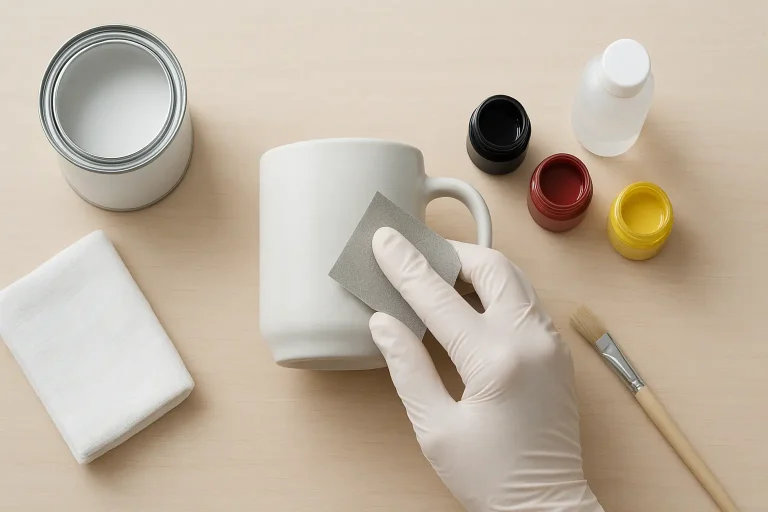
Ceramica is a sol-gel coating, which means silicon compounds in a liquid gel harden into solid silica glass during a factory bake. Silica is the same glass former inside the glaze on a stoneware mug, but a stoneware glaze needs cone 6, about 2232°F (1222°C), to melt. The Ceramica film cures at hundreds of degrees, not thousands.
The cured glass has low surface energy, so food rides on a whisper of oil instead of bonding to metal. That slickness holds when you cook at low to medium heat with a small amount of real oil. It fails when pans sit empty over high burners, when aerosol sprays bake into crust, or when metal tools scrape the film.
Once the film is worn, food bonds and no home seasoning trick brings it back for long. In plain terms, you are buying light aluminum pans finished with a glassy mineral skin, not pottery.
How Does Cuisinart Ceramic Cookware Perform in Daily Cooking?
Out of the box, the Ceramica XT line delivers sloppy-slick release. Eggs slide, fish lifts, and pancakes flip with barely any oil during the first months.
The scorecard below rates the set on the six factors that decide whether a ceramic set earns its price.
Product Review
Cuisinart Advantage Ceramica XT Scorecard
Six ratings drawn from long term kitchen use and verified buyer reviews across major retailers.
9/10
8/10
6/10
8/10
9/10
9/10
Scores are editorial assessments based on long term home kitchen use and verified buyer reviews. Not sponsored.
Nonstick Release on Eggs, Fish, and Pancakes
A fresh Ceramica surface passes the no-oil egg test cleanly. Crepes, flounder fillets, and over easy eggs release with a gentle tilt and a soft push.
A soft silicone spatula set is the only tool this surface ever needs. Nylon and wood also work without scratching the glass film.
Heat Spread and Hot Spots
The aluminum base heats quickly and holds an even temperature across the flat cooking zone. Rolled walls are thinner than the base, so most of the heat stays where your food sits.
On a medium burner, a skillet settles near 300°F (149°C) within about 90 seconds. That range is the sweet spot for this coating, and it is where the pan wants to live.
Handles, Lids, and Weight
These pans weigh far less than cast iron or hard anodized rivals, and one hand can swirl and drain them. The long handles sit at a comfortable angle and stay touchable during medium heat cooking.
Tempered glass lids let you watch a simmer without lifting and losing heat. Fresh performance rates an 8.2 out of 10, with durability the only weak bar on the board.
How Long Does the Ceramica XT Coating Actually Last?
Expect one to three years of good release with careful daily use. Hard cooking with sprays and high heat shortens that to roughly a year.
The coating does not melt or flake like old PTFE. It wears micro thin, release fades, and the effortless cleanup era quietly ends.
Mineral ceramic coatings tolerate heat better than PTFE, which starts breaking down around 500°F (260°C) and can fume. Silica based films stay stable several hundred degrees past that mark. The film still loses slickness from wear even though it never smokes the same way.
Cuisinart covers manufacturing defects under its limited warranty. A coating that slowly loses release from normal use counts as wear, not a defect, and that is standard across every nonstick finish sold today.
Across major retail review patterns, the story repeats: first year praise, then sticking complaints in year two and three. Care habits decide which camp your set falls into more than luck does. Plan on one to three years of slick cooking, and treat anything longer as a bonus.
What Does Cuisinart Ceramic Cookware Cost Compared With Rival Ceramic Sets?
The Ceramica XT 11-piece set runs about $99 on sale against a $130 list price, which undercuts most ceramic rivals by a wide margin. Count carefully, because four of the eleven pieces are lids, so seven cooking vessels at $99 work out to about $14 each.
Use the price bars below to see exactly where the Cuisinart set sits among the ceramic cookware sets shoppers cross-shop most.
Price Comparison
Ceramic Cookware Set Prices Compared
Typical street prices for comparable ceramic cookware sets, sorted lowest to highest. Prices verified at time of publication.
about $70
about $90
about $99
about $130
about $250
about $395
Prices are typical street prices at major US retailers at the time of publication. The Cuisinart set lists near $130 and often sells near $99. Bar width shows relative price, not quality.
The budget flank is real. Tramontina’s ceramic sets start near $70, and Blue Diamond’s reinforced coating lands near $130 with a bigger box count.
Ozeri sells its ceramic pans mostly as singles, and how Ozeri’s pans held up in daily testing matters when you price the market per skillet instead of per set.
Caraway plays a different game at $395 for seven pieces, built around thicker bodies, smart storage, and design first marketing. Cuisinart gives you ceramic cooking for roughly $14 per usable pan, the lowest real cost of any set compared here.
Ceramica XT vs GreenPan Valencia Pro: Which Should You Buy?
The Valencia Pro is the most popular premium ceramic set, and the Cuisinart wins on price while GreenPan wins on the heat ceiling and induction support. The next decision is whether those two upgrades are worth about $150 to your kitchen.
Use the side-by-side table below to decide which ceramic build fits your burners and your budget.
Product Comparison
Cuisinart Ceramica XT vs GreenPan Valencia Pro
The budget ceramic leader against the premium ceramic leader, feature by feature.
| Feature | Cuisinart Ceramica XT | GreenPan Valencia Pro |
|---|---|---|
| Typical set price | $99 to $130 | $200 to $250 |
| Cookware body | Lightweight colored aluminum | Hard anodized aluminum |
| Ceramic interior | Ceramica sol-gel film | Thermolon mineral ceramic |
| Oven safe to | 350°F (176°C) | 600°F (316°C) |
| Induction ready | No | Yes |
| Metal utensils | Soft tools only | Tolerant, soft tools still best |
| Dishwasher safe | Yes, hand wash extends life | Yes, same advice |
| Best for | Budget gas and electric kitchens | Induction burners and heavy oven use |
| Our verdict | Best value ceramic set | Best premium ceramic build |
Both interiors are sol-gel mineral coatings without PTFE. Heat tolerance and induction support drive most of the price difference.
The $150 gap buys real upgrades: a 600°F (316°C) oven ceiling, an induction ready base, and a harder anodized shell. If you do not need induction or high oven work, the Cuisinart set keeps the money and loses little on the stovetop.
A GreenPan Valencia Pro 11-piece set earns its price on induction stoves and in hot ovens. For gas and electric ranges on a budget, take the Cuisinart and bank the difference.
How Do You Care for Cuisinart Ceramic Cookware to Reach Its Full Lifespan?
Care decides the lifespan of this set more than the price does. Follow the six steps below and the finish can serve daily duty for two to three full years.
- Wash and dry before first use. Warm soapy water and a soft sponge remove packing dust and factory residue in five minutes.
- Season with a light wipe of oil. Pour a teaspoon of neutral high smoke point oil, spread it with a paper towel, then wipe until the pan looks nearly dry.
- Cook at low to medium heat. A splash of water should sizzle softly in a ready pan, never skitter and spit violently.
- Skip aerosol cooking sprays. Spray propellants and lecithin bake into a brown crust that grips the glass film.
- Cool before rinsing. Give a hot pan five to ten minutes off the burner so the coating never thermal shocks in the sink.
- Store with protection. Set cloth pan protectors between stacked pots so lids and rims cannot scratch the interior.
Occasional dishwasher trips are fine, but weekly cycles will shorten the finish. Our full dishwasher rules for ceramic kitchenware spell out which cycles are safe and which eat coatings.
Medium heat, real oil, soft tools, and slow cooling are the four habits that stretch this set past the two year mark.
Which Common Mistakes Ruin Ceramic Cookware the Fastest?
High dry heat, aerosol oils, and cold water on a hot pan are the three fastest coating killers a home cook can commit. Steel wool is the fourth.
- Empty preheating. A pan left over a high burner for five minutes can pass 600°F (316°C) with nothing inside to absorb the heat.
- Cooking sprays. The lecithin in aerosol sprays polymerizes into a tacky film that normal dish soap will not lift.
- Thermal shocking. Rinsing a hot pan in cold water warps thin aluminum and can crack the bond between coating and metal.
- Steel wool and abrasive scrubbers. Use a baking soda paste on a soft cloth for burnt spots instead of any abrasive pad.
- Stacking bare. Direct pan to pan contact scars the interior faster than any cooking does.
- Searing indoors at max heat. A proper steak crust wants a 12 inch cast iron skillet or stainless, not a glass film rated for medium.
Most ruined ceramic pans trace back to sprays, steel wool, or thermal shock. One week of changed habits stops all three.
Who Should Buy Cuisinart Ceramic Cookware, and Who Should Skip It?
Buy this set if you cook on gas or electric, want a PTFE free surface for under $150, and accept a two to three year refresh cycle. Skip it if you need induction, oven work above 350°F (176°C), or one set for the next decade.
The scorecard below sums up what this line gets right and where it honestly falls short.
Product Review
Cuisinart Advantage Ceramica XT Pros and Cons
What long term owners consistently praise and complain about, from verified buyer reviews and hands-on use.
Pros
- +PTFE free and PFOA free interior with no PTFE fume risk around pet birds
- +Street price near $99, about $14 per actual cooking vessel
- +Featherweight aluminum bodies that one hand can swirl and drain
- +Bright turquoise, red, and purple finishes that double as kitchen decor
- +Forgiving cleanup where warm water and a soft sponge handle most meals
Cons
- –Release fade begins in the second year of heavy daily use
- –No induction support because the base carries no magnetic layer
- –350°F (176°C) oven ceiling rules out most finish-in-oven recipes
- –Gloss exteriors show scratches and oil stains sooner than hard anodized shells
- –Aerosol sprays and steel wool ruin the film within weeks if used
For gas and electric kitchens on a budget, this is the best ceramic value under the $150 mark. Skip it for induction burners, serious searing, or a ten year finish.
Shoppers who want to weigh every name before committing should browse our brand-by-brand comparison of the big ceramic brands. If your budget points to a single skillet instead of the full box, the 10-inch Ceramica skillet is the best entry piece in the line. Buy it for a gentle gas or electric kitchen, and buy something else for induction or searing.
Frequently Asked Questions About Cuisinart Ceramic Cookware
These twelve reader questions cover details the review sections above could not squeeze in.
Why is food suddenly sticking to my Cuisinart ceramic pan?
Food starts sticking because the glassy film is worn thin or sealed under baked-on residue, not because the pan is finished. A baking soda paste wash plus a fresh seasoning with a teaspoon of oil rescues the pan in about half of all cases. If the film itself is scraped through, no home fix exists and replacement is the answer.
Run the no-oil egg test after the rescue wash. A clean release means residue was the culprit all along.
Can I put Cuisinart ceramic cookware in a 450°F oven?
No. Cuisinart rates the Ceramica XT line for ovens up to 350°F (176°C), and a 450°F (232°C) bake passes both that ceiling and the comfort range of the glass lids. Recipes that finish in a hot oven belong in dedicated bakeware, not this cookware.
For anything past 350°F, our guide on when to reach for ceramic versus metal bakeware sorts the choices pan by pan.
Is the Cuisinart ceramic coating free of PTFE, PFOA, lead, and cadmium?
Cuisinart states that the Ceramica interior is free of PTFE and PFOA. Lead and cadmium have no function in a sol-gel silica formula, so they are not part of the functional chemistry, and the brand can supply its current heavy metal testing paperwork on request.
Cook for sensitivities with confidence, but still avoid chipped or deeply worn coatings. A scratched film exposes aluminum at the base and belongs in the recycling bin.
Are Cuisinart ceramic pans safe around pet birds?
Yes, with normal ventilation. Pet birds die from PTFE fumes when classic nonstick overheats past about 500°F (260°C), and this line contains no PTFE at all. The remaining risk is scorched oil or food smoke, same as with any pan in any kitchen.
Still, never leave an empty pan on high around animals. Fumes can fill a small kitchen faster than people expect.
Can I use metal spatulas on the Ceramica XT coating?
No. Metal edges scratch micro-channels into the silica film, and those channels widen into sticky patches within weeks of normal cooking. Silicone, nylon, and wood are the only tools this coating wants, and a basic silicone set costs under $20 and often outlives the pan itself.
Can a hot Cuisinart pan go straight into cold dishwater?
No. Thin aluminum warps and the coating bond can crack when a hot pan meets cold water. Give the pan five to ten minutes of open air cooling, then rinse in warm water, and the base stays flat for the life of the set.
Why did my pan develop a white haze after washing?
White haze is mineral scale from hard water plus starchy film, not failed coating. Simmer a 50/50 mix of water and white vinegar for ten minutes, wipe with a soft cloth, rinse, and reseason with a drop of high smoke point oil. The sheen usually returns in a single pass.
Will an induction adapter disc make these pans induction ready?
Technically yes, but an adapter disc conducts induction heat into aluminum unevenly and slowly. Response turns sluggish, hot spots spread, and warp risk climbs with every cycle, so the better move is an induction-ready ceramic set with a magnetic base built in from the start.
Which lasts longer: Cuisinart ceramic or hard anodized nonstick?
Hard anodized nonstick usually outlasts this ceramic line by one to two years under equal care. The PTFE layer on anodized pans resists abrasive wear slightly better, but it carries the 500°F (260°C) fume ceiling that ceramic avoids, and neither finish is a lifetime pan.
Stainless steel is the only decades-long option in the cookware aisle. For the full trade-off stack, read our face-off between anodized bodies and ceramic coats.
Is Cuisinart better than the granite-stone coated pans I see advertised?
For daily performance they are equals, so buy on price per piece rather than stone branding. Granite-stone lines are also aluminum pans wearing speckled reinforced coatings, they fade on the same two to three year clock, and some of them include PTFE while others do not.
Read the box for a PTFE free claim before you believe the mineral marketing. Our breakdown of speckled stone style coatings lines up the chemistry brand by brand.
What is the best oil for seasoning a ceramic pan?
About one teaspoon of a neutral, high smoke point oil, wiped until the pan looks nearly dry, is the right seasoning dose. Refined avocado and grapeseed are the two best picks. Pure olive oil smokes too low and bakes on tacky within a few uses.
Can I sear a steak properly in a Cuisinart ceramic skillet?
No. A proper steak crust needs a surface above 400°F (204°C), and Cuisinart designs this line for low to medium heat. Sear in cast iron, carbon steel, or tri-ply stainless instead, then let the ceramic set handle eggs, fish, and crepes where it shines.
Final Verdict: Is Cuisinart Ceramic Cookware Worth the Money?
For gas and electric cooks who want a PTFE free kitchen for about $99 to $130, Cuisinart ceramic cookware is the best value in its class. It cooks beautifully for one to three years, costs about $14 per usable pan, and asks only for medium heat and soft tools in return.
Keep induction and searing jobs with harder pans, and reseason this set monthly with a drop of oil. Start with the 11-piece Ceramica XT set on sale, and your kitchen will spend less than a third of a premium ceramic setup.