Korean Ceramics: Celadon & Buncheong Pottery Inventions

Korean celadon is not just green glaze. The jade color comes from iron oxide converting to ferrous oxide inside a reduction kiln at cone 8 to cone 10 (2232 to 2381°F, 1222 to 1305°C), and Korea was the first culture to master that color on a truly fine scale. This guide covers Goryeo celadon, Joseon buncheong, ongi storage jars, and Korean white porcelain, with firing temperatures, clay bodies, glaze chemistry, and food safety for each tradition.
What Makes Korean Ceramics Different from Chinese and Japanese Pottery?
Korean ceramics earned global status by perfecting surfaces that China and Japan treated differently. Goryeo celadon (918 to 1392) reached a jade green color and an inlay technique called sanggam that no other culture matched in refinement.
According to the Smithsonian’s Freer and Sackler Galleries collection research, Goryeo celadon achieved its famous gray-green tone because Korean potters used local iron-bearing stoneware clay and controlled reduction firing more carefully than Song dynasty workshops producing Longquan celadon. The Korean clay body naturally contained around 2 percent iron oxide, which shifted the fired color away from the Chinese blue-green toward a warmer gray-green.
The difference is chemical, not stylistic. In a reduction kiln, the atmosphere is starved of oxygen. Carbon monoxide strips an oxygen atom from ferric oxide (Fe2O3) and converts it to ferrous oxide (FeO). Ferrous oxide acts as a flux and scatters light at a wavelength the eye reads as blue-green rather than rust-brown.
This only occurs in a wood or gas kiln with a carbon-rich atmosphere above roughly cone 012 and held through cone 8. Electric kilns firing in full oxidation cannot replicate it regardless of glaze chemistry, because the oxygen supply never drops.
If reduction starts too late, above cone 6, the glaze surface has already begun to seal. The result is a yellow-amber surface that looks like an oxidation firing. The historical fix was beginning light reduction early and watching the flame color at the spy holes.
Korean workshops also invented the inlay technique. The potter carves a design into leather-hard clay, fills the carving with white or black slip, scrapes the surface flat, then applies a transparent celadon glaze over the whole piece.
That single technique, sanggam, is a Korean invention. Chinese workshops imitated it later, but the Freer collection research notes it was first perfected at Gangjin and Buan kilns in the southwest of the peninsula. You can see how Chinese kilns developed their own parallel tradition in our Chinese ceramics history guide.
The Korean achievement was not copying China. It was reading the same chemistry differently and inventing techniques the source culture then borrowed back.
Goryeo Celadon: The Jade Glaze That Changed Firing Forever
Goryeo celadon is a reduction-fired, iron-tinted stoneware glaze produced between roughly 918 and 1392, maturing at cone 8 to cone 10 (2232 to 2381°F, 1222 to 1305°C). It is the highest-regarded ceramic achievement in Korean history.
The glaze itself is simple in formulation. It consists of feldspar as the main flux, silica as the glass former, kaolin for stability, and around 1 to 3 percent iron oxide as the sole colorant.
Ash from wood firing also melted into early glazes, adding calcium. In plain terms: the glaze is mostly melted rock and clay, and a tiny amount of rust dust turns it green when the kiln breathes wrong on purpose.
Key Specifications:
- Firing range: cone 8 to cone 10 (2232 to 2381°F, 1222 to 1305°C)
- Atmosphere: wood or gas reduction, started by cone 012
- Clay body: local iron-bearing stoneware, roughly 2 percent Fe2O3
- Glaze colorant: 1 to 3 percent iron oxide
- Typical total shrinkage: 10 to 12 percent from wet to fired
The famous color range runs from gray-green to a deep “kingfisher” blue-green. The most prized pieces also show a translucent depth, where the glaze pools in carved lines and thickens visibly.
Depth comes from glaze thickness. Thin celadon reads pale gray, while 1 to 2mm of applied glaze lets light penetrate, reflect off the clay body, and scatter through the glass layer twice. That double scattering is what makes good celadon glow rather than sit flat on the surface.
If the glaze is applied too thin, the fired color is washed-out gray with visible body showing through. The fix is building thickness in two or three dipped coats, letting each dry to the touch between coats.
Modern potters chasing this surface can start with a commercial cone 10 celadon glaze and a gas kiln. You cannot fake it in oxidation with copper, because copper produces a different green with a metallic edge that reads wrong to anyone who has handled the real thing.
For most studio potters today, celadon means cone 10 gas reduction on a smooth stoneware body, with iron oxide as the only colorant and glaze thickness near 1.5mm.
Buncheong: The Korean Invention Studio Potters Still Love
Buncheong (also spelled punch’ong) is a slip-decorated, gray-green stoneware made in Korea during the 15th and 16th centuries, fired to cone 6 to cone 9 (2232 to 2310°F, 1222 to 1266°C). It is the Korean tradition that modern makers have embraced most enthusiastically.
Its parent technique is sanggam inlay, and its descendants are bold, fast, expressive surface treatments. The core idea: coat a gray stoneware body with white slip, then work the slip with brushes, carving tools, stamps, or fingers before applying a transparent glaze.
The National Museum of Korea classifies buncheong decoration into seven styles, including inlay, stamp-impressed, incised, slip-brushed, slip-trailed, dipped, and the freely painted style associated with the artist Georges Boudot-influenced modern revival. The bold brushed style, called hwalmun, uses wide strokes that often run onto the bare body and leave visible finger energy.
During the 20th century, Japanese tea masters collected buncheong so heavily that the ware is sometimes better known in Kyoto than in Korea. In Korea, it was nearly extinguished when white porcelain took over in the 15th century.
The glaze is a transparent, slightly greenish ash-feldspar glaze. It is thin, so the white slip shows through, and the iron in the underlying body pulls the tone warm gray where slip is thin.
Because the technique is fast and forgiving, it suits studio potters perfectly. You can build a full buncheong surface in a single evening of slip work, something you can explore with our deeper history of early pottery making when tracing where slip decoration first began.
Buncheong differs from celadon in almost every practical choice. It works at mid-fire ranges, tolerates electric kilns with an oxidation-tinted transparent glaze, and rewards speed rather than precision.
For a studio potter, buncheong is the Korean tradition worth trying first, because a 25-pound bag of mid-fire stoneware, a bucket of white slip, and any pottery carving tool set will get you started.
Use the flow below to walk the full buncheong process from raw clay to fired surface, with each stage placed where it happens in the studio.
Step-by-Step Guide
How to Make Buncheong-Style Decoration – Step by Step
7 steps from leather-hard clay to fired surface. Estimated hands-on time: 2 to 3 hours plus two firings.
Form the pot on a gray stoneware body
Throw or handbuild with a cone 6 to cone 9 stoneware containing around 2 percent iron. The body color shows through thin slip areas and warms the surface tone.
Wait for leather-hard, usually 24 to 48 hours
Slip applied too wet will not carve cleanly. The surface should dent with a thumbnail but not smear. Cover loosely with plastic to slow drying in dry climates.
Mix and apply white slip at specific gravity 1.55 to 1.60
Use a slip of roughly 60 percent kaolin or ball clay blend. Dip, pour, or brush one even coat around 1mm thick. Check consistency with a hydrometer before each session.
Decorate while the slip is the same dampness as the body
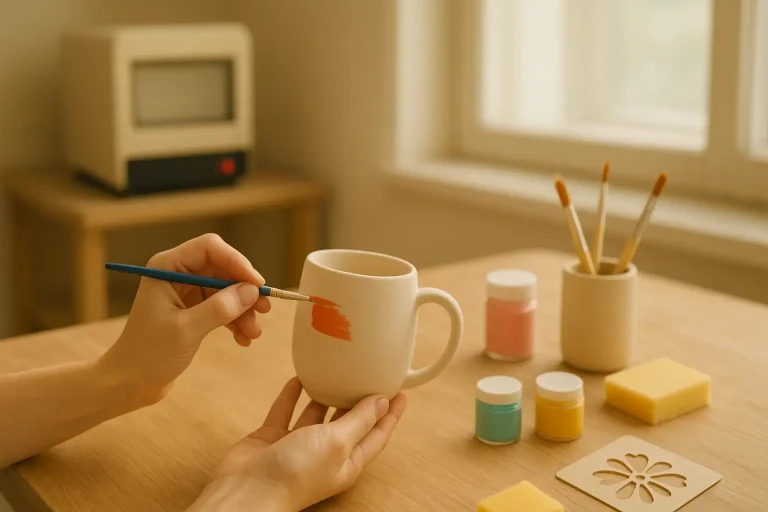
Choose one technique: carve through slip for sgraffito, press with carved stamps, brush bold slip strokes, or trail liquid slip. Historical buncheong favors speed and visible gesture over precision.
Let the piece dry fully, then bisque to cone 06
Bisque fire to cone 06 (1828°F, 999°C) on a slow schedule to burn out slip organics. Rapid bisque can flake or blister slip layers applied at uneven thickness.
Apply a thin transparent glaze
Dip a single coat of a clear or slightly green-tinted transparent at specific gravity 1.45 to 1.50. Thin matters: thick glaze clouds the slip decoration beneath it.
Glaze fire to cone 6 in oxidation, or cone 9 in reduction
Electric kilns to cone 6 give a clean white-gray result. Gas reduction to cone 9 warms the tone toward the historical gray-green, because body iron converts to FeO.
What Korea Actually Invented in Pottery
Korea invented sanggam inlay decoration, perfected the purest jade-green celadon tone, and developed buncheong as a distinct slip-ware tradition. These three contributions are documented in the National Museum of Korea’s ceramics collections and referenced across scholarly ceramic history literature.
Sanggam is the clearest invention. Before Goryeo potters, inlaid ceramics existed in other cultures, but the Korean method of filling carved lines with contrasting white and black slip under a translucent celadon glaze was new.
The second contribution is the color standard itself. Japanese and Chinese tea masters and collectors later described Goryeo celadon as the ideal green surface, often ranking it above Longquan wares.
The third is buncheong, which has no true Chinese parallel. It is a direct ancestor of Japanese mishima, a slip-inlay technique that traveled to Japan with captured Korean potters in the late 16th century.
Mishima is named after Japanese collections of Korean ink-decorated papers, not after a place in Korea. The pottery technique itself is Korean in origin, renamed in Japan.
A fourth contribution is the ondol kiln influence on ongi jars. Ongi are massive, low-fired, ash-glazed storage jars used for kimchi, soybean paste, and water, coil-built and glazed with a wood-ash slip rich in silica.
Ongi are fired much lower, around cone 010 to cone 06 (1635 to 1828°F, 891 to 999°C), making them porous enough to let fermentation breathe. Their glaze chemistry is a simple ash-feldspar melt over an iron-heavy body, which you can compare against how other world cultures solved storage and firing problems in our cross-cultural history article.
If you want to see where these traditions lead into contemporary practice, our profiles of influential ceramic artists past and present include modern Korean makers working in the buncheong idiom.
Korea’s inventions were not new kilns or new materials. They were new ways of combining slip, carving, glaze, and atmosphere, and those combinations still shape studio pottery worldwide.
Celadon vs Buncheong vs White Porcelain vs Ongi: Which Korean Tradition Fits Your Studio?
Celadon needs gas or wood reduction and cone 10. Buncheong works at cone 6 in an electric kiln. That single difference decides which tradition fits a home studio.
Use the table below to match your equipment and firing range to the right Korean tradition before buying clay or mixing slip.
Product Comparison
Four Korean Ceramic Traditions Side by Side
A practical comparison for modern studio potters choosing which tradition to study and make.
| Feature | Goryeo celadon | Buncheong | White porcelain | Ongi jar |
|---|---|---|---|---|
| Firing range | Cone 8-10 (2232-2381°F) | Cone 6-9 (2232-2310°F) | Cone 10-11 (2381-2360°F+) | Cone 010-06 (1635-1828°F) |
| Kiln type | Gas or wood reduction | Electric oxidation works | Gas, wood, or electric | Wood or low electric |
| Clay body | Iron-bearing stoneware | Gray stoneware plus white slip | White porcelain stone blend | Coarse iron-rich clay |
| Decoration | Sanggam inlay under glaze | Carved, stamped, brushed slip | Plain or blue underglaze | Minimal, ash-glazed |
| Difficulty for a home studio | High | Low to medium | High | Medium, scale is the challenge |
| Food safety after firing | Yes when glaze fits body | Yes at full vitrification | Yes, under 1% absorption | Functional but porous by design |
| Our verdict | Study it, fire it if you have gas | Best entry point for most potters | For advanced throwers | For fermentation and garden work |
Temperature ranges follow Orton Pyrometric Cone references for stated ramp rates. Absorption values depend on specific body formulation and firing speed.
For most home studio potters with an electric kiln, buncheong on a cone 6 stoneware body is the right starting point, with celadon saved for the day you gain access to a gas reduction kiln.
How to Fire Korean-Style Glazes in a Modern Studio
You can reproduce credible Korean surfaces with a gas kiln for celadon and any electric kiln for buncheong. The two processes diverge at the atmosphere stage, so plan equipment first.
For celadon, reduction is the whole game. Start a light reduction around cone 012 by partially closing the damper and watching for a flame with a yellow-orange tip at the spy hole. Hold moderate reduction through cone 8, then ease off in the final stage.
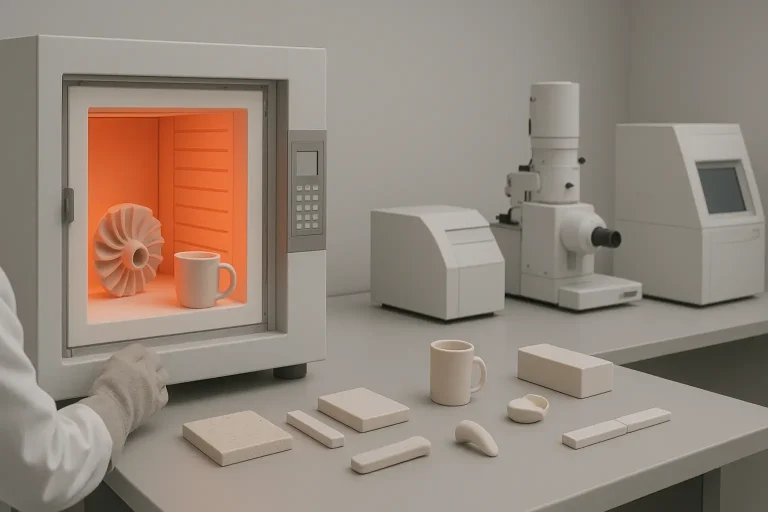
Witness cones are the only reliable way to confirm heat work. Electronic controllers drift over time, and Orton witness cones placed at top, middle, and bottom shelf levels show what actually happened in each zone.
For buncheong, oxidation is fine. A standard cone 6 schedule at 150 to 250°F per hour to temperature gives a clean, bright slip surface under a transparent glaze.
The failure mode for beginners is glaze thickness. Transparent glaze applied at 1mm shows the decoration. The same glaze at 3mm turns your carving into a faint shadow.
Test thickness on tiles before committing to pots. You can hold a consistent dip thickness by measuring specific gravity with a glaze hydrometer and keeping it at 1.45 to 1.50 for every session.
For glaze testing itself, a set of Orton witness cones costs about the same as one bag of clay and removes more guesswork than any other purchase in the studio.
The reliable home-studio recipe is simple: cone 6 electric oxidation for buncheong, cone 10 gas reduction for celadon, and witness cones in every firing of both.
Troubleshooting Korean-Style Firing: Common Problems and Fixes
Most Korean-style failures come from three causes: wrong atmosphere, wrong slip dampness, or wrong glaze thickness. Each cause leaves a distinct symptom you can read off the fired piece.
Problem: Yellow-amber celadon instead of green. The cause is late or absent reduction. Ferrous oxide only forms while the glaze surface is still open, so reduction must start by cone 012. The fix is closing the damper earlier and confirming flame color at the spy hole.
Problem: Slip flaking off before firing. The cause is shrinkage mismatch between slip and body. White slip made of pure kaolin shrinks more than a grogged stoneware body and pops free in patches. The fix is blending 30 to 40 percent ball clay into the slip to raise plasticity and reduce the shrinkage gap.
Problem: Carved decoration disappearing under glaze. The cause is glaze thickness above roughly 2mm. The fix is thinning the glaze and applying one dip instead of two.
Problem: Cracked ongi-style jars. The cause is too-fast drying of large coil-built forms. Jars over 18 inches tall need one to two weeks of even drying under loose plastic. The fix is patience, plus firing on the slowest bisque schedule your controller allows.
Problem: Crazing on celadon surfaces. The cause is thermal expansion mismatch between the glaze and the clay body. The glaze contracts more than the body on cooling and cracks in a fine web. The fix is adding 5 to 10 percent silica to the glaze batch to lower its contraction, then retesting.
Read the symptom first, change one variable, and fire test tiles before firing the next pot. One variable at a time is the difference between learning and guessing.
Test yourself on the fundamentals before you invest in materials, because the quiz below covers the same history and chemistry a first Korean-technique workshop would.
Interactive Quiz
How Much Do You Know About Korean Ceramics?
5 questions. Takes about 2 minutes. See your result at the end.
Buying Materials for Korean-Style Work: What You Actually Need
A working Korean-technique setup costs between 60 and 250 dollars in materials beyond clay. The list is short because the tradition is chemically simple.
Clay body. Buy a smooth or lightly grogged cone 6 stoneware with visible iron speckle for buncheong, roughly $18 to $25 per 25-pound bag. For celadon, choose a fine cone 10 stoneware or porcelain-stoneware blend, $25 to $35 per bag.
White slip. Mix 60 percent kaolin or ball clay with 40 percent ball clay and add water to specific gravity around 1.55. A kaolin powder supply for slip runs about $20 to $40 for enough material to decorate dozens of pieces.
Colorants. Iron oxide at 1 to 3 percent in the glaze batch is the only colorant celadon needs. A small jar of iron oxide powder covers hundreds of test tiles.
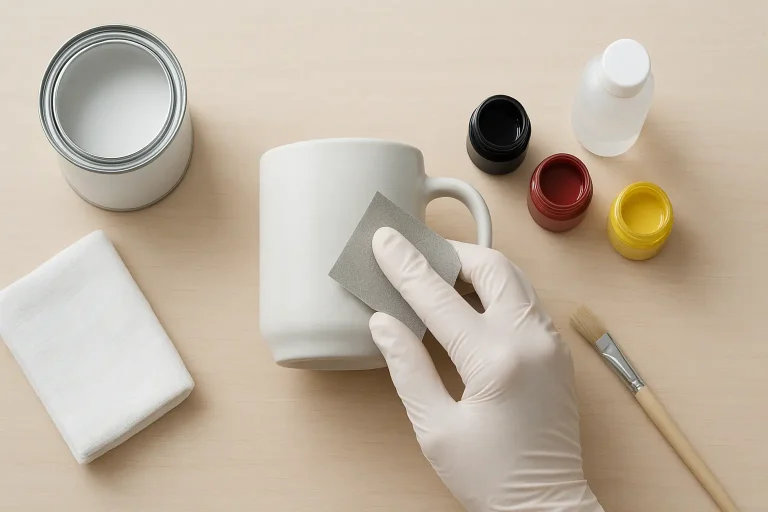
Carving tools. Korean slip carving needs loop and ribbon tools with fine tips. A basic sgraffito carving set costs $15 to $35 and lasts for years.
Glaze. One clear cone 6 dipping glaze at 1.45 to 1.50 specific gravity serves all buncheong work. For later celadon work, one cone 10 reduction celadon recipe covers the whole tradition.
Skip the extras. Korean technique rewards gesture and repetition, not tool catalogs, and one bag of clay plus one bucket of slip is a complete starter studio.
Frequently Asked Questions About Korean Ceramics
Is Korean celadon food safe?
Traditional Goryeo celadon glazes used iron oxide as the sole colorant, and iron is not a toxic material. Food safety depends on glaze fit and vitrification, not on the green color itself.
A crazed celadon surface is not food safe, because the crack lines harbor bacteria even when the glaze contains no lead. Test your glaze against your specific clay body, and fix any crazing by adding 5 to 10 percent silica before selling functional ware.
Historical glazes sometimes contained lead fluxes. Never use an antique or reproduction piece with unknown chemistry for food or drink without lab testing.
Can I make celadon green in an electric kiln?
You can approximate the color but not reproduce the chemistry. Electric kilns fire in full oxidation, so ferric oxide never converts to ferrous oxide.
Some potters add 0.5 percent titanium dioxide or small amounts of rutile to shift a cone 6 oxidation glaze toward gray-green. The result reads as pale celadon to a casual viewer but lacks the translucent depth of true reduction celadon.
For authentic color, find a community studio with a gas kiln and rent reduction firings by the shelf.
Why does my white slip crack and flake off my pots?
White slip cracks when it shrinks more than the clay body beneath it during drying. Pure kaolin slip shrinks 15 to 20 percent, while a grogged stoneware body shrinks 10 to 12 percent.
The fix is adjusting the slip recipe. Blend 30 to 40 percent ball clay into kaolin, or add up to 10 percent fine grog or silica to reduce the shrinkage gap.
Apply slip only when the body is at the same moisture stage, usually soft leather-hard, so both layers dry and shrink together.
What is the difference between buncheong and mishima?
Buncheong is the Korean tradition of slip-decorated stoneware made mainly in the 15th and 16th centuries. Mishima is the Japanese name for slip-inlay decoration adopted from that Korean tradition.
The techniques overlap heavily. Both carve a design, fill it with contrasting slip, and scrape the surface flat before glazing.
The difference is lineage and aesthetic emphasis. Buncheong includes bold brushed and dipped styles beyond inlay, while mishima refers narrowly to the inlaid look.
Can I fire buncheong at cone 6 instead of cone 10?
Yes, cone 6 in electric oxidation is the standard modern approach for buncheong. Use a cone 6 stoneware body, white slip, and a clear cone 6 transparent glaze at 1.45 to 1.50 specific gravity.
Historical buncheong fired hotter in wood kilns with light reduction, which warmed the tone. At cone 6 oxidation, expect a brighter, whiter slip surface with cooler gray tones.
Are ongi jars waterproof?
Ongi jars are intentionally porous, firing to only cone 010 to cone 06 (1635 to 1828°F, 891 to 999°C). They are water-resistant but not fully vitrified.
The porosity is functional. Fermenting kimchi releases gas and moisture that a sealed vitrified jar would trap, and the clay wall regulates humidity inside.
For waterproof storage, choose a fully vitrified stoneware jar fired to cone 6 or higher with under 2 percent absorption instead of traditional ongi.
How much does real Korean celadon cost to buy?
Antique Goryeo celadon pieces are museum-grade and reach six and seven figures at auction. Museum-quality reproductions by licensed Korean masters run from several hundred to several thousand dollars.
Studio-made contemporary celadon from working potters typically costs $40 to $300 per piece depending on size and inlay complexity. Functional celadon mugs and bowls sit at the lower end of that range.
Do I need a pottery wheel to make buncheong?
No, buncheong decoration works on handbuilt forms as well as thrown ones. Slab-built and coil-built pieces accept carved and stamped slip identically.
Historical buncheong decoration was applied to both wheel-thrown bowls and large storage vessels formed by other methods. The surface technique is independent of the forming method.
Is Korean celadon the same as Chinese Longquan celadon?
They are related traditions with different clay bodies and color results. Longquan celadon from Song dynasty China leans blue-green, while Goryeo celadon leans gray-green with a warmer tone.
The difference traces to local clay chemistry. Korean stoneware bodies contained more iron, which shifted the fired glaze color once reduction converted that iron to ferrous oxide.
You can compare the two traditions directly in our guide to Chinese ceramics from Neolithic times to Ming porcelain.
What books cover Korean ceramics techniques in depth?
The standard English-language reference is The World of Korean Ceramics by Young Yang Chung and Richard Moore, covering Goryeo and Joseon traditions in depth.
For glaze chemistry that applies to celadon work, Daniel Rhodes, Clay and Glazes for the Potter, is the classic materials-science foundation, including iron-oxide behavior in reduction.
Can I use commercial white slip instead of mixing my own?
Yes, commercial white dipping slips work well for buncheong and remove the shrinkage-matching guesswork. Brands like Amaco and Standard Ceramic sell slip formulated for cone 6 bodies.
Commercial slips are tested for fit on typical mid-fire bodies, which reduces flaking compared with an untested homemade kaolin slip. The tradeoff is less control over color tone and shrinkage for unusual clay bodies.
Conclusion
Korean ceramics rest on three inventions you can still work with today: sanggam inlay under reduction-fired celadon at cone 8 to 10 (2232 to 2381°F, 1222 to 1305°C), buncheong slip decoration that works in any cone 6 electric kiln, and low-fired porous ongi built for fermentation.
The jade green comes from iron oxide converting to ferrous oxide in a carbon-rich atmosphere, and that single chemical fact explains both the tradition and its limits.
Your next step is a small one: one 25-pound bag of speckled cone 6 stoneware, one bucket of white slip at specific gravity 1.55, and a carving tool. Make ten test tiles before you make a pot.